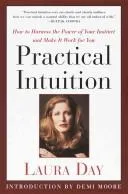
Practical Intuition
 74
74

Practical Intuition
Laura Day’s *Practical Intuition* approaches its subject with a welcome pragmatism. Unlike many texts that lean into mystical pronouncements, Day grounds her methods in exercises that feel accessible. The strength lies in its systematic breakdown of intuition into manageable components, particularly her concept of "psychic noise" which offers a relatable framework for understanding why intuitive signals are often missed. However, the book occasionally borders on oversimplification; the very real complexities of psychic phenomena are sometimes smoothed over for the sake of technique. A passage detailing how to differentiate between genuine intuition and wishful thinking, a crucial distinction Day attempts to clarify, highlights both her clarity and the inherent difficulty of the subject. Despite its limitations, *Practical Intuition* offers a solid, actionable foundation for those beginning to explore their inner landscape.
📝 Description
74
Laura Day's 1996 book, Practical Intuition, presents intuition as a learnable skill for daily decisions.
Published in 1996, Practical Intuition aims to demystify intuitive abilities, framing them not as rare gifts but as practical, accessible skills for everyday life. Laura Day focuses on actionable methods to sharpen one's awareness and build trust in inner guidance. The book is for anyone who suspects they have untapped intuitive potential but needs concrete tools to access it. It offers a structured way to understand gut feelings, premonitions, and subtle energetic perceptions.
Day's approach emphasizes practical application over abstract theory. She introduces concepts like "psychic noise," which can block intuitive clarity, and techniques for "clearing the channel." The work highlights the role of physical grounding and energetic awareness in developing reliable intuition. It describes intuition as an active process involving the entire person, incorporating physical sensations and emotions, rather than a passive reception of messages.
Practical Intuition emerged in the mid-1990s, a time when New Age philosophies and mind-body practices were gaining broader acceptance. This period saw many books on consciousness and alternative healing, often drawing from various traditions. Laura Day's work stood out by focusing on the practical application of intuition, moving beyond purely theoretical discussions. It contributed to a growing interest in personal development and the integration of subtle perceptions into daily life.
💡 Why Read This Book?
• Learn to differentiate "psychic noise" from genuine intuitive signals, a core concept presented by Day to clarify internal perception. • Gain practical techniques for grounding and energetic clearing, specifically detailed in the book's exercises, to enhance your ability to receive intuitive information. • Develop a structured approach to applying intuition in decision-making, a key takeaway from Day's methodology as outlined in the 1996 publication.
⭐ Reader Reviews
Honest opinions from readers who have explored this book.
❓ Frequently Asked Questions
What is 'psychic noise' according to Laura Day's Practical Intuition?
Psychic noise, as described by Laura Day, refers to the mental, emotional, and energetic distractions that obscure or distort intuitive signals, making it difficult to perceive clear inner guidance.
When was Laura Day's Practical Intuition first published?
Laura Day's Practical Intuition was first published in 1996, positioning it within the surge of popular interest in self-help and New Age spiritual practices during that decade.
Does Practical Intuition require prior psychic ability?
No, the book is designed for individuals of all backgrounds, aiming to teach practical methods for developing and utilizing intuition, regardless of any perceived prior psychic ability.
What is the main goal of the exercises in Practical Intuition?
The primary goal of the exercises is to help readers hone their awareness, clear mental and emotional clutter, and build trust in their innate intuitive faculties for everyday use.
How does Laura Day define intuition in her book?
Day defines intuition not as a mystical gift, but as a practical, learnable skill involving the ability to receive and interpret subtle information through bodily sensations and inner knowing.
Can Practical Intuition help with everyday decision-making?
Yes, the book explicitly focuses on applying intuitive skills to practical, everyday situations, offering methods to enhance clarity and confidence in decision-making processes.
🔮 Key Themes & Symbolism
Clearing Psychic Noise
A central tenet of Day's work is the concept of "psychic noise," which encompasses all the internal and external distractions that interfere with clear intuitive perception. This includes everyday mental chatter, emotional residue, and even environmental energies. The book provides specific exercises aimed at identifying and filtering out this noise, creating a quieter internal space where intuitive insights can be more readily perceived and trusted. This process is foundational for anyone seeking reliable inner guidance.
Embodied Intuition
Day emphasizes that intuition is not solely a mental or spiritual phenomenon but is deeply connected to the physical body. She guides readers to pay attention to bodily sensations, gut feelings, and physical responses as direct indicators of intuitive information. This perspective anchors intuition in tangible experience, making it less abstract and more accessible. By learning to interpret these physical cues, readers can develop a more grounded and reliable connection to their inner knowing.
Intuition as a Practical Skill
Distinguishing her approach from purely metaphysical interpretations, Day presents intuition as a learnable and applicable skill. The book is structured around practical exercises and techniques designed to systematically develop this capacity. The focus is on actionable methods that can be integrated into daily life, empowering individuals to use their intuition for problem-solving, decision-making, and enhancing overall well-being, rather than viewing it as an elusive or rare gift.
Trusting Inner Guidance
A significant hurdle for many is learning to trust the intuitive messages they receive. Day addresses this directly by providing a framework for validating intuitive insights through consistent practice and by teaching readers to discern authentic signals from doubt or projection. The emphasis on practice and building confidence is crucial for transforming tentative intuitive nudges into reliable sources of wisdom and direction.
💬 Memorable Quotes
Direct passages from the work, attributed to the author.
“Intuition is not a magical gift, but a skill that can be learned and honed.”
— This statement captures Day's core philosophy: that intuitive abilities are inherent and developable, not exclusive to a select few. It frames intuition as a practical faculty, accessible through diligent practice and focused attention, much like any other skill.
“Pay attention to the subtle physical sensations that accompany your thoughts and feelings.”
— This interpretation points to the book's emphasis on embodied intuition. It suggests that the body provides direct, often overlooked, feedback that can be a primary source of intuitive information if one learns to observe and interpret it.
“Intuition helps you make better decisions in your daily life.”
— This interpretation underscores the practical application of intuition presented in the book. It moves beyond abstract concepts to highlight how developing intuition can lead to tangible improvements in everyday choices and problem-solving.
💡 Key Ideas
Editorial paraphrase of the work's core concepts — not direct quotes.
Clearing the channel allows you to receive clear information.
This paraphrase highlights the book's focus on removing mental and emotional clutter. The "channel" represents one's intuitive receptivity, and "clearing" refers to the practices Day outlines to reduce distractions and improve the clarity of intuitive signals.
Recognizing psychic noise is the first step to overcoming it.
This paraphrase emphasizes the diagnostic aspect of Day's approach. By teaching readers to identify the various forms of internal and external interference that block intuition, the book sets the stage for the subsequent practices designed to mitigate these disturbances.
🌙 Esoteric Significance
Tradition
While not explicitly tied to a single ancient lineage like Hermeticism or Kabbalah, *Practical Intuition* draws from the broader Western esoteric tradition's interest in developing inner faculties beyond the rational mind. It aligns with traditions that emphasize inner knowing and direct experience, such as certain Gnostic streams or Renaissance Hermeticism's focus on the inner correspondences. Day's contribution is to secularize and systematize these concepts for a contemporary audience, presenting intuition as a universally accessible, trainable faculty.
Symbolism
The book doesn't rely heavily on overt esoteric symbolism, but the concept of the "channel" serves as a motif representing the intuitive pathway. Clearing this channel implies purifying one's inner state, akin to the Hermetic ideal of the pure mind. "Psychic noise" can be understood as the modern manifestation of the veils or illusions that obscure true perception in various esoteric systems, such as the Qliphoth in Kabbalah or the veils of Maya in Eastern thought.
Modern Relevance
Day's work remains relevant today, influencing contemporary coaches, therapists, and mindfulness practitioners who integrate intuitive development into their methodologies. Her emphasis on practical application and clearing mental clutter appeals to modern productivity and wellness trends. Thinkers and practitioners in fields like intuitive coaching, energy psychology, and even certain branches of organizational development implicitly or explicitly build upon the accessible frameworks for intuition that Day helped popularize.
👥 Who Should Read This Book
• Individuals seeking to develop their intuitive abilities beyond vague notions, offering practical techniques for honing inner perception. • Professionals and creatives looking to enhance decision-making and problem-solving skills by accessing a deeper well of insight. • Anyone interested in self-improvement and personal growth who desires a grounded, step-by-step guide to understanding and trusting their gut feelings.
📜 Historical Context
Laura Day's *Practical Intuition*, published in 1996, emerged during a period when the New Age movement was highly influential, and interest in personal empowerment and alternative forms of knowledge was widespread. This era saw figures like Louise Hay and Deepak Chopra gain significant traction, promoting mind-body connections and self-healing. Day's work contributed to this milieu by offering a more structured, less overtly mystical approach to intuition, distinguishing itself from some of the more esoteric or purely spiritual texts prevalent at the time. While authors like Shirley MacLaine explored psychic phenomena more dramatically, Day focused on a pragmatic, skill-building methodology. The book's emphasis on practical application resonated with a readership seeking tangible results and tools for everyday life, aligning with a broader cultural trend towards integrating psychological and spiritual practices.
📔 Journal Prompts
Reflect on your personal experience with "psychic noise" and how it might have obstructed your intuition.
Describe a situation where you ignored your intuition and the subsequent outcome.
Identify physical sensations that you associate with clear intuitive guidance.
How can the practice of "clearing the channel" be applied to a specific challenge you are currently facing?
What does trusting your inner guidance feel like in your body?
🗂️ Glossary
Psychic Noise
Distractions, whether mental, emotional, or environmental, that interfere with the clear reception and interpretation of intuitive information.
Clearing the Channel
The process of reducing or eliminating psychic noise to create a clearer pathway for intuitive signals.
Intuitive Guidance
Subtle information, insights, or knowing that arises from a source deeper than conscious reasoning.
Embodied Intuition
The practice of recognizing and interpreting intuitive information through physical sensations and bodily awareness.
Inner Knowing
A direct, non-rational form of understanding or certainty that arises from within.
Grounding
Techniques used to establish a connection with the earth or one's physical body, often to increase stability and reduce energetic overwhelm.
Premonition
A feeling or intuition about a future event, often experienced as a strong sense of foreboding or anticipation.
🔮 Readers Also Liked
Browse all →









More by Laura Day
All books →

More Free Occult Philosophy Books
View all →