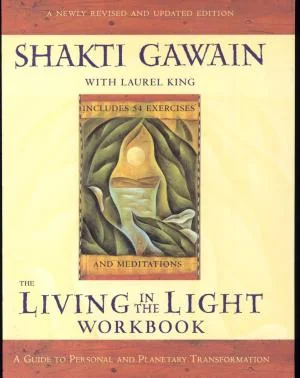
The Living in the Light
 84
84

The Living in the Light
Shakti Gawain's "Living in the Light Workbook" succeeds where many such guides falter: it provides concrete, actionable steps. The revised edition, released long after the initial 1998 publication, retains its direct approach. I found the exercises exploring unconscious beliefs particularly potent, offering a structured way to confront patterns that usually remain hidden. For instance, the guided meditation for identifying "limiting beliefs" (a concept Gawain frequently explores) is remarkably precise. However, the workbook's strength is also its limitation; it demands consistent engagement. Some readers might find the exercises repetitive if they expect rapid, dramatic shifts. The language, while clear, occasionally verges on the overly earnest, a common trait in this genre. Nevertheless, for those committed to internal work, this workbook is a dependable tool for self-exploration.
📝 Description
84
Shakti Gawain's 1998 workbook guides users to develop intuition through practical exercises.
Originally published in 1998, Shakti Gawain's "Living in the Light Workbook" is a practical manual for personal development. It is structured not as a narrative but as a collection of exercises and guided meditations. These activities aim to cultivate intuition and self-awareness. The workbook helps individuals apply spiritual concepts to their daily lives, offering methods to examine the subconscious and uncover hidden aspects of the self. Its design supports both single sessions and ongoing practice, serving as a companion to Gawain's other writings on spiritual awakening.
The workbook is suited for those engaged in self-discovery and spiritual growth. It is especially useful for individuals wanting to enhance their intuitive abilities, understand their fundamental beliefs, and connect with their inner selves. Those who prefer a hands-on approach to learning will find its structured activities more beneficial than purely theoretical explanations. Readers familiar with Gawain's previous books, such as "Creative Visualization," will recognize the shared principles and see this workbook as a practical application of those ideas.
Emerging in the late 1990s, this workbook appeared during a time of broad interest in New Age spirituality and accessible self-help. It aligns with a movement that sought to make spiritual practices widely available, moving beyond traditional religious structures. Gawain's work fits within this context by providing tools for internal exploration and consciousness development. The focus on integrating psychological understanding with spiritual growth reflects a wider trend of the era, emphasizing the connection between unconscious beliefs and personal understanding.
💡 Why Read This Book?
• You will learn to actively cultivate your intuition through structured exercises, moving beyond passive understanding to practical application, as demonstrated in the specific "Intuition Development" sections. • You will gain tools to identify and reframe limiting beliefs, a core tenet of Gawain's work since the 1970s, allowing for tangible shifts in your perception of reality. • You will experience guided meditations designed to help you acknowledge and integrate disowned aspects of yourself, fostering a sense of inner wholeness as presented in the workbook's numerous practice sessions.
⭐ Reader Reviews
Honest opinions from readers who have explored this book.
❓ Frequently Asked Questions
When was the original "Living in the Light Workbook" first published?
The original "Living in the Light Workbook" by Shakti Gawain was first published in November 1998, as indicated by its publication history.
What is the primary purpose of this workbook?
Its primary purpose is to help readers develop their intuition, explore unconscious beliefs, and integrate different aspects of themselves through exercises and meditations.
Does this workbook require prior knowledge of Shakti Gawain's work?
While prior knowledge of Gawain's philosophy, especially books like "Creative Visualization," can enhance the experience, the workbook is designed to be accessible to newcomers seeking self-development.
How many new exercises are in the revised edition?
The revised edition of the "Living in the Light Workbook" features 45 new and revised exercises and meditations, updating the original content.
Can this workbook be used as a daily practice?
Yes, the workbook is designed to be used either as a standalone resource or as part of an ongoing, daily practice for continuous self-exploration and growth.
What kind of meditation techniques are used in the workbook?
The workbook employs guided meditations focused on intuition development, exploring the unconscious, and self-acceptance, aligning with Gawain's holistic approach to spiritual practice.
🔮 Key Themes & Symbolism
Intuitive Development
The workbook frames intuition not as an esoteric gift but as an inherent capacity accessible to everyone. Exercises are specifically crafted to hone this inner knowing, encouraging readers to trust their gut feelings and subtle perceptions. This theme posits that by consistently practicing techniques to listen to and interpret these inner signals, individuals can enhance their decision-making and deepen their understanding of themselves and their environment. It’s about cultivating a conscious dialogue with one's own subconscious wisdom.
Unconscious Belief Exploration
A central tenet of Gawain's approach is that deeply ingrained, often unconscious, beliefs significantly shape our reality. This workbook provides structured methods to unearth these foundational ideas, many of which may be limiting or detrimental. Through guided meditations and reflective exercises, readers are prompted to identify these beliefs, examine their origins, and understand their impact on their lives. The goal is to bring these subconscious patterns into conscious awareness for potential transformation.
Self-Integration
This theme addresses the concept of wholeness by encouraging the recognition and acceptance of all parts of the self, including those aspects that have been hidden, denied, or disowned. The workbook guides individuals through processes designed to acknowledge these "shadow" elements and integrate them into a more complete sense of identity. This integration is presented as crucial for genuine spiritual growth and achieving inner harmony and authenticity.
Practical Application
Unlike purely theoretical spiritual texts, "Living in the Light Workbook" strongly emphasizes putting spiritual concepts into practice. Each exercise is designed to bridge the gap between abstract ideas and lived experience. The workbook's structure facilitates the application of principles like intuition and self-awareness directly into daily life, aiming for tangible personal change. It serves as a practical manual for enacting spiritual insights.
💬 Memorable Quotes
Direct passages from the work, attributed to the author.
“The workbook contains 45 new and revised exercises and meditations.”
— This factual statement highlights the practical, hands-on nature of the resource, indicating a significant update and expansion from its initial offering, emphasizing its utility for active engagement.
“Learn about the many aspects of yourself you may have hidden away.”
— This suggests a focus on integrating the shadow self and acknowledging suppressed parts of the personality, a key aspect of psychological and spiritual wholeness.
“Develop your intuition.”
— This points to the workbook's core aim of enhancing inner guidance, presenting intuition as a skill that can be actively cultivated rather than a passive or innate talent.
“Explore your unconscious beliefs.”
— This indicates a deep dive into the subconscious mind, targeting the root causes of behavior and experience that often operate outside conscious awareness.
“Put the new ideas in Living in the Light into their own lives.”
— This emphasizes the workbook's function as a practical tool for translating spiritual or psychological insights into concrete daily actions and lifestyle changes.
🌙 Esoteric Significance
Tradition
Gawain's work draws heavily from the modern esoteric and New Age movements, which synthesize elements from various spiritual traditions, including Eastern mysticism, Western esotericism, and depth psychology. It aligns with the New Thought movement's emphasis on the power of thought and belief in shaping reality and the human potential movement's focus on self-actualization. While not strictly adhering to a single lineage like Hermeticism or Kabbalah, it incorporates principles of inner knowing and spiritual awareness found across many esoteric paths.
Symbolism
The book's symbolism is often conveyed through the exercises themselves rather than explicit symbolic language. The 'light' in "Living in the Light" symbolizes consciousness, awareness, and divine presence, a common motif in many spiritual traditions representing enlightenment and truth. Exploring 'hidden aspects' refers to the integration of the shadow self, a concept influenced by Jungian psychology but widely adopted in esoteric circles to represent the integration of all facets of the psyche for wholeness.
Modern Relevance
Gawain's approach to intuition and self-awareness remains highly relevant in contemporary wellness and personal development spheres. Modern mindfulness practices, coaching methodologies, and therapeutic approaches that emphasize inner guidance and conscious belief systems echo the principles found in her work. Thinkers and practitioners in fields like positive psychology, consciousness studies, and even some branches of secular spirituality continue to explore and adapt these concepts for contemporary audiences seeking practical tools for mental and emotional well-being.
👥 Who Should Read This Book
• Individuals seeking to develop their intuitive faculties and learn to trust their inner guidance will find specific, actionable exercises. • Those interested in exploring the roots of their own behaviors and patterns by identifying and working with unconscious beliefs. • Practitioners of self-development and spiritual growth looking for practical tools to integrate their spiritual insights into daily life.
📜 Historical Context
Shakti Gawain's "Living in the Light Workbook," first published in 1998, emerged during a flourishing period for New Age and self-help literature. This era, particularly the 1990s, saw a widespread interest in personal transformation, consciousness studies, and accessible spirituality. Gawain's work built upon foundations laid by figures like Louise Hay and herself in earlier decades, particularly her seminal "Creative Visualization" (1978). The workbook's emphasis on intuition and unconscious beliefs resonated with a growing audience seeking practical tools for self-discovery outside traditional religious structures. This period also saw the rise of comparative psychology and the integration of spiritual concepts into therapeutic practices. While not facing overt censorship, works like Gawain's often occupied a space distinct from mainstream academic psychology, though they significantly influenced popular understanding of the mind and spirit. The book's reception was generally positive within its target audience, contributing to the ongoing dialogue about holistic well-being and personal empowerment.
📔 Journal Prompts
Inner guidance and the concept of intuition.
Identifying the origins of a core unconscious belief.
Acknowledging a disowned aspect of the self.
Applying intuitive insights to a current life situation.
Integrating the 'light' of awareness into daily routines.
🗂️ Glossary
Intuition
The capacity to understand or know something instinctively, without conscious reasoning. In Gawain's work, it's presented as an inner guidance system that can be cultivated and trusted.
Unconscious Beliefs
Deeply held convictions or assumptions about oneself, others, and the world that operate outside of conscious awareness but significantly influence behavior and perception.
Self-Awareness
Conscious knowledge of one's own character, feelings, motives, and desires. The workbook aims to increase this through guided exploration.
Integration
The process of bringing together different aspects of the self, including those that are hidden or disowned, to achieve a state of wholeness and inner harmony.
Inner Guidance
The internal sense of direction or knowing that comes from one's own inner wisdom or intuition, distinct from external advice or logic.
Limiting Beliefs
Unconscious beliefs that restrict one's potential or prevent personal growth and happiness. Identifying and transforming these is a key goal of the workbook.
Consciousness
The state of being aware of and responsive to one's surroundings. In this context, it also refers to a higher state of spiritual awareness.
This book appears in 2 collections
🔮 Readers Also Liked
Browse all →









From the “Meditation” Collection
View all →



![" A Self Powered Psychotronic Generator"...rch [ Vol. 35, No. 2, March April 1979]](/img/thumb/a-self-powered-psychotronic-generator-rch-vol-35-no-2-march-april-1979.webp)

More Free Occult Philosophy Books
View all →