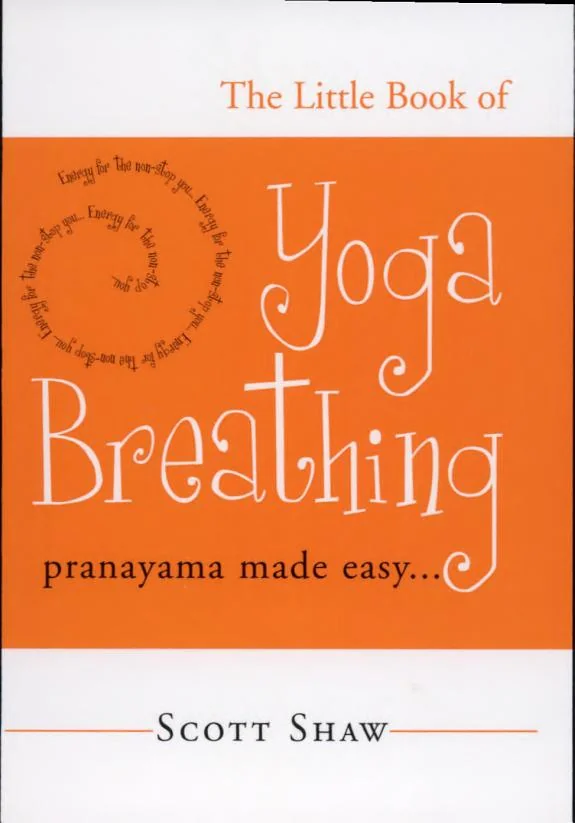
The Little Book of Yoga Breathing
 82
82

The Little Book of Yoga Breathing
Scott Shaw’s *The Little Book of Yoga Breathing* offers a surprisingly robust exploration of pranayama in a compact package. The direct, no-nonsense presentation of 16 distinct exercises is its primary strength. Shaw avoids unnecessary jargon, making techniques like *Nadi Shodhana* (Alternate Nostril Breathing) accessible even to neophytes. However, the brevity that makes it accessible also limits its depth. While the book explains *how* to perform the exercises, it sometimes skims over the deeper 'why'—the subtle energetic shifts or potential contraindications that more advanced texts might explore. For instance, the explanation of *Bhastrika* (Bellows Breath) is clear on mechanics but could benefit from more context on its stimulating effects. The work is a solid introduction, particularly for those new to breathwork, but seasoned practitioners might find it a primer rather than a comprehensive guide. It succeeds admirably in its goal of making yogic breathing practical.
📝 Description
82
Scott Shaw's 2003 book details 16 yogic breathing exercises.
Published in 2003, The Little Book of Yoga Breathing by Scott Shaw focuses on pranayama, the yogic practice of breath control. Shaw lays out 16 distinct breathing exercises designed for practical application. The book aims to be accessible to both experienced yoga students and newcomers to the discipline, simplifying techniques that might otherwise seem complex.
Shaw, a yoga instructor, organizes the material around the process of training, refining, and observing the breath. This structured method helps readers gain the most from each exercise, regardless of their prior experience. The work moves beyond the common focus on physical postures, or asanas, to highlight how breath control is central to developing inner peace and mental clarity. It shows how deliberate breathing can affect one's state of mind and overall physical health.
This book fits within the broader yogic tradition, which views breath (prana) as a fundamental life force. Pranayama, the science of breath control, is considered one of the eight limbs of yoga in classical texts like Patanjali's Yoga Sutras. It is an integral part of yogic philosophy, aiming to purify the body and calm the mind, preparing the practitioner for deeper states of meditation and self-awareness. The techniques described are rooted in ancient Indian practices aimed at influencing physical and mental energies.
💡 Why Read This Book?
• You will learn 16 specific pranayama techniques, including *Nadi Shodhana* and *Bhastrika*, presented with clear instructions for practice, enabling you to integrate them into your daily routine for stress reduction. • You will understand the foundational principle of 'training, refining, and witnessing' your breath, a core concept from Scott Shaw’s instruction, to deepen your mindful connection to your own respiratory system. • You will gain practical methods for utilizing breath control to address common issues such as sleeplessness, a specific benefit highlighted in the book’s original description, offering immediate applications for improved well-being.
⭐ Reader Reviews
Honest opinions from readers who have explored this book.
❓ Frequently Asked Questions
What is pranayama as explained in 'The Little Book of Yoga Breathing'?
Pranayama, as detailed in Scott Shaw's 2003 book, refers to the yogic practice of breath control. It involves specific exercises designed to train, refine, and witness the breath, aiming to enhance physical and mental well-being.
How many breathing exercises are included in the book?
The book presents a total of 16 distinct breathing exercises. Each is explained in an easy-to-understand and practice format to help readers gain the maximum benefit from their training.
Who is the intended audience for this book?
Scott Shaw's work is designed for a wide range of individuals, including dedicated yoga practitioners and those who are interested in yoga but may not practice regularly. Its accessible style caters to both groups.
What specific benefit does the book mention for sleep issues?
The book suggests that the practices of pranayama, or yogic breathing, can be beneficial for individuals experiencing difficulty falling asleep. By controlling and focusing on the breath, one can cultivate a calmer state conducive to rest.
What is the core philosophy behind the breathing techniques presented?
The core philosophy emphasizes a three-part process: training the breath to follow specific patterns, refining these patterns for efficiency and control, and witnessing the effects of the breath on the mind and body.
When was 'The Little Book of Yoga Breathing' first published?
Scott Shaw's 'The Little Book of Yoga Breathing' was first published on January 1, 2003, making it a relatively contemporary guide to ancient yogic practices.
🔮 Key Themes & Symbolism
Pranayama as a Tool
This work frames pranayama not merely as a physical exercise but as a potent tool for self-regulation. The 16 exercises presented are practical applications designed to directly influence mental states, alleviate stress, and improve physical vitality. Shaw emphasizes a systematic approach, guiding the reader through training, refining, and witnessing their breath. This methodology underscores the idea that conscious control over respiration is a pathway to deeper self-awareness and energetic balance, moving beyond mere physical postures.
Accessibility and Practicality
A central theme is making the ancient science of yogic breathing accessible to the modern practitioner. Scott Shaw intentionally avoids overly academic or esoteric language, opting for clear, actionable instructions. The book's format, first published in 2003, reflects a desire to bridge the gap between traditional knowledge and contemporary needs. It caters to both novice 'admirers' and experienced yogis, ensuring that the benefits of breath control are within reach for anyone willing to engage with the material.
Mind-Body Connection Through Breath
The book consistently reinforces the intrinsic link between breath and consciousness. By focusing on the 'training, refining, and witnessing' of breath, readers are encouraged to observe how specific breathing patterns affect their thoughts, emotions, and physical sensations. This theme highlights the power of breath as a bridge between the material and subtle bodies, offering a direct means to cultivate inner peace, mental clarity, and even physical ease, such as improving sleep quality.
💬 Memorable Quotes
Direct passages from the work, attributed to the author.
“16 breathing exercises in an easy-to-understand format.”
— This highlights the book's core offering: a structured collection of pranayama techniques presented with clarity. It promises practical, actionable guidance for readers seeking to learn and apply yogic breathing.
“Train, refine, and witness your breath.”
— This phrase captures the book's pedagogical approach. It suggests a progressive method for engaging with breathwork, moving from initial instruction to skilled execution and finally to mindful observation of its effects.
“For yoga practitioners and those who only consider themselves yoga admirers.”
— This statement defines the book's inclusive target audience. It aims to serve both seasoned practitioners and individuals with a casual interest, ensuring the principles of yogic breathing are accessible to all.
“Having trouble falling asleep”
— This points to a specific, common application of the techniques taught. It suggests that the book offers practical solutions for everyday problems through the application of breath control, making it relevant beyond formal yoga practice.
“Pranayama, the practice of breath control.”
— This is a foundational definition provided early in the book. It clearly establishes the subject matter and its primary focus, setting the stage for the detailed exploration of various breathing exercises.
🌙 Esoteric Significance
Tradition
This work aligns with the broader yogic and Tantric traditions of India, which view pranayama as a fundamental pillar of spiritual development alongside asana and meditation. Within these traditions, breath is seen as the vehicle for prana (life force energy), and its control is essential for purifying the subtle body and achieving higher states of consciousness. Shaw's book, while presented accessibly, draws upon this ancient lineage, offering practical techniques derived from practices developed over millennia.
Symbolism
While the book focuses on the practical application of breathing exercises, the underlying symbolism relates to the concept of 'prana' itself—the vital life force that animates all beings. Each breathing technique can be seen as a method to direct, harness, or expand this prana. The act of 'witnessing' the breath symbolizes dawning self-awareness, observing the energetic currents within. Furthermore, the transition from shallow, unobserved breathing to deep, controlled pranayama represents a movement from a state of unconscious reactivity to conscious control and spiritual awareness.
Modern Relevance
In contemporary wellness and mindfulness movements, the principles explored in Shaw's book are highly relevant. Practices like mindful breathing, stress reduction techniques, and biofeedback often draw upon the foundational understanding of breath's impact on the nervous system, a concept central to pranayama. Thinkers and practitioners in fields ranging from clinical psychology (e.g., using breathwork for anxiety) to embodied cognition continue to explore the mind-body connection that yogic breathing techniques so directly address. The book's emphasis on practical application makes its teachings readily adaptable.
👥 Who Should Read This Book
• Beginning yoga students seeking to understand the importance of breath beyond basic posture alignment, gaining practical techniques to enhance their practice. • Individuals experiencing stress or sleep disturbances who are looking for accessible, non-pharmacological methods to cultivate calm and improve rest. • Yoga instructors or aspiring teachers aiming to expand their knowledge of pranayama and acquire a simple yet effective resource for teaching breathwork to their own students.
📜 Historical Context
Published in 2003, *The Little Book of Yoga Breathing* emerged during a period of significant popularization of yoga in the West. While Hatha Yoga, particularly asana-focused practices, had already gained considerable traction, there was a growing interest in the subtler aspects of yogic science, including pranayama. Scott Shaw’s work arrived as many Western practitioners, influenced by figures like B.K.S. Iyengar whose seminal text *Light on Yoga* was first published in 1966, were seeking more direct guidance on breath control beyond what was typically offered in general yoga classes. The book offered a focused, accessible manual on pranayama, differentiating itself from broader yoga compendiums. It contributed to a broader discourse that saw yoga moving beyond mere physical exercise towards a more holistic mind-body discipline, engaging with concepts that had roots in ancient Indian traditions but were being reinterpreted for a modern, global audience.
📔 Journal Prompts
The practice of 'training, refining, and witnessing' your breath.
The specific benefits of pranayama for sleep.
Understanding the 16 distinct breathing exercises.
The role of breath control in a yoga admirer's journey.
The connection between breath and mental states.
🗂️ Glossary
Pranayama
The yogic science and practice of breath control. It involves specific techniques to regulate the inhalation, exhalation, and retention of breath to influence vital energy (prana) and consciousness.
Asana
Physical postures or exercises in yoga, typically practiced to prepare the body for meditation and to improve physical health and flexibility. This book focuses on breathwork rather than asana.
Nadi Shodhana
A common pranayama technique also known as Alternate Nostril Breathing. It involves breathing in through one nostril while the other is closed, then exhaling through the first and inhaling through the second.
Bhastrika
A forceful breathing technique, often translated as Bellows Breath. It involves vigorous inhalations and exhalations, typically performed with the mouth closed, and is known for its energizing effects.
Prana
The vital life force or energy that flows through all living beings, according to yogic philosophy. Pranayama is the practice of controlling and directing this energy.
Yoga Admirer
A term used in the book to describe individuals who appreciate or are interested in yoga but may not actively practice its physical postures (asanas) or other disciplines.
Breath Control
The deliberate regulation of breathing patterns, including rate, depth, and rhythm. In the context of yoga, this is the core of pranayama, aimed at influencing physical and mental states.
This book appears in 1 collection
🔮 Readers Also Liked
Browse all →









From the “Hatha Yoga” Collection
View all →







More Free Occult Philosophy Books
View all →