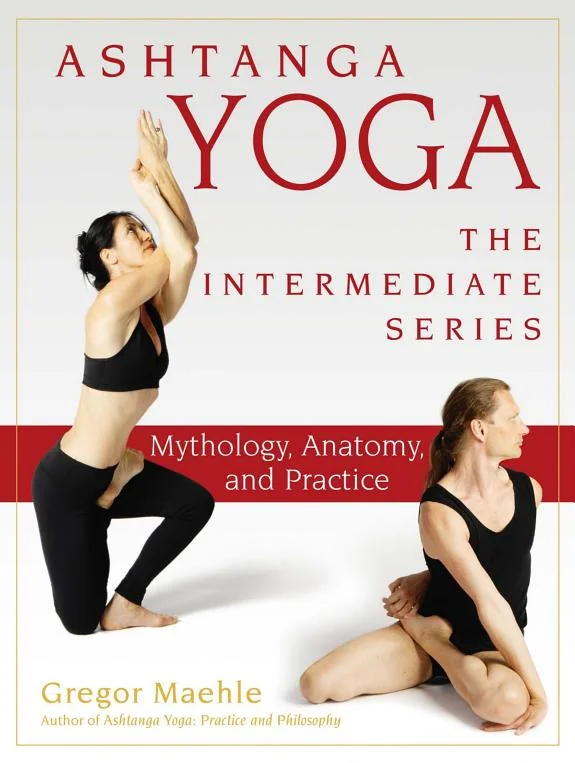
Ashtanga Yoga
 80
80

Ashtanga Yoga
Gregor Maehle's "Ashtanga Yoga" is a significant contribution to the literature on the Intermediate Series, distinguished by its meticulous anatomical explanations. The work excels in dissecting the physical mechanics of postures like Kurmasana with a clarity rarely found. However, while Maehle references Karma, Bhakti, and Jnana Yoga, the integration of these philosophical streams with the specific Intermediate Series sequences feels somewhat compartmentalized rather than organically woven throughout the textual analysis. A passage detailing the energetic alignment of the bandhas during Purvottanasana exemplifies the book's strengths in precise instruction. Ultimately, this volume serves as an indispensable, albeit narrowly focused, technical manual for dedicated Ashtanga practitioners seeking anatomical mastery.
📝 Description
80
Gregor Maehle's 2009 book details the Ashtanga Intermediate Series with anatomical and philosophical depth.
In "Ashtanga Yoga" (2009), Gregor Maehle breaks down the Intermediate Series, following his prior work on "Practice and Philosophy." This volume examines the postures, breath control, and energetic seals central to Ashtanga's second sequence.
Maehle's approach is notable for its precise anatomical explanations. He presents each posture not merely as a physical shape, but as a means to grasp the body's energy channels and their links to yoga's philosophy and stories. The book connects demanding physical practice with yoga's historical and philosophical roots. It discusses the myths and traditions that shape the Intermediate Series, giving practitioners context.
Beyond the physical poses, Maehle discusses Karma Yoga, Bhakti Yoga, and Jnana Yoga, showing their place in the Ashtanga system. He explains how these yogic paths apply to the more advanced sequences.
This book fits within the tantric and Hatha yoga traditions that emphasize the body as a vehicle for spiritual transformation. The focus on precise physical alignment, internal energy manipulation through breath and bandha, and the connection to philosophical narratives aligns with esoteric interpretations of yoga that seek to understand the subtle body and its relationship to consciousness. It moves beyond mere physical exercise to address the deeper energetic and psychological effects of the practice, linking it to ancient yogic lineages.
💡 Why Read This Book?
• Gain an unprecedented understanding of the anatomical intricacies of Ashtanga's Intermediate Series, as detailed in Maehle's specific descriptions of postures like Matsyendrasana. • Explore the mythological heritage of the Intermediate Series, learning how figures like the Nagas are referenced in the context of yogic symbolism and practice. • Grasp the distinct applications of Karma, Bhakti, and Jnana Yoga as presented within the framework of Ashtanga's advanced sequences, as outlined in the book's philosophical sections.
⭐ Reader Reviews
Honest opinions from readers who have explored this book.
❓ Frequently Asked Questions
When was Gregor Maehle's Ashtanga Yoga first published?
Gregor Maehle's "Ashtanga Yoga" focusing on the Intermediate Series was first published in 2009, serving as a follow-up to his initial work.
What distinguishes Maehle's approach to Ashtanga Yoga?
Maehle's approach is distinguished by its deep anatomical explanations and attention to the philosophical and mythological heritage of the practice, particularly for the Intermediate Series.
Does the book cover the philosophical aspects of yoga?
Yes, the book examines the background and applications of Karma Yoga, Bhakti Yoga, and Jnana Yoga within the Ashtanga system.
Is this book suitable for beginners?
This book is primarily aimed at practitioners who have a solid foundation and are ready to engage with the Intermediate Series, due to its detailed anatomical and philosophical depth.
What is the Intermediate Series in Ashtanga Yoga?
The Intermediate Series, also known as Nadi Shodhana, is the second of six sequences in Ashtanga Vinyasa Yoga, focusing on purification of the nervous system (nadis).
What kind of mythological heritage is discussed?
The book explores the mythological heritage connected to the Intermediate Series, potentially referencing deities, ancient texts, and symbolic narratives relevant to yogic traditions.
🔮 Key Themes & Symbolism
Anatomical Depth in Asana
Maehle's "Ashtanga Yoga" offers an exceptionally detailed anatomical breakdown of the Intermediate Series postures. It goes beyond mere physical form, exploring the precise muscular engagement, joint alignment, and energetic pathways within each asana. This rigorous approach provides practitioners with a profound understanding of how the body functions during the practice, fostering greater safety and efficacy. The emphasis on internal anatomy and biomechanics serves as a practical guide for serious students seeking to refine their physical execution of challenging poses.
Philosophical Integration
The work carefully elucidates the philosophical underpinnings of Ashtanga, specifically examining the interwoven principles of Karma Yoga, Bhakti Yoga, and Jnana Yoga. Maehle illustrates how these distinct paths of yogic action, devotion, and knowledge are not separate entities but are integral to the deeper practice of the Intermediate Series. This contextualization helps practitioners understand the 'why' behind the physical discipline, connecting the postures to broader spiritual aims and ancient yogic traditions.
Mythological and Heritage Context
Beyond the physical and philosophical, "Ashtanga Yoga" explores the rich mythological and historical heritage that informs the Intermediate Series. It draws connections to ancient narratives and symbolic representations, providing a cultural and spiritual context for the practice. This exploration enriches the practitioner's engagement with the series, transforming it from a purely physical discipline into a connection with a lineage of wisdom and esoteric understanding.
The Intermediate Series (Nadi Shodhana)
The central focus of this volume is the Intermediate Series, known as Nadi Shodhana or the "Purity of the Channels." Maehle provides a comprehensive guide to its postures, vinyasas, and energetic locks. The book elucidates the purpose of this series in purifying the subtle body's energetic channels, offering a structured approach for those ready to progress beyond the Primary Series and deepen their yogic journey.
💬 Memorable Quotes
Direct passages from the work, attributed to the author.
“The Intermediate Series is designed to purify the nadis.”
— This statement highlights the core purpose of Ashtanga's second sequence, emphasizing its role in clearing and balancing the subtle energetic channels of the body, crucial for advanced yogic development.
“Each posture in the Intermediate Series demands precise anatomical understanding.”
— This emphasizes Maehle's focus on the physical mechanics of the poses, suggesting that mastery of the Intermediate Series requires not just flexibility but a deep knowledge of biomechanics and proper alignment.
“The mythological background enriches the practitioner's experience.”
— This interpretation suggests that understanding the stories and symbols associated with the yogic tradition enhances the depth and meaning of the physical practice, connecting the practitioner to a lineage.
“Attention to the bandhas is critical for the Intermediate Series.”
— This interpretation underscores the importance of energetic locks (bandhas) in stabilizing and channeling energy during the more demanding postures of the Intermediate Series, as detailed in the book.
💡 Key Ideas
Editorial paraphrase of the work's core concepts — not direct quotes.
Karma, Bhakti, and Jnana Yoga are all present in the practice.
This paraphrased concept points to the integration of different yogic paths within Ashtanga, suggesting that the physical practice is a vehicle for action, devotion, and wisdom, not solely a physical exercise.
🌙 Esoteric Significance
Tradition
This work fits within the modern lineage of Hatha Yoga, specifically the Ashtanga Vinyasa system as passed down by K. Pattabhi Jois. While rooted in classical Hatha Yoga, Maehle's approach emphasizes a detailed, almost biomechanical understanding of the practice, which can be seen as a contemporary interpretation of yogic energetics. It aligns with esoteric traditions that view the physical body as a vehicle for spiritual transformation, focusing on the purification of subtle channels (nadis) through precise physical and energetic techniques.
Symbolism
The Intermediate Series itself, Nadi Shodhana, is deeply symbolic, representing the purification of the energetic pathways within the subtle body. Maehle's work likely explores the symbolism of specific asanas within this series, potentially linking them to mythological figures or concepts that represent stages of spiritual development or energetic alignment. The focus on bandhas (energetic locks) also carries symbolic weight, representing the control and channeling of vital energy (prana) towards higher consciousness.
Modern Relevance
Contemporary Ashtanga practitioners and teachers continue to draw on Maehle's detailed anatomical and philosophical explanations to deepen their understanding and practice. His work provides a technical reference point for students working through the challenges of the Intermediate Series. Furthermore, the emphasis on integrating physical discipline with philosophical concepts like Karma, Bhakti, and Jnana Yoga remains relevant for those seeking a holistic approach to spiritual development in the modern era.
👥 Who Should Read This Book
• Dedicated Ashtanga Vinyasa practitioners who have mastered the Primary Series and are preparing to or are currently exploring the Intermediate Series. • Yoga teachers seeking a comprehensive anatomical and philosophical resource to deepen their knowledge and teaching of Ashtanga's advanced sequences. • Students of esoteric traditions interested in the intersection of rigorous physical practice, subtle body energetics, and yogic philosophy as presented in a structured, detailed format.
📜 Historical Context
Gregor Maehle's "Ashtanga Yoga" (2009) emerged during a period of significant global interest in yoga, particularly the Ashtanga Vinyasa system popularized by K. Pattabhi Jois. While Jois himself had published works earlier, Maehle's contribution focused specifically on the Intermediate Series (Nadi Shodhana) with an unprecedented level of anatomical and philosophical detail. This period saw numerous books on yoga, ranging from introductory guides to more specialized texts. Maehle's work distinguished itself by its rigorous, almost scientific, examination of the physical postures, a characteristic that set it apart from more general or purely spiritual interpretations. It arrived in a landscape where practitioners sought deeper, more technical understanding beyond the basic instruction available, and it was favorably received by dedicated Ashtanga practitioners and teachers who appreciated its depth and clarity, contrasting with the more widely disseminated, less technical approaches.
📔 Journal Prompts
The purification of the nadis as a goal of the Intermediate Series.
The specific anatomical demands of postures like Karandavasana.
The integration of Karma, Bhakti, and Jnana Yoga principles.
The symbolic meaning of the bandhas in controlling prana.
The mythological heritage referenced in the Ashtanga system.
🗂️ Glossary
Intermediate Series
The second sequence in Ashtanga Vinyasa Yoga, also known as Nadi Shodhana, focusing on purifying the subtle energetic channels of the body.
Nadi Shodhana
Literally 'channel purification,' this refers to the Intermediate Series of Ashtanga Yoga, aimed at clearing and balancing the body's energetic pathways.
Karma Yoga
The yogic path of selfless action and duty, emphasizing performing actions without attachment to the results.
Bhakti Yoga
The yogic path of devotion and love, often expressed through chanting, prayer, and surrender to a higher power.
Jnana Yoga
The yogic path of knowledge and wisdom, involving study, contemplation, and the discrimination between the real and unreal.
Bandhas
Energetic locks in yoga that involve the contraction of specific muscle groups to control and direct the flow of prana (life force energy).
Asana
A physical posture or pose in yoga, practiced for its physical, mental, and spiritual benefits.
This book appears in 1 collection
🔮 Readers Also Liked
Browse all →









From the “Hatha Yoga” Collection
View all →







More Free Occult Philosophy Books
View all →