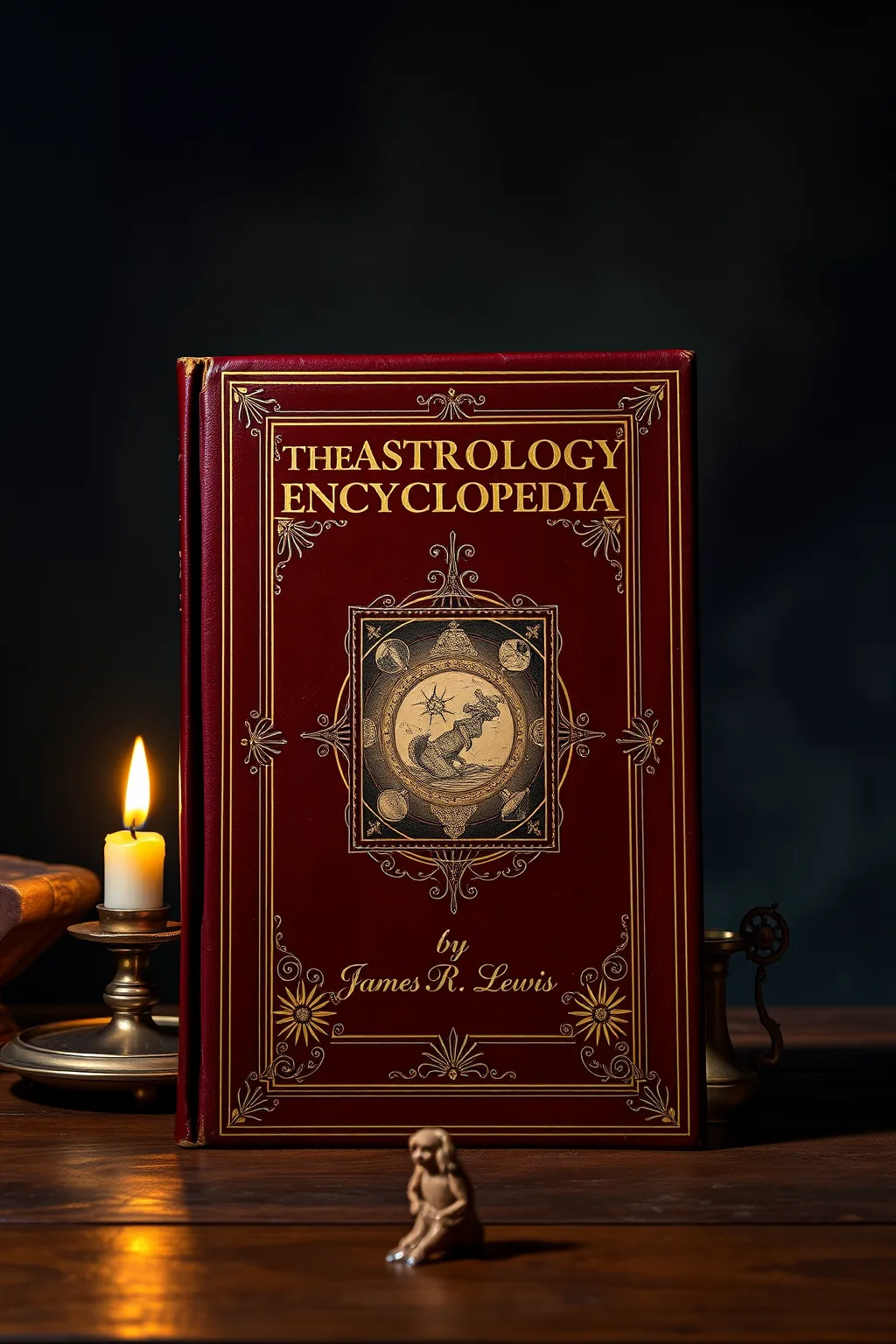
The Light of Egypt

 79
79

The Light of Egypt
Burgoyne's The Light of Egypt offers a remarkably thorough exploration of Hermetic principles, presenting them with a clarity that belies the esoteric nature of the subject. Its strength lies in its systematic approach, moving from foundational concepts like the Seven Planes of Consciousness to more intricate discussions on spiritual alchemy. The chapter on the 'Great Work' is particularly illustrative, reframing ancient alchemical processes as a metaphor for inner transformation. However, the book's prose, while detailed, can occasionally become dense, requiring patient study. Some readers might find the direct invocation of ancient Egyptian cosmology, while fascinating, to be a less accessible entry point compared to purely abstract philosophical treatments. Nevertheless, for those committed to understanding the underpinnings of Western esoteric thought, it remains an indispensable and authoritative text.
📝 Description
79
Thomas H. Burgoyne's The Light of Egypt, first published in 1963, details occult philosophy.
Thomas H. Burgoyne's The Light of Egypt systematically lays out principles of occult philosophy. The book guides readers from basic concepts to more complex ideas about reality, the human soul, and spiritual growth. Burgoyne aims to create a clear system for understanding the hidden forces that shape existence.
This work is for individuals serious about occult studies, metaphysics, and comparative religion. It offers a thorough look at esoteric ideas, moving beyond superficial interpretations. Those interested in the history of occult thought, especially Hermeticism, will find considerable information. It also suits those pursuing personal spiritual development with a text that balances theory and practice.
Published in 1963, The Light of Egypt appeared during a resurgence of interest in occultism. Burgoyne builds upon earlier Hermetic teachings, seeking to organize and clarify them for a contemporary audience. The book emerged in an era where Spiritualism, Theosophy, and Western Esotericism were subjects of active discussion, often alongside established religious and philosophical ideas. Its detailed approach made it a valuable resource for structured learning in occult sciences.
💡 Why Read This Book?
• Gain a structured understanding of the Seven Planes of Consciousness, a core concept in Hermetic philosophy, which provides a map for navigating different states of awareness beyond the physical. • Explore the alchemical 'Great Work' as detailed by Burgoyne, learning how ancient transformative processes are applied to personal spiritual development and soul purification. • Grasp the significance of the astral body and the power of thought, as presented in the book's early sections, offering practical insights into mind-body-spirit interconnectedness.
⭐ Reader Reviews
Honest opinions from readers who have explored this book.
❓ Frequently Asked Questions
What is the primary focus of Thomas H. Burgoyne's 'The Light of Egypt'?
The book's primary focus is on occult philosophy and esoteric principles, drawing heavily from Hermeticism and ancient wisdom traditions to explain the nature of reality, consciousness, and spiritual evolution.
When was 'The Light of Egypt' first published?
Thomas H. Burgoyne's 'The Light of Egypt' was first published in 1963, making it a significant text from the mid-20th century esoteric revival.
Does 'The Light of Egypt' offer practical exercises?
Yes, the work aims to provide both theoretical knowledge and practical guidance for spiritual development, including methods for developing psychic abilities and achieving spiritual mastery.
What esoteric traditions heavily influence 'The Light of Egypt'?
The book is significantly influenced by Hermeticism, ancient Egyptian wisdom, and broader Western Esoteric traditions, synthesizing their teachings on cosmology and spiritual paths.
Is 'The Light of Egypt' suitable for beginners in occult studies?
While comprehensive, the book's depth requires dedicated study. Beginners seeking a systematic introduction to Hermetic principles and esoteric philosophy will find it valuable, though it is not a light read.
What is the 'Great Work' as described in the book?
In 'The Light of Egypt', the 'Great Work' refers to the alchemical process not just chemically, but as a path of profound soul purification, spiritual transformation, and eventual enlightenment.
🔮 Key Themes & Symbolism
The Seven Planes of Consciousness
Burgoyne meticulously details the Seven Planes of Consciousness, presenting them as distinct realms or states of existence that the soul traverses. This concept, central to many esoteric systems, is explained as a hierarchical structure of reality, from the densest physical to the most rarefied spiritual. The book elucidates how awareness operates on each plane and how understanding this cosmology is crucial for spiritual progress and self-mastery. It offers a framework for comprehending phenomena beyond ordinary perception and the subtle interactions between these planes.
Hermetic Alchemy and the Great Work
The Light of Egypt reinterprets Hermetic alchemy, moving beyond its metallurgical associations to define the 'Great Work' as the process of spiritual purification and perfection of the human soul. Burgoyne connects alchemical symbolism to psychological and spiritual transformation, detailing the stages involved in transmuting base desires and limitations into higher spiritual qualities. This involves understanding the interplay of opposing forces and the disciplined cultivation of inner states to achieve true enlightenment and union with the divine.
The Astral Body and Thought Power
A significant focus of the book is the nature and function of the astral body, described as the vehicle of consciousness and emotion. Burgoyne explains how this subtle body influences our experiences and interactions in the physical world and beyond. He emphasizes the potent force of thought, positing that thoughts have tangible energy and creative power, capable of shaping both personal reality and the surrounding environment. Understanding and directing thought is presented as a fundamental skill for anyone seeking to master their inner and outer worlds.
Ancient Egyptian Symbolism as Esoteric Key
Burgoyne extensively employs the symbolism and mythology of ancient Egypt as a primary lens through which to understand esoteric principles. Figures like Osiris, Isis, and Ra, along with hieroglyphic motifs, are not treated as mere historical artifacts but as profound allegories for universal laws and spiritual truths. The book suggests that the ancient Egyptians possessed a deep understanding of occult sciences, and their iconography provides a coded language for initiating students into the mysteries of existence and the path to liberation.
💬 Memorable Quotes
Direct passages from the work, attributed to the author.
“The seven planes of consciousness form a ladder connecting the material universe to the spiritual.”
— This statement captures the book's cosmological framework, presenting consciousness not as a singular state but as a graduated spectrum of awareness that allows for ascent towards higher spiritual realities.
“Alchemy is the science of the soul's purification and perfection.”
— Burgoyne redefines the ancient art of alchemy, shifting its focus from material transformation to the inner work of refining one's character, overcoming limitations, and achieving spiritual wholeness.
“Our thoughts possess a creative energy that shapes our destiny.”
— This highlights the book's emphasis on the power of mind, suggesting that mental discipline and conscious intention are crucial tools for influencing personal experience and the unfolding of one's life path.
“The astral body acts as the medium through which we experience emotions and desires.”
— This interpretation focuses on the subtle anatomy discussed in the book, identifying the astral body as the energetic counterpart to the physical form responsible for our affective and volitional lives.
“Ancient Egyptian symbols are keys to unlocking universal spiritual laws.”
— This points to the book's method of interpreting ancient Egyptian mythology and iconography, viewing them as a sophisticated symbolic language that encodes profound metaphysical truths accessible through esoteric study.
🌙 Esoteric Significance
Tradition
This work firmly belongs to the Western Esoteric tradition, particularly drawing from Hermeticism, with significant influences from Kabbalah and Neoplatonism. It seeks to synthesize and clarify ancient teachings, presenting them in a systematic manner suitable for dedicated students. Burgoyne's approach can be seen as an evolution of earlier Hermetic revival movements, aiming to provide a coherent philosophical and practical system for spiritual development, distinct from but complementary to other esoteric lineages like Rosicrucianism or ceremonial magic.
Symbolism
Central to the book's symbolism is the concept of the Seven Planes, representing a ladder of consciousness. Another key motif is the Egyptian Ankh, often used to symbolize life and immortality, which Burgoyne likely interprets through an esoteric lens related to spiritual vitality and cosmic consciousness. The 'Great Work' itself functions as a potent symbol for inner transformation, representing the alchemical process of refining the soul from its base elements into a state of spiritual perfection and divine union.
Modern Relevance
Contemporary practitioners of Western Esotericism, particularly those focused on Hermeticism, psychology, and consciousness studies, continue to draw upon The Light of Egypt. Its systematic exposition of consciousness, the subtle bodies, and the principles of transformation remains relevant for modern spiritual seekers. Thinkers and groups exploring consciousness expansion, the power of thought, and symbolic interpretation often find Burgoyne's foundational work provides valuable insights and a coherent framework for their investigations.
👥 Who Should Read This Book
• Students of Hermeticism seeking a systematic, text-based introduction to its core doctrines, including cosmology and spiritual alchemy. • Researchers in comparative religion and esoteric history interested in mid-20th-century occult literature and its synthesis of ancient wisdom. • Individuals dedicated to profound self-study and spiritual development who desire a comprehensive guide to understanding consciousness and the path of inner transformation.
📜 Historical Context
The Light of Egypt, first published in 1963, emerged during a significant resurgence of interest in esoteric subjects. Following the foundational work of figures like Helena Blavatsky and the Theosophical Society in the late 19th century, the mid-20th century saw continued exploration of spiritualism, occultism, and Eastern philosophies. Burgoyne's text can be situated within this intellectual milieu, serving as a comprehensive synthesis and exposition of Hermetic principles. It offered a structured alternative to more fragmented or individually focused occult teachings prevalent at the time. Contemporary movements like the emerging New Age spirituality and established occult orders provided a fertile ground for such works. While not subject to widespread censorship, its teachings often ran counter to mainstream scientific and religious paradigms, placing it firmly within the alternative spiritual discourse of its era. Its detailed approach distinguished it from simpler introductions to the occult.
📔 Journal Prompts
The Seven Planes of Consciousness: Describe your understanding of the subtle differences between adjacent planes.
The Great Work as inner alchemy: How does the concept of transmuting base metals apply to your own character development?
Astral Body and Thought Power: Reflect on a recent experience where your thoughts seemed to manifest a tangible outcome.
Egyptian Symbolism: Analyze a common Egyptian symbol (e.g., Eye of Horus) through the lens of its potential esoteric meaning.
Spiritual Evolution: Consider the concept of reincarnation as presented in the book and its implications for personal growth.
🗂️ Glossary
Seven Planes of Consciousness
A hierarchical framework describing different levels or states of awareness, ranging from the physical to the purely spiritual, through which consciousness operates and evolves.
Hermeticism
A philosophical and religious tradition based on writings attributed to Hermes Trismegistus, emphasizing principles like 'As above, so below' and the unity of all things.
The Great Work
In esoteric traditions, particularly alchemy, this refers to the process of spiritual transformation, purification, and perfection of the soul, leading to enlightenment.
Astral Body
A subtle, non-physical body often described as the vehicle of emotions, desires, and consciousness, connecting the physical body to higher spiritual realms.
Thought Power
The concept that thoughts possess a creative energy capable of influencing reality, shaping personal experiences, and affecting the environment.
Esotericism
Teachings or practices concerned with hidden knowledge or understanding, typically accessible only to a select group of initiated individuals.
Alchemy
An ancient tradition focused on the transformation of substances, often interpreted allegorically as a process of spiritual purification and self-realization.
🔮 Readers Also Liked
Browse all →


![[ Stephen Arroyo] Astrology](/img/thumb/stephen-arroyo-astrology.webp)





More by Thomas H. Burgoyne
All books →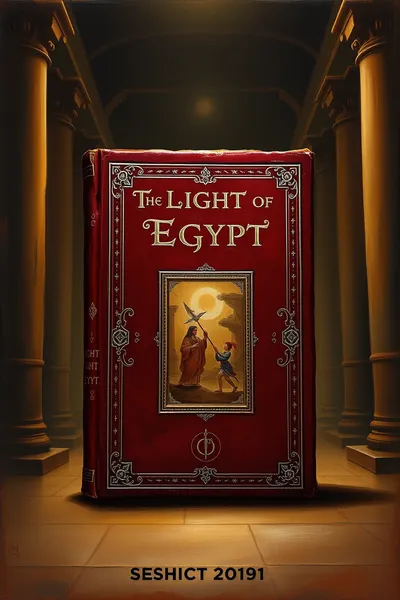


More Free Astrology & Cosmology Books
View all →