Chinese zodiac signs
 73
73

Chinese zodiac signs
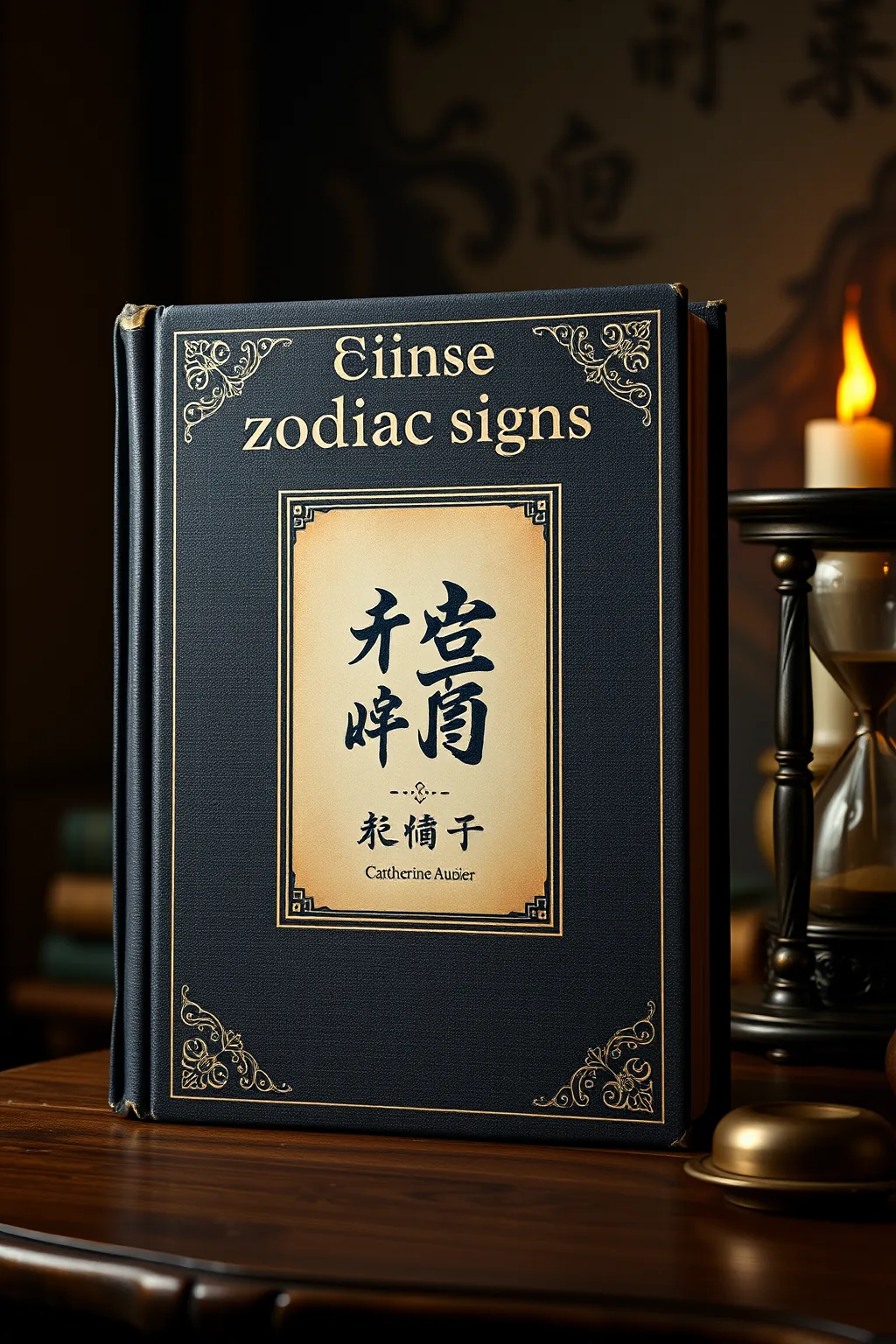
Catherine Aubier’s "Chinese Zodiac Signs" presents the intricate system of the twelve zodiac animals with commendable clarity. Its strength lies in demystifying the core concepts, such as the elemental cycles and their interaction with the animals, which can often seem opaque to newcomers. Aubier avoids overly academic jargon, making the material approachable. However, the book, originating from 1988, occasionally feels dated in its presentation of interpretive frameworks, lacking some of the nuanced psychological or sociological perspectives found in more recent scholarship. A particularly engaging section is the detailed breakdown of animal-to-animal compatibility, offering concrete examples of relationship dynamics. While it doesn't break new ground in esoteric theory, it serves as a solid, foundational primer. It is a dependable introduction to a complex astrological system.
📝 Description
73
Catherine Aubier's 1988 book examines the twelve animals of the Chinese zodiac and their influence.
Published in 1988, Catherine Aubier's work offers a detailed look at the twelve animals of the Chinese zodiac. The book explains how each animal presides over a year in a twelve-year cycle and the ways these animals are thought to shape personality, destiny, and relationships. Aubier covers the cyclical nature of the zodiac and the characteristics associated with each creature.
This book is for anyone interested in Eastern astrology, comparative mythology, or cultural approaches to understanding personality. It breaks down the core ideas of Chinese zodiac lore, useful for personal insight, astrological study, or academic interest. Readers will learn about the symbolic language that has been important in Chinese culture for centuries.
The central focus is on the Rat, Ox, Tiger, Rabbit, Dragon, Snake, Horse, Goat, Monkey, Rooster, Dog, and Pig. Each sign has specific traits, connections to the Five Elements (Wood, Fire, Earth, Metal, Water), and influences modified by yin and yang. The interaction of the Five Elements with the zodiac animals forms a detailed system for character analysis and prediction.
Aubier's book draws from a long tradition of Chinese cosmology. The twelve-animal zodiac system, integral to Chinese culture for millennia, has been used for divination, assessing compatibility, and marking the passage of time. This framework predates many Western astrological systems and developed alongside philosophies like Taoism and Confucianism. It offers a distinct perspective on human nature and the cosmos, situating these historical beliefs for a contemporary audience.
💡 Why Read This Book?
• Gain a foundational understanding of the twelve Chinese zodiac animals, their inherent traits, and elemental associations, moving beyond superficial character descriptions to grasp the underlying principles of the Wood, Fire, Earth, Metal, and Water cycles as presented by Aubier. • Learn about the concept of animal compatibility within the Chinese zodiac, enabling you to analyze potential relationship dynamics based on specific animal pairings discussed in the text. • Appreciate the historical depth of Chinese astrology, understanding its roots and its place within broader Chinese cultural and philosophical traditions, as explored in the book's contextual sections.
⭐ Reader Reviews
Honest opinions from readers who have explored this book.
❓ Frequently Asked Questions
When was Catherine Aubier's 'Chinese Zodiac Signs' first published?
Catherine Aubier's 'Chinese Zodiac Signs' was first published in 1988, offering readers an introduction to the ancient system of Chinese astrology.
What are the twelve animals of the Chinese zodiac as covered in the book?
The book covers the twelve animals: Rat, Ox, Tiger, Rabbit, Dragon, Snake, Horse, Goat, Monkey, Rooster, Dog, and Pig, detailing their individual characteristics and influences.
Does the book explain the Five Elements in relation to the zodiac animals?
Yes, 'Chinese Zodiac Signs' explains how the Five Elements—Wood, Fire, Earth, Metal, and Water—interact with the twelve animal signs to create a more complex astrological system.
Is this book suitable for someone new to Chinese astrology?
Absolutely. The book is designed as an accessible guide for beginners interested in understanding the core principles and symbolism of the Chinese zodiac.
What is the significance of the lunar calendar in Chinese zodiacal assignments?
The lunar calendar is fundamental; the book explains how the zodiacal animal for a given year is determined by this calendar, influencing events and personalities associated with that year.
Can I use this book to understand personal compatibility?
Yes, the book explores the compatibility between different zodiac signs, offering insights into potential strengths and challenges in relationships based on the animal signs involved.
🔮 Key Themes & Symbolism
The Twelve Animal Archetypes
The book meticulously details the unique personality traits, strengths, and potential challenges associated with each of the twelve animals: Rat, Ox, Tiger, Rabbit, Dragon, Snake, Horse, Goat, Monkey, Rooster, Dog, and Pig. These animals are not merely symbols but are presented as archetypal energies that influence individuals born under their year. Aubier explores how each animal's inherent nature, influenced by its associated element and polarity (yin/yang), shapes destiny, character, and interactions with others, providing a framework for self-understanding and recognizing the patterns in human behavior.
Elemental Interactions and Cycles
Central to Aubier's exposition is the dynamic interplay between the twelve zodiac animals and the Five Elements: Wood, Fire, Earth, Metal, and Water. The book elaborates on how the presence or combination of these elements within a person's birth year, or in relation to other signs, modifies the expression of the animal's core characteristics. This creates a sophisticated layer of analysis beyond the simple animal designation, highlighting the cyclical and transformative nature of cosmic influences as understood in traditional Chinese cosmology.
Astrological Compatibility and Relationships
A significant portion of the work is dedicated to the concept of compatibility between the twelve zodiac signs. Aubier explains the traditional Chinese astrological views on which animal signs tend to harmonize well together, which may clash, and which offer lessons for growth. This analysis extends to various types of relationships, including romantic partnerships, friendships, and business collaborations, offering readers practical insights into navigating interpersonal dynamics through the lens of zodiacal affinities.
The Lunar Calendar and Time's Flow
The book emphasizes the crucial role of the lunar calendar in the Chinese zodiac system. Unlike the Gregorian solar calendar, the Chinese calendar is lunisolar, and its cycles dictate the progression of the zodiacal years. Aubier explains how this cyclical passage of time, marked by the succession of the twelve animals, is believed to influence not only individual destinies but also the collective events and energies of a particular year, underscoring a worldview where time itself is imbued with distinct qualities.
💬 Memorable Quotes
Direct passages from the work, attributed to the author.
“Each animal sign is more than a label; it is a complex set of energies influencing personality and destiny.”
— This highlights the book's approach, which moves beyond simple categorization to explore the nuanced energetic influences of each zodiac animal, suggesting a dynamic interplay rather than fixed traits.
“Understanding animal affinities can illuminate the dynamics of human relationships.”
— This reflects the book's practical application of zodiacal knowledge, suggesting that by examining the traditional compatibility between animal signs, readers can gain insights into their interactions with others.
“The cyclical nature of the lunar calendar dictates the procession of the zodiacal years.”
— This emphasizes the temporal framework of Chinese astrology as presented in the book, noting the importance of the lunisolar calendar in determining the sequence and influence of the twelve zodiac animals.
💡 Key Ideas
Editorial paraphrase of the work's core concepts — not direct quotes.
The Five Elements modify the expression of the zodiacal animal, creating unique individual profiles.
This paraphrase points to a core concept in Chinese astrology discussed in the book: the interaction between the elemental forces (Wood, Fire, Earth, Metal, Water) and the animal signs, which results in a more detailed and individualized astrological reading.
The Dragon, for instance, is often associated with power and charisma, but its elemental composition can temper or amplify these traits.
This is an interpretive paraphrase illustrating how the book connects specific animal symbolism (Dragon) with the modifying influence of the Five Elements, providing concrete examples of the astrological system's complexity.
🌙 Esoteric Significance
Tradition
This work is situated within the broad sphere of traditional Chinese cosmology and its application in astrology. While not strictly belonging to Western esoteric lineages like Hermeticism or Kabbalah, it engages with a system that shares common esoteric principles: the belief in celestial influence on terrestrial affairs, the use of symbolic language to interpret cosmic order, and the cyclical nature of time and energy. It represents an indigenous form of esoteric knowledge that has guided Chinese culture for centuries, offering a different symbolic language and conceptual framework for understanding human nature and the universe.
Symbolism
Key symbols include the twelve animals themselves, each representing a specific set of archetypal energies and influences. The Five Elements (Wood, Fire, Earth, Metal, Water) are also central, acting as modifiers that interact with the animal signs, creating a dynamic interplay of energies. The concept of Yin and Yang further refines these interactions, adding a layer of polarity. The cyclical nature of the twelve-year rotation, driven by the lunar calendar, symbolizes the continuous flux and transformation inherent in the cosmos.
Modern Relevance
Contemporary practitioners of astrology, both Eastern and Western, continue to draw upon the foundational principles outlined in works like Aubier's. The renewed interest in mindfulness, self-awareness, and holistic living has led many to explore diverse astrological systems for personal growth. Furthermore, in fields like comparative religion and cultural studies, the Chinese zodiac remains a vital lens through which to understand East Asian cultural identity, philosophy, and historical worldview, demonstrating its enduring significance beyond mere fortune-telling.
👥 Who Should Read This Book
• Beginners interested in comparative astrology who wish to understand a system distinct from Western traditions, offering a unique perspective on personality and destiny. • Individuals seeking to explore their birth year's animal sign and its associated elemental influences, aiming for deeper self-knowledge and personal insight. • Students of cultural history and mythology looking to grasp the symbolic language and cosmological framework that has shaped East Asian societies for centuries.
📜 Historical Context
Catherine Aubier's "Chinese Zodiac Signs," published in 1988, entered a landscape where Western engagement with Eastern philosophies and astrological systems was growing, yet often remained superficial. The book emerged during a period when alternative spiritualities and esoteric studies were gaining traction, fueled by a desire for holistic understanding beyond purely materialistic worldviews. Traditional Chinese astrology, with its roots stretching back over two millennia and deeply intertwined with concepts from Taoism and I Ching, offered a complex cosmological framework. While scholars like Joseph Needham were meticulously documenting Chinese science and technology, popular interest often focused on more accessible practices like astrology and traditional medicine. Aubier's work, by explaining the twelve-animal system, including the crucial Five Elements (Wood, Fire, Earth, Metal, Water), contributed to making these ancient traditions more digestible for a Western audience, positioning it as an introduction amidst a growing wave of interest in non-Western esoteric thought.
📔 Journal Prompts
The characteristics of your birth animal sign, as detailed by Aubier.
The interplay between your birth animal and its associated element.
The compatibility dynamics between your zodiac animal and those of close associates.
The cyclical influence of the lunar calendar on the succession of zodiacal years.
The archetypal energies represented by the Dragon and the Monkey.
🗂️ Glossary
Zodiac Animals
The twelve animals (Rat, Ox, Tiger, Rabbit, Dragon, Snake, Horse, Goat, Monkey, Rooster, Dog, Pig) that form the core of the Chinese astrological system, each representing distinct personality traits and influences.
Five Elements
The fundamental forces in traditional Chinese philosophy: Wood, Fire, Earth, Metal, and Water. In astrology, they interact with the zodiac animals to modify their characteristics and influence events.
Lunar Calendar
The traditional Chinese calendar, based on the cycles of the moon, which dictates the progression of the twelve-year zodiacal cycle and the assignment of animal signs to specific years.
Yin and Yang
The dualistic principle representing complementary, interconnected opposites. In Chinese astrology, these polarities are applied to the zodiac animals and elements to further refine their characteristics.
Compatibility
The traditional astrological assessment of how well different zodiac signs are likely to interact in relationships, based on their inherent characteristics and elemental makeup.
Archetype
A fundamental, universal symbol or motive that recurs in the literature and art of many cultures. In this context, each zodiac animal embodies specific archetypal energies.
Cosmology
A theory or doctrine concerning the order and constitution of the universe. Chinese cosmology views the celestial and terrestrial realms as interconnected and influencing each other.
🔮 Readers Also Liked
Browse all →









More by Catherine Aubier
All books →



More Free Astrology & Cosmology Books
View all →