Western Astrology and Chinese Me

 71
71

Western Astrology and Chinese Me
Jonathan Willmott's 1983 publication, "Western Astrology and Chinese Me," attempts a scholarly comparison of astrological and cosmological frameworks. The strength of the work lies in its detailed exposition of both systems, particularly its examination of the Western zodiac against the Chinese animal signs and the elemental theories. Willmott's methodical approach, while academic, can sometimes feel dry, lacking the vibrant engagement one might expect from comparative esoteric texts. A notable section delves into the Five Elements (Wu Xing) of Chinese philosophy, contrasting them with the classical Western elements, a discussion that highlights significant philosophical differences in how each tradition perceives fundamental forces. However, the book occasionally struggles to bridge the gap between academic dissection and practical application, leaving the reader wishing for more synthesis. Despite this, it remains a valuable resource for those seeking a structured comparison of these ancient systems.
📝 Description
71
Jonathan Willmott's 1983 book compares Western astrology's zodiac with Chinese cosmology's Five Elements.
Published in 1983, "Western Astrology and Chinese Me" by Jonathan Willmott offers a comparative study of two distinct cosmological systems. The book examines the fundamental principles and symbolic languages of Western astrological traditions alongside Chinese cosmology, specifically referencing the Chinese zodiac and the Five Elements. Willmott moves beyond simple comparisons to analyze the underlying philosophies and methodologies that characterize each system, identifying potential areas of intersection and divergence.
This work is for serious students and practitioners of both Western astrology and Eastern philosophies. Readers interested in comparative religion, esoteric studies, and cross-cultural symbolism will find value. It appeals to those who seek to understand how different cultures have mapped the celestial and terrestrial realms, and who desire to explore beyond a single framework for cosmic understanding. A basic grasp of astrological or cosmological concepts is beneficial.
Jonathan Willmott's book emerged in the 1980s, a period of increased Western interest in Eastern philosophies and esoteric traditions, fueled by New Age movements. This era saw broader engagement with non-Western thought, partly influenced by figures like Carl Jung, whose theories on synchronicity and archetypes supported comparative symbolic studies. Willmott's comparative analysis of Western astrology and Chinese cosmology contributes to this intellectual milieu, addressing a growing desire for holistic spirituality and cross-cultural understanding.
💡 Why Read This Book?
• Gain a nuanced understanding of the Chinese Five Elements theory and its contrast with Western elemental systems, offering a unique perspective on cosmological foundations. • Explore the comparative symbolic language of the Western zodiac and the Chinese twelve animal signs, revealing deeper insights into cyclical time and human archetypes. • Appreciate the historical context of esoteric comparative studies in the 1980s, understanding how texts like this contributed to a growing Western interest in Eastern philosophies.
⭐ Reader Reviews
Honest opinions from readers who have explored this book.
❓ Frequently Asked Questions
What is the primary goal of Jonathan Willmott's 'Western Astrology and Chinese Me'?
The book's primary goal is to offer a comparative analysis of Western astrological principles and Chinese cosmological concepts, examining their respective symbolic languages, elemental theories, and approaches to understanding human nature and cosmic order.
When was 'Western Astrology and Chinese Me' first published?
This work was first published in 1983, positioning it within a period of increased Western engagement with Eastern esoteric and philosophical traditions.
Does the book cover the Chinese zodiac?
Yes, a significant portion of the book is dedicated to comparing the Western zodiac with the Chinese twelve-year cycle of animal signs, exploring their unique characteristics and symbolic meanings.
What are the key cosmological systems discussed?
The book primarily discusses Western astrology, focusing on its zodiacal signs and classical elements (Earth, Air, Fire, Water), and Chinese cosmology, particularly its animal zodiac and the Five Elements theory (Wood, Fire, Earth, Metal, Water).
Is this book suitable for beginners in astrology?
While it provides explanations, the book is more suited for readers with some foundational knowledge of either Western astrology or Eastern cosmology, as it aims for comparative depth rather than introductory basics.
What makes this comparison unique compared to other books on the topic?
Willmott's approach in 1983 offered a structured, academic comparison that moved beyond superficial associations, delving into the philosophical underpinnings of each system during a time when such comparisons were gaining academic and popular interest.
🔮 Key Themes & Symbolism
Elemental Systems Contrasted
The work meticulously contrasts the four classical elements of Western tradition (Earth, Air, Fire, Water) with the dynamic Five Elements (Wu Xing) of Chinese philosophy: Wood, Fire, Earth, Metal, and Water. It scrutinizes how each system conceptualizes fundamental forces, their interactions, and their influence on the material world and human character. This comparison highlights differing metaphysical assumptions regarding the nature of reality and its constituent principles, offering a unique lens for understanding diverse cosmological frameworks.
Zodiacal Cycles and Archetypes
A central theme is the comparative analysis of the twelve signs of the Western zodiac with the twelve animal signs of the Chinese zodiac. Willmott explores how each system assigns archetypal qualities, influences, and cyclical patterns to these divisions of time and celestial influence. The book examines the distinct origins and symbolic meanings attached to Aries, Taurus, Gemini, etc., versus the Rat, Ox, Tiger, etc., and how these impact perceptions of personality and destiny.
Comparative Cosmological Frameworks
The book's overarching theme is the exploration of divergent yet parallel methods of mapping the cosmos and human experience. It investigates the philosophical underpinnings that lead to distinct systems of divination, personality assessment, and fate interpretation. By placing Western astrological concepts alongside Chinese cosmology, Willmott illuminates how different cultures have grappled with similar existential questions through unique symbolic languages and conceptual structures.
Symbolic Language and Interpretation
Willmott explores the specific symbolic vocabularies employed by both Western astrology and Chinese cosmology. This includes not only the signs and elements but also the planetary rulers, the I Ching hexagrams, and the broader philosophical concepts like Yin and Yang. The work emphasizes how the interpretation of these symbols shapes understanding of the individual's place within the greater cosmic order.
💬 Memorable Quotes
Direct passages from the work, attributed to the author.
“The Western zodiac traces the sun's path through constellations, while the Chinese cycle follows planetary movements and the Earth's orbit.”
— This highlights a fundamental difference in the astronomical basis of each system, suggesting that their symbolic representations arise from distinct observational and conceptual frameworks of celestial mechanics.
“Elemental interactions in Western thought often focus on balance or conflict between static qualities, whereas Chinese elements are in constant flux and transformation.”
— This interpretation points to a key philosophical divergence: Western elements are seen as foundational states, while Chinese elements are dynamic forces engaged in perpetual cycles of generation and control.
“The attribution of character traits to birth year in China contrasts with Western astrology's focus on birth date.”
— This observation underscores the different temporal divisions used for astrological mapping—yearly cycles versus monthly divisions based on solar progression—leading to distinct methods of personality assessment.
“The concept of 'Wu Xing' involves cyclical relationships of creation and destruction, influencing everything from medicine to governance.”
— This statement captures the pervasive influence of the Five Elements theory in Chinese culture, illustrating its role not just as a cosmological model but as a practical framework for understanding natural processes and societal organization.
💡 Key Ideas
Editorial paraphrase of the work's core concepts — not direct quotes.
Both systems seek to provide order and meaning to human existence through celestial and terrestrial correspondences.
This paraphrased concept emphasizes the shared human impulse behind these complex systems: the desire to find patterns, understand causality, and locate oneself within a larger, meaningful universe.
🌙 Esoteric Significance
Tradition
The work engages with the Hermetic and Neoplatonic underpinnings of Western astrology, examining its correspondence theories and cyclical time concepts. It situates itself within a lineage of comparative esoteric scholarship that seeks universal patterns across diverse traditions. While not strictly adhering to a single esoteric school, it reflects the 20th-century trend of synthesizing Eastern and Western mystical thought, influenced by Theosophical ideas of universal wisdom but grounded in a more systematic, comparative approach.
Symbolism
Key symbols include the twelve signs of the Western zodiac and the twelve animals of the Chinese zodiac, representing cyclical time and archetypal human characteristics. The elemental systems are central: the Western four elements (Earth, Air, Fire, Water) and the Chinese Five Elements (Wood, Fire, Earth, Metal, Water), symbolizing fundamental forces and their interactions. Concepts like Yin and Yang, though not explicitly detailed in every section, provide an underlying framework for understanding the dynamic interplay within the Chinese system.
Modern Relevance
Contemporary practitioners of comparative astrology and cross-cultural psychology can draw on Willmott's foundational analysis. The ongoing interest in holistic systems, mindfulness, and Eastern philosophies means that a structured comparison of cosmological frameworks remains relevant. Modern esotericists exploring syncretism or seeking to understand diverse global perspectives on destiny and human nature find value in this detailed dissection of two major worldviews.
👥 Who Should Read This Book
• Students of comparative cosmology: Individuals interested in how different cultures have conceptualized the universe, time, and human destiny, seeking a structured comparison of two major systems. • Western astrologers and Eastern philosophy enthusiasts: Those with existing knowledge in one field who wish to understand its counterpart, exploring symbolic parallels and philosophical divergences. • Researchers of esoteric traditions: Academics or independent scholars examining the history of ideas, particularly the cross-pollination of Western and Eastern esoteric thought in the late 20th century.
📜 Historical Context
Jonathan Willmott's "Western Astrology and Chinese Me," published in 1983, emerged during a vibrant period of cross-cultural esoteric interest. The late 20th century saw a significant influx of Eastern philosophies and practices into Western discourse, partly fueled by the New Age movement and a broader academic exploration of comparative religion and psychology. Thinkers like Carl Jung, whose work on archetypes and synchronicity provided a theoretical bridge for understanding seemingly disparate symbolic systems, were influential. This era also witnessed a burgeoning academic study of astrology and divination as cultural phenomena, moving beyond simple dismissal. While Willmott's work was not a mainstream bestseller, it contributed to a growing body of literature that sought to synthesize or at least systematically compare Western esoteric traditions with those from the East, offering a counterpoint to purely Western-centric occult studies.
📔 Journal Prompts
The contrasting elemental systems: How do the dynamic relationships of the Five Elements (Wood, Fire, Earth, Metal, Water) differ from the static qualities of the Western elements?
Archetypes of the zodiac: Reflect on the specific animal archetypes in the Chinese zodiac versus the Western signs; where do their core meanings align or diverge?
Cosmic mapping: Consider how the 1983 publication date influences the perspective on comparative cosmology.
Symbolic interpretation: Analyze a personal trait through both a Western zodiac sign and a Chinese animal sign. What new insights emerge?
Personal philosophy: How does the concept of cyclical time in Chinese cosmology challenge or complement a Western understanding of linear progression?
🗂️ Glossary
Western Zodiac
The system of twelve astrological signs (Aries, Taurus, etc.) derived from the twelve constellations through which the Sun appears to pass annually. It is based on the Sun's position at the time of birth.
Chinese Zodiac
A cycle of twelve years, each represented by an animal (Rat, Ox, Tiger, etc.). It is traditionally based on the Chinese lunisolar calendar and is used for determining personality traits and compatibility.
Five Elements (Wu Xing)
The fundamental Chinese cosmological concept comprising Wood, Fire, Earth, Metal, and Water. These elements are believed to be in constant interaction, generating and overcoming each other, influencing all natural phenomena.
Classical Elements
The four fundamental elements (Earth, Air, Fire, Water) central to ancient Greek philosophy and subsequently integrated into Western esoteric traditions and astrology, representing different qualities and states of matter.
Archetype
A universal, inherited pattern of thought or imagery derived from the collective unconscious, as defined by psychologist Carl Jung. In this context, zodiacal signs and animals represent such patterns.
Cosmology
The study of the origin, evolution, and eventual fate of the universe. In esoteric contexts, it often involves understanding the structure of the cosmos and humanity's place within it through symbolic systems.
Correspondence
The Hermetic principle 'As Above, So Below,' suggesting that there are meaningful relationships and parallels between different levels of reality, such as the celestial and terrestrial realms.
🔮 Readers Also Liked
Browse all →







More by Jonathan Willmott
All books →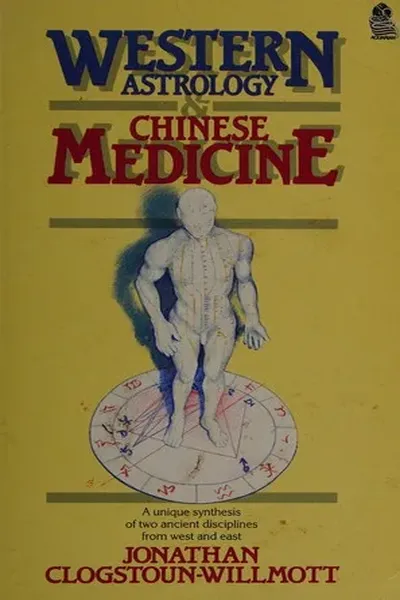
More Free Astrology & Cosmology Books
View all →