The Facts on Astrology
 72
72

The Facts on Astrology
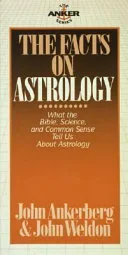
Ankerberg and Weldon's 1988 booklet, *The Facts on Astrology*, presents a direct, albeit brief, challenge to astrological claims. Its strength lies in its directness; it doesn't shy away from labeling astrology as an occult practice with significant personal consequences. The authors clearly articulate their position, focusing on a critical assessment of astrological tenets. However, its primary limitation is its brevity. The 48-page format necessitates a broad overview rather than a deep, nuanced exploration of the historical, philosophical, or psychological arguments surrounding astrology. A passage discussing the occult associations, while pointed, could have benefited from more detailed examples or counter-arguments to demonstrate the basis for their classification. Ultimately, *The Facts on Astrology* serves as a concise, critical primer for a specific viewpoint, but lacks the depth for comprehensive engagement with the subject.
📝 Description
72
Published in 1988, The Facts on Astrology scrutinizes astrological practice.
John Ankerberg and John Weldon published The Facts on Astrology in 1988. This 48-page booklet offers a critical look at astrology's basic assertions. It moves past common ideas to examine the principles behind astrological claims and their possible effects.
The book targets individuals looking for a logical, evidence-based view of astrology. It is useful for people who have seen astrological ideas in horoscopes or media and want to understand arguments questioning its effectiveness and its connections to the occult. It speaks to those who are skeptical or curious about astrology's deeper meanings and how it might affect individuals.
Ankerberg and Weldon dissect core astrological ideas, including how celestial bodies supposedly affect human personality and events. They also address the predictive power assigned to planetary positions at birth. The booklet discusses the occult aspects of astrology, relating it to divination and belief systems that some argue conflict with certain theological or rationalist perspectives. It also touches on potential psychological or spiritual outcomes for those who engage with astrology.
The Facts on Astrology was released in 1988, a time when astrology saw renewed interest within New Age spiritual movements. This period also coincided with a growing evangelical Christian movement that often examined such practices critically. The booklet positions itself against the popular acceptance of astrology, questioning its claims from a specific analytical standpoint. It engages with the broader discourse surrounding alternative belief systems and their perceived compatibility with traditional religious or secular viewpoints.
💡 Why Read This Book?
• Understand the specific arguments against astrological prediction, as detailed in the booklet's examination of celestial body influence on human affairs. • Grasp the authors' classification of astrology as an occult practice, a key point made when assessing its esoteric aspects. • Evaluate the personal consequences of astrological reliance, a central concern highlighted by Ankerberg and Weldon in their analysis.
⭐ Reader Reviews
Honest opinions from readers who have explored this book.
❓ Frequently Asked Questions
What specific astrological claims does the booklet examine?
The Facts on Astrology scrutinizes claims regarding the influence of celestial bodies on personality, life events, and the predictive power derived from planetary positions at birth.
When was 'The Facts on Astrology' first published?
The booklet 'The Facts on Astrology' was first published in 1988 by John Ankerberg and John Weldon.
What is the primary perspective of 'The Facts on Astrology' on astrology?
The booklet presents a critical perspective, assessing astrology's occult aspects and emphasizing the potential personal consequences of its use.
Is this booklet a comprehensive study of astrology?
No, it is a concise 48-page booklet designed to critically examine specific claims and occult associations rather than provide an exhaustive study.
Who are the authors of 'The Facts on Astrology'?
The authors are John Ankerberg and John Weldon, who published the booklet in 1988.
What does the booklet say about the 'occult aspects' of astrology?
It assesses these aspects, suggesting that astrology is tied to occult systems and practices, a central theme of its critical examination.
🔮 Key Themes & Symbolism
Critique of Astrological Claims
This booklet systematically interrogates the fundamental assertions made by astrology. It moves beyond surface-level interpretations to question the basis for believing that celestial bodies exert a direct influence on human personality, destiny, and daily occurrences. The work scrutinizes the predictive capabilities often attributed to horoscopes and planetary charts, seeking to evaluate their validity through a critical lens. This theme focuses on deconstructing the logic and evidence, or lack thereof, supporting astrological pronouncements.
Occult Associations
A central argument presented is the classification of astrology as an occult practice. The authors look at the nature of occultism and seek to establish connections between astrological systems and broader occult traditions. This examination is not merely descriptive but evaluative, positioning astrology within a framework that raises questions about its origins, methods, and alignment with certain belief systems. The booklet aims to highlight these occult dimensions for readers to consider.
Personal Consequences
Beyond theoretical critiques, The Facts on Astrology emphasizes the tangible, personal repercussions for individuals who engage with astrological practices. This theme explores the potential psychological, spiritual, or practical impacts of relying on astrological guidance for decision-making or self-understanding. The booklet suggests that such reliance may lead to unintended negative outcomes, prompting readers to consider the broader implications for their lives and choices.
Rational Assessment
Underpinning the entire work is an appeal for a rational and critical assessment of astrology. The authors encourage readers to move past popular acceptance or anecdotal evidence and to apply logical scrutiny to astrological claims. This theme underscores the booklet's objective: to provide a framework for thoughtful consideration and to equip readers with arguments for evaluating astrology's place in their lives and in society.
💬 Memorable Quotes
Direct passages from the work, attributed to the author.
“The booklet thoroughly examines the claims of astrology.”
— This statement highlights the core intent of the work: a deep investigation into the foundational principles and promises made by astrological systems, aiming for a comprehensive critique.
“It assesses its occult aspects.”
— This points to the booklet's critical evaluation of astrology's connection to occult traditions and practices, framing it as a key area of concern for analysis.
“The work emphasizes the personal consequences of its use.”
— This signifies the booklet's focus on the real-world impact and potential negative effects on individuals who adhere to or rely upon astrological guidance for their decisions and beliefs.
“A 48-page booklet.”
— This factual descriptor indicates the concise nature of the publication, suggesting a focused and direct approach to its subject matter rather than an exhaustive treatise.
“Published in 1988.”
— This date anchors the work within a specific historical period, allowing for context regarding the intellectual and cultural currents influencing its creation and reception.
🌙 Esoteric Significance
Tradition
While not explicitly aligning with a single esoteric lineage like Hermeticism or Kabbalah, *The Facts on Astrology* engages with themes pertinent to esoteric studies by critically examining a practice often considered within the broader umbrella of Western esotericism. Its approach is primarily analytical and critical, positioning itself as an external evaluator rather than an inheritor of esoteric traditions. The work’s significance lies in its challenge to practices that have historically been integrated into or adjacent to esoteric thought, prompting a re-evaluation of their underpinnings.
Symbolism
The booklet primarily focuses on the conceptual framework of astrology rather than its specific symbolic language. However, it implicitly addresses symbols like zodiac signs and planetary glyphs by questioning the efficacy and meaning attributed to them. The core 'symbol' it deconstructs is the very idea of celestial influence on terrestrial human lives, arguing against the validity of the cosmic-human correspondence that astrology posits.
Modern Relevance
In contemporary discourse, *The Facts on Astrology* remains relevant for its role in the ongoing dialogue between skeptical inquiry and alternative belief systems. While the New Age movement has evolved, astrological practices continue to be popular. Thinkers and writers who advocate for scientific literacy and critical thinking often echo the sentiments expressed in this booklet, using similar arguments to question the empirical basis of astrology and its potential psychological effects.
👥 Who Should Read This Book
['• Individuals skeptical of astrological claims: Those seeking a concise, critical overview that questions the validity and occult nature of astrology, as presented by Ankerberg and Weldon.', '• Students of comparative religion and belief systems: Researchers interested in the historical and theological critiques of popular spiritual practices, particularly those originating in the late 20th century.', '• Those questioning personal reliance on astrology: Readers who currently use or are considering using astrological guidance and wish to understand potential criticisms and consequences.']
📜 Historical Context
Published in 1988, *The Facts on Astrology* emerged during a period of significant interest in New Age spirituality and alternative belief systems. This era saw a burgeoning popular engagement with practices like astrology, often fueled by self-help movements and a desire for personalized spiritual guidance. Simultaneously, the late 20th century witnessed a resurgence of conservative religious movements, many of which offered critical theological and philosophical counterpoints to these burgeoning spiritual trends. Ankerberg and Weldon’s booklet fits squarely within this latter camp, providing a specific, critical perspective that challenged the widespread acceptance of astrology. Contemporary authors like Carl Sagan, in works such as *The Demon-Haunted World* (published later, 1995, but reflecting similar intellectual currents), also engaged in skeptical analyses of pseudoscientific claims, including astrology, highlighting a broader cultural debate about evidence and belief.
📔 Journal Prompts
The occult associations of astrology: What connections does the booklet suggest?
Personal consequences of astrological reliance: What specific impacts are mentioned?
Assessment of astrological claims: How do Ankerberg and Weldon propose readers evaluate them?
The 1988 publication context: How does this date frame the book's arguments?
Critique of celestial influence: What are the booklet's main points against this concept?
🗂️ Glossary
Astrology
A practice that claims to divine information about human affairs and terrestrial events by the positions of celestial objects. It is often based on horoscopes and zodiacal interpretations.
Occult Aspects
Refers to hidden or secret knowledge and practices, often associated with mysticism, magic, or supernatural phenomena, that are not part of mainstream science or religion.
Personal Consequences
The outcomes or effects that result from an individual's actions or beliefs, specifically in this context, the impacts of engaging with and relying on astrological guidance.
Claims of Astrology
The fundamental assertions made by astrological systems regarding the influence of stars and planets on human personality, life events, and future occurrences.
Celestial Bodies
Natural objects in space, such as stars, planets, moons, and comets, which are the subjects of astrological interpretation.
Divination
The practice of seeking knowledge of the future or the unknown by supernatural means, often through rituals or the interpretation of signs and omens.
Rational Assessment
An evaluation or judgment based on logic, reason, and evidence, rather than emotion, tradition, or belief.










![[Medical and astrological texts : in English].](/img/thumb/medical-and-astrological-texts-in-english.webp)