The Light of Egypt
 80
80

The Light of Egypt
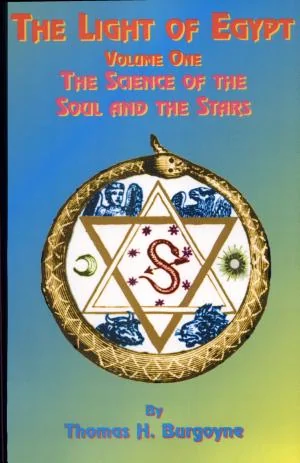
Burgoyne's "The Light of Egypt" is a dense, methodical exploration of spiritual principles, rooted in a fascinating blend of ancient traditions. Its strength lies in the sheer breadth of concepts it attempts to unify, from astrological influences to the soul's journey through reincarnation and karma. The section on "The Science of the Soul," for instance, offers a structured view of inner mechanics that feels almost alchemical. However, the prose can be dry, and the author's absolute certainty in his pronouncements sometimes borders on didacticism. A particular point of interest is the detailed treatment of astrological correspondences, which, while extensive, requires a significant commitment from the reader to fully grasp. For those willing to engage with its rigorous framework, the book provides a detailed, if sometimes austere, map of the spiritual landscape.
Celeste Moreau's Verdict: A foundational text for serious students of Hermeticism, demanding but rewarding.
📝 Description
80
Thomas H. Burgoyne's The Light of Egypt, first published in 1999, offers a detailed system for spiritual understanding.
This work presents itself as a manual for spiritual comprehension, divided into "The Science of the Soul" and "The Science of the Stars." It aims to instruct readers on deeper truths concerning existence, the cosmos, and an individual's place within them. The book is suited for those who seek a systematic, almost scientific, perspective on metaphysical ideas. Readers interested in the mechanics of karma, immortality, reincarnation, and the human soul will find extensive material.
The author draws upon ancient wisdom traditions, synthesizing Hermetic, Kabalistic, Theosophical, and Buddhist principles. This approach aligns with syncretic tendencies found in late 19th and early 20th century occult thought. The book emphasizes ancient Egyptian and Chaldean methods, placing it in dialogue with contemporary interpretations of history and archaeology.
It addresses the connection between human consciousness and celestial bodies, suggesting cosmic laws influence earthly events. The text outlines a path toward self-mastery and the comprehension of universal principles through spiritual evolution. Burgoyne frames these teachings as rediscovered wisdom, applicable throughout history.
Emerging from a renewed interest in occult and spiritualist movements around the turn of the 20th century, The Light of Egypt reflects the era's intellectual atmosphere. Burgoyne combined Hermeticism, Kabbalah, Theosophy, and Buddhist ideas, a syncretic approach common among figures like Helena Blavatsky. Its focus on ancient Egyptian and Chaldean systems engaged with contemporary archaeological findings and esoteric historical interpretations. The book's structured presentation of metaphysical concepts situates it within the development of systematic occult philosophy.
💡 Why Read This Book?
• Gain a structured understanding of the soul's journey through concepts like karma and reincarnation, as detailed in "The Science of the Soul." • Learn about the author's interpretation of ancient Egyptian and Chaldean methods for spiritual instruction, offering a historical perspective on esoteric practices. • Explore the intricate relationship between celestial movements and human destiny as presented in "The Science of the Stars," providing a framework for astrological study.
⭐ Reader Reviews
Honest opinions from readers who have explored this book.
❓ Frequently Asked Questions
When was Thomas H. Burgoyne's "The Light of Egypt" first published?
Thomas H. Burgoyne's "The Light of Egypt" was first published in October 1999, though the author's works often draw upon much older traditions.
What are the two main parts of "The Light of Egypt"?
The book is divided into two principal sections: "The Science of the Soul," which examines the human spirit and its processes, and "The Science of the Stars," focusing on astrological and cosmic influences.
What ancient traditions influence Burgoyne's teachings?
Burgoyne's teachings are heavily influenced by Hermeticism, Kabbalah, Theosophy, and Buddhist principles, alongside methods he attributes to ancient Egypt and Chaldea.
Does the book discuss reincarnation?
Yes, "The Light of Egypt" explores concepts such as karma, immortality, and reincarnation, viewing them as integral aspects of the human soul's existence and evolution.
Is "The Light of Egypt" suitable for beginners in esoteric studies?
While it covers fundamental esoteric topics, the book's systematic and detailed approach, particularly in "The Science of the Stars," may be more suited for dedicated students rather than absolute beginners.
What is the author's background?
Thomas H. Burgoyne was known for his extensive knowledge of world wisdom traditions, synthesizing Hermetic, Kabbalistic, Theosophical, and Buddhist philosophies in his writings.
🔮 Key Themes & Symbolism
The Science of the Soul
This section systematically breaks down the author's understanding of the human soul, exploring its nature, its journey through cycles of existence, and its relationship with karma. Burgoyne posits that the soul is not merely a passive entity but an active participant in its own evolution, subject to specific cosmic laws. The work details concepts of immortality and reincarnation as fundamental processes guiding this spiritual development, offering a framework for understanding personal destiny and the consequences of actions.
The Science of the Stars
Here, Burgoyne connects the microcosm of the human being to the macrocosm of the universe, focusing on astrological principles derived from Chaldean and Egyptian systems. This part of the book explores how celestial bodies and their movements influence earthly life and individual destinies. It presents astrology not just as a predictive tool but as a science revealing universal laws governing existence, providing instruction on interpreting these cosmic patterns for spiritual growth and self-awareness.
Ancient Wisdom Synthesis
A core theme is Burgoyne's synthesis of diverse ancient traditions, including Hermeticism, Kabbalah, Theosophy, and Buddhism. He presents these not as separate doctrines but as facets of a singular, universal wisdom. The book emphasizes methods and teachings purportedly dating back to ancient Egypt and Chaldea, positioning them as the most effective spiritual instruction available. This approach highlights the interconnectedness of global esoteric thought.
Spiritual Instruction and Truth
At its heart, "The Light of Egypt" is a guidebook for spiritual truth. Burgoyne aims to provide readers with practical methods and conceptual clarity to understand their spiritual path. The book functions as an instruction manual, offering insights into the fundamental principles of the universe and the human condition, encouraging a conscious engagement with spiritual laws for personal transformation and enlightenment.
💬 Memorable Quotes
Direct passages from the work, attributed to the author.
“The methods used date back to ancient Egypt and Chaldea.”
— This statement positions the book's teachings as rooted in very ancient, foundational esoteric traditions, suggesting a lineage of wisdom passed down through millennia.
“Contains some of the most effective spiritual instruction ever used.”
— This claim emphasizes the practical efficacy and power of the methods presented, asserting their superiority and long-standing effectiveness in guiding individuals toward spiritual understanding.
“The author was well-schooled in wisdom from around the world.”
— This highlights Burgoyne's broad learning and his ability to draw from diverse philosophical and religious systems, including Hermetic, Kabbalistic, Theosophical, and Buddhist principles.
“The book is divided into two parts: The Science of the Soul and The Science of the Stars.”
— This structural division indicates the book's scope, addressing both the internal, psychological, and spiritual aspects of existence (the soul) and the external, cosmic influences (the stars).
“Explores karma, immortality, reincarnation and the human soul.”
— These subjects form the core metaphysical content of the book, indicating a focus on fundamental spiritual concepts related to existence, destiny, and the nature of consciousness.
🌙 Esoteric Significance
Tradition
Burgoyne's work is deeply embedded in the Western Esoteric Tradition, specifically drawing from Hermeticism and Kabbalah. It also incorporates Theosophical and Buddhist concepts, reflecting a syncretic approach characteristic of late 19th and early 20th-century occultism. The emphasis on ancient Egyptian and Chaldean origins positions the book as an attempt to uncover and systematize primordial spiritual laws, fitting within the Hermetic ideal of 'As Above, So Below.'
Symbolism
The book likely engages with symbols common in Hermetic and astrological lore. The 'Light' in the title itself is a potent symbol of divine knowledge and spiritual illumination, a recurring motif in mystical traditions. Celestial bodies, discussed in "The Science of the Stars," are potent symbols in Chaldean and Hermetic astrology, representing cosmic forces and influences on human life. The human soul, as explored in the first part, can be seen as a microcosm reflecting these universal patterns.
Modern Relevance
Contemporary practitioners of Hermeticism, astrology, and comparative spirituality may find "The Light of Egypt" a valuable resource. Its structured approach to karma, reincarnation, and celestial influences continues to inform modern esoteric thought. Thinkers and groups focused on synthesizing ancient wisdom with contemporary understanding of consciousness and cosmology often reference foundational texts like Burgoyne's for their systematic presentation of metaphysical principles.
👥 Who Should Read This Book
• Students of Hermeticism and Kabbalah seeking a detailed exploration of cosmic laws and their effect on the soul. • Individuals interested in comparative religion and esoteric philosophy who wish to understand syncretic approaches to spiritual knowledge. • Aspiring astrologers and metaphysical researchers looking for a framework that connects celestial movements to the human experience of karma and reincarnation.
📜 Historical Context
Published in 1999, "The Light of Egypt" emerged during a period of renewed interest in esoteric traditions, building upon the groundwork laid by late 19th and early 20th-century occult revivals. Thomas H. Burgoyne's work synthesizes Hermetic, Kabbalistic, Theosophical, and Buddhist ideas, a common practice among authors of that era seeking a universal spiritual philosophy. His explicit reference to ancient Egyptian and Chaldean methods aligns with a broader trend of seeking primal sources of wisdom, often fueled by archaeological discoveries and interpretations of ancient texts. This approach placed him alongside contemporaries who were exploring similar syncretic paths. For example, the Theosophical Society, founded by Helena Blavatsky in 1875, was instrumental in popularizing such cross-cultural spiritual studies. Burgoyne's work can be seen as contributing to the ongoing discourse within Western esotericism, offering a structured, almost scientific, approach to metaphysical subjects that appealed to those seeking a coherent worldview beyond conventional religion and emerging scientific materialism.
📔 Journal Prompts
The author's division of teachings into "The Science of the Soul" and "The Science of the Stars" prompts reflection on how inner states correspond to outer phenomena.
Consider the concept of karma as presented in "The Light of Egypt"; how might past actions, according to the book's principles, shape present circumstances?
Reflect on the author's claim regarding ancient Egyptian and Chaldean methods; what enduring wisdom might these ancient systems offer today?
Analyze the author's synthesis of Hermetic, Kabbalistic, Theosophical, and Buddhist principles; identify potential points of convergence or divergence in your own understanding.
Ponder the idea of spiritual instruction as presented by Burgoyne; what constitutes 'effective' teaching for the human soul's evolution?
🗂️ Glossary
Karma
In this context, karma refers to the universal law of cause and effect, where actions and intentions have consequences that shape an individual's present and future experiences, influencing their soul's journey.
Immortality
The book explores immortality not necessarily as unending physical existence, but as the enduring nature of the soul and consciousness beyond physical death, often linked to spiritual attainment.
Reincarnation
The cyclical process of the soul being reborn into different physical bodies or lifetimes, driven by karmic accumulation and the soul's evolutionary path toward spiritual perfection.
Hermeticism
A philosophical and religious tradition based on writings attributed to Hermes Trismegistus, emphasizing divine wisdom, the interconnectedness of all things ('As Above, So Below'), and the pursuit of gnosis (knowledge).
Kabbalah
A system of Jewish mysticism that explores the nature of God and the universe through esoteric interpretations of scripture, often involving divine emanations (Sefirot) and symbolic representation.
Theosophy
A spiritual movement founded in the late 19th century, seeking to understand the underlying unity of all religions and philosophies, often incorporating elements of Eastern and Western mysticism.
Chaldea
An ancient civilization in Mesopotamia, historically associated with early developments in astronomy, astrology, and mathematics, which Burgoyne references as a source of spiritual knowledge.
This book appears in 1 collection
🔮 Readers Also Liked
Browse all →









From the “Occultism” Collection
View all →







More Free Occult Philosophy Books
View all →