The Lancashire Witches
 80
80

The Lancashire Witches
Poole's "The Lancashire Witches" is not a narrative account but a scholarly dissection of the 1612 Pendle trials, and in that, it largely succeeds. The strength lies in its multidisciplinary approach, with essays by legal historians, social historians, and folklorists offering varied lenses. One particularly illuminating section discusses the economic pressures on the families involved, suggesting material desperation as a subtle undercurrent to accusations. However, the collection occasionally suffers from an unevenness in accessibility; some essays feel overly dense for the general reader interested in the occult. The focus remains resolutely on historical analysis, which, while academically sound, might leave those seeking direct occult correspondences wanting. Nonetheless, for its rigorous historical scholarship on a pivotal event in English witchcraft history, it is a valuable contribution.
📝 Description
80
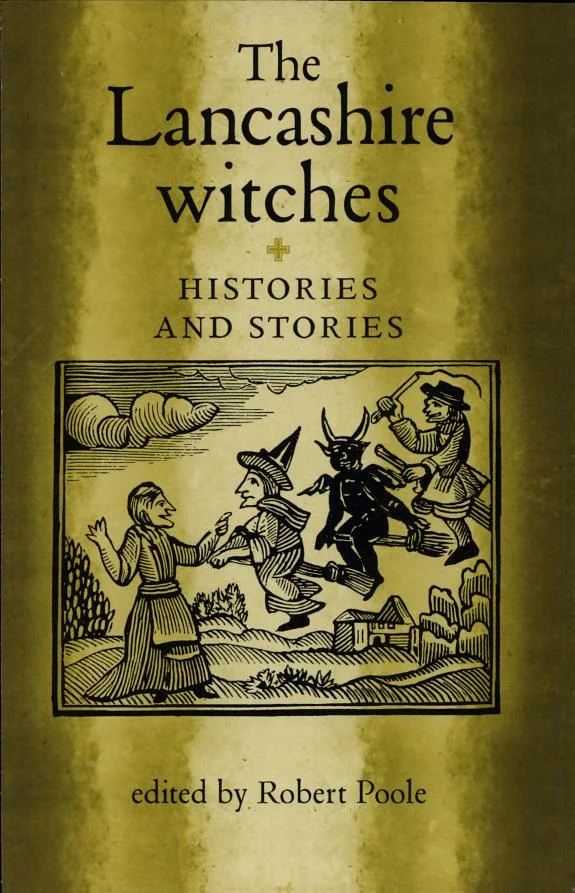
Robert Poole's 2002 collection examines the 1612 Pendle witch trials through eleven scholarly essays.
Published in 2002, Robert Poole's "The Lancashire Witches" scrutinizes the 1612 Pendle witch trials. This volume gathers eleven essays from academics across various disciplines to look closely at the events in Lancashire. The book moves past sensational accounts to study the social, political, and religious forces behind the accusations and the executions of ten people. It aims to provide a deeper understanding for students of history, folklore, and occult studies, going beyond simple stories of witch hunts. The essays cover the ideology of witch hunting, the court proceedings, and the socio-economic environment that fostered fear and suspicion in early modern England. It also addresses how 'witchcraft' became a concept and a crime in history. The collection reconstructs the context of the 1612 trials, noting significant religious change and social unease in Lancashire. It analyzes key figures, the evidence used, and the trials' impact on the local area and broader English legal and social history, highlighting its status as England's largest recorded witch trial.
This book engages with the historical understanding of witchcraft, a topic central to many esoteric traditions. While not a guide to practicing magic, it dissects the societal fears and beliefs that shaped accusations of witchcraft in early modern England. It examines the historical construction of 'witchcraft' as a concept and a crime, which allows readers to understand the cultural and religious frameworks within which such accusations arose. This historical perspective is valuable for those interested in the roots of Western occult beliefs and the persecution of individuals associated with them.
💡 Why Read This Book?
• Understand the socio-political climate that led to the 1612 Pendle witch trials, learning how religious tensions and economic anxieties, as detailed in the book's analysis of early modern England, can fuel mass hysteria. • Analyze the legal and ideological frameworks of witch-hunting through the specific case of the ten accused witches in Lancashire, gaining insight into historical methods of prosecution and belief systems. • Explore the enduring cultural impact and interpretation of the Pendle witch trials, recognizing how events from 1612 continue to inform modern understandings of folklore and historical persecution.
⭐ Reader Reviews
Honest opinions from readers who have explored this book.
❓ Frequently Asked Questions
What were the main accusations against the Lancashire witches in 1612?
The primary accusations in the 1612 Pendle trials centered on malevolent witchcraft, including causing death or illness through supernatural means, making pacts with the Devil, and engaging in ritualistic harm against individuals and livestock.
Who were some of the key figures involved in the 1612 Lancashire witch trial?
Key figures included the ten individuals accused and hanged, such as Old Demdike and Anne Whittle (Chattox), along with the magistrate Roger Nowell, who was instrumental in gathering evidence and prosecuting the case.
What is the historical significance of the Pendle witch trials?
The Pendle witch trials are significant as one of England's largest and most famous witch trials, resulting in the execution of ten people in 1612 and providing a stark example of early modern anxieties about witchcraft and the supernatural.
Does the book discuss the supposed magical practices of the accused?
Yes, the book examines accounts and testimonies related to alleged magical practices, analyzing them within the context of contemporary beliefs, societal fears, and the legal proceedings of the time.
What is the academic consensus on the 2002 publication of 'The Lancashire Witches'?
The 2002 publication was recognized as the first major scholarly study of the Pendle trials, lauded for its multidisciplinary approach and its contribution to understanding the historical context and meaning of witch-hunts.
How does this book differ from sensationalized accounts of witchcraft?
This book offers a rigorous academic analysis based on historical evidence and scholarly interpretation, differentiating it from sensationalized or fictionalized accounts by focusing on the socio-political and religious context of the 1612 trials.
🔮 Key Themes & Symbolism
Ideology of Witch-Hunting
The collection scrutinizes the prevailing ideologies that underpinned the persecution of alleged witches in early modern England. It examines how theological doctrines, folk beliefs, and societal anxieties converged to create a framework where individuals could be accused of malevolent supernatural acts. The essays explore the intellectual currents that defined witchcraft not merely as superstition but as a tangible threat to social and religious order, impacting judicial processes and public perception.
Social and Economic Contexts
This work studies the socio-economic conditions of Lancashire in 1612, revealing how factors such as poverty, land disputes, and community tensions could contribute to accusations of witchcraft. The book highlights how marginalized individuals, particularly women, were often targets, suggesting that accusations could serve as a mechanism for social control or as a response to economic distress. The essays analyze the intricate web of relationships and local power dynamics that played a role in the trials.
The Legal and Judicial Process
A significant focus is placed on the conduct and implications of the 1612 trial itself. The contributors examine the legal procedures, the nature of evidence presented (including spectral evidence and confessions), and the role of key figures within the judicial system. The book critically assesses the reliability of testimonies and the fairness of the proceedings, offering insights into how legal frameworks grappled with accusations of supernatural crimes during this period.
Meaning and Legacy
The essays explore how the events of the Pendle witch trials were understood by contemporaries, how their meaning evolved through subsequent generations, and how they are interpreted today. This theme addresses the enduring fascination with the trials and their representation in folklore, literature, and historical discourse. It considers the lasting impact on the perception of witchcraft and the communities involved.
💬 Memorable Quotes
Direct passages from the work, attributed to the author.
“The 1612 trial saw ten individuals arraigned and hung in Pendle.”
— This factual statement grounds the entire study in the grim reality of the events, emphasizing the scale and outcome of the Pendle witch trials as a key moment in English legal and social history.
“Essays examine the politics and ideology of witch-hunting.”
— This highlights the book's analytical depth, moving beyond mere recounting to dissect the underlying power structures and belief systems that motivated and legitimized the persecution of alleged witches.
“The social and economic contexts are crucial to understanding the accusations.”
— This points to an interpretation that societal pressures, poverty, and interpersonal conflicts were significant factors, suggesting that witchcraft accusations were often rooted in mundane human affairs rather than solely supernatural beliefs.
“The work offers new surveys of these events and their meanings.”
— This emphasizes the book's scholarly contribution, indicating that it presents fresh perspectives and updated research on a historically significant event, challenging previous interpretations and offering deeper insights.
“Eleven experts offer diverse perspectives on the trials.”
— This underscores the comprehensive nature of the study, showcasing how a range of specialized knowledge from different academic fields converges to provide a many-sided and thorough examination of the Lancashire witch trials.
🌙 Esoteric Significance
Tradition
While "The Lancashire Witches" is primarily a historical and sociological study, it intersects with esoteric traditions by examining the historical construction and persecution of practices often labeled as witchcraft. Its significance lies not in advocating for specific magical traditions, but in providing critical historical context for the fears and beliefs that shaped how 'witchcraft' was understood and punished. This scholarly distance allows for a more objective view of historical occult practices and the societal reactions they provoked.
Symbolism
The book implicitly engages with symbols of persecution and societal fear. The figure of the 'witch' itself, as constructed by the trials, becomes a potent symbol of the marginalized, the scapegoated, and the perceived threat to social order. Concepts like the Devil's pact, though viewed historically, carry symbolic weight within many esoteric traditions, representing a transgression or a forbidden alliance, prompting reflection on the nature of power and pacts.
Modern Relevance
Contemporary practitioners and scholars of Western Esotericism draw on works like this to understand the historical roots of modern witchcraft movements and the enduring cultural impact of witch trials. It informs discussions on historical accuracy, the evolution of paganism, and the deconstruction of negative stereotypes associated with occult practices. Thinkers exploring modern animism, folk magic, and historical revisionism within Paganism find value in its detailed contextualization.
👥 Who Should Read This Book
• Historians of early modern England and Europe seeking detailed analysis of witch trials and their societal impact. • Students of folklore and mythology interested in the origins and evolution of beliefs surrounding witchcraft and the supernatural. • Scholars and practitioners of Western Esotericism aiming to understand the historical persecution of witchcraft and its cultural legacy. • Researchers in comparative religion and social history examining the intersection of belief, law, and social control.
📜 Historical Context
The Lancashire Witches was first published in 2002, positioning itself as a significant scholarly intervention into the study of early modern English witchcraft. It emerged during a period of sustained academic interest in the social, cultural, and religious history of the period, building upon foundational works by historians like Keith Thomas and Christina Larner. The book specifically addresses the 1612 Pendle witch trials, England's most infamous case, placing it within the broader context of European witch-hunts. Unlike purely theological or demonological treatises of the era, Poole's collection focuses on the socio-legal and political dimensions. The reception of such works often involves scholarly debate; while this book is a compilation of expert essays, its emergence provided a crucial update and consolidation of research on the Pendle case for a new generation of historians and occult scholars.
📔 Journal Prompts
The ideology of witch-hunting as presented in the text.
The specific socio-economic pressures faced by the accused in 1612.
Roger Nowell's role in the Pendle trials.
The meaning of 'spectral evidence' in historical witchcraft accusations.
How the 2002 publication re-contextualized the 1612 events.
🗂️ Glossary
Spectral Evidence
Testimony about dreams, visions, or supernatural encounters, claiming to witness the accused's spirit or shape tormenting victims. It was a controversial form of evidence used in historical witch trials.
Malevolent Witchcraft
The belief that individuals could intentionally use supernatural powers to cause harm, such as illness, death, or misfortune, often attributed to a pact with the Devil.
Ideology of Witch-Hunting
The set of beliefs, doctrines, and assumptions that justified the persecution of individuals accused of witchcraft, encompassing theological, social, and political rationales.
Pendle Witch Trials
A series of witchcraft trials in Lancashire, England, in 1612 and 1634, most famously involving ten executions in 1612, making it one of England's largest witch trials.
Early Modern England
The historical period roughly from the late 15th century to the late 18th century, characterized by significant religious, social, and political changes, including the Reformation and the rise of state power.
Arraigned
Formally accused or indicted of a crime; brought before a court to answer a charge.
Demdike
Alizon Demdike, one of the primary accused witches in the 1612 Pendle trials, whose family was central to the accusations and testimonies.
This book appears in 1 collection
🔮 Readers Also Liked
Browse all →



From the “Neopaganism” Collection
View all →





More Free Witchcraft & Paganism Books
View all →