The Kurosagi corpse delivery service
 80
80

The Kurosagi corpse delivery service
The Kurosagi Corpse Delivery Service operates on a grimly practical premise: a company that handles the inconvenient business of disposing of dead bodies. Yet, this mundane setup is merely a gateway to the supernatural machinations that drive Eiji Ōtsuka's narratives. Housui Yamazaki's stark, effective artwork complements the unsettling atmosphere, presenting grotesque imagery with matter-of-fact precision. The series excels when it intertwines the procedural aspect of corpse disposal with the spiritual fallout, particularly in early arcs like the one involving a cursed videotape that echoes contemporary anxieties surrounding media and death. However, the episodic nature can sometimes lead to a sense of narrative diffusion, where individual stories, while impactful, don't always coalesce into a larger thematic arc. The strength lies in its unique, dark humor and its unflinching gaze at the consequences of unresolved lives. It’s a singular take on the ghost story, rooted in the tangible and the spectral.
📝 Description
80
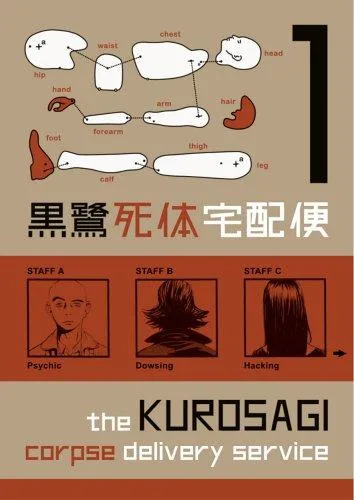
Eiji Ōtsuka and Housui Yamazaki's manga The Kurosagi Corpse Delivery Service began serialization in 2000, following a company that handles bodies with supernatural complications.
The Kurosagi Corpse Delivery Service, created by Eiji Ōtsuka and illustrated by Housui Yamazaki, chronicles the activities of a peculiar business tasked with disposing of corpses. This company, known for its morbid name, frequently finds its mundane work entangled with the supernatural. Clients hire them not just for disposal, but often because the deceased are involved with ghosts or lingering karmic issues.
The series weaves together dark humor with elements of the occult. It examines the space between life and death, where unresolved earthly matters and spiritual unrest manifest. The narrative grounds these phenomena in the practical, if grim, business of managing the dead, creating a unique juxtaposition of the everyday and the otherworldly. Readers encounter tales that blend ghost stories with the ethical quandaries surrounding death and the afterlife.
Emerging in the early 2000s, this manga series taps into a tradition of Japanese horror that gained international attention. It engages with concepts like *reikan*, or spiritual senses, and the persistence of *yūrei*, or ghosts, often tied to unresolved earthly matters. The work also explores karmic consequences, suggesting that the dead can influence the living and that improper handling of remains can lead to further spiritual unrest. The Kurosagi service itself acts as a conduit for confronting these lingering ties.
💡 Why Read This Book?
• Understand the mechanics of *reikan* and how spiritual senses are depicted as crucial for the Kurosagi team's work, offering a unique perspective on paranormal investigation beyond typical ghost-hunting tropes. • Explore the series' unique approach to karma and the afterlife, as illustrated by the consequences of improper corpse disposal and the lingering attachments of the deceased, as seen in various client cases. • Engage with Housui Yamazaki's distinctive art style, which renders disturbing supernatural phenomena and the grim reality of death with a stark, unsettling clarity not found in more conventional horror manga.
⭐ Reader Reviews
Honest opinions from readers who have explored this book.
❓ Frequently Asked Questions
What is the original publication year of The Kurosagi Corpse Delivery Service manga?
The Kurosagi Corpse Delivery Service manga by Eiji Ōtsuka and Housui Yamazaki was first published in 2000, marking its entry into the early landscape of mature-themed Japanese comics.
What does 'Kurosagi' mean in the context of the series?
'Kurosagi' translates to 'black sagi' or 'black heron.' In the context of the series, it's the name of the company specializing in corpse disposal, lending a dark, symbolic avian motif to their morbid profession.
Are there supernatural elements in The Kurosagi Corpse Delivery Service?
Yes, supernatural elements are central to the series. The company frequently encounters ghosts, curses, and other spiritual phenomena tied to the deceased they are tasked with handling.
Who are the main characters in The Kurosagi Corpse Delivery Service?
The core team consists of Taro Karasuma, the owner and undertaker; Yoshiko Karasuma, his niece and assistant; and Keiji Okegawa, a former Shinto priest who acts as their exorcist and spiritual consultant.
What kind of themes does the manga explore?
The manga explores themes of death, the afterlife, karma, unresolved attachments, the persistence of spirits, and the ethical considerations surrounding the disposal of the dead.
Is the manga suitable for all ages?
No, the manga deals with mature themes, graphic imagery, and violence, making it unsuitable for younger readers. It is intended for an adult audience.
🔮 Key Themes & Symbolism
The Liminality of Death
The series constantly explores the threshold between life and death, not just as a biological transition but as a spiritual and karmic one. The Kurosagi team operates in this liminal space, facilitating the final passage of the deceased. Their work highlights how unresolved issues, emotional attachments, and unfinished business can tether spirits to the earthly realm, creating disturbances that require their unique, often supernatural, intervention. This focus on the 'in-between' state is central to the series' exploration of mortality.
Karmic Repercussions
A core tenet of the narrative is the concept of karma, particularly as it relates to the dead and their impact on the living. The Kurosagi service often finds itself dealing with the karmic fallout of murder, suicide, or even simple negligence in handling remains. The presence of restless spirits or vengeful entities is frequently explained as a direct consequence of past actions, emphasizing a cosmic balance that the team must navigate or rectify. This theme grounds the supernatural in a philosophical framework of cause and effect.
Spiritual Senses and Communication
The ability to perceive or interact with the spiritual world, often referred to as *reikan*, is a recurring motif. Characters like Keiji Okegawa possess heightened spiritual senses that allow them to detect the presence of ghosts and understand their plight. This theme underscores the idea that the deceased are not entirely gone but can communicate or manifest through various means, often seeking resolution or justice. The series uses these abilities to drive the plot and explore the complex relationships between the living and the dead.
The Mundane and the Macabre
The Kurosagi Corpse Delivery Service masterfully juxtaposes the utterly mundane act of corpse disposal with the profoundly macabre and supernatural. The characters approach their grim work with a professional detachment, treating the disposal of bodies and the appeasement of spirits as just another job. This contrast creates a darkly comedic effect and highlights how extraordinary phenomena can become normalized within a specific context, making the horror feel both immediate and strangely routine.
💬 Memorable Quotes
Direct passages from the work, attributed to the author.
“A properly disposed corpse ensures a peaceful transition.”
— This reflects the company's motto and core philosophy. It suggests that the physical and spiritual care taken during the disposal of remains is crucial for the soul's journey, implying that neglect can lead to restless spirits.
“Karma doesn't forget, even if the living do.”
— This highlights the series' recurring theme that past actions have enduring consequences, particularly concerning death. The actions of the deceased and those who wronged them continue to influence the present, manifesting as supernatural disturbances.
“Some jobs require more than just a shovel and a hearse.”
— This statement emphasizes the unique challenges faced by the Kurosagi team, who must often employ spiritual, occult, or even violent methods beyond standard funeral practices to resolve supernatural entanglements.
“The darkness isn't always outside; sometimes it's what remains.”
— This interpretation suggests that the 'darkness' the Kurosagi team confronts is not merely external supernatural forces but the lingering negative energies, regrets, or sins associated with the deceased or their final moments.
💡 Key Ideas
Editorial paraphrase of the work's core concepts — not direct quotes.
The dead are not silent; they are merely unheard.
This paraphrase captures the essence of the series' premise: that spirits continue to exist and attempt communication, but their voices are often imperceptible to the living, necessitating mediums or spiritualists to interpret their needs or grievances.
🌙 Esoteric Significance
Tradition
While not strictly adhering to a single lineage, The Kurosagi Corpse Delivery Service draws heavily from Japanese Shinto and Buddhist beliefs regarding spirits, karma, and the afterlife. Its exploration of restless spirits (*yūrei*) and the importance of proper funerary rites aligns with traditional animistic beliefs where the spiritual world is an active participant in the material realm. The series also touches upon concepts akin to Gnostic ideas of lingering material attachments hindering spiritual progression, though framed within a distinctly East Asian cosmological context.
Symbolism
The 'black heron' (Kurosagi) itself symbolizes death, transformation, and a messenger between worlds, fitting for a company that handles the deceased. The recurring motif of unresolved emotional attachments, like grudges or unfulfilled desires, acts as a potent symbol of spiritual stagnation, trapping spirits in a perpetual state of unrest. Furthermore, the physical act of corpse disposal symbolizes the necessary, albeit often unpleasant, process of confronting and laying to rest the remnants of earthly existence.
Modern Relevance
In contemporary occult and esoteric circles, The Kurosagi Corpse Delivery Service remains relevant for its nuanced portrayal of death and the afterlife, offering alternative perspectives to Western-centric spiritual models. Its exploration of karma and spiritual persistence appeals to modern interests in reincarnation, ancestral veneration, and the energetic impact of unresolved trauma. Thinkers and practitioners interested in comparative religion, funerary rites across cultures, and the psychology of death find its combination of folklore and practical application a compelling subject for study and discussion.
👥 Who Should Read This Book
• Readers interested in Japanese folklore and *yūrei* traditions, seeking to understand how traditional beliefs about ghosts and the afterlife are adapted into modern narratives. • Fans of dark fantasy and supernatural horror who appreciate stories that blend the macabre with philosophical inquiry into mortality and karma. • Students of comparative religion and funerary practices, looking for fictional explorations of death rituals and the spiritual consequences of improper handling of the deceased.
📜 Historical Context
When The Kurosagi Corpse Delivery Service began publication in 2000, the manga landscape was increasingly embracing darker, more complex narratives. This era saw the rise of psychological thrillers and supernatural horror that moved beyond simple jump scares to explore deeper societal anxieties. The influence of films like Hideo Nakata's Ringu (1998) had already established a global appetite for Japanese horror, characterized by its atmospheric dread and focus on curses and vengeful spirits. Ōtsuka and Yamazaki's work distinguished itself by grounding these supernatural elements in the prosaic, almost bureaucratic, task of corpse disposal. Unlike the more overtly supernatural horror of contemporaries like Junji Ito, Kurosagi offered a combination of the procedural and the paranormal, focusing on the karmic and spiritual aftermath of death. The series tapped into a cultural fascination with folklore and the unseen, providing a darkly humorous yet serious examination of mortality that resonated with readers seeking something beyond conventional ghost stories.
📔 Journal Prompts
The Kurosagi team's approach to unresolved attachments of the deceased.
Keiji Okegawa's role as a former Shinto priest and his spiritual insights.
The karmic consequences depicted in the various client cases.
The symbolic meaning of the 'Kurosagi' name and its connection to the company's work.
How the series portrays the boundary between the living and the spectral realms.
🗂️ Glossary
Yūrei
Japanese term for ghosts, typically depicted as spirits of the dead who are unable to pass on to the afterlife due to unfinished business, strong emotions, or violent deaths.
Reikan
Literally 'spiritual senses,' referring to the ability to perceive supernatural phenomena, ghosts, or spiritual energies, often possessed by characters in the series.
Karma
In Buddhist and Hindu traditions, the principle of cause and effect where intent and actions of an individual influence their future existence. In the series, it manifests as the lingering consequences of earthly deeds.
Undertaker
A person or business that prepares the dead for burial or cremation and makes arrangements for funeral services. In Kurosagi, this role is often intertwined with spiritual duties.
Shinto
An indigenous religion of Japan focusing on the worship of kami (spirits or deities) and ancestral spirits, emphasizing purity, harmony, and reverence for nature.
Liminal Space
A transitional or in-between state or place. In the context of the series, it refers to the threshold between life and death, or the state of being a restless spirit.
Macabre
Disturbing and horrifying because of involvement with death or violence. The series frequently employs macabre imagery and themes.
🔮 Readers Also Liked
Browse all →









More by Eiji Ōtsuka, Eiji Ohtsuka, Housui Yamazaki
All books →
More Free Occult Philosophy Books
View all →