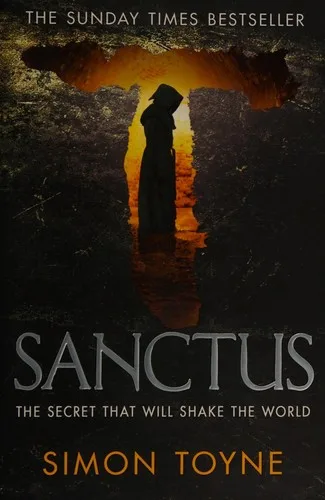
Sanctus
 74
74

Sanctus
Simon Toyne's Sanctus presents an ambitious narrative framework, attempting to synthesize thriller pacing with deep esoteric underpinnings. The strength lies in its construction of a compelling central mystery, hinting at vast, ancient conspiracies that echo throughout history. Toyne effectively builds suspense, drawing the reader into a world where symbols and hidden meanings are paramount. However, the execution occasionally falters. While the initial premise is strong, the narrative sometimes struggles to fully integrate its more complex philosophical or theological concepts into the plot's momentum, leaving certain thematic explorations feeling somewhat underdeveloped. A particularly memorable aspect is the depiction of the titular society and its methods of preserving arcane knowledge, which, despite its fictional nature, feels grounded in a plausible, if hidden, reality. Ultimately, Sanctus offers a diverting read for those seeking a fictional gateway into occult mysteries, though it doesn't quite achieve the lasting impact of its more profound inspirations.
📝 Description
74
Simon Toyne's 2011 novel Sanctus centers on a hidden society guarding ancient secrets.
Sanctus, published in 2011, is a work of speculative fiction that combines elements of mystery, thriller, and occult philosophy. The story follows a secret society and its long-held knowledge, frequently involving coded messages and clandestine rituals. The narrative examines themes of concealed information, the conflict between order and chaos, and how ancient powers might affect the present.
This book appeals to readers who enjoy complex plots with a strong mystical and arcane undercurrent. Those interested in fictional portrayals of secret societies, Gnostic ideas, and the intersection of history and conspiracy will find the story engrossing. It suits a readership that appreciates a developing mystery, where characters confront abilities and understanding beyond normal human grasp.
Published in 2011, Sanctus emerged during a period of heightened interest in conspiracy theories and esoteric lore, partly driven by online communities and a fascination with hidden histories. While not directly linked to a specific historical movement, it draws on a long tradition of occult fiction dating back to the late 19th and early 20th centuries, including works by authors like Aleister Crowley and fictional accounts of secret orders. The novel taps into the enduring appeal of such subjects, predating some more recent pop-occult trends.
💡 Why Read This Book?
• Gain an understanding of how fictional narratives can explore Gnostic concepts of hidden knowledge and the struggle against a perceived demiurgic order, a theme often found in esoteric traditions. • Experience a plot structure that mimics the discovery of ancient secrets, providing a narrative parallel to the process of initiatory learning found in some esoteric schools. • Encounter the specific motif of the 'Codex Umbra' as a narrative device, illustrating how fictional texts can represent the transmission of forbidden lore and the dangers associated with its pursuit.
⭐ Reader Reviews
Honest opinions from readers who have explored this book.
❓ Frequently Asked Questions
What is the primary focus of Simon Toyne's Sanctus?
Sanctus primarily focuses on a secret society and its ancient, hidden knowledge. The narrative blends thriller elements with esoteric themes, exploring mysteries tied to coded messages, clandestine rituals, and the potential influence of ancient forces on the present.
When was Sanctus first published?
Sanctus was first published in 2011, placing it within a period of renewed popular interest in conspiracy theories and esoteric lore.
Does Sanctus draw on specific historical esoteric traditions?
While fictional, Sanctus draws upon a broad spectrum of esoteric themes, including Gnosticism, secret societies, and the concept of hidden lineages of knowledge, echoing traditions that gained prominence in late 19th and early 20th-century occult literature.
What kind of reader would enjoy Sanctus?
Readers who enjoy intricate mystery plots with occult and conspiratorial undertones, and those fascinated by fictional explorations of secret societies and hidden histories, are likely to find Sanctus engaging.
Are there specific symbols or concepts explored in Sanctus?
The book often explores concepts like apocryphal texts, hidden lineages of knowledge keepers, and the idea of ancient wisdom encoded within events or objects, suggesting a reality with hidden layers.
Is Sanctus part of a series?
Yes, Sanctus is the first book in a series, followed by 'Codex' and 'Sanctum', continuing the narrative and exploring further mysteries within the established esoteric framework.
🔮 Key Themes & Symbolism
Secret Societies and Hidden Knowledge
The narrative of Sanctus is deeply rooted in the concept of clandestine organizations hoarding ancient wisdom. These societies, often operating outside the public eye, possess texts, rituals, and understanding that have been deliberately concealed from the wider world. The book explores the allure and peril of such hidden knowledge, suggesting that its pursuit can lead to profound revelations but also grave dangers. The existence of these groups implies a parallel history, one shaped by forces and actors unseen by conventional historical accounts, where power lies not in overt control but in the manipulation of esoteric information.
The Interplay of History and Myth
Sanctus frequently blurs the lines between verifiable historical events and ancient mythologies or esoteric interpretations of the past. It posits that significant historical moments may have been influenced or orchestrated by secret orders acting upon hidden agendas. This approach invites readers to reconsider accepted historical narratives, suggesting that underlying currents of occult influence have shaped human civilization. The book uses this interplay to create a sense of deep, layered reality where the past is not merely prologue but an active force influencing the present through veiled means.
Symbolism and Encoded Meanings
A core element of the narrative is the prevalence of symbols and coded messages that hold significant meaning for those initiated into their understanding. These symbols are not merely decorative but function as keys to unlocking deeper truths, historical secrets, or pathways to power. The characters must learn to decipher these esoteric languages, whether found in ancient texts, architectural details, or seemingly random occurrences. This focus on encoded meaning highlights the esoteric library's interest in how knowledge is preserved and transmitted across generations, often through non-obvious channels.
The Quest for Truth and Its Consequences
At its heart, Sanctus is a story about the relentless pursuit of forbidden truths. Characters are drawn into a dangerous quest, often compelled by circumstance or an innate curiosity about the world's hidden mechanisms. The narrative emphasizes that such a quest is fraught with peril, testing the protagonists' resolve and often demanding significant personal sacrifice. The consequences of uncovering these truths are profound, revealing not only the nature of hidden powers but also the corrupting influence that such knowledge can wield, forcing characters to confront their own motivations and limitations.
💬 Memorable Quotes
Direct passages from the work, attributed to the author.
“The oldest secrets are written not in ink, but in blood and stone.”
— This highlights the book's theme that fundamental, ancient truths are embedded in enduring aspects of existence, suggesting a connection to primal forces and a history far predating written records.
“They do not seek power; they seek understanding. Power is merely a consequence.”
— This interpretation suggests a focus on intellectual or spiritual enlightenment as the primary goal of the esoteric groups within the book, framing worldly power as a secondary outcome of possessing hidden knowledge.
“Every symbol is a door, but not all doors lead to safety.”
— This emphasizes the dual nature of esoteric symbols: they are tools for accessing deeper meaning and reality, but this access can also expose one to danger or forces beyond comprehension.
“History is not what happened, but what they want us to believe happened.”
— This reflects a conspiratorial undercurrent, suggesting that established historical accounts are manipulated or incomplete, and that true understanding lies in uncovering suppressed narratives.
“The Codex Umbra does not reveal itself; it is earned.”
— This implies that the acquisition of significant, hidden knowledge, represented by the 'Codex Umbra,' requires effort, dedication, and perhaps initiation, rather than simple discovery.
🌙 Esoteric Significance
Tradition
Sanctus draws broadly from Gnostic and Hermetic traditions, particularly concerning the idea of hidden knowledge and a perceived duality between the mundane world and a deeper, often concealed, reality. It carries the concept of a hidden lineage of initiates who safeguard ancient truths, a motif present in various esoteric schools. While not strictly adhering to any single doctrine, the work plays with the Gnostic notion of a flawed creation and the possibility of attaining liberation through gnosis (knowledge), framing this within a contemporary thriller narrative.
Symbolism
The book prominently features symbolism related to ancient texts, such as the 'Codex Umbra,' which acts as a MacGuffin representing forbidden lore. Other symbols might include esoteric sigils, alchemical references, or architectural elements imbued with hidden meaning, reflecting the Hermetic principle of 'as above, so below.' These symbols serve as keys within the narrative, unlocking secrets and guiding characters through the complex layers of the conspiracy, much like sigils or coded language in actual esoteric practices.
Modern Relevance
Contemporary readers interested in the resurgence of interest in esoteric philosophy and conspiracy narratives find resonance in Sanctus. Thinkers and practitioners exploring the intersection of ancient mysticism and modern psychology, or those examining the role of secret societies in shaping global events (even in fictional contexts), can find thematic parallels. The book's exploration of encoded knowledge and hidden histories aligns with modern inquiries into information control and alternative epistemologies, making it relevant to discussions about truth and perception in the digital age.
👥 Who Should Read This Book
• Readers interested in speculative fiction that incorporates elements of mystery and occult philosophy, particularly those who enjoy narratives about secret societies and hidden historical conspiracies. • Enthusiasts of Gnostic themes and Hermetic concepts who appreciate fictional explorations of forbidden knowledge and the quest for enlightenment outside conventional understanding. • Fans of intricate thriller plots that require deciphering symbols and coded messages, offering a narrative parallel to the study of esoteric texts and traditions.
📜 Historical Context
When Simon Toyne's Sanctus was published in 2011, the literary landscape was receptive to intricate thrillers infused with esoteric elements. The early 21st century saw a surge in popular fascination with conspiracy theories, ancient mysteries, and secret societies, partly fueled by the burgeoning internet culture. This coincided with the enduring legacy of authors like Dan Brown, whose work brought elements of historical conspiracy to a mass audience. Sanctus tapped into this vein, offering a narrative that echoed the clandestine traditions explored in late 19th and early 20th-century occult literature, though it wasn't directly aligned with a specific movement like Theosophy or Golden Dawn mysticism. While its reception was generally positive within its genre, it emerged in a crowded field of similar speculative fiction. Contemporary authors like Kate Mosse, who also explored historical secrets and hidden narratives, were popular, indicating a broader market interest in such themes.
📔 Journal Prompts
Reflection on the concept of the 'Codex Umbra' as a representation of hidden wisdom.
Consider the implications of history being shaped by unseen forces.
Analyze the function of symbols within the narrative of Sanctus.
Explore the potential consequences of pursuing forbidden knowledge.
Examine the role of secret societies in preserving or controlling esoteric information.
🗂️ Glossary
Codex Umbra
A fictional ancient text central to the plot, representing concealed and potentially dangerous esoteric knowledge. Its name suggests a 'shadow book,' implying secrets best left hidden.
The Custodians
A clandestine group within the novel dedicated to protecting and controlling ancient secrets, often acting in opposition to those seeking to reveal them.
Gnostic undertones
Elements within the narrative that echo Gnostic philosophy, such as the idea of a flawed material world and the importance of spiritual knowledge (gnosis) for liberation.
Esoteric symbols
Signs, icons, or motifs within the book that hold deeper, hidden meanings relevant to the characters' quest for knowledge, often requiring specialized interpretation.
Apocryphal texts
Texts that are not part of an established canon or official scripture, often containing hidden or alternative spiritual narratives, which feature prominently in the book's lore.
Hidden lineages
The concept of secret successions of knowledge-keepers or initiates who transmit esoteric wisdom through generations, often undetected by the mainstream.
The Great Work
While not explicitly named as such, the overarching goal of the esoteric groups in Sanctus mirrors the 'Great Work' found in Hermeticism – the pursuit of ultimate knowledge and spiritual transformation.
🔮 Readers Also Liked
Browse all →








More Free Occult Philosophy Books
View all →