The Enormous Crocodile
 77
77

The Enormous Crocodile
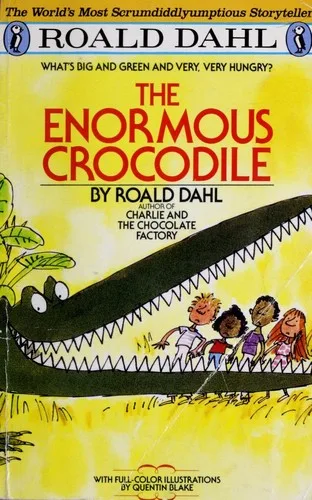
Roald Dahl's "The Enormous Crocodile" certainly delivers on its promise of a villainous reptile with a penchant for child-eating. The sheer audacity of the crocodile's schemes, like his plan involving a giant magnifying glass to cook a child, is a testament to Dahl's imaginative, if disturbing, creativity. However, the narrative, while amusing, sometimes feels a bit thin, relying heavily on the shock value of its premise. The pacing can be uneven, with stretches of exposition before the next outlandish plot point. A particularly memorable moment is the crocodile's disguise as a log, a simple yet effective piece of trickery that underscores his deceptive nature. While the comeuppance is satisfying, the book's exploration of good versus evil, though present, lacks the nuanced depth found in some of Dahl's more complex works. It ultimately serves as a darkly amusing, if somewhat shallow, fable of predatory intent.
📝 Description
77
Roald Dahl's "The Enormous Crocodile" was published in 1978.
This 1978 book tells the story of an enormous crocodile with a singular, unpleasant goal: to eat children. He devises elaborate, often ridiculous, schemes to achieve this, showcasing his particular brand of villainy. The narrative follows his attempts to outwit other jungle creatures who stand in his way.
Dahl's signature style is evident here, blending the grotesque with the comical. The scenarios are exaggerated, creating a darkly humorous effect. While ostensibly a children's story, it subverts expectations with its macabre elements. Readers who appreciate satire and tales of trickery and comeuppance will find layers of interpretation regarding ambition and the consequences of evil actions, even for adult readers.
Published in 1978, "The Enormous Crocodile" arrived during a time when children's literature began to push boundaries, moving away from purely innocent narratives. Roald Dahl was known for challenging gentler styles, engaging with a younger generation through direct, sometimes unsettling, storytelling. This work fits within a tradition of darker fairy tales and fables that explore moral consequences and the nature of evil through allegorical characters and exaggerated situations, appealing to those interested in the subversion of traditional children's story tropes.
💡 Why Read This Book?
• You will learn about the subversion of expectations in narrative, specifically how Roald Dahl uses the crocodile's elaborate, albeit failed, plans in "The Enormous Crocodile" to critique unchecked ambition. • You will feel the distinct, dark humor Roald Dahl is known for, particularly in the exaggerated descriptions of the crocodile's hunger and the other animals' cleverness, as seen in their defeat of the crocodile. • You will gain an appreciation for allegorical storytelling in children's literature, understanding how the conflict between the crocodile and the jungle animals in the 1978 publication can be interpreted as a commentary on natural order versus destructive forces.
⭐ Reader Reviews
Honest opinions from readers who have explored this book.
❓ Frequently Asked Questions
What is the main plot of Roald Dahl's 'The Enormous Crocodile'?
The book follows an enormous, devious crocodile who devises various wicked plans to eat children. These schemes are consistently foiled by other jungle animals who unite to protect the potential victims and defeat the crocodile.
When was 'The Enormous Crocodile' first published?
Roald Dahl's "The Enormous Crocodile" was first published in 1978, marking a period of his prolific output in children's literature.
Who are the main characters in 'The Enormous Crocodile'?
The primary antagonist is the Enormous Crocodile himself. He is opposed by a group of other jungle animals, including the Elephant, the Giraffe, and the Rumpelstiltskin-like Hippopotamus, who work together to thwart his plans.
What makes 'The Enormous Crocodile' unique among children's books?
Its uniqueness lies in Dahl's signature blend of dark humor and grotesque imagery. The book doesn't shy away from a genuinely menacing villain, presenting a surprisingly candid depiction of predatory intent for a children's story.
What is the overall message of 'The Enormous Crocodile'?
The book conveys a message about the consequences of greed and evil. It shows that even the most cunning and powerful villains can be overcome by unity and cleverness, and that wicked plans ultimately backfire.
Is 'The Enormous Crocodile' suitable for very young children?
While a children's book, its themes of a crocodile wanting to eat children and the violent defeat of the crocodile might be frightening for very young or sensitive children. Parental discretion is advised.
🔮 Key Themes & Symbolism
Predatory Ambition
The Enormous Crocodile embodies relentless, unchecked ambition fueled by a singular, predatory desire: to eat children. His elaborate schemes, from disguising himself as a tree to attempting to cook his prey with a magnifying glass, showcase a mind obsessed with achieving his wicked goal. This theme explores the nature of pure avarice and the lengths to which a creature driven by base instinct will go. The narrative contrasts this with the collective intelligence and determination of the other animals, who represent a more ordered, albeit also instinctual, force of opposition.
The Folly of Hubris
A central theme is the downfall that often accompanies extreme arrogance. The Enormous Crocodile is utterly convinced of his own cleverness and invincibility, believing his plans are foolproof. This overconfidence blinds him to the possibility of failure and the resourcefulness of his adversaries. The book illustrates how pride can lead to meticulous planning, yet ultimately be the very reason for one's undoing. His ultimate defeat, orchestrated by the combined efforts of the jungle inhabitants, serves as a stark warning against overestimating one's own abilities.
Justice and Comeuppance
The narrative provides a clear sense of justice and retribution. The Enormous Crocodile's villainy is met with decisive action from the other animals, leading to his ultimate defeat and punishment. This theme offers a satisfying resolution for the reader, reinforcing the idea that evil deeds will not go unpunished. The method of his comeuppance, being chopped up and used as ingredients for a celebratory feast by the very creatures he sought to harm, is a darkly humorous and fitting end to his malevolent reign.
Collective Action
The story highlights the power of unity in overcoming a formidable threat. The Enormous Crocodile is a singular, powerful force, but he is eventually defeated through the combined efforts of various jungle animals. Each animal contributes their unique strengths and intelligence to thwart his plans. This theme underscores the importance of cooperation and community in confronting and neutralizing individual malevolence or destructive forces, presenting a united front against a common enemy.
💬 Memorable Quotes
Direct passages from the work, attributed to the author.
“He had yellow eyes with greenish pupils and teeth like a row of daggers.”
— This vivid description immediately establishes the crocodile's menacing and dangerous nature. The comparison of his teeth to daggers emphasizes their sharpness and the threat they pose, setting the tone for his villainous character.
“He was an enormous crocodile. He was the biggest and the nastiest crocodile in the whole of Africa.”
— This establishes the scale of the threat and the character's core attribute. The repetition of 'enormous' and the explicit declaration of his nastiness leave no doubt about his role as the primary antagonist and the danger he represents.
“The crocodile was so pleased with himself he did a little dance.”
— This showcases the crocodile's arrogance and self-satisfaction, particularly after a perceived success or clever scheme. It highlights his hubris, a trait that ultimately contributes to his downfall, as he becomes overconfident in his abilities.
“The animals shouted, 'Hooray!' They cheered and they danced.”
— This demonstrates the collective relief and joy of the jungle creatures upon the crocodile's defeat. It signifies the restoration of order and the triumph of good over evil, celebrated through communal expression.
“The crocodile was never seen again.”
— This provides a definitive and conclusive ending to the story, ensuring that the threat posed by the Enormous Crocodile has been permanently neutralized. It offers a sense of closure and finality to his malevolent presence.
🌙 Esoteric Significance
Tradition
While "The Enormous Crocodile" is not overtly an esoteric text, its themes can be viewed through a lens of primal forces and the natural order, aligning loosely with animistic or nature-based spiritualities. The clear delineation between the destructive, avaricious force (the crocodile) and the harmonizing, protective force (the other animals) echoes Gnostic dualism or even certain interpretations of the struggle between chaos and order found in ancient mythologies. The animals acting in concert to defeat a singular, monstrous entity can be seen as a metaphorical representation of aligning with a higher natural law or collective consciousness.
Symbolism
The Enormous Crocodile himself symbolizes unchecked greed, primal appetite, and destructive ego. His physical attributes—vast size, sharp teeth, yellow eyes—are classic markers of a dangerous predator, representing the shadow self or the untamed, malevolent aspect of existence. The other animals, such as the Elephant and Giraffe, symbolize stability, height (perspective), and communal strength, respectively. Their collective action represents the triumph of wisdom and unity over brute, selfish force, suggesting that balance and harmony within a community can overcome individualistic corruption.
Modern Relevance
Contemporary discussions around shadow work in psychology and spirituality can find resonance with the Enormous Crocodile's character as an embodiment of the destructive impulses that must be acknowledged and overcome. Furthermore, the theme of collective action against a corrupting force is relevant in ecological and social justice movements, where individuals unite to counteract destructive systems or entities. The book's enduring appeal suggests a continued human fascination with clear-cut moral battles and the satisfaction of seeing villainy definitively vanquished, a narrative archetype that persists in many modern spiritual and self-help frameworks.
👥 Who Should Read This Book
• Beginning students of comparative mythology will find value in the archetypal struggle between the monstrous predator and the united community, mirroring ancient tales of chaos versus order. • Readers interested in Roald Dahl's oeuvre will appreciate this work for its signature dark humor and its place within his broader exploration of challenging themes in children's literature. • Parents and educators seeking to discuss concepts of good versus evil, consequences of actions, and the importance of cooperation with younger audiences will find "The Enormous Crocodile" a useful, albeit cautionary, narrative tool.
📜 Historical Context
Roald Dahl's "The Enormous Crocodile," released in 1978, arrived at a time when children's literature was increasingly exploring darker, more complex themes, moving beyond the gentle didacticism of earlier eras. Dahl, already a prominent figure with works like "Charlie and the Chocolate Factory" (1964), consistently challenged conventional notions of acceptable subject matter for young readers. His approach, often featuring grotesque characters and morally ambiguous situations, contrasted with the more traditional, whimsical styles of contemporaries like A. A. Milne. The late 1970s saw a broader cultural shift allowing for more direct engagement with unpleasant realities, even within children's narratives. While not facing significant censorship itself, Dahl's work generally navigated a space where its frankness and occasional naughtiness were debated by educators and parents, pushing the boundaries of what was considered suitable for children's consumption.
📔 Journal Prompts
The Enormous Crocodile's predatory ambition and its ultimate failure.
The collective action of the jungle animals in defeating the crocodile.
The symbolism of the crocodile's physical attributes and their connection to his character.
Roald Dahl's use of exaggerated descriptions to create a menacing villain.
The contrast between the crocodile's individual schemes and the animals' unified response.
🗂️ Glossary
Enormous Crocodile
The central antagonist of the story, characterized by his immense size, cunning, and insatiable desire to eat children. He represents pure, predatory malevolence and overconfidence.
Magnifying Glass Scheme
One of the crocodile's elaborate, failed plans to capture and cook a child using a giant magnifying glass to focus the sun's rays, illustrating his inventive but ultimately unsuccessful villainy.
Rumpelstiltskin-like Hippopotamus
Though not explicitly named, the Hippopotamus plays a central role in tricking the crocodile, similar to how Rumpelstiltskin might use a clever bargain or disguise. This character aids in the crocodile's downfall.
Comeuppance
The deserved fate or punishment for wrongdoing. In the book, the Enormous Crocodile receives his comeuppance for his wicked intentions and attempts to eat children.
Jungle Animals' Unity
The collective effort and cooperation of various animals (Elephant, Giraffe, etc.) who unite their intelligence and strengths to outwit and defeat the Enormous Crocodile, highlighting the power of community.
Yellow Eyes with Greenish Pupils
A specific descriptive detail used to characterize the Enormous Crocodile, emphasizing his unnatural and menacing appearance, contributing to his fearsome reputation.
Primal Instinct
The innate, unlearned behaviors and drives present in living organisms. The crocodile's desire to eat children is presented as a powerful, primal instinct that overrides reason or morality.
🔮 Readers Also Liked
Browse all →








More by Roald Dahl
All books →





More Free Occult Philosophy Books
View all →