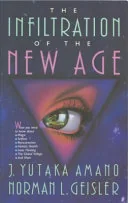
The Infiltration of the New Age
 79
79

The Infiltration of the New Age
Amano and Geisler's 1989 analysis of the New Age movement, *The Infiltration of the New Age*, presents a starkly defined critique from a conservative Christian viewpoint. Its primary strength lies in its methodical deconstruction of New Age ideas, identifying their presence in popular culture – a point particularly well-articulated when discussing the pervasive influence of concepts like 'self-divinity' in media. The authors effectively highlight how these ideas, often presented as novel, have roots in older esoteric traditions. However, the book’s limitation is its unwavering adherence to a singular theological framework, which can preclude a more nuanced appreciation of the diverse spiritual seeking within the New Age itself. The passage discussing 'holistic health' practices, while critical, overlooks the genuine therapeutic benefits many individuals found. Ultimately, it serves as a potent, albeit biased, historical snapshot of one perspective on a complex cultural moment.
📝 Description
79
Published in 1989, The Infiltration of the New Age critically examines the late 20th-century spiritual movement.
J. Yutaka Amano and Norman L. Geisler's 1989 book, The Infiltration of the New Age, offers a critical look at the New Age movement. The authors intended to give readers, especially those from Christian backgrounds, a clear picture of the movement's varied beliefs and practices. They sought to inform judgment by detailing the movement's reach.
The book is for anyone wanting a structured analysis of the New Age phenomenon, particularly those concerned about its presence in popular culture and its theological implications. It addresses students of religion, cultural critics, and individuals seeking a biblically based view of a spiritual current present in media and self-help.
Released when the New Age movement was rapidly growing and becoming more popular, the book discusses a time when its ideas were increasingly seen in mainstream media. The authors present their work as a response to the movement and to the diverse, sometimes uncritical, Christian reactions to it. They analyze how New Age thought appeared in television, film, music, and literature.
This book engages with the latter half of the 20th century's burgeoning interest in alternative spiritualities. The New Age movement, which it scrutinizes, drew from a wide array of traditions, including Eastern religions, occultism, and Western esotericism. Amano and Geisler approach this phenomenon from a distinctively Christian theological standpoint, aiming to delineate what they perceive as the movement's departures from orthodox doctrine. Their work positions itself within a broader discourse of religious apologetics that arose in response to the diversification of spiritual expression during that era.
💡 Why Read This Book?
• Gain a biblically-grounded critique of New Age tenets, understanding specific criticisms outlined by Amano and Geisler concerning concepts like self-divinity, which was prevalent in 1989. • Analyze the documented infiltration of New Age ideas into popular culture, as the authors detail its presence in television, movies, and music from the late 20th century. • Evaluate the historical Christian responses to the New Age movement, as presented by the authors, to understand the theological debates surrounding its rise in the late 1980s.
⭐ Reader Reviews
Honest opinions from readers who have explored this book.
❓ Frequently Asked Questions
When was The Infiltration of the New Age first published?
The book was first published in 1989, a period when the New Age movement was gaining significant cultural momentum and visibility.
What is the primary perspective of the authors, Amano and Geisler?
The authors offer a critique from a conservative Christian perspective, aiming to analyze the New Age movement through a biblical framework.
How does the book address the influence of New Age thought?
It details how New Age beliefs and practices influenced various facets of popular culture, including television, movies, music, and literature of the era.
Is the book a neutral overview of the New Age movement?
No, the book is explicitly critical and aims to provide a biblically-based evaluation rather than a neutral academic survey.
Who are the intended readers for this book?
The book is primarily intended for Christians seeking information and a theological framework to understand and respond to the New Age movement.
What specific cultural influences of the New Age does the book examine?
The authors discuss the impact of New Age thought on media like television, film, music, and literature, highlighting its pervasive presence.
🔮 Key Themes & Symbolism
Cultural Permeation
The work meticulously documents how New Age philosophy, often subtly, seeped into the cultural fabric of the late 20th century. Authors Amano and Geisler identify its presence not just in explicit spiritual circles but also within mainstream media such as television programs, popular films, music lyrics, and literary works. This pervasive influence, they argue, normalizes concepts that deviate significantly from traditional religious doctrines, posing a challenge to established belief systems.
Biblical Hermeneutics
Central to the authors' critique is a rigorous application of biblical interpretation. They establish a theological baseline, measuring New Age tenets against scripture. This approach allows them to identify perceived contradictions and incompatibilities, framing the movement's ideas as potentially misleading or heretical from their specific theological standpoint. The book serves as an example of applying a particular hermeneutical lens to contemporary spiritual phenomena.
Christian Response Analysis
Beyond critiquing the New Age itself, the book also analyzes how the Christian community responded to its rise. Amano and Geisler highlight instances of both uncritical acceptance and overzealous condemnation, suggesting that a more informed and discerning approach was needed. They advocate for understanding the movement's diverse facets before formulating a Christian response, emphasizing the importance of accurate information.
Origins of New Age Thought
While focused on its late 20th-century manifestation, the authors allude to the historical roots of New Age ideas. They implicitly connect contemporary beliefs to older esoteric traditions and philosophies, suggesting that what appeared novel was often a repackaging of ancient concepts. This historical perspective, though not the primary focus, adds depth to their critique by contextualizing the movement's intellectual lineage.
💬 Memorable Quotes
Direct passages from the work, attributed to the author.
“New Age thought indeed influences TV, movies, music, and books.”
— This statement captures the authors' core thesis regarding the movement's cultural reach, highlighting its presence beyond niche spiritual communities and into mass media.
“Working from a firm biblical base, they critique the movement itself.”
— This highlights the methodological approach of Amano and Geisler, emphasizing their theological framework as the foundation for their analysis and critique of New Age beliefs.
“Others aren't sure what the movement is all about.”
— This points to the ambiguity and diverse nature of the New Age, acknowledging that many individuals lacked clear information, which the book aims to rectify from its specific viewpoint.
“Critique the movement itself and also the sometimes misguided Christian responses to it.”
— This indicates a dual focus: analyzing the New Age directly and examining the effectiveness and accuracy of reactions from within Christianity.
“Before we pass judgment, we need reliable information about the diverse facets of New Age beliefs and practices.”
— This expresses the authors' stated intention to provide comprehensive information as a prerequisite for forming an informed opinion or judgment on the New Age.
🌙 Esoteric Significance
Tradition
This work does not align with any specific esoteric tradition but rather critiques them from an external, evangelical Christian viewpoint. It examines the New Age movement, which itself is a syncretic blend drawing from various traditions including Theosophy, Eastern mysticism, Gnosticism, and Hermeticism. The authors' engagement is analytical, dissecting these influences rather than participating in or propagating them.
Symbolism
The book does not focus on specific esoteric symbols in a devotional or interpretive manner. Instead, it discusses the *concepts* and *ideas* that constitute New Age thought, such as the notion of universal consciousness, self-divinity, and the integration of Eastern and Western spiritual practices. These are presented as thematic elements of the movement being critiqued, rather than symbols to be explored for their deeper meaning.
Modern Relevance
While written in 1989, the book's analysis of how spiritual ideas infiltrate popular culture remains relevant. Contemporary thinkers and cultural critics continue to examine the secularization and popularization of esoteric concepts, echoing Amano and Geisler's observations about media influence. It serves as a historical reference for understanding the roots of current spiritual trends and the ongoing dialogue between traditional religions and emergent spiritualities.
👥 Who Should Read This Book
• Beginning students of comparative religion seeking to understand a critical perspective on the New Age movement's cultural impact in the late 20th century. • Christian apologists and theologians interested in historical analyses of religious movements and their intersection with popular culture from a biblically-grounded viewpoint. • Cultural historians and researchers studying the evolution of spirituality and its manifestation in media and society during the 1980s and 1990s.
📜 Historical Context
The Infiltration of the New Age emerged in 1989, a central year for the New Age movement's mainstream visibility. This era saw a surge in popular interest in alternative spirituality, holistic health, and self-empowerment, influenced by figures like Marilyn Ferguson, whose 1980 book *The Aquarian Conspiracy* became a seminal text. The intellectual currents were diverse, drawing from Eastern religions, Gnosticism, theosophy, and psychology. Amano and Geisler's work positioned itself against this backdrop, offering a critical counter-narrative from a conservative Christian perspective. It responded to a cultural moment where New Age ideas were increasingly integrated into popular media, challenging traditional religious frameworks. While not facing overt censorship, the book engaged with a broader discourse that included numerous other theological responses and critiques of the movement.
📔 Journal Prompts
The perceived infiltration of New Age concepts into 1989 media.
The authors' use of a 'firm biblical base' for critique.
Diverse facets of New Age beliefs and practices.
Christian responses to the New Age movement.
The nature of 'self-divinity' as a New Age tenet.
🗂️ Glossary
New Age Movement
A broad, eclectic spiritual movement that gained prominence in the late 20th century, characterized by a syncretic blend of Eastern and Western spiritual, mystical, and philosophical traditions, often emphasizing personal transformation and holistic well-being.
Biblical Base
The foundational principles and doctrines derived from the Christian Bible, used by the authors as the primary framework for evaluating and critiquing other belief systems and philosophies.
Holistic Health
An approach to health that emphasizes the interconnectedness of the mind, body, and spirit, often incorporating alternative or complementary therapies alongside conventional medicine, a concept frequently associated with New Age practices.
Self-Divinity
A core concept within certain New Age philosophies suggesting that the individual possesses inherent divinity or is a divine being, often contrasted with traditional monotheistic views of God.
Syncretism
The merging or blending of different, often seemingly contradictory, beliefs, philosophies, or practices from various religious or cultural traditions into a new, unified system.
Esoteric
Relating to or appealing to a small number of people with a specialized knowledge or interest; often referring to secret or mysterious doctrines or practices.
Hermeneutics
The theory and methodology of interpretation, especially the interpretation of biblical texts, literary works, or philosophical writings.
This book appears in 1 collection
🔮 Readers Also Liked
Browse all →









From the “Spirit Guides” Collection
View all →






More Free Occult Philosophy Books
View all →