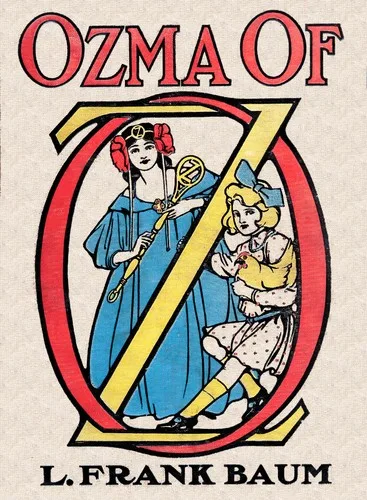
Ozma of Oz
 83
83

Ozma of Oz
The narrative of Ozma of Oz, while ostensibly a children's story, presents a peculiar fascination for its exploration of disparate realities and the characters who inhabit them. Dorothy’s return to Oz, initiated by a storm, feels less like a grand reunion and more like a consequence of cosmic indifference, a recurring motif in Baum’s work that suggests the world operates on its own inscrutable logic. The introduction of the mechanical hen, Billina, and the subsequent encounters with the Nome King and his subterranean kingdom offer a glimpse into Baum’s capacity for crafting unsettling, albeit whimsical, antagonists.
However, the book’s pacing can feel somewhat episodic, with distinct geographical and societal shifts that, while imaginative, occasionally disrupt the narrative flow. The charm lies in the sheer invention of the Ozian landscape, but the emotional arc sometimes feels secondary to the parade of fantastical elements. Despite these minor quibbles, Ozma of Oz remains a singular entry in the Oz canon, demonstrating Baum's persistent exploration of the absurd and the magical.
Read more ↓
Baum’s consistent inventiveness makes Ozma of Oz a noteworthy, if not entirely seamless, addition to the Land of Oz.
📝 Description
83
Ozma of Oz, published in 1961, continues Dorothy Gale's adventures in the magical Land of Oz.
Ozma of Oz, the third book in L. Frank Baum's series, finds Dorothy Gale unexpectedly returned to the Land of Oz. This time, she is accompanied by Billina, a mechanical hen. Their journey leads them through peculiar lands and introduces a variety of characters. The narrative focuses on Dorothy's displacement from Kansas and her subsequent efforts to find her way home.
Baum's work, though published posthumously in 1961, built upon the immense popularity of the earlier Oz books. The series, which began with The Wonderful Wizard of Oz in 1900, established a distinct American fantasy tradition. Ozma of Oz contributes to this by exploring themes of artificial life and societal differences within the imaginative Oz universe. The book highlights the varied nature of existence beyond the familiar.
While L. Frank Baum's Oz books are primarily known as children's fantasy, they often contain allegorical and philosophical underpinnings that resonate with esoteric thought. Ozma of Oz, with its introduction of mechanical beings like the Clockwork Man and explorations of different societies, touches upon themes of creation, consciousness, and the nature of reality. The cyclical nature of Dorothy's return to Oz and her quest for home can be seen as a metaphor for spiritual journeys or the search for inner truth within a constructed, magical world.
💡 Why Read This Book?
• Understand the concept of the "Nome King" and his subterranean domain, which represents a descent into the earth, a common motif in mythologies and esoteric traditions, offering a unique perspective on the underworld. • Experience the introduction of the mechanical hen, Billina, a proto-automaton figure that foreshadows later explorations of artificial life and consciousness in literature. • Trace Dorothy's repeated displacement and journey back to Oz, reflecting themes of cyclical existence and the search for belonging, a narrative structure explored in various spiritual quests.
⭐ Reader Reviews
Honest opinions from readers who have explored this book.
❓ Frequently Asked Questions
When was Ozma of Oz first published?
Ozma of Oz was first published in 1961, many years after the author L. Frank Baum's passing in 1919. It is the third book in the Oz series.
What is the significance of the Nome King in Ozma of Oz?
The Nome King is the ruler of the Nomes, a race of subterranean beings. His kingdom is a place of rock and jewels, and he represents a powerful, often antagonistic, force within the Ozian landscape.
Who are the main new characters introduced in Ozma of Oz?
Key new characters include Billina, a talking hen who becomes Dorothy's companion, and the various inhabitants of Ev, the land Dorothy travels through, including the Clockwork Man and the Armies of the Winkies.
How does Ozma of Oz differ from The Wonderful Wizard of Oz?
While The Wonderful Wizard of Oz focuses on Dorothy's initial journey to Oz and her desire to return home, Ozma of Oz sees her voluntarily returning to Oz and embarking on a new adventure, introducing new lands and challenges.
Is Ozma of Oz considered an esoteric text?
While not a traditional esoteric text, Ozma of Oz contains allegorical elements and symbolic characters that can be interpreted through an esoteric lens, exploring themes of transformation, displacement, and different states of consciousness.
What is the role of the mechanical hen, Billina?
Billina is a sentient, talking hen who accompanies Dorothy. Her mechanical nature and surprising resilience highlight themes of artificial life and survival in unusual circumstances.
🔮 Key Themes & Symbolism
The Nature of Home
Dorothy's repeated displacement from Kansas and her eventual return to Oz raise questions about what constitutes 'home.' The narrative suggests that home is not merely a physical location but also a state of being or belonging, often found through arduous journeys and trials. This theme speaks to esoteric concepts of the soul's journey through various planes of existence in search of its true origin or spiritual homeland.
Artificiality and Sentience
The character of Billina, a mechanical hen, introduces the theme of artificial life gaining sentience and agency. This concept echoes discussions in metaphysics and early science fiction regarding consciousness, soul, and the boundaries between the organic and synthetic. Billina's survival instincts and emotional responses challenge a purely mechanistic view of existence, hinting at deeper spiritual or vital forces.
Subterranean Realms
The Nome King's underground kingdom represents a descent into a chthonic realm, a recurring motif in mythology and esoteric traditions symbolizing the unconscious, the hidden, or the material plane. This realm, characterized by rock and jewels, contrasts sharply with the surface world of Oz, suggesting different dimensions of reality with their own rulers and laws, akin to underworld myths or Kabbalistic Malkuth.
Identity and Transformation
Characters undergo transformations, both literal and figurative. The journey through different lands prompts introspection and adaptation. The Clockwork Man, a being of gears and springs, embodies a literal mechanical existence, yet participates in the narrative's emotional landscape, prompting contemplation on what defines identity beyond physical form and the potential for change.
💬 Memorable Quotes
Direct passages from the work, attributed to the author.
“The Nome King was very angry when he saw his visitors had escaped.”
— This emphasizes the conflict with the subterranean ruler. It portrays the Nome King as a possessive and wrathful entity, a representation of forces that guard hidden treasures or knowledge and react fiercely to attempts to reclaim or escape them.
“Billina, the hen, was a very important personage.”
— This elevates the status of a seemingly ordinary creature, suggesting that importance is not determined by form but by role and contribution. It hints at the inherent value and unique purpose of every being within the grander scheme.
“The land of Ev was a very pretty country.”
— This simple description serves as an introduction to a new, distinct region within Oz. It sets the stage for encountering unique inhabitants and customs, showcasing Baum's method of creating varied and visually imaginative settings.
“The Clockwork Man was made entirely of metal.”
— This highlights the introduction of artificial beings into the Oz narrative. It prompts reflection on the nature of life, consciousness, and identity, questioning what it means to be 'alive' when constructed from inanimate materials.
💡 Key Ideas
Editorial paraphrase of the work's core concepts — not direct quotes.
Dorothy, who had been very hungry, was glad to eat the strange and delicious food.
This line highlights the theme of adaptation and finding sustenance in unfamiliar circumstances. It suggests an openness to new experiences, even when they are initially bewildering, reflecting a willingness to engage with the unknown.
🌙 Esoteric Significance
Tradition
While not explicitly aligned with a singular esoteric tradition, Baum's Oz series, including Ozma of Oz, can be viewed through a lens of Hermeticism and Gnosticism. The journey through varied lands with distinct rulers and laws mirrors the Hermetic concept of correspondence ('As above, so below') and the Gnostic idea of navigating different spiritual or material planes. The underlying moral and allegorical structures often reflect a search for inner truth or a return to a primal state of unity, akin to soul-travel narratives.
Symbolism
The Nome King's subterranean realm symbolizes the material world or the unconscious, a place of hidden treasures (jewels) but also confinement and potential enslavement, reminiscent of materialist illusions or the limitations of the lower self. Billina, the mechanical hen, can be interpreted as a symbol of manufactured existence or the mechanical aspects of the psyche, which nonetheless possesses a vital spark and agency, challenging purely organic definitions of life. Dorothy's journey itself symbolizes the soul's pilgrimage through various experiences and challenges.
Modern Relevance
Contemporary explorations of artificial intelligence and consciousness sometimes echo the themes presented by characters like the Clockwork Man and Billina, questioning the essence of life and sentience. Furthermore, the recurring motif of displacement and the search for belonging in Oz continues to inform narratives about identity and finding one's place in a complex world, resonating with modern psychological and philosophical discourse on self-discovery.
👥 Who Should Read This Book
• Students of comparative mythology and folklore: To analyze recurring archetypes such as the subterranean king and the soul's journey within a distinctly American context. • Readers interested in the evolution of fantasy literature: To understand how Baum’s Oz series contributed to the genre's development and influenced later works. • Those exploring allegorical narratives: To engage with a story that, beneath its surface, offers reflections on home, identity, and the nature of reality.
📜 Historical Context
Ozma of Oz, published in 1961, arrived long after the zenith of L. Frank Baum's creative output and his passing in 1919. The original Oz books, beginning with The Wonderful Wizard of Oz in 1900, were a phenomenon of early 20th-century American literature, establishing a distinct national fairy tale tradition. Baum's work competed with and innovated upon European fairy tale traditions, offering a more contemporary, American sensibility. By 1961, the Oz series had cemented its place in children's literature, with its enduring popularity necessitating posthumous publications to satisfy a dedicated readership. The continued publication of Baum's stories demonstrated a sustained cultural interest that transcended his lifetime, marking the series as a foundational element of American fantasy, rather than a fleeting trend.
📔 Journal Prompts
The Nome King's subterranean kingdom and its treasures.
Billina's unexpected resilience and importance.
Dorothy's recurring displacement and the concept of 'home'.
The variety of societies encountered in the land of Ev.
The Clockwork Man's existence as a constructed being.
🗂️ Glossary
Nomes
A race of subterranean beings, often depicted as miners and guardians of underground treasures. They are ruled by the Nome King and inhabit a kingdom beneath the surface of Oz.
Nome King
The ruler of the Nomes. He is a powerful figure associated with rocks, jewels, and the underworld of Oz, often portrayed as greedy and antagonistic towards surface dwellers.
Ev
A neighboring country to Oz, which Dorothy and Billina travel through. Ev is characterized by its distinct inhabitants and customs, presenting a contrast to the familiar landscapes of Oz.
Clockwork Man
A character encountered in Ev, made entirely of mechanical parts. His existence raises questions about artificiality, life, and consciousness within the fantastical world.
Billina
A talking hen who becomes Dorothy's companion on her journey. Despite being a hen, she exhibits intelligence, courage, and a vital role in overcoming challenges.
Dorothy's Return
The narrative event where Dorothy is transported back to the Land of Oz, initiating a new adventure distinct from her first visit. This recurring theme explores displacement and homecoming.
Subterranean Realm
The underground kingdom of the Nome King, symbolizing a descent into the earth. It represents a hidden, material world often associated with danger and hidden riches.
🔮 Readers Also Liked
Browse all →









More by L. Frank Baum
All books →





More Free Occult Philosophy Books
View all →