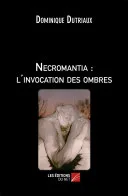
Necromantia : l'invocation des ombres
 82
82

Necromantia : l'invocation des ombres
Dominique Dutriaux's Necromantia: l'invocation des ombres presents a compelling, if somewhat elusive, protagonist in Rose. The narrative's strength lies in its evocative atmosphere and the potent symbolism woven into Rose's flight from an implied "Gynocide." Her status as "une non prononcée" offers a fresh perspective on themes of identity erasure. However, the narrative's allegorical nature sometimes sacrifices narrative momentum, leaving the reader yearning for more concrete grounding in the "strange beings" Rose encounters. The concept of "invocation of shadows" is intriguing, hinting at a deeper psychic exploration that, while present, feels underdeveloped. The book succeeds in creating a mood of searching and resilience, but its true potential for illuminating the path to freedom remains partially veiled.
Verdict: A symbolically rich narrative of escape and self-discovery, best suited for patient readers drawn to allegorical journeys.
📝 Description
82
Dominique Dutriaux's 2013 novel, Necromantia: l'invocation des ombres, follows Rose's quest for autonomy.
Necromantia: l'invocation des ombres tells the story of Rose, an "unspoken" individual fleeing a past marked by loss. She moves through a world populated by strange entities, each encounter bringing her closer to self-possession. The narrative explores identity, liberation, and what existence means when defined by absence and pursuit.
This book appeals to those who enjoy allegorical stories. Readers who appreciate a protagonist's internal struggles mirrored by encounters with the symbolic will find it rewarding. It suits individuals interested in literature that questions selfhood and freedom through a lens hinting at the occult and metaphysical.
Published in 2013, Necromantia resonates with a contemporary interest in esoteric themes. Its spiritual seeking and encounters with otherworldly beings echo elements found in Gnostic texts and occult revivalist works. The narrative's focus on a female protagonist's escape from oppression, hinted at by "Gynocide," aligns with speculative fiction that addresses power and survival.
💡 Why Read This Book?
• Gain insight into the concept of "l'invocation des ombres" as a means of confronting hidden aspects of the self, as depicted in the text's allegorical journey. • Understand the struggle for liberation through the specific lens of Rose, a "non prononcée" surviving "le grand Gynocide," offering a unique perspective on reclaiming identity. • Explore the symbolic encounters with "êtres étranges" that facilitate personal transformation, mirroring archetypal journeys found in various esoteric traditions since the early 20th century.
⭐ Reader Reviews
Honest opinions from readers who have explored this book.
❓ Frequently Asked Questions
What does 'l'invocation des ombres' mean in the context of Necromantia?
'L'invocation des ombres' translates to 'the invocation of shadows.' In Necromantia, this concept suggests an active engagement with the hidden, repressed, or unseen aspects of oneself and reality, crucial for the protagonist Rose's journey towards freedom.
Who is Rose and what is her significance in the book?
Rose is the central character, described as 'une non prononcée' (an unspoken one) and a survivor of 'le grand Gynocide.' Her journey is one of evasion and self-discovery, seeking to reclaim her freedom and identity.
What is the 'grand Gynocide' mentioned in the blurb?
The 'grand Gynocide' refers to a devastating, implied event of systemic annihilation, likely targeting women, from which Rose is a survivor. It serves as the foundational trauma driving her flight and quest for liberation.
What kind of beings does Rose encounter on her journey?
Rose encounters 'êtres étranges' (strange beings). These entities are presented as catalysts or guides, playing a role in her process of self-discovery and her pursuit of freedom, embodying symbolic or metaphysical forces.
Is Necromantia a literal story or an allegory?
Necromantia functions primarily as an allegory. While it follows Rose's physical journey, the narrative is rich with symbolic meaning, exploring existential themes of identity, freedom, and the confrontation with one's own 'shadows'.
What is the publication year of Necromantia?
The book Necromantia: l'invocation des ombres by Dominique Dutriaux was first published on November 25, 2013.
🔮 Key Themes & Symbolism
The Unspoken Self
Rose's identity as 'une non prononcée' signifies a profound state of being unacknowledged or erased. This theme explores the psychological and spiritual implications of invisibility, challenging the reader to consider how societal or personal forces can silence an individual. Her journey is a quest to find voice and reclaim a self that has been systematically denied, echoing philosophical discussions on existentialism and the power of naming.
Liberation Through Evasion
The narrative frames freedom not as a direct confrontation but as an ongoing process of evasion and discovery. Rose's flight from the aftermath of 'le grand Gynocide' highlights that liberation can be a winding path, achieved through encountering diverse influences. The 'strange beings' she meets act as waypoints, each offering a piece of wisdom or a new perspective that aids her ultimate goal of self-possession.
Invocation of Shadows
Central to the book is the idea of 'l'invocation des ombres.' This concept suggests that true freedom and self-understanding are achieved by actively engaging with one's own 'shadows'—the hidden, repressed, or darker aspects of the psyche. Rather than fleeing from these elements, Rose learns, through her encounters, to invoke them, integrating them into her being to achieve wholeness.
Trauma and Survival
The specter of 'le grand Gynocide' looms over Rose's existence, establishing trauma as a primary motivator for her journey. The book examines survival not merely as enduring hardship but as an active process of transformation. It posits that overcoming profound loss requires engaging with its memory and impact, rather than simply escaping it, leading to a redefined sense of self.
💬 Memorable Quotes
Direct passages from the work, attributed to the author.
“Rose is a fugitive, an unspoken one.”
— This concise statement establishes the core of the protagonist's identity and predicament: her active state of flight and her fundamental lack of acknowledged existence, setting the stage for her quest for freedom.
“She escapes and encounters, along her journey, strange beings who will help her recover her freedom.”
— This highlights the narrative's structure: a journey of evasion punctuated by encounters with symbolic entities. These 'strange beings' are not random but instrumental in Rose's process of regaining autonomy, suggesting a guided spiritual or psychological evolution.
“Her rescue from the great Gynocide.”
— This phrase points to a foundational act of violence and a subsequent act of salvation. It implies that Rose's existence is a defiance of annihilation, and her journey is intrinsically linked to understanding and transcending this origin trauma.
“She seeks to recover her freedom.”
— This simple declaration captures the protagonist's driving motivation. It implies that freedom is not a given but something to be actively regained, suggesting a state of captivity, whether physical, psychological, or spiritual, from which she must emerge.
“The invocation of shadows.”
— This thematic phrase suggests a core occult or psychological practice within the book, implying that confronting and integrating one's hidden or darker aspects is key to achieving a more complete or liberated state of being.
🌙 Esoteric Significance
Tradition
Necromantia aligns broadly with Western esoteric traditions that emphasize the inner journey and the confrontation with the psyche's hidden aspects. While not strictly Hermetic or Kabbalistic, its concept of 'l'invocation des ombres' suggests a process akin to Jungian shadow work or certain forms of Western magical invocation, focusing on integrating disowned parts of the self for spiritual wholeness.
Symbolism
The 'grand Gynocide' serves as a potent symbol of collective trauma and existential threat, likely representing societal or psychological forces that seek to annihilate or erase identity. Rose's status as 'une non prononcée' symbolizes the unacknowledged self, while the 'êtres étranges' embody archetypal guides or manifestations of inner knowledge crucial for reading through the path to freedom.
Modern Relevance
The work's emphasis on reclaiming identity from erasure and confronting internalized oppression appeals to contemporary discussions in post-colonial and feminist thought, as well as modern psychological practices. Thinkers and practitioners exploring shadow work, narrative therapy, and existential freedom find value in its allegorical approach to overcoming profound personal and collective wounds.
👥 Who Should Read This Book
• Readers exploring allegorical fiction that studies existential themes of identity and liberation, particularly those interested in the concept of confronting one's 'shadows' as presented in esoteric psychology. • Students of comparative literature and mythology seeking narratives that reframe archetypal journeys through a modern, feminist-inflected lens, focusing on survival and self-reclamation. • Individuals drawn to symbolic storytelling that uses fantastical encounters with 'strange beings' to represent internal psychological processes and the arduous path to personal freedom.
📜 Historical Context
Published in 2013, Dominique Dutriaux's Necromantia: l'invocation des ombres appeared during a period where digital publishing and independent presses broadened the reach of esoteric and metaphysical literature. While its themes echo perennial philosophies found in Gnosticism and later occultism, its narrative structure, focusing on a fugitive protagonist's journey, can be seen as a contemporary reimagining of archetypal quests. The work did not emerge within a specific, documented intellectual debate or receive significant critical reception from established academic circles at the time of its release. However, it aligns with a broader, ongoing interest in speculative fiction that incorporates mystical or psychological elements, a trend observed in authors like Carlos Castaneda and later explored by various contemporary writers engaging with Jungian psychology and shamanic traditions.
📔 Journal Prompts
Rose's status as 'une non prononcée': What aspects of yourself feel unacknowledged or unspoken?
The 'invocation of shadows': How might engaging with your own 'shadows' lead to greater freedom?
Reflecting on 'le grand Gynocide': What collective traumas, if any, shape your understanding of the world?
The role of 'êtres étranges': What unusual encounters or influences have guided your journey?
Defining 'liberté': What does personal freedom truly mean to you beyond physical escape?
🗂️ Glossary
l'invocation des ombres
Literally 'the invocation of shadows.' In the context of the book, it refers to a process of confronting, engaging with, and integrating the hidden, repressed, or disowned aspects of the self or reality.
une non prononcée
Translates to 'an unspoken one.' This term describes the protagonist, Rose, indicating a state of being unacknowledged, erased, or lacking a voice, fundamental to her existential struggle.
le grand Gynocide
The 'great Gynocide.' This refers to a catastrophic, implied event of annihilation, likely targeted at women, from which Rose is a survivor and which serves as a major catalyst for her journey.
êtres étranges
'Strange beings.' These are the entities Rose encounters during her journey, functioning as symbolic guides or catalysts that aid her in her quest for freedom and self-discovery.
liberté
'Freedom.' The central goal of the protagonist, Rose. It encompasses not only physical escape but also existential and spiritual liberation from trauma and a silenced identity.
fuyarde
'Fugitive' or 'runaway.' Describes Rose's initial state and ongoing action of escaping her past and circumstances, highlighting her active role in seeking a different future.
recouvrer
'To recover' or 'to regain.' This verb signifies the active process Rose undertakes to reclaim her freedom, suggesting it is something lost or taken that must be reclaimed.