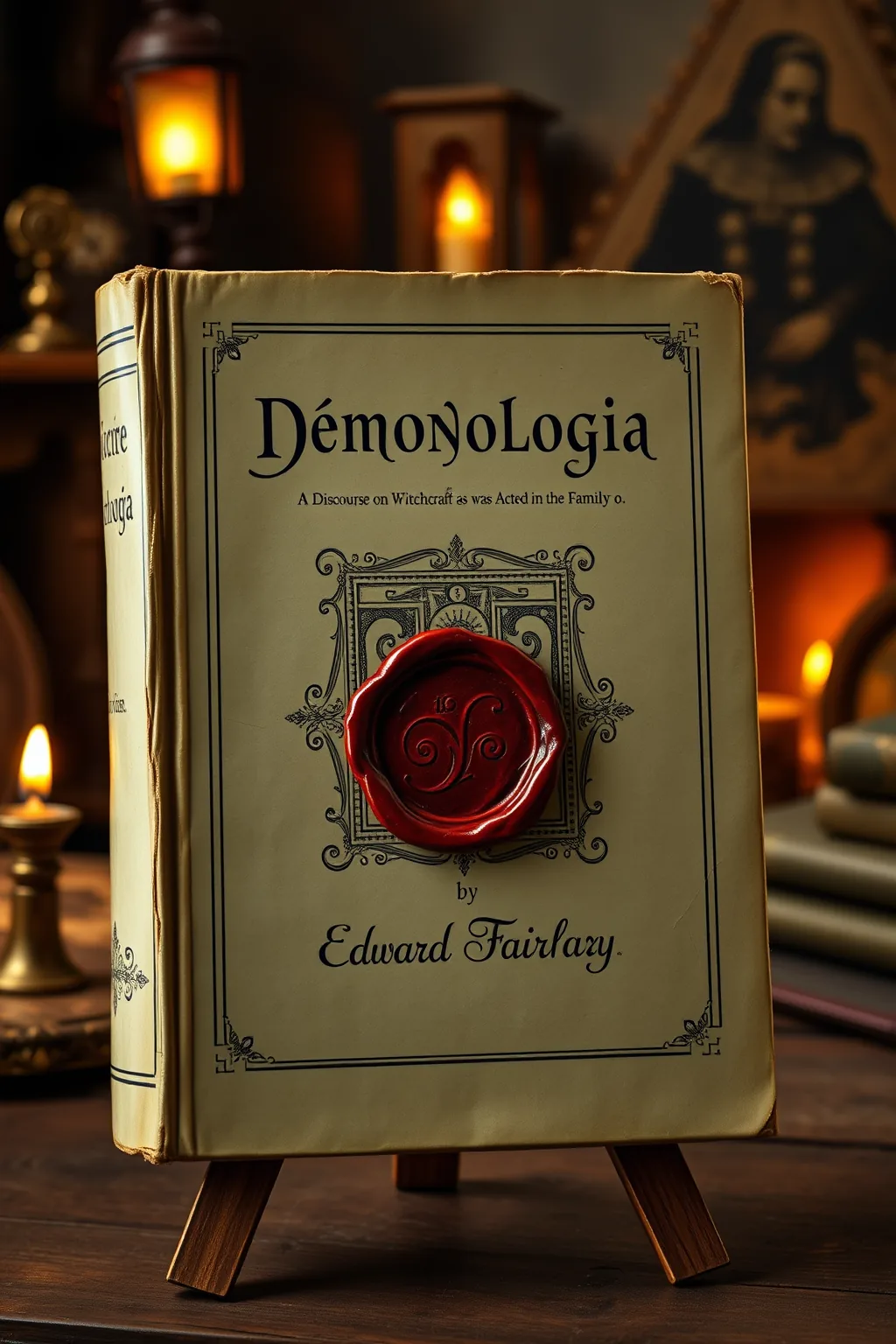
Dæmonologia: A Discourse on Witchcraft as it was Acted in the Family of Mr. Edward Fairfax, of ...
 73
73

Dæmonologia: A Discourse on Witchcraft as it was Acted in the Family of Mr. Edward Fairfax, of ...


Dæmonologia by Edward Fairfax is a compelling exploration of witchcraft and its impact on a prominent family. The book offers a detailed and often chilling account of the witchcraft trials that unfolded within the Fairfax family, providing a rare glimpse into the esoteric practices and beliefs of the time. For modern esoteric seekers, this text serves as a valuable resource for understanding the historical context of witchcraft and its enduring influence on occult traditions. The author's meticulous documentation of events and his insightful analysis make this book an essential read for anyone interested in the occult and paganism. The narrative is engaging and thought-provoking, making it a standout work in the genre.
📝 Description
73
Edward Fairfax's 1621 account details witchcraft within his own household.
Edward Fairfax's "Dæmonologia" recounts the alleged witchcraft that afflicted his family. Written in 1621, the text describes specific incidents and the perceived supernatural forces at play. Fairfax, a poet, approached the events with a blend of personal conviction and intellectual inquiry, attempting to understand the phenomena through the lens of contemporary beliefs about demonology and witchcraft. The work details the afflictions experienced, the individuals suspected, and Fairfax's own attempts to confront or comprehend these occurrences.
The book is notable for its personal perspective on what was a widespread societal concern. Unlike more abstract treatises, Fairfax's account is grounded in his direct experience. He records the spectral visions, physical torments, and behavioral changes attributed to witchcraft. The narrative is a primary source for understanding how individuals grappled with the idea of demonic influence and its tangible effects in their lives during the early 17th century.
This text falls within the tradition of early modern demonological literature, a genre that sought to explain and categorize supernatural phenomena, particularly witchcraft. Fairfax's "Dæmonologia" is distinct for its firsthand, personal testimony, moving beyond theoretical discussions to a specific family's ordeal. It engages with concepts of possession, maleficium, and the perceived actions of spirits, reflecting the anxieties and theological frameworks of its time. The work provides insight into how individuals interpreted extraordinary events through the established, albeit often debated, paradigms of occult and religious belief.
💡 Why Read This Book?
Reading Dæmonologia today offers a unique opportunity to explore the historical and cultural dimensions of witchcraft. This book provides valuable insights into the esoteric practices and beliefs that shaped the lives of people in the 17th century. For modern esoteric seekers, it serves as a bridge between the past and present, offering a deeper understanding of the occult traditions that continue to fascinate and inspire. By delving into this text, readers can gain a richer appreciation for the complexities of witchcraft and its enduring legacy.
⭐ Reader Reviews
Honest opinions from readers who have explored this book.
❓ Frequently Asked Questions
What is the primary focus of Dæmonologia?
The primary focus of Dæmonologia is the exploration of witchcraft as it affected the Fairfax family, providing detailed accounts of trials and superstitions.
Is this book suitable for beginners in esoteric studies?
Yes, this book is suitable for beginners as it offers a historical context for understanding witchcraft and occult practices.
Where can I find a digital copy of this book?
A digitized version of Dæmonologia is available on the Internet Archive, uploaded by user tpb.
🔮 Key Themes & Symbolism
Witchcraft and Rituals
Dæmonologia provides an in-depth look at the rituals and practices of witchcraft, offering readers a rare opportunity to explore the mystical forces that drive these ancient traditions. The book explores the symbolism and hidden knowledge that underpin these rituals, making it an essential read for those interested in the occult.
Hidden Knowledge and Symbolism
This esoteric text is rich in symbolism and hidden knowledge, inviting readers to ponder the deeper meanings behind witchcraft and paganism. The book's detailed descriptions and philosophical insights make it a valuable resource for scholars and practitioners alike.
Philosophical Significance
Dæmonologia explores the philosophical significance of witchcraft within the context of early modern society, offering readers a unique perspective on the mystical forces that shape our world. The book's exploration of these themes makes it an indispensable resource for those seeking to understand the enduring relevance of these ancient practices.
💡 Key Ideas
Editorial paraphrase of the work's core concepts — not direct quotes.
The veil between worlds is thin, and those who seek to cross it must do so with caution and respect.
This quote underscores the mystical and potentially dangerous nature of witchcraft.
Witchcraft is not a mere superstition, but a path to hidden knowledge and power.
This passage highlights the esoteric significance of witchcraft and its allure for those seeking forbidden knowledge.
The symbols of witchcraft are the keys to unlocking the mysteries of the universe.
This quote emphasizes the importance of symbolism in the practice of witchcraft and its role in accessing hidden knowledge.
The rituals of witchcraft are a dance with the divine, a communion with the mystical forces that govern our world.
This passage underscores the spiritual and mystical dimensions of witchcraft and its practices.
Those who examine the mysteries of witchcraft must be prepared to face the shadows within themselves.
This quote highlights the personal and introspective nature of the esoteric journey into witchcraft.
🌙 Esoteric Significance
Tradition
Dæmonologia belongs to the esoteric tradition of witchcraft and paganism, drawing on the hidden knowledge and symbolism that define these practices. The book's exploration of rituals and mystical forces makes it a valuable resource for those interested in the occult and its enduring relevance.
Symbolism
Key symbols in Dæmonologia include the pentacle, the circle of protection, and various magical sigils. These symbols represent the mystical forces at play in witchcraft and serve as keys to unlocking hidden knowledge and power.
Modern Relevance
Dæmonologia remains relevant today for modern practitioners of witchcraft and those interested in the occult. Its exploration of rituals, symbolism, and hidden knowledge offers valuable insights into the mystical forces that shape our world and the enduring significance of these ancient practices. Modern practitioners often refer to this text for its detailed descriptions and esoteric insights.
👥 Who Should Read This Book
Dæmonologia is ideal for a diverse audience, including beginners interested in the occult, scholars of esoteric traditions, spiritual seekers, and experienced practitioners of witchcraft. Beginners will find a rich introduction to the mystical and symbolic aspects of witchcraft, while scholars will appreciate the detailed historical and philosophical context. Spiritual seekers will be drawn to the book's exploration of hidden knowledge and its philosophical significance, while experienced practitioners will find valuable insights into the rituals and symbolism of witchcraft.
📜 Historical Context
Written in the 17th century, Dæmonologia emerged during a time of intense religious and social turmoil. The witchcraft trials of this era were a reflection of the fear and superstition that gripped society, as well as the struggle between traditional beliefs and the emerging scientific worldview. Edward Fairfax's account provides a valuable window into this tumultuous period, offering insights into the occult practices and mystical beliefs that shaped the era. The book's influence can be seen in the enduring fascination with witchcraft and the occult, as well as in the scholarly study of these subjects.
📔 Journal Prompts
Reflect on the rituals described in Dæmonologia. How do they compare to modern practices of witchcraft?
Consider the symbolism in the book. What hidden meanings do these symbols hold for you?
Explore the philosophical significance of witchcraft as described in Dæmonologia. How does this resonate with your own beliefs?
Think about the historical context of Dæmonologia. How do the witchcraft trials of the 17th century compare to modern views on the occult?
Reflect on the personal and introspective nature of the esoteric journey into witchcraft. What shadows within yourself have you encountered?
🗂️ Glossary
Pentacle
A five-pointed star inscribed within a circle, often used as a symbol of protection and mystical power in witchcraft.
Sigil
A magical symbol designed to represent a specific intention or desire, often used in rituals and spells.
Circle of Protection
A ritual circle used to create a sacred space and protect the practitioner from negative energies during magical workings.
Hidden Knowledge
Esoteric information and wisdom that is not widely known or understood, often sought after by practitioners of the occult.
Mystical Forces
The supernatural energies and entities that are believed to govern the world and can be accessed through magical practices.
This book appears in 2 collections
🔮 Readers Also Liked
Browse all →








From the “Witchcraft” Collection
View all →


![BAILEY, Michael D. Historical Dictionary Of Witchcraft. [inglês]](/img/thumb/bailey-michael-d-historical-dictionary-of-witchcraft-ingl-s.webp)


More Free Witchcraft & Paganism Books
View all →

![The Tipperary (or Clonmel) witch case : [transcripts of newspaper reports &c. concerning Bridget Cleary, burned as a witch, and the trial of her husband and neighbours for murder, in 1895]](/img/thumb/the-tipperary-or-clonmel-witch-case-transcripts-of-newspaper-reports-c-concerning-bridget-cleary-burned-as-a-witch-and-the-trial-of-her-husband-and-neighbours-for-murder-in-1895.webp)