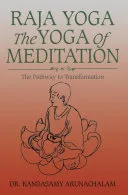
Raja Yoga the Yoga of Meditation
 78
78

Raja Yoga the Yoga of Meditation
Dr. Kandasamy Arunachalam’s "Raja Yoga the Yoga of Meditation" offers a clear, if somewhat academic, exposition of the fourth path of yoga. The book's strength lies in its methodical breakdown of Raja Yoga's principles, grounding the practice in its traditional philosophical framework. Arunachalam’s delineation of the four main yogas—Bhakti, Karma, Jnana, and Raja—provides a useful map for understanding the broader yogic landscape. A particularly illuminating section discusses the concept of *Vritti*, the mental fluctuations that obscure true perception, and how Raja Yoga aims to still them. However, the text occasionally feels more like a scholarly treatise than an intimate guide. While the 2017 publication date suggests a modern perspective, the prose can sometimes lack the direct, experiential engagement one might hope for in a text focused on meditation. The book serves best as a foundational text for those already acquainted with Indian philosophy, offering precision but perhaps less of the visceral resonance found in more experiential accounts of yogic practice. Ultimately, it is a valuable reference for understanding the theoretical architecture of Raja Yoga.
📝 Description
78
Dr. Kandasamy Arunachalam's 2017 book defines Raja Yoga as the fourth path of yoga, focused on mental control.
Raja Yoga, the Yoga of Meditation, is presented in Dr. Kandasamy Arunachalam's 2017 work as the fourth principal branch of yoga. This path is distinct from Bhakti, Karma, and Jnana Yoga, though it may incorporate elements from them. The book emphasizes the systematic cultivation of mental control and inner stillness. Meditation is portrayed not as an isolated practice, but as a direct method to realize higher consciousness and understand reality's nature. It is a practical discipline designed to quiet mental fluctuations, leading to profound self-awareness and liberation.
This text is for individuals who seek a structured approach to meditation that goes beyond superficial techniques. It will appeal to those who view yoga as a complete system for spiritual development, not just physical exercise. Readers interested in the philosophical foundations of yogic practices and those wishing to move toward direct inner experience, rather than solely devotional or intellectual paths, will find this book valuable. It is suited for serious students of esoteric disciplines ready for rigorous mental training.
Dr. Arunachalam's work on Raja Yoga is part of a long tradition of yogic philosophy, particularly its Western dissemination in the late 19th and early 20th centuries, influenced by figures like Swami Vivekananda. While ancient texts such as Patanjali's Yoga Sutras provide the historical basis, Arunachalam's 2017 publication offers a modern interpretation. This era saw increased interest in Indian spiritual traditions, often studied through comparative religion and Theosophy, making contemporary analyses like this important for tracing the evolution and spread of these concepts.
💡 Why Read This Book?
• Gain a precise understanding of Raja Yoga as the distinct path of meditation, differentiating it from Bhakti, Karma, and Jnana Yoga, as detailed in Dr. Arunachalam’s 2017 analysis. • Learn the fundamental yogic concepts of *Dharana* and *Dhyana* as practical steps toward achieving *Samadhi*, a core objective of Raja Yoga as explained within the text. • Comprehend the classical yogic view of *Chitta* and its *Vritti*, understanding how their stilling is central to the self-realization goals of Raja Yoga.
⭐ Reader Reviews
Honest opinions from readers who have explored this book.
❓ Frequently Asked Questions
What are the four main categories of yoga discussed in "Raja Yoga the Yoga of Meditation"?
Dr. Kandasamy Arunachalam identifies four primary branches: Bhakti Yoga (devotion), Karma Yoga (service), Jnana Yoga (wisdom), and Raja Yoga (meditation). The book specifically focuses on the latter.
When was "Raja Yoga the Yoga of Meditation" first published?
The book by Dr. Kandasamy Arunachalam was first published on December 19, 2017.
Is Raja Yoga primarily about physical postures?
No, "Raja Yoga the Yoga of Meditation" emphasizes that Raja Yoga is the yoga of meditation and mental control, distinct from the physical aspects often associated with Hatha Yoga.
What is the ultimate goal of Raja Yoga according to the book?
The book explains that the goal of Raja Yoga is to achieve control over the mind, leading to states of deep meditation (*Samadhi*) and direct realization of higher consciousness.
What is the relationship between Raja Yoga and other forms of yoga like Jnana Yoga?
While distinct, Raja Yoga often complements other forms. The book suggests that Jnana Yoga (wisdom) can inform the meditative practice of Raja Yoga, and Raja Yoga can provide the mental discipline to deeply explore wisdom.
Who is the author of "Raja Yoga the Yoga of Meditation"?
The author is Dr. Kandasamy Arunachalam, whose work on Raja Yoga was first published in 2017.
🔮 Key Themes & Symbolism
The Four Paths of Yoga
The work meticulously distinguishes between the four primary yogic paths: Bhakti (devotion), Karma (action/service), Jnana (knowledge/wisdom), and Raja Yoga (meditation). Arunachalam positions Raja Yoga as the discipline focused on direct mental cultivation and control, distinct from the emotional focus of Bhakti, the selfless action of Karma, or the intellectual pursuit of Jnana. Understanding these divisions is crucial for appreciating Raja Yoga's specific role in spiritual development and its unique approach to achieving inner stillness and self-awareness.
Mind Control and Stillness
Central to Raja Yoga is the concept of mastering the mind, or *Chitta*. The text studies how the mind is characterized by constant fluctuations, known as *Vritti*. Raja Yoga provides the systematic techniques, primarily through concentration (*Dharana*) and meditation (*Dhyana*), to quiet these mental disturbances. The ultimate aim is to achieve a state of profound mental stillness, allowing the practitioner to perceive reality more clearly and connect with their deeper consciousness.
The Path to Samadhi
The ultimate objective of Raja Yoga, as expounded in this book, is the attainment of *Samadhi*, a state of profound meditative absorption and inner union. This state transcends ordinary consciousness, where the distinction between the meditator, the act of meditation, and the object of meditation dissolves. The book likely outlines the progression through various stages of concentration and meditation, which are presented as essential preparatory steps for reaching this advanced spiritual state of awareness and insight.
Raja Yoga as Esoteric Discipline
Arunachalam frames Raja Yoga not merely as a relaxation technique but as a rigorous esoteric discipline. It requires consistent effort and a deep understanding of the mind's mechanics. The book likely touches upon the ethical underpinnings and mental preparation necessary for such advanced practice. This perspective aligns Raja Yoga with broader esoteric traditions that emphasize inner transformation through systematic mental and spiritual training, rather than outward rituals or external devotion alone.
💬 Memorable Quotes
Direct passages from the work, attributed to the author.
“Raja-yoga is the yoga of meditation.”
— This straightforward statement defines the book's core subject, immediately distinguishing it from other yogic paths like Bhakti, Karma, or Jnana Yoga and setting the focus on internal mental discipline.
“Yoga falls into four categories.”
— This indicates the book's structured approach, presenting Raja Yoga not in isolation but as one part of a larger, categorized system of spiritual development, providing context for its specific role.
“What we are concerned with here is raja-yoga.”
— This direct assertion clearly signals the book's intent to focus exclusively on the principles and practices of Raja Yoga, guiding the reader toward its specific teachings.
“There are, of course, other forms of yoga that are accessories to the four main categories.”
— This acknowledges the existence of various yogic practices that support the main branches, suggesting a comprehensive view of yoga where specialized techniques serve the overarching goals of the four primary paths.
“The first, being the yoga of devotion, is termed bhakti yoga.”
— This provides the initial definition in the book's categorization, establishing Bhakti Yoga as the first of the four main branches and setting the stage for the introduction of the others.
🌙 Esoteric Significance
Tradition
Raja Yoga, as discussed by Arunachalam, firmly belongs to the Vedanta and Samkhya philosophical traditions of India, which underpin classical yogic thought. It is considered esoteric due to its focus on internal, subjective experience and the systematic manipulation of consciousness, rather than external dogma or ritual. Its lineage traces back to ancient Indian sages, with Patanjali's Yoga Sutras being a foundational text. This work fits within the broader category of esoteric spirituality by offering a path to self-mastery and enlightenment through disciplined inner work, aligning with traditions that seek hidden knowledge and spiritual transformation.
Symbolism
While the book's primary focus is on mental states rather than overt symbolism, the concept of *Vritti* (mental fluctuations) can be seen metaphorically as ripples on the surface of a lake, obscuring the clear reflection of the Self. The goal of stilling these *Vritti* is akin to calming the water to see the true image. Furthermore, the eight limbs of Raja Yoga, though not always detailed in this specific excerpt, symbolically represent a progressive journey from ethical conduct and physical discipline to profound meditative absorption and ultimate liberation, each limb building upon the last.
Modern Relevance
Contemporary mindfulness practices, secularized meditation techniques, and contemplative neuroscience often draw implicitly or explicitly from the principles of Raja Yoga. Thinkers and practitioners in fields like positive psychology and transpersonal psychology engage with concepts of focused attention and altered states of consciousness that echo Raja Yoga's goals. Furthermore, modern yoga instructors and spiritual seekers continue to turn to scholarly interpretations like Arunachalam's to understand the deeper philosophical and psychological underpinnings of meditation beyond its popular physical associations.
👥 Who Should Read This Book
• Aspiring meditators seeking a structured, philosophical approach to deepening their practice beyond basic techniques. • Students of comparative religion and philosophy interested in understanding the distinct branches of Indian yogic thought. • Esoteric practitioners looking to integrate rigorous mental discipline into their spiritual development path, complementing other contemplative or ritualistic practices.
📜 Historical Context
Dr. Kandasamy Arunachalam’s "Raja Yoga the Yoga of Meditation," published in 2017, enters a long tradition of interpreting Patanjali's Yoga Sutras and related texts. The late 19th and early 20th centuries saw a significant Western engagement with Indian philosophies, notably through figures like Swami Vivekananda, who introduced Raja Yoga to a global audience at the 1893 Parliament of Religions. This era was characterized by the rise of Theosophy and an increasing academic interest in comparative religion. Arunachalam’s work builds upon this foundation, offering a modern perspective on a practice that had previously been explored by scholars and yogis alike. While figures like Helena Blavatsky and later scholars like Mircea Eliade engaged with yogic traditions, Arunachalam's text focuses specifically on the meditative aspect, providing a contemporary scholarly lens on an ancient practice.
📔 Journal Prompts
The concept of *Vritti* and its impact on your perception.
Cultivating *Dharana*: Identifying a single point of focus for sustained attention.
The progression towards *Samadhi*: Reflecting on states of deep concentration.
Distinguishing Raja Yoga from Bhakti Yoga in personal practice.
The role of mental stillness in achieving self-awareness.
🗂️ Glossary
Raja Yoga
Literally 'Royal Yoga,' this branch of yoga focuses on meditation, mental control, and the systematic discipline of the mind to achieve higher consciousness and self-realization.
Bhakti Yoga
The yoga of devotion, characterized by love, surrender, and emotional connection to the Divine or a chosen deity.
Karma Yoga
The yoga of selfless action and service, emphasizing performing one's duties without attachment to the results.
Jnana Yoga
The yoga of wisdom and knowledge, involving intellectual inquiry, discrimination, and the pursuit of understanding the true nature of reality.
Chitta
In yogic philosophy, this refers to the mind-stuff, consciousness, or the totality of the mind, including intellect and ego.
Vritti
The modifications, fluctuations, or disturbances of the mind-stuff (*Chitta*) that cloud clear perception and prevent direct experience of the Self.
Samadhi
A state of profound meditative absorption, profound concentration, or union, where the mind achieves a state of deep stillness and oneness with the object of meditation.