The illustrated I Ching
 61
61

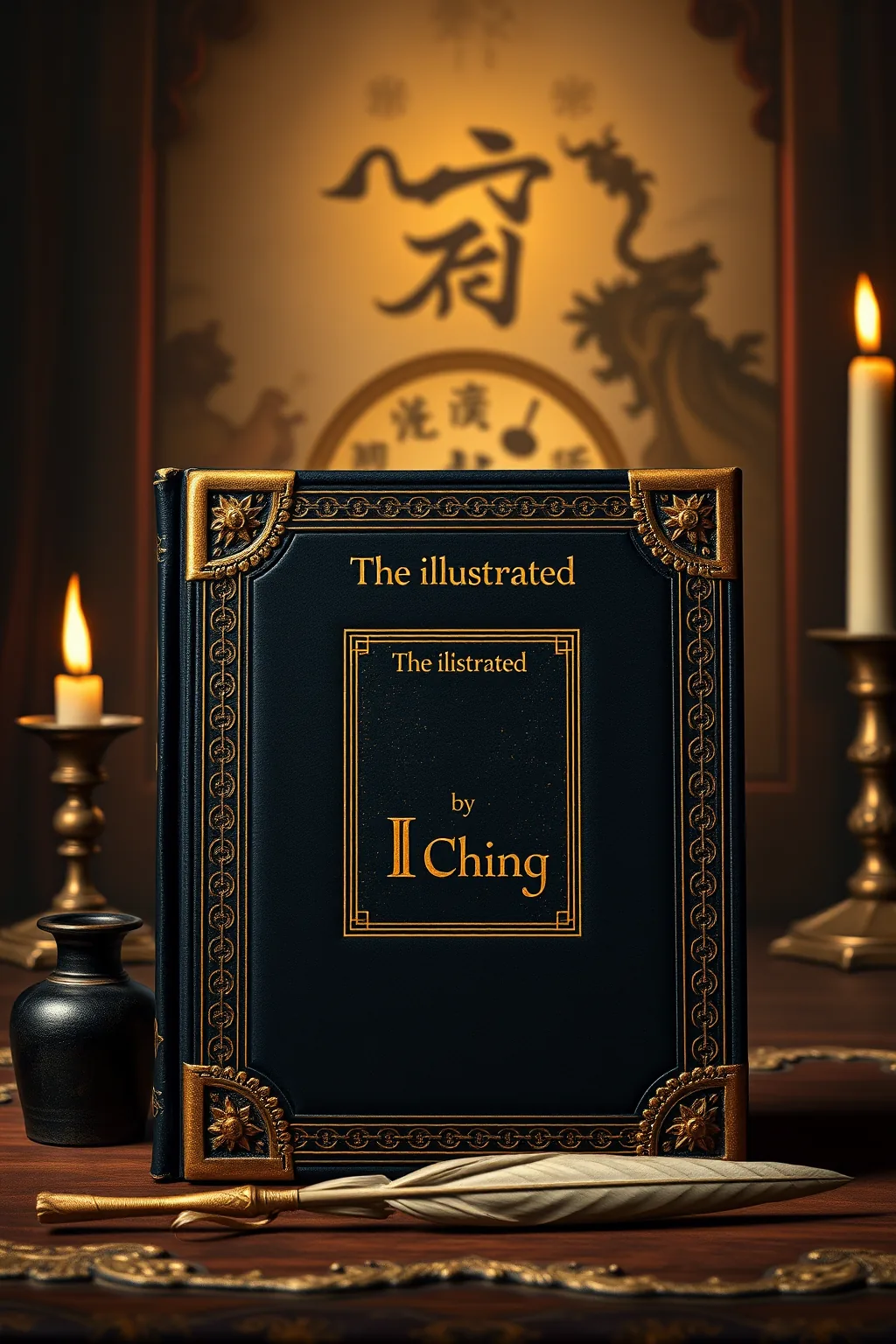
The illustrated I Ching



By Alaric Kestrel (Metaphysical Studies Reviewer) — "The Illustrated I Ching" is a masterpiece of visual and philosophical translation, breathing vibrant life into one of humanity's most revered oracular texts. Its strength lies in its ability to render abstract esoteric concepts into accessible, potent imagery, guiding the reader through the labyrinthine wisdom of the hexagrams. This edition transcends mere academic study, offering a truly intuitive and spiritual engagement with the Book of Changes. It serves as an invaluable resource for serious practitioners of divination, as well as for scholars and seekers of profound philosophical insights. The clarity of its presentation makes the profound wisdom of the I Ching approachable, fostering a deeper connection to its timeless teachings on transformation and cosmic order.
📝 Description
61
Published without a known author, 'The Illustrated I Ching' presents a visual approach to the ancient Chinese divination text.
This edition of the I Ching focuses on its visual elements, using illustrations to interpret the sixty-four hexagrams. Each hexagram is presented not just as a set of lines but as a symbol, meant to represent cosmic forces and human events. The book aims to make the philosophy of change, balance, and interconnectedness accessible through these images. It goes beyond simple fortune-telling, positioning itself as a tool for self-understanding and guidance through life's complexities.
The target audience includes those seeking deeper meaning, an understanding of archetypal patterns, and the connection between art and philosophy. The illustrations are intended to provide a direct link to the historical practice of the I Ching, connecting the reader to a long tradition of esoteric thought. By engaging with the visual representations, the book encourages a perception of underlying energies and promotes a sense of inner harmony and self-awareness. It is offered as a resource for individuals interested in fate, ancient Chinese philosophy, and personal reflection.
The I Ching, or 'Book of Changes,' is a foundational text in Chinese philosophy and divination, dating back centuries. Its esoteric tradition lies in its use as a tool for understanding cosmic patterns and seeking guidance on personal and collective matters. The sixty-four hexagrams, formed by combinations of yin and yang lines, are seen as archetypal representations of situations and transformations. This illustrated version specifically highlights the visual language of the hexagrams, connecting their symbolic forms to broader philosophical concepts and the practice of divination within Taoist and Confucian thought.
💡 Why Read This Book?
Immerse yourself in the profound, visual language of the I Ching. This edition unlocks the archetypal meanings behind each hexagram through captivating illustrations, offering a unique path to understanding cosmic cycles and personal destiny. Ideal for seekers of ancient wisdom, practitioners of divination, and scholars of esoteric traditions who desire a rich, accessible exploration of this seminal text.
⭐ Reader Reviews
Honest opinions from readers who have explored this book.
❓ Frequently Asked Questions
What is the I Ching?
The I Ching, or Book of Changes, is an ancient Chinese divination text and philosophical classic, revered for its profound insights into the nature of change, balance, and the interconnectedness of all things.
How is this edition different?
This edition distinguishes itself through its comprehensive and evocative illustrations, which visually interpret the symbolism and meaning of each hexagram, making the text more accessible and spiritually resonant.
Who is the intended audience?
This book is designed for a broad audience, including those new to the I Ching, experienced practitioners, scholars of Eastern philosophy and esotericism, and anyone seeking a deeper understanding of life's patterns and transformations.
Can I use this for divination?
Absolutely. The accompanying text and illustrations are crafted to facilitate intuitive understanding and practical application for divination, offering guidance on interpreting hexagrams for personal reflection and decision-making.
What philosophical concepts does it explore?
It delves into core Taoist and Confucian philosophies, exploring themes of Yin and Yang, the five elements, cyclical change, human virtue, the Mandate of Heaven, and the balance between action and stillness.
🔮 Key Themes & Symbolism
The Dynamics of Change
Central to the I Ching is the profound understanding that all existence is in a constant state of flux. This theme explores the ceaseless interplay of forces, the cyclical nature of phenomena, and the wisdom of adapting to transformation rather than resisting it. It teaches that within every apparent ending lies the seed of a new beginning, urging practitioners to recognize the opportune moments for action and the necessity of patient observation.
Cosmic Harmony and Interconnectedness
The I Ching posits a universe where all elements are interconnected and influenced by overarching cosmic principles. This theme explores the subtle energies that bind the macrocosm and microcosm, illustrating how personal actions resonate with universal patterns. It emphasizes the importance of aligning oneself with the natural order, fostering a sense of unity and understanding that individual lives are part of a grand, harmonious design.
The Art of Wise Counsel
Beyond mere prediction, the I Ching serves as a sophisticated oracle for ethical guidance and decision-making. This theme focuses on the book's role as a source of profound counsel, offering insights into the consequences of actions, the cultivation of virtue, and the path towards balance and self-mastery. It encourages introspection, urging the reader to consult the hexagrams not just for answers, but for a deeper understanding of themselves and their place in the unfolding cosmic narrative.
💬 Memorable Quotes
Direct passages from the work, attributed to the author.
“When you are near the right, you are near the wrong.”
— This highlights the delicate balance between opposing forces and the subtle nature of truth, suggesting that extreme positions can easily lead to their opposite.
“The superior man, when he has made a mistake, will not repeat it.”
— This underscores the value of learning from experience and the continuous process of self-improvement through mindful correction.
“The movement of what is changing is difficult to see.”
— This speaks to the subtle and often imperceptible nature of transformation, urging patience and keen observation to grasp the underlying shifts.
“The superior man makes himself strong and vigorous.”
— This emphasizes the importance of inner strength, resilience, and proactive engagement with life's challenges for personal growth and effectiveness.
💡 Key Ideas
Editorial paraphrase of the work's core concepts — not direct quotes.
The superior man acts before he speaks, and afterwards speaks according to his actions.
This quote emphasizes the importance of integrity and action aligned with words, a core tenet for ethical conduct and self-cultivation.
🌙 Esoteric Significance
Tradition
The I Ching is intrinsically linked to Taoist and Confucian traditions, serving as a foundational text for Chinese esoteric philosophy. It embodies the Taoist principle of 'Wu Wei' (non-action or effortless action) and the Confucian emphasis on ethical cultivation and societal harmony. Its oracular function taps into ancient shamanistic practices, viewing the hexagrams as conduits for divine or cosmic guidance, bridging the mundane and the sacred.
Symbolism
The core symbolism revolves around the interplay of Yin (feminine, passive, dark) and Yang (masculine, active, light) represented by broken and unbroken lines, which combine to form the sixty-four hexagrams. Each hexagram is a complex symbol of a specific situation or archetypal pattern. Further layers of symbolism are found in the trigrams (three-line combinations) and the imagery associated with each hexagram, representing natural phenomena, human relationships, and stages of life.
Modern Relevance
In contemporary times, the I Ching offers a powerful framework for navigating complexity, uncertainty, and personal growth. Its emphasis on adaptability, the cyclical nature of life, and the interconnectedness of all things provides profound wisdom for modern challenges. It serves as a tool for introspection, decision-making, and fostering a deeper understanding of oneself and one's place in the world, making its ancient insights remarkably relevant to the spiritual and psychological needs of today.
👥 Who Should Read This Book
This key work is essential for the dedicated seeker of ancient wisdom, offering a profound exploration of life's fundamental principles. Scholars of Eastern philosophy and comparative religion will find its depth and historical significance important for academic study. Practitioners of divination and esoteric arts will discover a richly illustrated guide to one of the world's most revered oracles. Furthermore, individuals on a path of personal growth and self-discovery will benefit from its timeless counsel on navigating change, understanding destiny, and cultivating inner harmony.
📜 Historical Context
The I Ching, or Book of Changes, traces its origins to ancient China, with its earliest components dating back to the Western Zhou Dynasty (c. 1046–771 BCE). Initially a complex system of divination used by rulers and shamans, it evolved over centuries, incorporating philosophical commentaries that elevated it to a profound work of wisdom. The Ten Wings, attributed to Confucius and his disciples, significantly shaped its esoteric and philosophical dimensions during the Warring States period and the Han Dynasty (206 BCE – 220 CE). This period saw the systematization of the hexagrams and their interpretations, embedding concepts of Yin and Yang, the five elements, and a sophisticated understanding of cosmic cycles. The I Ching's influence permeated Chinese culture, impacting philosophy, politics, art, medicine, and spiritual practices, establishing it as a core part of East Asian thought.
📔 Journal Prompts
Reflect on a recent situation where change was inevitable. How did you respond, and what hexagram might represent that transition?
Consider the interplay of Yin and Yang in your daily life. Where do you see balance, and where is there an imbalance?
How can the principle of 'Wu Wei' be applied to a challenge you are currently facing?
If you were to consult the I Ching for guidance on a specific dilemma, what question would you pose, and what qualities would you hope to uncover in the response?
Explore the concept of interconnectedness. How do your actions, however small, ripple outwards into the larger web of existence?
🗂️ Glossary
Hexagram
A symbol composed of six stacked lines, representing a specific archetype or situation, formed by the combination of two trigrams. There are sixty-four unique hexagrams.
Trigram
A symbol composed of three stacked lines, either broken (Yin) or unbroken (Yang). There are eight fundamental trigrams, each representing a core concept or element.
Yin
The feminine, passive, dark, receptive, and yielding principle in the I Ching and Taoist philosophy, represented by a broken line (--).
Yang
The masculine, active, light, creative, and assertive principle in the I Ching and Taoist philosophy, represented by an unbroken line (—).
Wu Wei
A central Taoist concept meaning 'non-action' or 'effortless action.' It refers to acting in accordance with the natural flow of the Tao, without forcing or striving, leading to effectiveness.
This book appears in 3 collections
🔮 Readers Also Liked
Browse all →









From the “Tarot” Collection
View all →









More Free Divination & Tarot Books
View all →