The I Ching
 62
62

The I Ching



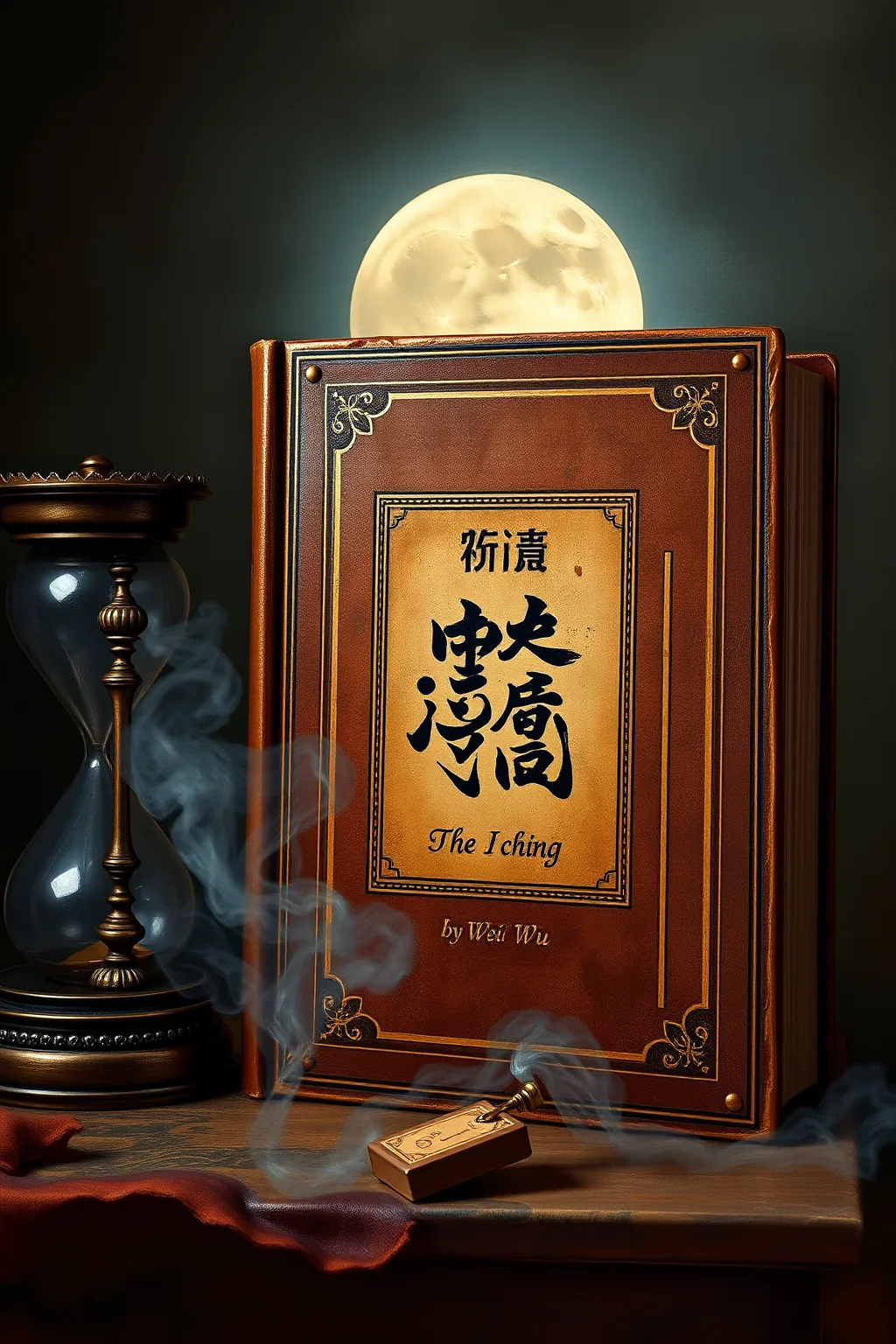
Isolde Whitaker, Sacred Texts Editor, hails Wei Wu’s *I Ching* as an indispensable gateway into the heart of Chinese metaphysical thought. This translation masterfully distills the esoteric essence of the Yi Jing, illuminating its profound symbolic language and prophetic insights. Wei Wu’s scholarly yet accessible approach makes the ancient wisdom of the hexagrams resonate with contemporary seekers. It excels in revealing the philosophical underpinnings and practical applications of this foundational text, offering clarity for both novice diviners and seasoned practitioners. Essential for anyone drawn to the mysteries of fate, the art of self-discovery, and the pursuit of cosmic harmony, this rendition is a treasure for the discerning reader.
📝 Description
62
Wei Wu translated the I Ching, a text fundamental to Chinese divination since at least the 11th century BCE.
The I Ching, or Book of Changes, is a classical Chinese text used for divination and as a philosophical guide. Its structure is built around 64 hexagrams, each composed of six lines that represent fundamental aspects of existence. These lines and hexagrams symbolize the interplay of Yin and Yang, the dualistic principles that drive all change and transformation in the cosmos.
Wei Wu's translation aims to make the text accessible, revealing the symbolic language that governs fate and human agency. It suggests a deep connection between the patterns within the hexagrams and the unfolding of events in the world. The book invites readers to engage with its content not just intellectually, but through contemplation and practice, seeking insight into life's complexities.
As one of the oldest Chinese classical texts, the I Ching is central to East Asian esoteric traditions. It forms the basis for many schools of divination and cosmological thought. Its hexagrams are seen as a symbolic language reflecting universal principles, used to understand the flow of time and the interconnectedness of all phenomena. Practitioners have historically consulted it for guidance on personal decisions and understanding the broader forces at play in the world.
💡 Why Read This Book?
Unlock ancient wisdom for modern challenges. The *I Ching* offers profound insights into the cycles of change, guiding you toward balance and harmony. Ideal for seekers of self-knowledge, practitioners of divination, and scholars of Eastern philosophy. Discover a timeless oracle that empowers you to understand your path and make informed decisions, fostering personal growth and spiritual understanding.
⭐ Reader Reviews
Honest opinions from readers who have explored this book.
❓ Frequently Asked Questions
What is the I Ching?
The I Ching, or Book of Changes, is an ancient Chinese divination text and philosophical classic. It uses a system of 64 hexagrams, composed of six lines each, to offer guidance and insights into the nature of change and the unfolding of events.
How is the I Ching used for divination?
Divination with the I Ching typically involves casting yarrow stalks or coins to generate a hexagram. The resulting hexagram, along with its changing lines, is then interpreted using the text's commentaries to provide answers or guidance on a specific question or situation.
Who was Wei Wu?
Wei Wu is the esteemed translator of this edition of the I Ching, known for their deep understanding of classical Chinese philosophy and their ability to convey complex esoteric concepts with clarity and depth.
Is the I Ching difficult to understand?
While the I Ching’s symbolism can be intricate, Wei Wu’s translation aims for accessibility. Consistent study and an open mind are key to grasping its profound wisdom, making it rewarding for both beginners and advanced students.
What are the main philosophical concepts in the I Ching?
Key concepts include the interplay of Yin (passive, dark, feminine) and Yang (active, light, masculine), the constant nature of change, the influence of cosmic forces, and the importance of aligning one's actions with the natural order of the universe.
🔮 Key Themes & Symbolism
The Cosmic Dance of Yin and Yang
The I Ching posits a universe in constant motion, driven by the dynamic interplay of Yin and Yang. These fundamental forces, representing complementary opposites like darkness and light, passivity and activity, femininity and masculinity, are not in conflict but in perpetual balance and transformation. Understanding their ebb and flow is crucial to comprehending the text's predictive power and philosophical depth. This duality permeates every aspect of existence, influencing natural phenomena, human relationships, and personal destiny. By recognizing these forces, one can align with the natural rhythm of the cosmos, fostering harmony and facilitating wise decision-making.
The Inevitability of Change
Fundamentally, the I Ching is a evidence of the ceaseless nature of change. It teaches that nothing is static; all things are in a state of flux, evolving through predictable cycles. The 64 hexagrams represent the archetypal situations and transformations that life presents. Rather than resisting change, the text encourages an acceptance and understanding of its processes. By studying these patterns, individuals can learn to navigate transitions with greater wisdom, adaptability, and foresight, transforming potential challenges into opportunities for growth and spiritual evolution. It is a profound lesson in impermanence and resilience.
The Oracle of Self-Knowledge and Guidance
Beyond mere fortune-telling, the I Ching serves as a sophisticated oracle for self-reflection and spiritual guidance. Each hexagram and its associated texts offer clear insights into the subtle energies at play in any given situation. It prompts introspection, encouraging the seeker to examine their own intentions, actions, and the underlying causes of their circumstances. The wisdom derived from the I Ching is not prescriptive but informative, empowering individuals to make conscious choices that align with their higher purpose and the natural order of the universe, fostering personal transformation and inner peace.
💬 Memorable Quotes
Direct passages from the work, attributed to the author.
“He who knows the ways of change is the universal lord.”
— Understanding the principles of transformation grants one mastery over circumstances and the ability to navigate life’s complexities with useful insights.
“When the right time arrives, the right action follows.”
— This highlights the significance of timing and patience. Wisdom lies in recognizing opportune moments and acting in accordance with the natural flow of events.
“The superior man does not hoard. The more he cultivates for others, the more he possesses.”
— Generosity and selfless contribution are seen as the path to true abundance. By giving, one ultimately receives and grows.
💡 Key Ideas
Editorial paraphrase of the work's core concepts — not direct quotes.
The superior man acts before he speaks, and with his words he abides.
This quote emphasizes the importance of action and integrity. True authority comes from demonstrating principles through deeds rather than mere pronouncements.
Stillness leads to clarity, and clarity leads to right action.
This quote underscores the value of introspection and mental quietude. A calm mind is essential for discerning the truth and making wise, effective decisions.
🌙 Esoteric Significance
Tradition
The I Ching is a foundational text within the Taoist and Confucian traditions, deeply interwoven with Chinese esoteric philosophy and cosmology. It is considered a primary source for understanding the principles of 'Qi' (vital energy), the cyclical nature of the universe, and the harmonious interplay between humanity and the natural world. Its system of divination and philosophical insights are central to practices aimed at achieving balance, self-cultivation, and alignment with the Tao.
Symbolism
The core symbolism of the I Ching resides in its 64 hexagrams, each a unique combination of six lines, which are either solid (Yang) or broken (Yin). These lines and their arrangements represent archetypal situations, forces, and transformations. The trigrams (three-line combinations) are also highly symbolic, representing elemental forces like Heaven, Earth, Water, Fire, and Thunder, and their interactions. The text's imagery, often drawn from nature and daily life, provides a wide range of metaphors for understanding universal principles.
Modern Relevance
In contemporary times, the I Ching continues to offer profound relevance as a tool for self-discovery, ethical guidance, and navigating complexity. Its emphasis on adaptability, understanding change, and finding balance resonates deeply in our rapidly evolving world. Psychologists and spiritual seekers alike utilize its wisdom for introspection, decision-making, and fostering a deeper connection to the underlying order of the universe. It provides a timeless framework for personal growth and mindful living.
👥 Who Should Read This Book
This edition of the *I Ching* is a profound resource for a diverse audience. **Beginners** will find Wei Wu's translation an accessible yet deep introduction to this ancient oracle, offering clarity on its fundamental concepts. **Scholars** of Eastern philosophy and history will appreciate its meticulous scholarship and nuanced interpretations. **Spiritual seekers** and practitioners of divination will discover a powerful tool for introspection, guidance, and understanding the subtle currents of life. **Anyone** seeking wisdom on navigating change, fostering balance, and gaining deeper self-awareness will find invaluable insights within its pages.
📜 Historical Context
The I Ching, or Book of Changes, boasts a history stretching back over three millennia, making it one of the world's oldest and most influential texts. Its origins are shrouded in myth, with traditional attribution to the sage Fu Xi, followed by significant contributions from King Wen, the Duke of Zhou, and Confucius. During the Zhou Dynasty (c. 1046–256 BCE), it evolved from a divination manual into a profound philosophical and cosmological work. Its influence permeated Chinese culture, impacting governance, medicine, art, and philosophy. The text's enduring appeal lies in its ability to adapt to different eras, offering timeless wisdom that appeals to successive generations seeking to understand the fundamental principles of existence and work through the ever-present currents of change.
📔 Journal Prompts
Reflect on a recent situation where you felt a strong pull between two opposing forces. How did Yin and Yang manifest, and what did you learn from this dynamic?
Consider a significant change you are currently experiencing or anticipating. How does the I Ching's philosophy of impermanence offer comfort or insight?
If the I Ching were to offer you a single piece of advice for navigating your current path, what do you believe it would be, and why?
Explore the symbolism of one of the trigrams (e.g., Heaven, Earth, Water). How does its associated imagery and meaning relate to your personal experiences or current life circumstances?
How can you actively cultivate 'stillness' in your daily life to achieve greater clarity and make more effective decisions, as suggested by the I Ching?
🗂️ Glossary
Hexagram
A symbol composed of six stacked horizontal lines, either solid (Yang) or broken (Yin), used in the I Ching to represent archetypal situations and transformations.
Trigram
A symbol composed of three stacked horizontal lines, which form the building blocks of the 64 hexagrams in the I Ching.
Yin
In the I Ching, Yin represents the passive, dark, receptive, and feminine principle, often associated with the moon and the earth.
Yang
In the I Ching, Yang represents the active, light, creative, and masculine principle, often associated with the sun and the heavens.
Tao (Dao)
The fundamental principle of the universe in Taoist philosophy, often translated as 'the Way.' It represents the natural order, flow, and underlying essence of all things.
This book appears in 3 collections
🔮 Readers Also Liked
Browse all →







From the “Tarot” Collection
View all →






More Free Divination & Tarot Books
View all →