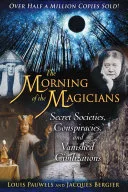
The Morning of the Magicians
 75
75

The Morning of the Magicians
Pauwels and Bergier’s 1960 exposé feels less like a scholarly examination and more like a fervent manifesto for the occult underground. Its strength lies in its sheer audacity, bringing together disparate elements like Tibetan Buddhism, Nazi occultism, and the work of Charles Fort into a sprawling, interconnected narrative. The section detailing the supposed mystical quests of the Third Reich, while unsubstantiated, remains a potent and influential piece of esoteric lore. However, the book’s primary limitation is its uncritical acceptance of its sources; assertion often stands in for evidence. For instance, their portrayal of the alchemist Fulcanelli, while evocative, relies heavily on mythologizing rather than verifiable fact. The work’s enduring appeal stems from its willingness to entertain possibilities outside conventional science, yet readers should approach its claims with a healthy dose of skepticism.
This book remains a significant, if flawed, primer for those venturing into esoteric studies.
📝 Description
75
Published in 1960, The Morning of the Magicians examined occultism, anomalies, and history.
Louis Pauwels and Jacques Bergier's 1960 book investigates the connections between occult beliefs, scientific anomalies, and historical events. It brought together topics like telepathy, precognition, and purported supernatural occurrences, which had previously been relegated to fringe discussions. The authors synthesized information from various sources to suggest hidden forces influence human history and consciousness.
The book appeals to readers curious about the unexplained and potential hidden influences on the world. Those interested in the history of esoteric thought, paranormal research, and alternative historical accounts will find substantial content. It is especially suitable for individuals seeking to link diverse fields, from alchemy to parapsychology, and who question established viewpoints.
Published during the Cold War and growing interest in the paranormal, *The Morning of the Magicians* reflected a fascination with conspiracy and the unknown. Its examination of occult influences on the Third Reich, including alleged Nazi interest in the Thule Society, was controversial. The book appeared at a time when figures like Charles Fort were documenting anomalies and G.I. Gurdjieff influenced spiritual thought.
This work emerged from a post-war European intellectual milieu where interest in esoteric traditions and the paranormal was resurfacing. It drew upon earlier currents of thought that sought to integrate mystical or occult knowledge with scientific inquiry, often in opposition to materialistic or rationalist worldviews. The book connected these ideas to contemporary anxieties and the perceived mysteries of the universe, placing itself within a lineage of writers who explored alternative realities.
💡 Why Read This Book?
• Understand the historical impact of the book's 1960 publication by exploring its role in popularizing occultism and paranormal phenomena for a post-war generation. • Examine the book's controversial connections between the Third Reich and esoteric beliefs, a topic that continued to fuel discussion and research for decades. • Gain familiarity with key figures like the alchemist Fulcanelli and researcher Charles Fort, whose works are presented as vital components of hidden knowledge.
⭐ Reader Reviews
Honest opinions from readers who have explored this book.
❓ Frequently Asked Questions
When was 'The Morning of the Magicians' originally published?
The book was first published on December 9, 2008, though its initial conception and widespread influence date back to its original 1960 release.
What is the central thesis of 'The Morning of the Magicians'?
The book proposes that occult traditions, paranormal phenomena, and hidden spiritual currents have significantly influenced human history and consciousness, challenging materialistic worldviews.
Which historical figures are discussed in the book?
Key figures include the alchemist Fulcanelli, Charles Fort, and G.I. Gurdjieff, alongside explorations of alleged occult interests within the Third Reich.
What role did 'The Morning of the Magicians' play in the 1960s?
It was instrumental in popularizing occultism, alchemy, and paranormal research, bringing these subjects into mainstream intellectual discourse and sparking widespread interest.
Does the book offer scientific explanations for paranormal events?
Rather than strict scientific proof, the book explores theoretical possibilities and historical accounts, suggesting that conventional science may not encompass all of reality.
Is 'The Morning of the Magicians' considered a factual historical account?
While it discusses historical events and figures, the book is more accurately described as an exploration of esoteric interpretations and speculative history, blending fact with occult lore.
🔮 Key Themes & Symbolism
Occult Influences on History
The work posits that esoteric knowledge and occult practices have subtly guided human civilization. It scrutinizes alleged connections between secret societies, alchemical traditions, and important historical moments, most notably the Third Reich. The authors suggest that figures operating outside conventional power structures have often been the true architects of change, driven by hidden agendas and spiritual insights.
Paranormal Phenomena and Consciousness
Pauwels and Bergier elevate subjects like telepathy, precognition, and psychic abilities from the field of superstition to potential fields of study. They explore how these phenomena might represent untapped human potentials or interactions with non-physical realities. The book encourages readers to reconsider the boundaries of the known universe and the capabilities of the human mind.
The Alchemical Tradition
Alchemy is presented not merely as primitive chemistry but as a profound spiritual discipline and a symbolic language for understanding cosmic and human transformation. The book highlights figures like Fulcanelli, whose work is interpreted as a key to unlocking ancient wisdom. This perspective frames alchemy as a crucial element in a hidden lineage of knowledge passed down through centuries.
Challenging Materialism
A central aim is to counter the dominant materialistic worldview by presenting evidence and arguments for a more encompassing reality. The authors draw on mythology, mysticism, and reports of anomalous events to suggest that science alone cannot explain the totality of existence. This approach invites a re-evaluation of what constitutes 'reality' and 'knowledge'.
💬 Memorable Quotes
Direct passages from the work, attributed to the author.
“The world is not what it seems.”
— This concise statement expresses the book's core premise: that conventional, observable reality is only a superficial layer, and deeper, hidden forces and truths are at play.
“Alchemy is the science of the secret.”
— This highlights the book's view of alchemy not just as a proto-scientific practice but as a symbolic system for accessing hidden knowledge and transformative processes.
“We are only beginning to understand reality.”
— This sentiment underscores the book's call for open-mindedness, suggesting that current scientific and philosophical frameworks are incomplete and that further exploration into the unknown is necessary.
💡 Key Ideas
Editorial paraphrase of the work's core concepts — not direct quotes.
The occult has shaped history.
This paraphrased concept reflects the authors' persistent argument that esoteric movements and beliefs have exerted significant, often unrecognized, influence on major historical events and figures.
Human potential extends beyond the physical.
This paraphrased idea points to the book's exploration of psychic abilities and consciousness, suggesting that our true capabilities may transcend biological and physical limitations.
🌙 Esoteric Significance
Tradition
The work draws heavily from Hermetic, Gnostic, and Theosophical traditions, synthesizing their elements into a broad, syncretic vision of hidden knowledge. It positions itself as a bridge between ancient esoteric doctrines and modern scientific inquiry, suggesting a continuous lineage of occult wisdom. It departs from strict adherence to any single tradition, instead aiming for a universalist interpretation of spiritual and mystical phenomena.
Symbolism
Key symbols include the concept of the 'divine spark' within humanity, reflecting Gnostic ideas of inherent divinity obscured by material existence. Alchemy, particularly through the figure of Fulcanelli, serves as a potent symbol for transformation and the unlocking of hidden truths. The book also engages with symbols of initiation and secret knowledge, suggesting a hidden order guiding human progress.
Modern Relevance
Contemporary interest in consciousness studies, quantum mysticism, and alternative history movements often references or reflects the themes presented in *The Morning of the Magicians*. Thinkers and practitioners exploring the intersection of spirituality and science, as well as those investigating conspiracy theories and suppressed histories, find fertile ground in its arguments and speculations. Its influence persists in popular culture and fringe intellectual circles.
👥 Who Should Read This Book
• Students of esoteric history seeking to understand the origins of modern occult popularization, particularly its role in shaping discourse around the paranormal and secret societies. • Researchers interested in the intersection of ideology and mysticism, especially concerning the controversial theories linking the Third Reich to occultism. • Individuals curious about alternative interpretations of reality and human potential, looking beyond conventional scientific paradigms to explore concepts like telepathy and psychic phenomena.
📜 Historical Context
When *The Morning of the Magicians* appeared in 1960, the intellectual landscape was marked by the Cold War's existential anxieties and a burgeoning popular interest in the paranormal, fueled by figures like Charles Fort whose anomalous data collections had gained traction. The book’s exploration of occultism, particularly its controversial linkage of the Third Reich to esoteric societies like the Thule Society, tapped into post-war fascination and apprehension regarding Nazism’s darker mystique. It arrived at a time when existentialism was prevalent, yet it offered a counter-narrative emphasizing hidden spiritual forces rather than humanistic freedom. While not directly engaging with contemporaries like Carl Jung in explicit debate within its pages, its themes echoed Jung’s own interest in archetypes and the collective unconscious, albeit from a more overtly mystical perspective. The book’s sensational claims generated significant debate, positioning it as an important text in popularizing esoteric subjects, though often met with skepticism from academic circles.
📔 Journal Prompts
The concept of hidden influences on history, as presented in the book's analysis of figures like Fulcanelli.
Reflections on the book's portrayal of paranormal phenomena like telepathy and its potential implications for human consciousness.
The synthesis of disparate esoteric traditions – Hermeticism, Gnosticism, Theosophy – within the book's framework.
The book's challenge to materialistic worldviews through the exploration of occultism and mysticism.
Connections between Charles Fort's cataloging of anomalies and the book's broader arguments about unexplained events.
🗂️ Glossary
Occultism
A broad category of esoteric beliefs and practices concerned with the supernatural, hidden knowledge, and alleged spiritual forces influencing the material world.
Alchemy
An ancient practice that sought to transmute base metals into gold and discover a universal elixir, often interpreted as a symbolic path to spiritual purification and enlightenment.
Telepathy
The purported direct communication of thoughts or feelings from one person to another without the use of the senses.
Fulcanelli
A mysterious 20th-century French alchemist, whose identity and teachings are central to the book's exploration of esoteric traditions and hidden symbolism.
Charles Fort
An American researcher known for his extensive cataloging of anomalous phenomena, such as unexplained aerial objects and strange occurrences, which he presented as neglected data.
G.I. Gurdjieff
An influential spiritual teacher and writer who developed a system of esoteric psychology and cosmology aimed at spiritual awakening.
Third Reich
The common name for Germany under the Nazi regime, from 1933 to 1945, a period the book controversially links to occult interests and esoteric quests.