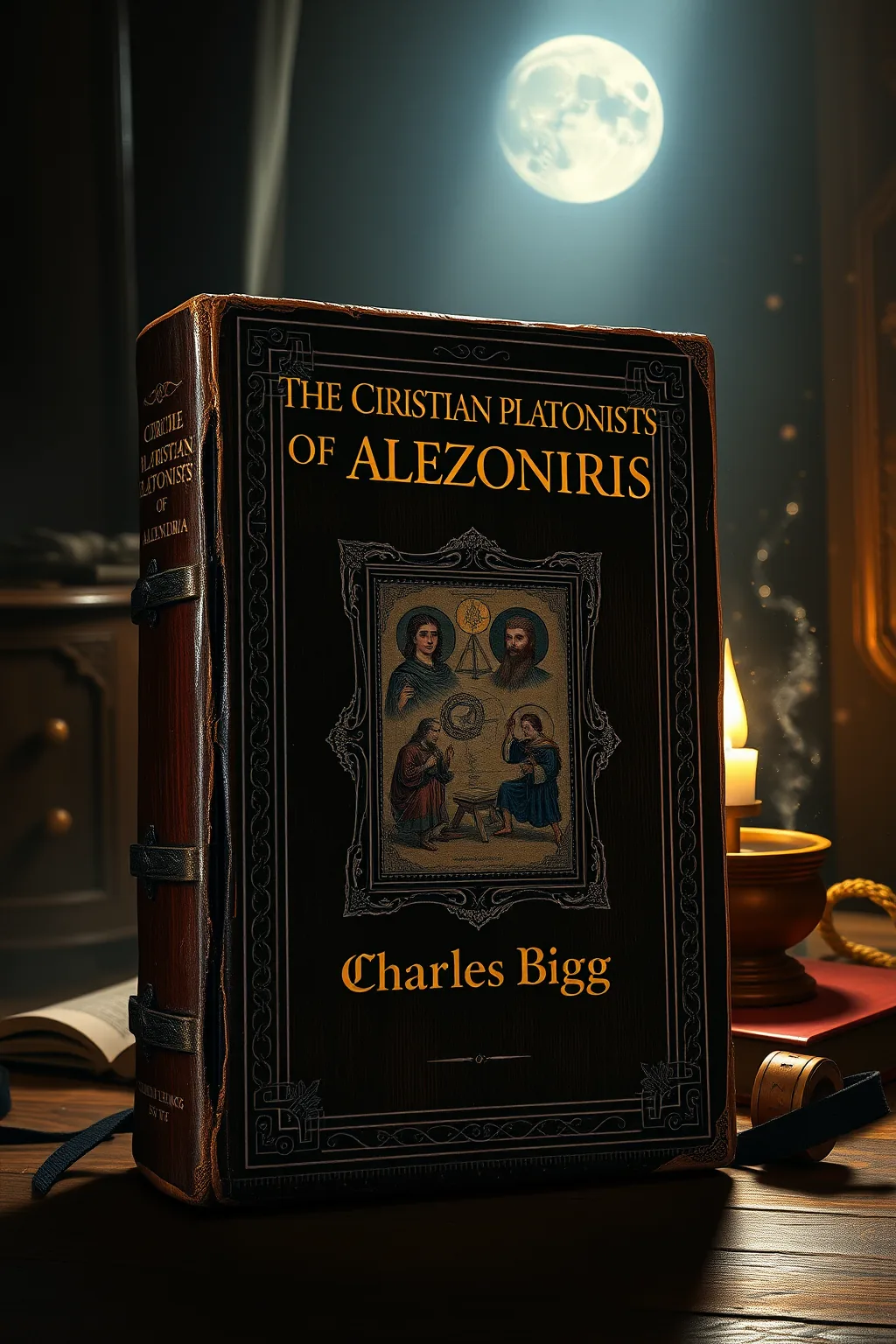
The Christian Platonists of Alexandria
 64
64

The Christian Platonists of Alexandria



Review by Celeste Moreau (Divination & Symbolism Reviewer) — 'The Christian Platonists of Alexandria' by Charles Bigg is a profound journey into the esoteric heart of early Christian mysticism. Bigg's meticulous research and insightful analysis provide a rare glimpse into the hidden knowledge of the Alexandrian school, making this book an essential read for those interested in the intersection of philosophy and spirituality. The strengths of this work lie in its ability to unravel complex theological ideas and present them in a way that is both accessible and enlightening. This book is particularly valuable for scholars, spiritual seekers, and practitioners of the occult who wish to deepen their understanding of ancient wisdom.
📝 Description
64
Charles Bigg's 1913 study examines the Alexandrian thinkers who blended Platonic philosophy with Christian doctrine.
Charles Bigg's 1913 book, 'The Christian Platonists of Alexandria,' reconstructs the intellectual history of a specific group of early Christian thinkers in Egypt. He focuses on figures like Clement of Alexandria and Origen, showing how they integrated Greek Platonic philosophy with their Christian faith. Bigg details their interpretations of scripture, their ideas about the soul, and their understanding of God, all filtered through a Platonic lens.
The work traces the influence of earlier Jewish philosophers, such as Philo, on these Christian scholars. Bigg argues that these Alexandrian figures developed a distinct theological and philosophical system, one that sought to explain Christian beliefs using the language and concepts of Hellenistic philosophy. The book is a scholarly account of how these ideas took shape and what they meant for the development of Christian thought.
This book situates itself within the study of esoteric traditions by examining how philosophical schools, particularly Platonism, were adapted and transformed by early Christian intellectuals. It highlights the Alexandrian school's attempt to reconcile Greek metaphysical speculation with revealed Christian doctrine, creating a sophisticated theological system. The focus on symbolic interpretation, the nature of the divine, and the soul's ascent connects this work to broader esoteric interests in hidden meanings and spiritual knowledge within religious traditions.
💡 Why Read This Book?
Why read this book? 'The Christian Platonists of Alexandria' is a must-read for anyone fascinated by the mystical traditions of early Christianity. Ideal for seekers of hidden knowledge, scholars of religious studies, and practitioners of the occult, this book offers a rich exploration of Alexandrian Platonism. It provides deep insights into the esoteric teachings of Clement and Origen, making it an invaluable resource for those interested in the symbolic and philosophical underpinnings of early Christian thought.
⭐ Reader Reviews
Honest opinions from readers who have explored this book.
❓ Frequently Asked Questions
What is the primary focus of 'The Christian Platonists of Alexandria'?
The primary focus is on the esoteric teachings of the Alexandrian school, particularly the works of Clement and Origen, and their philosophical roots in Platonism.
Who would benefit most from reading this book?
Scholars of religious studies, spiritual seekers, and practitioners of the occult will find this book particularly enriching.
What makes this book unique in the field of religious studies?
Its unique blend of philosophical rigor and esoteric insight into early Christian mysticism sets it apart.
Are there any notable quotes or passages in the book?
Yes, the book is filled with memorable quotes that reveal the depth of Alexandrian thought and its enduring relevance.
Is this book accessible to beginners in the field of religious studies?
While it is accessible, a basic understanding of early Christian and Platonic philosophy would enhance the reading experience.
🔮 Key Themes & Symbolism
Alexandrian Platonism
Examine the esoteric teachings of the Alexandrian school, where philosophy and spirituality intertwine. This theme explores the profound influence of Platonism on early Christian thought, revealing hidden knowledge and symbolic richness.
Esoteric Christianity
Uncover the mystical underpinnings of early Christianity through the works of Clement and Origen. This theme highlights the esoteric dimensions of Christian theology, offering insights into the spiritual quest of early mystics.
Symbolism and Hidden Knowledge
Discover the symbolic language and hidden knowledge that permeate the teachings of the Alexandrian Platonists. This theme illuminates the deep symbolism that lies at the heart of their philosophical and spiritual explorations.
💬 Memorable Quotes
Direct passages from the work, attributed to the author.
“Knowledge of the divine is not mere intellectual comprehension but a transformative experience.”
— This highlights the esoteric nature of spiritual knowledge, which transcends mere intellectual understanding.
“The symbolic language of the divine is a key to unlocking hidden truths.”
— This emphasizes the importance of symbolism in accessing deeper layers of spiritual wisdom.
“The divine wisdom of the ancients is a beacon guiding us through the darkness of ignorance.”
— This underscores the enduring relevance of ancient wisdom in informative the path to spiritual enlightenment.
💡 Key Ideas
Editorial paraphrase of the work's core concepts — not direct quotes.
The soul, in its quest for divine union, must ascend through layers of spiritual purification.
This quote underscores the mystical journey of the soul towards divine union, a central theme in Alexandrian Platonism.
The path to enlightenment is a journey of self-discovery and spiritual awakening.
This quote reflects the mystical quest for enlightenment through self-discovery and spiritual growth.
🌙 Esoteric Significance
Tradition
This book belongs to the Hermetic tradition, which emphasizes the hidden knowledge and symbolic language that connect the divine and the human. It explores the esoteric teachings of early Christian mystics, revealing the profound spiritual insights that underpin their philosophical explorations.
Symbolism
Key symbols in this work include the ascent of the soul, the purification of the spirit, and the transformative power of divine knowledge. These symbols are integral to understanding the mystical journey described in the book, offering readers a deeper appreciation of its esoteric significance.
Modern Relevance
Today, practitioners of the occult and spiritual seekers find this book important for its insights into the hidden dimensions of early Christian thought. It provides a framework for understanding the enduring relevance of ancient wisdom in modern spiritual practices.
👥 Who Should Read This Book
Beginners interested in the mystical traditions of early Christianity will find this book an enlightening introduction. Scholars of religious studies will appreciate its depth and rigor, while spiritual seekers will be drawn to its exploration of esoteric themes. Practitioners of the occult will find valuable insights into the symbolic language and hidden knowledge that permeate the teachings of the Alexandrian Platonists.
📜 Historical Context
Written in an era when the Christian Church was grappling with its philosophical foundations, 'The Christian Platonists of Alexandria' by Charles Bigg offers a timely exploration of the Alexandrian school's influence. This period saw a rich interplay between Greek philosophy and Christian theology, with figures like Clement and Origen playing important roles. Bigg's work was important for its ability to bridge the gap between ancient wisdom and modern theological discourse, providing a historical context that remains relevant today.
📔 Journal Prompts
Reflect on the significance of the ascent of the soul in your own spiritual journey.
How does the concept of spiritual purification resonate with your personal experiences?
In what ways does the symbolic language of the divine enrich your understanding of spiritual truths?
Consider the transformative power of divine knowledge in your life.
How does the interplay between philosophy and spirituality influence your worldview?
🗂️ Glossary
Alexandrian Platonism
A philosophical and spiritual tradition that combines Platonism with early Christian theology, emphasizing the mystical dimensions of divine knowledge.
Esoteric Christianity
The mystical and hidden aspects of Christian theology, often explored through symbolic language and spiritual practices.
Clement of Alexandria
An early Christian theologian known for his integration of Platonism into Christian thought, emphasizing the spiritual journey of the soul.
Origen
A prominent early Christian scholar and theologian whose works examine the esoteric dimensions of Christian theology and philosophy.
Philo of Alexandria
A Hellenistic Jewish philosopher who significantly influenced the Alexandrian school through his blend of Jewish and Greek philosophical ideas.
This book appears in 3 collections
🔮 Readers Also Liked
Browse all →








More by Charles Bigg
All books →




From the “Neoplatonism” Collection
View all →







More Free Alchemy & Hermeticism Books
View all →