The Healing Home
 78
78

The Healing Home
Steven Ash's "The Healing Home" attempts to bridge the gap between our inner emotional states and the energetic resonance of our living spaces. The core concept – that our homes absorb and reflect our psychological states – is compelling. Ash articulates this idea clearly, particularly when describing how 'irritability and anger' can 'contract' our personal energetic field, a notion that feels intuitively true for many. However, the book occasionally struggles to move beyond assertion into rigorous exploration. While the initial premise is strong, the subsequent development sometimes feels repetitive, lacking deeper engagement with the mechanics of how these energetic imprints are formed or transmuted. A notable strength is the accessible language used to describe complex energetic phenomena. The limitation lies in the absence of specific case studies or practical exercises that go beyond broad recommendations for meditation and relaxation. The work explores the concept of 'energetic baggage' stored within walls, a powerful image that could benefit from more detailed examination. Ultimately, "The Healing Home" offers an interesting, if somewhat underdeveloped, perspective on environmental psychology and subtle energies.
📝 Description
78
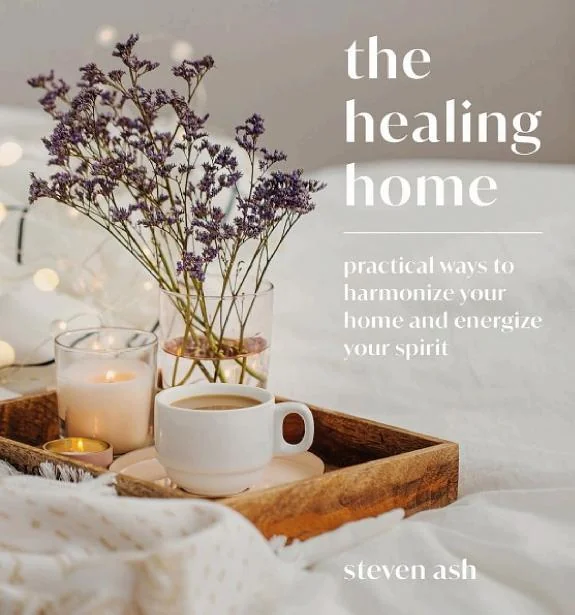
Steven Ash's 2020 book, The Healing Home, asserts that our homes possess energetic imprints.
The Healing Home, published in 2020, examines the energetic qualities of domestic spaces. Steven Ash proposes that the places we live are not simply physical structures but absorb the emotional residue of past events and the intentions of their inhabitants. The book details how these energetic imprints impact an individual's well-being. Ash draws connections between the internal energetic field of a person and the energetic field of their living environment.
This work is for those interested in the subtle energetic links between their inner state and their physical surroundings. It will appeal to readers aiming to cultivate more balanced living spaces and enhance their personal well-being through modifications to their environment. The book addresses the interplay of memory, emotion, and location. Those who perceive the 'atmosphere' of certain places as affecting them will find practical advice.
The Healing Home connects to a long-standing esoteric interest in how consciousness shapes reality. While not aligned with specific movements like Theosophy or Hermeticism, it reflects a broader fascination with the energetic properties of place. This focus on personal space shares ground with older traditions of geomancy and dowsing, which investigated the subtle energies of the earth and its structures. The book taps into a contemporary dialogue on mindfulness and personal well-being by framing these concepts within an energetic model of the home.
💡 Why Read This Book?
• You will learn to identify and consciously influence the energetic imprints in your home, moving beyond passive reception of environmental moods, as discussed in the concept of 'personal space' as an energetic field. • Gain practical understanding of how your emotional state directly affects your living environment, enabling you to 'expand and soften' your space through intentional practice, as described in the book's initial premise. • Discover how to address 'energetic baggage' that may linger in your home, fostering a more harmonious and supportive atmosphere by understanding the connection between memory and place.
⭐ Reader Reviews
Honest opinions from readers who have explored this book.
❓ Frequently Asked Questions
What is the core idea presented in Steven Ash's 'The Healing Home'?
The book's central thesis is that our personal energetic space extends to our homes, which absorb and reflect our emotional states and past experiences, impacting our well-being.
When was 'The Healing Home' first published?
'The Healing Home' by Steven Ash was first published on July 10, 2020.
How does the book explain the effect of emotions on living spaces?
Steven Ash explains that emotions like anger and irritability 'contract' our personal energetic field, while relaxation and meditation 'expand' it, thus influencing the atmosphere of our homes.
Does 'The Healing Home' offer specific techniques for cleansing a space?
While the book broadly suggests meditation and relaxation, it focuses more on the conceptual understanding of energetic imprints rather than providing a detailed manual of cleansing rituals.
What is 'energetic baggage' as defined in the book?
Energetic baggage refers to the lingering imprints of memories, history, and unresolved emotions within a physical space, which can affect present occupants.
Who would benefit most from reading 'The Healing Home'?
Individuals interested in the subtle energies of their environment, those seeking to improve their home's atmosphere, and people who feel influenced by the 'atmosphere' of certain rooms would find this book beneficial.
🔮 Key Themes & Symbolism
Personal Energetic Space
The work posits that each individual carries an energetic field that extends beyond their physical body and permeates their living environment. This 'personal space' is dynamic, capable of expanding with positive states like meditation and contracting with negative emotions such as anger. The book explores how this concept is fundamental to understanding our connection with our homes, suggesting that the boundaries of our energetic influence are far more fluid than commonly perceived.
Memory Imprints in Places
A significant theme is the idea that physical locations, particularly homes, store energetic imprints of past events and emotions. Memories are not just abstract recollections but can leave palpable residues within walls and rooms. The book encourages readers to recognize how this 'history' affects the atmosphere of a space, explaining why certain rooms might evoke specific feelings or moods based on the experiences they have witnessed or absorbed.
Emotional Atmosphere of Homes
The Healing Home explores how sustained emotional states, both by current inhabitants and previous ones, contribute to the overall 'atmosphere' of a dwelling. It suggests that chronic stress, joy, conflict, or peace can create distinct energetic signatures. Understanding this allows for a more conscious approach to cultivating a desired atmosphere, moving beyond mere decor or physical comfort to address the subtle energetic quality of one's sanctuary.
Intuition and Sensory Dulness
The book addresses the common human experience of having dulled senses and intuition due to modern, stressful lifestyles. This makes individuals less aware of the energetic influences in their environment. Ash advocates for reawakening these subtle perceptions to better understand and interact with the energetic dimensions of home, framing it as a crucial step in reclaiming a more holistic relationship with one's surroundings.
💬 Memorable Quotes
Direct passages from the work, attributed to the author.
“We carry our own space with us wherever we go.”
— This opening statement establishes the core premise: our personal energetic field is portable and influences every environment we enter, including our own homes, challenging the notion of a purely objective external reality.
“We expand and soften it with meditation and relaxation and we contract and sharpen it with irritability and anger.”
— This highlights the dynamic nature of our personal energetic space, linking specific emotional states and practices directly to tangible energetic qualities, suggesting a direct, measurable impact on our immediate environment.
“In the space in front of us we carry our dreams and expectations; behind us we carry our memories, history and old baggage.”
— This offers a spatial metaphor for internal states, dividing our energetic field into future-oriented (anticipation) and past-oriented (residue) components, illustrating how our psychological timeline is embedded within our energetic presence.
“We live in houses with memories stored in the walls and wonder why we are affected by the atmosphere in certain rooms.”
— This directly addresses the phenomenon of environmental influence, proposing that homes are not inert but contain residual energetic information from past occupants and events, explaining subconscious reactions to specific spaces.
“But because our senses and intuition become so dulled by our stressful lives, we forget to look.”
— This points to a societal issue – the erosion of subtle perception due to modern pressures – and suggests that reconnecting with our innate intuition is key to understanding the energetic dynamics of our homes.
🌙 Esoteric Significance
Tradition
The work draws implicitly from Hermetic principles concerning the axiom 'As Above, So Below,' applying it to the relationship between the individual's internal energetic state and their external living space. It aligns with contemporary esoteric thought that emphasizes personal energetic fields and consciousness's role in shaping reality. While not explicitly rooted in a single historical lineage like Rosicrucianism or Gnosticism, it appeals to the broader Hermetic tradition's focus on understanding and manipulating subtle energies for personal transformation and harmony.
Symbolism
The primary symbol explored is the 'home' itself, transformed from a mere physical structure into a living, breathing energetic entity imbued with memories and emotions. 'Space' functions symbolically as the energetic field surrounding and permeating the individual and their dwelling. 'Baggage' serves as a potent symbol for the residual energetic imprints of past experiences that can weigh down the present atmosphere of a home.
Modern Relevance
In contemporary esoteric circles, "The Healing Home" speaks to the growing interest in bioenergetics, conscious living, and the application of subtle energy principles to daily life. Practitioners of energy healing modalities, space clearing, and those exploring personal development through environmental psychology find resonance in Ash's work. It informs current discussions on creating sacred spaces and mindful living environments, relevant to schools of thought that bridge psychology, spirituality, and physics.
👥 Who Should Read This Book
• Individuals feeling inexplicably affected by their living environment, seeking to understand the energetic link between their emotions and their home's atmosphere. • Those interested in contemporary esoteric concepts of personal energy fields and their extension into physical spaces, looking for practical applications beyond traditional meditation. • Readers exploring concepts of 'place memory' and environmental psychology from a more metaphysical or spiritual perspective, wanting to consciously shape their dwelling's energy.
📜 Historical Context
Published in 2020, Steven Ash's "The Healing Home" arrived during a resurgence of interest in holistic living, mindfulness, and personal well-being, movements that gained significant traction in the preceding decades. While the book doesn't align strictly with a specific historical esoteric school, it taps into perennial philosophies concerning the mind-body-environment connection. It echoes concepts found in geomancy and Feng Shui, ancient practices focused on harmonizing human spaces with natural energies, and also touches upon ideas present in New Age thought that emerged in the mid-20th century. Unlike the more structured metaphysical systems of Theosophy or Kabbalah, Ash's work offers a more individualized and psychologically focused approach to environmental energetics. Its reception occurred in a landscape where authors like Doreen Virtue and Gabby Bernstein were popularizing spiritual concepts, yet Ash's focus remained distinctly on the tangible, personal dwelling as a site of energetic interaction.
📔 Journal Prompts
The energetic imprint of memories stored in the walls: what sensations arise?
Reflecting on the 'contraction' and 'expansion' of your personal space: identify emotional triggers.
How does the 'history' of a room influence your current feelings within it?
The concept of carrying 'old baggage': map its potential energetic presence in your home.
Reawakening dulled intuition: what subtle environmental cues might you be missing?
🗂️ Glossary
Personal Space
The energetic field surrounding an individual, extending beyond the physical body and influencing the immediate environment. It is dynamic and responsive to emotional states.
Energetic Imprints
Residual energetic signatures left in a physical location by past events, emotions, or occupants. These are believed to affect the atmosphere and inhabitants of the space.
Contraction (of space)
A state where the personal energetic field becomes smaller and potentially denser, often associated with negative emotions like anger, stress, or irritability.
Expansion (of space)
A state where the personal energetic field becomes larger, softer, and more permeable, typically associated with positive states like relaxation, peace, and meditation.
Old Baggage
A metaphorical term for unresolved issues, past traumas, or lingering negative emotional energy that an individual carries, which can also imprint upon their living environment.
Atmosphere (of rooms)
The palpable energetic quality or feeling of a specific space, influenced by its history, the emotions of its inhabitants, and the energetic imprints it holds.
Dulled Senses/Intuition
A reduced capacity to perceive subtle energetic information due to the stresses and distractions of modern life, hindering awareness of environmental influences.
This book appears in 1 collection
🔮 Readers Also Liked
Browse all →









From the “Aura Cleansing” Collection
View all →








More Free Occult Philosophy Books
View all →