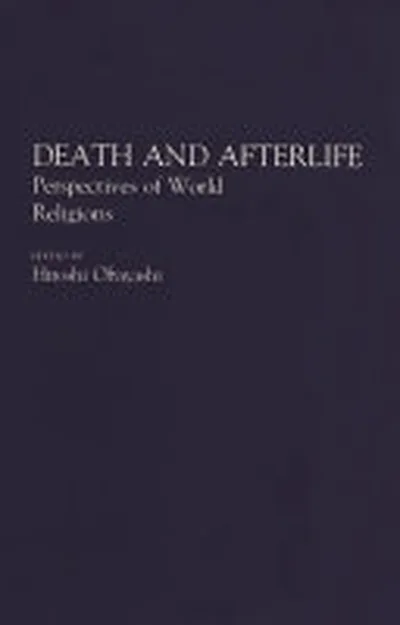
Death and Afterlife
 73
73

Death and Afterlife
Hiroshi Obayashi's "Death and Afterlife" presents a broad, if occasionally dense, survey of human conceptions of mortality and eternal existence. The work's strength lies in its ambitious scope, drawing parallels between disparate cultures and religions, from ancient Egyptian funerary texts to Tibetan Tantric practices. Obayashi's methodical approach, detailing the eschatological views of cultures like Mesopotamia and Greece alongside theological perspectives from Judaism and Islam, is commendable for its sheer breadth. However, the sheer volume of information can sometimes lead to a lack of depth in specific areas. For instance, while the chapter on African beliefs is present, it feels less developed than the examinations of Eurasian traditions. A particularly striking section details the Zoroastrian concept of the Chinvat Bridge, illustrating the detailed comparative analysis Obayashi offers. Despite its academic rigor, the prose occasionally feels dry, making certain passages a challenge for the casual reader. Nevertheless, "Death and Afterlife" stands as a valuable academic reference for those seeking a wide-ranging overview of global death beliefs.
📝 Description
73
Hiroshi Obayashi's 1992 study, "Death and Afterlife," compares eschatological beliefs across cultures.
This study systematically surveys perspectives on mortality, the soul's journey, and concepts of immortality across ancient and modern cultures. Hiroshi Obayashi traces these themes through diverse religious and philosophical traditions, offering a broad overview of humanity's questions about existence beyond the physical. The work contrasts cyclical views of existence found in Eastern religions with linear eschatologies prevalent in Abrahamic faiths. Specific attention is given to funerary rites, ancestral veneration, and the symbolic representations of the underworld and paradise in different cultural narratives.
Obayashi's work emerged during a period of renewed academic interest in comparative mythology and religious studies. It addressed a growing demand for interdisciplinary approaches to understanding spiritual traditions. The book's comparative scope, encompassing regions from Africa to Asia and theological frameworks from ancient Mesopotamia to modern Islam, positioned it as a significant contribution to the field. It offers a structured approach to previously disparate areas of study, covering concepts such as soul transmigration, divine judgment, reincarnation, and spiritual liberation.
This book engages with the perennial philosophical and religious questions surrounding death and what follows, a subject central to many esoteric traditions. It examines how different cultures conceptualize the soul, its potential survival after bodily death, and the nature of existence in non-physical realms. By comparing these views, Obayashi touches upon themes common in spiritualist thought, comparative mysticism, and philosophical inquiries into consciousness and transcendence. The work provides a scholarly framework for understanding the diverse interpretations of the afterlife that have shaped human spiritual practice and belief systems.
💡 Why Read This Book?
• Gain a structured understanding of how ancient African civilizations conceptualized the soul's passage, a perspective often overlooked in general religious studies. • Explore the specific Zoroastrian doctrine of the Chinvat Bridge, a concrete example of a transitional spiritual realm discussed in the book. • Compare the linear eschatology of early Christianity with the cyclical views of Hinduism, as detailed within Obayashi's comparative analysis.
⭐ Reader Reviews
Honest opinions from readers who have explored this book.
❓ Frequently Asked Questions
What ancient civilizations' views on death are explored in Hiroshi Obayashi's book?
The book examines death and afterlife beliefs from ancient Africa, Mesopotamia, and Egypt, providing comparative insights into their distinct cosmological frameworks and ritual practices concerning mortality.
How does "Death and Afterlife" cover Abrahamic religions?
It offers distinct analyses of the Old Testament, New Testament, Judaism, Christianity, and Islam, focusing on their unique theological perspectives on the soul, judgment, and eternal destiny.
Are Eastern religions discussed in detail?
Yes, the work includes comprehensive sections on Hinduism, Buddhism, and Tibetan Tantric traditions, highlighting their varied approaches to reincarnation, karma, and spiritual liberation.
What specific cultural regions are covered in the book?
The book covers Africa, Mesopotamia, Egypt, Greece, and provides perspectives from Judaism, Christianity, Islam, Hinduism, Buddhism, Tibetan Tantric traditions, and Chinese religions.
When was "Death and Afterlife" originally published?
Hiroshi Obayashi's "Death and Afterlife" was first published in 1992, contributing to scholarly discourse on comparative religion and eschatology during that era.
Does the book discuss Chinese religious views on death?
Yes, "Death and Afterlife" includes an examination of Chinese religions, exploring their unique philosophies and practices related to death, the spirit world, and ancestral veneration.
🔮 Key Themes & Symbolism
Ancient Mesopotamian Afterlife
The work scrutinizes the Mesopotamian conception of the underworld, often depicted as a somber, dusty realm where spirits existed in a diminished state. It contrasts this with more optimistic views of the afterlife found in other cultures, highlighting the unique pessimism of Babylonian and Assyrian eschatology. This section explores the implications of such beliefs on daily life and religious practice, examining the role of rituals and prayers aimed at appeasing the dead and mitigating the grim fate of the underworld.
Egyptian Funerary Beliefs
Obayashi examines the elaborate funerary practices and complex theology of ancient Egypt, focusing on the journey of the soul through the Duat and the judgment before Osiris. The concept of *Ma'at* (truth, order, justice) plays an important role in determining the deceased's fate. The book details the importance of mummification, the Book of the Dead, and the spells intended to guide and protect the soul, underscoring the Egyptian desire for eternal life and resurrection.
Buddhist Concepts of Rebirth
This theme examines the Buddhist doctrine of *samsara*, the cycle of birth, death, and rebirth, driven by karma. Obayashi elucidates how this cyclical view differs fundamentally from linear eschatologies. The path to liberation (*nirvana*) is presented not as an afterlife reward, but as an escape from the cycle of suffering inherent in existence, achieved through ethical conduct, meditation, and wisdom.
Islamic Eschatology
The book explores the Islamic understanding of the Day of Judgment, the weighing of deeds, and the eternal destinations of Paradise (*Jannah*) and Hell (*Jahannam*). It discusses the role of divine mercy and justice, the intercession of prophets, and the physical descriptions of the afterlife as presented in the Quran and Hadith. This section highlights the emphasis on accountability and the clear dichotomy between reward and punishment.
💬 Memorable Quotes
Direct passages from the work, attributed to the author.
“The Mesopotamian underworld was a place of dust and darkness, where spirits ate clay and drank the waters of oblivion.”
— This highlights the stark, unappealing nature of the Mesopotamian afterlife, contrasting sharply with more vibrant or hopeful concepts found in other traditions explored in the book.
“In ancient Egypt, the deceased's journey was fraught with trials, necessitating the Book of the Dead as a guide.”
— This emphasizes the perilous nature of the Egyptian afterlife and the critical role of magical texts and rituals in ensuring a successful passage to the eternal realm.
“Zoroastrianism presents the Chinvat Bridge, which widens for the righteous and narrows to a razor's edge for the wicked.”
— This vivid metaphor illustrates the Zoroastrian belief in a decisive, perilous judgment point where one's earthly actions directly determine their eternal fate.
“The Buddhist path seeks escape from samsara, the endless cycle of birth and death, through the cessation of suffering.”
— This concisely defines the core goal of Buddhism: not an afterlife, but liberation from the continuous process of reincarnation and its associated pain.
“Christianity posits a final judgment where souls are eternally assigned to heaven or hell based on faith and deeds.”
— This captures the linear, binary eschatological framework central to Christian theology, emphasizing a definitive, irreversible outcome after death.
🌙 Esoteric Significance
Tradition
While not explicitly aligned with a single esoteric lineage, Obayashi's work functions as a critical comparative tool for esoteric scholars. It provides a foundational mapping of ideas that underpin many Western esoteric traditions, such as those influenced by Gnosticism, Hermeticism, and Theosophy, which often engage with Eastern philosophies and ancient mystery cults. By detailing the diverse origins of concepts like soul transmigration and spiritual purification, it allows practitioners to trace the lineage and transformation of these ideas within their own chosen paths.
Symbolism
The book implicitly discusses potent symbols of transformation and passage. The Egyptian *Ankh*, symbolizing life and immortality, is a visual representation of the cultural preoccupation with overcoming death. Similarly, the concept of the *Bardo* in Tibetan Buddhism, the transitional state between death and rebirth, is a potent symbolic space of potential spiritual realization or karmic entrapment. Obayashi's examination of the Chinvat Bridge in Zoroastrianism offers another symbolic representation of the soul's perilous journey and moral reckoning.
Modern Relevance
Contemporary thinkers and practitioners in fields like transpersonal psychology, consciousness studies, and comparative mysticism frequently draw upon the cross-cultural insights presented in works like Obayashi's. Modern spiritual movements that emphasize a synthesis of Eastern and Western thought, or those exploring near-death experiences and altered states of consciousness, find valuable context in this book's analysis of diverse afterlife narratives and their psychological underpinnings.
👥 Who Should Read This Book
• Students of comparative religion and mythology seeking a structured overview of global eschatological beliefs. • Anthropologists and historians interested in the cultural and historical development of ideas surrounding death and the soul. • Individuals exploring personal spiritual questions and seeking to understand the diverse ways humanity has grappled with mortality across different traditions.
📜 Historical Context
Published in 1992, Hiroshi Obayashi's "Death and Afterlife" emerged in an academic landscape where comparative religion and mythology were gaining significant traction. The late 20th century saw a synthesis of anthropological, historical, and theological methods applied to understanding global spiritual phenomena. Obayashi's work followed in the footsteps of scholars like Mircea Eliade, who championed the study of archaic religions and their symbolic structures. While the book does not appear to have faced significant censorship, its comprehensive scope might have drawn comparisons to earlier encyclopedic works on religion. However, its specific focus on eschatology across such a wide array of cultures, from ancient Mesopotamia to Tibetan Tantra, offered a unique contribution. The intellectual currents of the time encouraged such interdisciplinary surveys, making "Death and Afterlife" a relevant text for understanding the period's approach to global belief systems.
📔 Journal Prompts
The Egyptian judgment scene before Osiris, as described in the work.
The concept of *samsara* and its implications for ethical living.
Contrasting linear and cyclical views of the afterlife.
The role of ancestral veneration in African religious traditions.
The Zoroastrian Chinvat Bridge and its symbolic meaning.
🗂️ Glossary
Eschatology
The branch of theology concerned with death, judgment, and the final destiny of the soul and of humankind. It explores beliefs about the end of the world and the afterlife.
Samsara
In Hinduism, Buddhism, Jainism, and Sikhism, the cyclical process of death and rebirth, driven by karma. It is often seen as a state of suffering from which liberation is sought.
Duat
The ancient Egyptian concept of the underworld, a realm inhabited by gods and the deceased. It was the landscape the sun traversed during the night and where souls were judged.
Ma'at
In ancient Egyptian religion, the personification of truth, balance, order, harmony, law, morality, and justice. It was crucial for the deceased's judgment in the afterlife.
Chinvat Bridge
In Zoroastrianism, the 'Bridge of the Separator' which is said to be a passage for the souls of the dead. It is described as being wide for the righteous and narrow for the wicked.
Jannah
The Arabic word for Paradise in Islam. It is described as a place of eternal bliss and reward for the righteous believers.
Bardo
A state of existence between death and rebirth in Tibetan Buddhism. It is considered a crucial period where consciousness can either progress towards enlightenment or fall back into lower states.