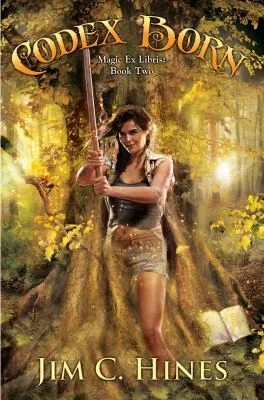
Codex Born
 79
79

Codex Born
Codex Born presents an intriguing premise: a protagonist literally inheriting dangerous, hidden knowledge. Jim C. Hines constructs a world where magical texts are more than just spells; they are volatile entities capable of immense destruction or creation. The strength of the novel lies in its detailed world-building, particularly the intricate workings of the secret society and the tangible, often perilous, nature of the magic it controls. The depiction of the "Codex" itself as an active force rather than a passive artifact is a notable conceptual achievement. However, the narrative occasionally falters in pacing, with certain sections feeling overly expositional, slowing the momentum built by the more action-oriented sequences. A specific passage detailing the ritualistic activation of a minor artifact, while visually descriptive, could have been condensed to maintain the story's inherent tension. The character development, while functional, sometimes feels secondary to the intricate plot mechanics. Despite these limitations, the novel offers a satisfying exploration of forbidden lore and its consequences, culminating in a resolution that, while perhaps predictable for seasoned genre readers, remains thematically coherent.
📝 Description
79
Jim C. Hines' 2013 novel, Codex Born, centers on a secret society where magical knowledge holds immense power.
Codex Born follows a protagonist drawn into a hidden world where magic and ancient secrets shape reality. This society operates on the principle that knowledge is power, and its acquisition carries immense responsibility. The narrative examines the dangers of wielding forbidden lore and the ethical quandaries that arise from unlocking profound mysteries. Magical traditions in this world are not mere legends but active forces, often with perilous consequences for those who seek to control them. The story's core conflict is the pursuit and management of this extraordinary knowledge.
This novel appeals to speculative fiction readers drawn to esoteric themes. Those interested in secret societies, hidden histories, and the philosophical aspects of magic will find ample material. It is suited for individuals who enjoy narratives where knowledge itself is a primary source of conflict, and characters face moral dilemmas in their quest for understanding. Codex Born offers a lore-driven experience, blending fantasy with elements of mystery and suspense beyond typical adventure stories.
Emerging in the early 21st century, a period marked by renewed popular interest in esoteric subjects, Codex Born taps into a cultural trend. Following the success of works that explored historical and religious conspiracies, and the widespread introduction of magic through popular fantasy series, there was an audience receptive to narratives blending arcane lore with contemporary settings. Hines' novel reflects this environment, where complex mythologies and the concept of hidden orders influencing reality found fertile ground with readers.
💡 Why Read This Book?
• Gain insight into the mechanics of magical inheritance as depicted in Codex Born, understanding how lineage and destiny intertwine with the acquisition of arcane power, a concept central to the narrative's conflict. • Explore the societal structures of secret magical orders, similar to those discussed in historical occult texts, and consider the ethical implications of knowledge control as presented in the book's specific clandestine organizations. • Experience the tangible danger of ancient lore through the narrative's portrayal of the "Codex" not as a static object but as a potent, reactive force, offering a unique perspective on the consequences of wielding forbidden knowledge.
⭐ Reader Reviews
Honest opinions from readers who have explored this book.
❓ Frequently Asked Questions
When was Codex Born first published?
Codex Born was first published in 2013, placing it within a period of renewed public fascination with esoteric themes in speculative fiction.
What is the central concept of the "Codex" in the book?
The "Codex" in Codex Born represents not just a collection of spells, but a potent, active repository of forbidden knowledge that carries significant danger and responsibility for its wielder.
Does the book involve secret societies?
Yes, Codex Born heavily features secret societies that guard and control access to arcane knowledge, forming a core element of the plot and world-building.
Who is the author of Codex Born?
The author of Codex Born is Jim C. Hines, known for his work in speculative fiction that often blends fantasy with other genres.
What kind of magic system does Codex Born employ?
The book explores a magic system rooted in ancient lore and knowledge, emphasizing the acquisition and control of power through esoteric texts rather than innate, raw magical ability alone.
Is Codex Born part of a series?
Codex Born is a standalone novel, offering a complete narrative arc without requiring readers to follow a longer series.
🔮 Key Themes & Symbolism
The Peril of Forbidden Knowledge
Codex Born posits that certain knowledge is inherently dangerous, not merely due to its potential for misuse, but because the lore itself possesses an active, volatile quality. The "Codex" is depicted as more than a collection of spells; it’s a force that shapes reality and demands respect, often with dire consequences for those unprepared. This theme is explored through the protagonist's struggle to understand and control the power he inherits, highlighting the ethical burdens and personal risks associated with acquiring profound secrets. The narrative emphasizes that true mastery comes not just from learning, but from understanding the inherent dangers and responsibilities tied to such arcane wisdom.
Secret Societies and Arcane Control
The novel studies the intricate structures of secret societies dedicated to safeguarding or exploiting esoteric knowledge. These organizations operate outside conventional society, establishing their own hierarchies, rules, and methods for maintaining control over magical lore. The narrative examines the power dynamics within these groups, the lengths to which they go to protect their secrets, and the conflicts that arise from internal factions or external threats. This theme reflects a long-standing trope in esoteric literature, where hidden orders act as gatekeepers to hidden truths and powers, shaping historical and mystical currents from the shadows.
Inherited Power and Destiny
A significant thread in Codex Born is the idea that certain individuals are predisposed to interact with the arcane, often through inheritance or destiny. The protagonist finds himself entangled with this world not by accident, but seemingly by design, suggesting a predetermined path. This concept raises questions about free will versus fate, and the struggle to accept or defy one's supposed role. The narrative explores how these inherited connections manifest, the challenges they present, and the potential for individuals to either succumb to their fate or forge their own destiny within the framework of a magical legacy.
The Nature of Magic Itself
Beyond spells and rituals, Codex Born contemplates the fundamental nature of magic. It suggests magic is not merely a tool but a living, reactive force intrinsically linked to ancient knowledge and perhaps the fabric of reality itself. The "Codex" serves as a focal point for this exploration, representing a concentrated source of this power. The book examines how this force interacts with the human psyche and the physical world, and the profound philosophical implications of its existence. This perspective moves beyond simple magical systems to consider magic as a fundamental aspect of the universe, often misunderstood and feared.
💬 Memorable Quotes
Direct passages from the work, attributed to the author.
“The Codex doesn't just contain knowledge; it breathes it.”
— This highlights the active, almost sentient nature attributed to the magical texts within the novel. It suggests the 'Codex' is not a passive repository but a dynamic entity with its own influence and power, demanding a deeper level of engagement than mere study.
“Some secrets are best left buried, not for the world's safety, but for the seeker's.”
— This interpretation points to the personal cost of acquiring forbidden knowledge. It implies that the true danger lies not just in the potential for the knowledge to harm others, but in its corrupting or destructive effect on the individual who seeks it.
“Inheritance is a cage, but sometimes it's the only key.”
— This expresses the dual nature of destiny in the book. While being tied to a magical lineage might feel restrictive or fated, it also provides the unique access and understanding necessary to read through the arcane world and its challenges.
“Power is not given; it is taken, and it always demands a price.”
— This reflects the harsh reality of wielding significant magical ability within the narrative. It suggests that acquiring power is an aggressive act, and that such gains are never without cost, implying a transactional or sacrificial element to magical prowess.
“The Society guards more than just books; it guards the balance.”
— This statement elevates the role of the secret organization beyond mere custodianship of texts. It suggests their purpose is cosmic or fundamental, maintaining equilibrium in the world by controlling the flow of powerful, potentially destabilizing, arcane forces.
🌙 Esoteric Significance
Tradition
Codex Born engages with the Western esoteric tradition, particularly themes found in Hermeticism and occult fiction that deal with hidden knowledge and secret societies. While not explicitly tied to a single historical order, the narrative carries the idea of guardian traditions that protect dangerous lore, a concept central to many magical philosophies. It departs from more ritualistic or purely philosophical approaches by focusing on the narrative consequences and personal stakes of wielding arcane power, framing it within a more accessible genre fiction context.
Symbolism
The primary symbol is the "Codex" itself, representing not just a book but a concentrated source of volatile, active knowledge. Another motif is the sigil or seal, often used by secret societies to denote membership, ward off unwanted attention, or signify the activation of magical energies. The act of inheritance also functions symbolically, representing destiny and the burden of legacy that connects individuals to unseen forces and historical currents.
Modern Relevance
Contemporary readers interested in modern occult fiction, urban fantasy with deep lore, and narratives exploring the ethics of knowledge and power can find resonance in Codex Born. Thinkers and writers who explore the intersection of technology and magic, or who re-examine historical esoteric concepts through a contemporary lens, might find inspiration in its premise. The novel's portrayal of secret societies controlling information also has parallels with discussions around data control and hidden influence in the digital age.
👥 Who Should Read This Book
• Fans of urban fantasy and occult thrillers looking for narratives that blend magical systems with contemporary settings and the intrigue of secret organizations. • Readers interested in the philosophical implications of knowledge and power, particularly how forbidden lore might influence individual morality and societal structures. • Speculative fiction enthusiasts who appreciate detailed world-building and character journeys focused on uncovering hidden truths and confronting the consequences of arcane discovery.
📜 Historical Context
The early 21st century, particularly the period around 2013 when Jim C. Hines' Codex Born was published, witnessed a significant public appetite for speculative fiction that intertwined arcane lore with contemporary settings. Following the global phenomenon of Dan Brown's *The Da Vinci Code* (2003), which blended historical conspiracy with religious mystery, and the enduring popularity of fantasy series that introduced magic to mainstream audiences, readers were increasingly receptive to narratives featuring hidden worlds and secret knowledge. Hines' novel emerged in this fertile ground, where concepts like secret societies, ancient texts, and inherited magical abilities resonated strongly. This era also saw a notable interest in exploring the historical foundations of occultism, with renewed attention given to figures like Aleister Crowley and movements such as the Hermetic Order of the Golden Dawn. Unlike purely escapist fantasy, Codex Born offered a more grounded approach, suggesting that such powers could exist just beneath the surface of modern life, making it a relevant contribution to the genre's exploration of the hidden.
📔 Journal Prompts
The protagonist's inheritance of the Codex: How does this predetermined connection shape his initial choices and responsibilities?
Reflect on the concept of 'active' forbidden knowledge as presented in the novel. What distinguishes it from passive information?
Consider the role of the secret society in Codex Born. What are the ethical justifications for their control over arcane power?
The balance between destiny and free will is a recurring theme. How does the protagonist navigate his inherited path versus his personal desires?
Analyze the depiction of the "Codex" as a dangerous entity. What specific attributes make it more than just a magical text?
🗂️ Glossary
Codex
In the context of the novel, the "Codex" refers to a specific, potent repository of arcane knowledge that is both powerful and inherently dangerous, acting almost as a living entity.
Arcane Lore
Refers to secret, mystical, or magical knowledge, often associated with ancient traditions, hidden societies, and powers beyond ordinary human understanding.
Secret Society
An organization whose membership is secret and whose activities often involve the guardianship or pursuit of hidden knowledge, power, or influence, operating outside mainstream society.
Inheritance (Magical)
The concept that magical abilities, knowledge, or a connection to arcane forces are passed down through lineage or destiny, often placing individuals in a predetermined role within a hidden world.
Sigil
A symbol used in magical traditions, often associated with secret societies, to represent a concept, activate power, or serve as a mark of identity or protection.
Wielder
An individual who possesses and actively uses magical power or knowledge, often implying a degree of skill, responsibility, or danger associated with that use.
Forbidden Knowledge
Information or secrets considered dangerous, taboo, or too powerful for general access, often guarded by esoteric groups or hidden from ordinary society.
🔮 Readers Also Liked
Browse all →








More by Jim C. Hines
All books →
More Free Occult Philosophy Books
View all →