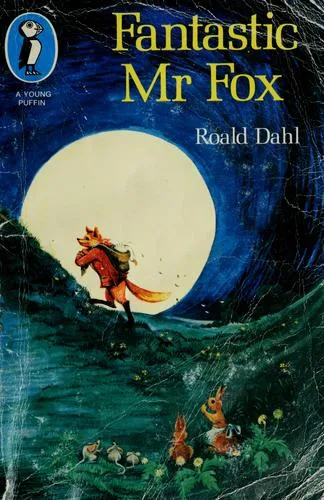
Fantastic Mr Fox
 80
80

Fantastic Mr Fox
Roald Dahl’s "Fantastic Mr. Fox" offers a deceptively simple fable, yet its core dynamic between cunning survival and brute oppression provides fertile ground for symbolic analysis. The narrative's strength lies in its relentless pacing and the sheer inventiveness of Mr. Fox’s stratagems, painting a vivid picture of resourcefulness against overwhelming odds. The characters, while caricatured, effectively embody primal drives: Mr. Fox’s instinct for sustenance and freedom, and the farmers’ insatiable greed. A notable limitation, however, is the rather underdeveloped depiction of the community the farmers represent; their motivations are solely tied to their wealth, lacking broader societal commentary. The scene where Mr. Fox devises the underground feast for his starving community, after the farmers have destroyed his home, powerfully illustrates how shared hardship can forge collective identity and celebration. Ultimately, "Fantastic Mr. Fox" succeeds as a spirited, if somewhat simplistic, allegory of nature’s resilience against avarice.
📝 Description
80
Roald Dahl's 1970 story pits a clever fox against three greedy farmers.
Published in 1970, Roald Dahl's "Fantastic Mr. Fox" tells the story of Mr. Fox, a creature who steals from three farmers: Boggis, Bunce, and Bean. These men, driven by avarice, attempt to capture and kill Mr. Fox and his family. The narrative portrays a fundamental struggle for survival, where ingenuity and community cooperation are pitted against brute force and insatiable greed.
The story can be read as an allegory for resistance against oppressive systems. Mr. Fox represents a trickster figure, a common archetype in folklore, who uses wit to overcome adversaries. The farmers, with their industrial methods and relentless pursuit of profit, embody unchecked materialism and the destructive potential of unchecked capitalism. The book also touches on the relationship between humanity and the natural world, highlighting the clever adaptations animals must make to thrive.
While appearing as a children's tale, "Fantastic Mr. Fox" contains layers that resonate with adult readers interested in symbolic storytelling. It explores themes of resourcefulness, community, and the clash between natural order and human exploitation. The narrative's enduring appeal lies in its clear depiction of these primal conflicts.
The tale functions as a modern fable illustrating the trickster archetype, a figure found across many mythologies and spiritual traditions. Mr. Fox's cunning and ability to subvert the established order of the farmers mirrors figures like Hermes, Loki, or Coyote. This tradition often explores the liminal spaces where established rules are challenged, and transformation occurs through cleverness rather than direct confrontation. The story’s focus on survival and community against oppressive forces also echoes themes present in various folk narratives concerned with maintaining balance.
💡 Why Read This Book?
• Learn about the trickster archetype through Mr. Fox's ingenious schemes, understanding how cunning can overcome brute force in challenging situations, as depicted in his raids against Boggis, Bunce, and Bean. • Explore the symbolic conflict between natural order and industrial greed, recognizing how the farmers' destructive methods contrast with the woodland creatures' need for survival. • Experience the power of community formation under duress, seeing how Mr. Fox’s actions, even those born of necessity, ultimately lead to a cooperative underground society for all the starving animals.
⭐ Reader Reviews
Honest opinions from readers who have explored this book.
❓ Frequently Asked Questions
What is the primary symbolic conflict in "Fantastic Mr. Fox"?
The central conflict is between the natural instinct for survival and resourcefulness, embodied by Mr. Fox, and the destructive, materialistic greed represented by the three farmers, Boggis, Bunce, and Bean.
What does Mr. Fox symbolize in the story?
Mr. Fox embodies the trickster archetype, representing cleverness, adaptability, and a challenge to oppressive authority. His actions highlight the ability of wit and resourcefulness to overcome brute force.
Who are Boggis, Bunce, and Bean, and what do they represent?
Boggis, Bunce, and Bean are the three wealthy farmers who relentlessly hunt Mr. Fox. They represent unchecked greed, industrial might, and oppressive control, driven by the desire to protect their ill-gotten gains.
How does the story address themes of community?
After the farmers destroy their homes, Mr. Fox leads the other woodland creatures to establish a cooperative underground village, symbolizing how shared struggle and mutual aid can create new forms of community.
When was "Fantastic Mr. Fox" first published?
"Fantastic Mr. Fox" was first published in 1970, a period marked by growing counter-cultural sentiment and increased awareness of environmental concerns.
What is the main lesson of "Fantastic Mr. Fox"?
The story suggests that cleverness and cooperation can triumph over brute force and greed, and highlights the resilience of nature and the importance of community in the face of adversity.
🔮 Key Themes & Symbolism
The Trickster Archetype
Mr. Fox embodies the classic trickster figure, a primal force of chaos and cunning that disrupts established order. His repeated raids on the farmers' stores are not mere theft but acts of defiance against oppressive control and unequal distribution of resources. The trickster's role is often to expose hypocrisy and challenge rigid systems, which Mr. Fox achieves through his superior intellect and adaptability, forcing the farmers into increasingly desperate and ultimately futile measures.
Nature vs. Industrial Greed
The narrative starkly contrasts the natural world with the destructive forces of industrial agriculture and unchecked avarice. Boggis, Bunce, and Bean, with their vast farms and mechanized methods (implied by their wealth and destructive tools), represent a system that seeks to dominate and eradicate nature for profit. Mr. Fox and his community, conversely, represent the enduring, adaptable spirit of the wild, demonstrating that survival often depends on understanding and working with natural rhythms, not against them.
Community and Mutual Aid
Initially, Mr. Fox acts out of personal necessity for his family. However, the relentless persecution by the farmers forces him and his kin into hiding, leading to a broader communal struggle. The climax, where Mr. Fox orchestrates the creation of an underground village and a celebratory feast for all the displaced woodland creatures, highlights the emergence of strong communal bonds forged through shared adversity. This new society signifies resilience and the potential for cooperative living.
Resourcefulness and Survival
At its heart, "Fantastic Mr. Fox" is a story about the will to survive against overwhelming odds. Mr. Fox's intelligence, agility, and strategic planning are his primary tools. The farmers rely on brute force, machinery, and sheer numbers, but they are consistently outmaneuvered by Mr. Fox's understanding of his environment and his opponents' weaknesses. The narrative champions ingenuity and adaptability as essential qualities for thriving, not just surviving, in a challenging world.
💬 Memorable Quotes
Direct passages from the work, attributed to the author.
“"Mr. Fox was too clever for them. He was always too clever."”
— This recurring sentiment underscores the core theme of intelligence triumphing over brute force. It highlights Mr. Fox's inherent nature as a strategist and trickster, consistently outwitting his less imaginative and more violent adversaries.
“"And soon, from the doorway of the biggest house, came the delicious smell of toasted doughnuts."”
— This sensory detail signifies the reward for Mr. Fox's cleverness and the establishment of a new, prosperous community. It contrasts sharply with the farmers' futile efforts and represents the fruits of successful resistance and cooperation.
“"We are digging to freedom, and nobody can stop us!"”
— This declaration captures the spirit of liberation and defiance. It transforms the act of digging from mere survival into a symbolic act of breaking free from constraints and creating one's own destiny, unhindered by external threats.
“The farmers' plan was simple: dig Mr. Fox out and kill him.”
— This stark statement of intent from Boggis, Bunce, and Bean lays bare their brutal motivations. It establishes the extreme threat Mr. Fox faces and sets the stage for his ingenious countermeasures, highlighting the disparity in their approaches.
💡 Key Ideas
Editorial paraphrase of the work's core concepts — not direct quotes.
"They dug the whole day long. Their muscles ached and their teeth were on edge. But they knew they must keep digging."
This passage emphasizes the relentless effort and physical toll required for survival against a determined, powerful antagonist. It speaks to perseverance and the sheer will needed to overcome obstacles, particularly when facing systemic oppression.
🌙 Esoteric Significance
Tradition
While not explicitly aligned with a single esoteric lineage, "Fantastic Mr. Fox" appeals to Hermetic principles, particularly the concept of "As Above, So Below" and the mastery of one's environment through understanding. Mr. Fox's actions reflect the Hermetic adept's ability to transmute base elements (food from the farmers) into sustenance for his community. The narrative also echoes Gnostic themes of overcoming materialist oppressors (the Archons represented by the farmers) through gnosis (knowledge/cunning). It operates on a level of universal archetypes rather than specific doctrine.
Symbolism
Mr. Fox himself is a potent symbol of the trickster, a liminal figure embodying chaos, wit, and the subversion of rigid hierarchies. The three farmers, Boggis, Bunce, and Bean, symbolize brute force, avarice, and the destructive potential of unchecked industrial capitalism. Their unified, yet ultimately futile, efforts represent the limitations of material power against intelligent adaptation. The underground community they are forced to create symbolizes resilience, the forging of new societal structures from shared hardship, and a return to a more primal, cooperative existence.
Modern Relevance
Contemporary thinkers in ecopsychology and systems theory might draw parallels between Mr. Fox's adaptive strategies and the principles of ecological resilience. His role as a disruptor of corrupt systems also finds echoes in modern critiques of corporate power and resource exploitation. Furthermore, the story's enduring appeal to those interested in archetypal psychology, particularly the trickster figure, connects it to ongoing discussions in Jungian analysis and comparative mythology regarding the shadow self and the necessity of chaos for renewal.
👥 Who Should Read This Book
• Students of comparative mythology and folklore: To analyze the enduring archetype of the trickster figure and its manifestation in modern narratives. • Readers interested in ecological allegory: To explore themes of nature's resilience against industrial greed and the consequences of unchecked resource exploitation. • Those seeking archetypal narratives: To understand primal conflicts between cunning survival and oppressive forces, and the formation of community through adversity.
📜 Historical Context
Roald Dahl's "Fantastic Mr. Fox," published in 1970, emerged from a literary landscape increasingly willing to explore darker, more complex themes in children's literature, a trend that gained momentum through the latter half of the 20th century. This period saw authors like William Golding (though his adult work predates this) and others pushing boundaries. Dahl himself was a significant figure, known for his distinctive, often subversive, voice. The early 1970s also coincided with a nascent environmental movement and growing public discourse around industrialization's impact, themes subtly woven into the farmers' relentless pursuit and destructive methods. While not directly engaging with a specific esoteric movement, the book taps into primal archetypes of trickster versus oppressor, a narrative form present across many mythologies and philosophical traditions. The reception was generally positive, though Dahl's work often courted controversy for its perceived 'nastiness' or lack of overt moralizing, a characteristic that also contributed to its enduring appeal.
📔 Journal Prompts
Mr. Fox's repeated raids on the farmers' stores.
The depiction of Boggis, Bunce, and Bean's combined efforts.
The creation of the underground village.
Mr. Fox's inherent cunning and resourcefulness.
The contrast between the farmers' destructive methods and the creatures' survival needs.
🗂️ Glossary
Trickster Archetype
A primal figure found in mythology and folklore, characterized by cunning, deception, and boundary-crossing. Tricksters often challenge authority, expose societal flaws, and bring about change through their unpredictable actions.
Archetypal Conflict
A fundamental struggle between universal character types or forces, such as the hero versus the villain, or order versus chaos. These conflicts represent deep-seated patterns in human psychology and storytelling.
Resourcefulness
The ability to find quick and clever ways to overcome difficulties. In "Fantastic Mr. Fox," this is exemplified by Mr. Fox's ingenious plans to feed his family and escape the farmers.
Industrial Greed
An excessive desire for wealth and profit driven by industrial methods, often leading to exploitation of resources and disregard for natural balance or the well-being of others.
Mutual Aid
Cooperative support provided to members of a community, especially those in need. The underground village formed by the animals demonstrates mutual aid in action.
Liminal Figure
A character or entity that exists on the threshold between two states or worlds, often possessing unique perspectives or powers. Mr. Fox, bridging the wild and the human-dominated farms, fits this description.
Gnosis
In esoteric traditions, 'knowledge,' often referring to spiritual insight or intuitive understanding. Mr. Fox's 'knowing' how to outwit the farmers can be seen as a form of practical gnosis.
🔮 Readers Also Liked
Browse all →









More by Roald Dahl
All books →





More Free Occult Philosophy Books
View all →