The harvest
 79
79

The harvest
Robert Charles Wilson’s The Harvest presents a stark scenario: the sudden, inexplicable removal of most of humanity. The strength of the novel lies in its unflinching examination of the survivors’ desperate search for meaning. Wilson effectively portrays the psychological toll of such an event, particularly through the character of the reverend, whose faith is tested to its limits. However, the narrative sometimes feels constrained by its own premise; the mystery of the vanishing, while central, can overshadow the development of individual character arcs beyond their immediate reactions to the cataclysm. A particularly poignant moment occurs when the surviving characters grapple with the mundane absence of billions, realizing the sheer silence left behind. The book ultimately offers a somber reflection on human resilience and the enduring need for belief, even when faced with cosmic indifference.
📝 Description
79
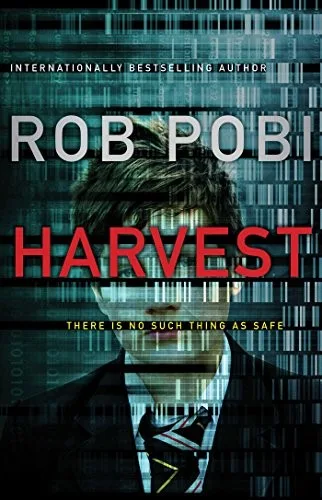
Robert Charles Wilson's 1992 novel, The Harvest, begins with the inexplicable disappearance of most of humanity.
The Harvest, published in 1992, presents a stark vision of humanity's fate when the majority of the population vanishes without a trace. This event, termed 'the harvest,' leaves a small fraction of survivors to confront the silence and the vast unknown. Wilson follows disparate characters as they grapple with this cosmic abandonment, their individual struggles reflecting broader questions about faith, existence, and purpose. The narrative does not offer easy answers, instead focusing on the psychological and societal fallout of such an unprecedented event. It examines how belief systems shift and fracture when faced with the ultimate mystery.
Wilson structures the story through multiple viewpoints, allowing for a varied examination of human reaction to the inexplicable. Some survivors cling to old faiths, others embrace new interpretations, and some simply try to endure. The novel touches on anxieties prevalent in the post-Cold War era, a time marked by rapid technological change and shifting global dynamics, reflecting a broader cultural search for meaning. The Harvest stands as a thoughtful exploration of what it means to be human when the familiar framework of society and belief is shattered.
The Harvest engages with themes often found in speculative fiction that touches upon religious and occult ideas. The concept of a 'harvest' can be seen as a modern interpretation of apocalyptic narratives or ascension myths, where a chosen few are separated from the many. It questions the nature of divine intervention or advanced alien intelligence as orchestrators of humanity's fate. The novel probes the formation of new belief systems in the wake of such a profound, inexplicable event, mirroring historical instances where societal upheaval has led to radical spiritual or philosophical shifts.
💡 Why Read This Book?
• You will explore the psychological impact of mass disappearance, examining how characters like Reverend Miller cope with the sudden absence of their congregations and the world they knew, as depicted in the wake of the 1992 publication. • You will confront existential questions about faith and meaning when faced with the inexplicable, drawing parallels to the intellectual currents of the early 1990s' speculative fiction scene. • You will experience a narrative that probes the nature of 'the harvest' itself, a central concept that drives the characters' desperate search for answers in a universe that has seemingly moved on.
⭐ Reader Reviews
Honest opinions from readers who have explored this book.
❓ Frequently Asked Questions
What is the central mystery of Robert Charles Wilson's The Harvest?
The central mystery is the sudden and inexplicable disappearance of the vast majority of the human population. The novel explores the aftermath and the survivors' attempts to understand this global event.
Who are some of the key characters in The Harvest?
Key characters include Reverend Miller, a clergyman struggling with his faith, and others who represent different facets of human response to crisis and the unknown.
What themes does The Harvest explore?
The novel explores themes of faith, doubt, existentialism, humanity's place in the universe, and the psychological impact of inexplicable loss and survival.
When was The Harvest first published?
The Harvest was first published in 1992, placing it within a period of evolving science fiction that grappled with more philosophical and societal questions.
Does The Harvest offer a definitive explanation for the disappearances?
The novel focuses more on the human response and the search for meaning rather than providing a concrete, scientific explanation for the event known as 'the harvest'.
What is the overall tone of The Harvest?
The overall tone is somber, introspective, and philosophical, focusing on the emotional and spiritual struggles of the surviving characters in a profoundly altered world.
🔮 Key Themes & Symbolism
The Nature of Faith
The novel intensely scrutinizes the role and resilience of faith when confronted with inexplicable cosmic events. Reverend Miller's internal struggle serves as a focal point, questioning whether belief can endure when the very fabric of reality seems to have been arbitrarily altered. It probes whether faith is a human construct for meaning or a genuine connection to something greater, especially in the stark silence left after the 'harvest' of 1992.
Existential Void and Meaning-Making
The core of The Harvest lies in the existential void created by the mass disappearance. Wilson explores how humanity, stripped of its majority, desperately seeks to impose meaning onto a seemingly indifferent universe. The survivors grapple with the profound absence, forcing them to re-evaluate their lives, their relationships, and their understanding of purpose in a world rendered suddenly hollow.
Humanity's Place in the Cosmos
The novel positions humanity as a potentially insignificant element within a vast, unknowable cosmos. The 'harvest' suggests forces or intelligences far beyond human comprehension, prompting contemplation on whether humanity is subject to higher powers or simply a biological phenomenon subject to cosmic whims. This perspective challenges anthropocentric views, as seen in the philosophical discourse surrounding the event.
The Aftermath of Absence
More than the event itself, The Harvest focuses on the aftermath – the silence, the emptiness, and the psychological residue. It examines how societies, or what's left of them, attempt to reconstruct order and normalcy in the wake of an event that defies all logical explanation. This focus on the 'day after' provides a unique lens on human adaptability and the persistent drive for connection.
💬 Memorable Quotes
Direct passages from the work, attributed to the author.
“The silence was the loudest thing.”
— This captures the overwhelming emptiness left by the vanished population. It suggests that the absence of sound and presence became a palpable, almost deafening force for the survivors.
“What if God decided it was time for a final reaping?”
— This reflects the theological anxieties of characters like Reverend Miller, questioning if the event is a divine judgment or a preordained cosmic event, forcing a re-examination of scripture and belief.
“We were the ones left behind. Why?”
— This question captures the core existential dilemma faced by the survivors. It highlights their struggle to understand their purpose and the arbitrary nature of their continued existence.
“The world felt smaller, but infinitely more complex.”
— This paradox illustrates how the reduced population and simplified societal structures paradoxically amplified the internal and philosophical complexities for the remaining individuals.
“They were simply gone. No trace, no reason.”
— This emphasizes the inexplicable nature of the 'harvest.' The lack of evidence or logical explanation fuels the survivors' desperate search for understanding and their confrontation with the unknowable.
🌙 Esoteric Significance
Tradition
While not explicitly tied to a single esoteric lineage, The Harvest engages with Gnostic themes of a flawed or indifferent creator/cosmic force and the concept of a select few being 'chosen' or left behind for reasons unknown. It carries the Gnostic search for understanding a hidden cosmic order that operates beyond human morality or comprehension, presenting a universe that is not necessarily benevolent.
Symbolism
The primary symbol is the 'harvest' itself, representing an inexplicable cosmic culling or selection process, akin to a divine judgment or a natural cosmic event beyond human control. The overwhelming silence left by the vanished population symbolizes the void, the absence of divine presence, or the universe's indifference to human existence. The scattered survivors can be seen as remnants of a fallen humanity, seeking to rebuild meaning.
Modern Relevance
The novel's themes of existential dread, cosmic indifference, and the search for meaning in the face of inexplicable events remain highly relevant. Contemporary thinkers and practitioners in fields ranging from existential philosophy to speculative theology might draw parallels between the 'harvest' and modern anxieties about global crises, AI, or the search for extraterrestrial intelligence. The book serves as a touchstone for discussions on humanity's perceived insignificance.
👥 Who Should Read This Book
• Readers interested in philosophical science fiction exploring the implications of inexplicable global events, particularly those who appreciate narratives that prioritize character introspection over action. • Students of comparative religion and theology examining how fictional narratives grapple with concepts of divine intervention, cosmic judgment, and the problem of evil. • Speculative fiction enthusiasts seeking works that look at existential questions about humanity's purpose and its place within a potentially indifferent universe, especially those who enjoyed novels published in the early 1990s.
📜 Historical Context
Robert Charles Wilson's The Harvest, published in 1992, arrived during a period of significant introspection within science fiction. The genre was moving beyond the space opera and hard sci-fi tropes that dominated earlier decades, with authors like Ursula K. Le Guin and Samuel R. Delany having already paved the way for more literary and philosophical explorations. The early 1990s saw a continued interest in dystopian futures and the human condition under duress, influenced by the geopolitical shifts following the Cold War and anxieties about technological advancement. While not overtly political, The Harvest taps into a post-Cold War unease about humanity's fragility and the potential for large-scale, inexplicable disruptions. Contemporaries like Connie Willis, with her own explorations of societal collapse and human resilience, were also active. The reception of The Harvest was generally positive within the genre, appreciated for its mature handling of profound themes, though it didn't necessarily spark major critical debates or censorship controversies typical of more overtly theological or political works.
📔 Journal Prompts
The silence left by the vanished: How does this absence alter perceptions of reality?
Reverend Miller's crisis of faith: Explore the tension between belief and overwhelming evidence.
The concept of 'the harvest': What cosmic or divine implications does this term suggest?
The survivors' search for purpose: Reflect on the drive to create meaning in an absurd universe.
The inexplicable nature of the event: Consider the psychological impact of confronting the utterly unknown.
🗂️ Glossary
The Harvest
The central event in the novel where a significant majority of the human population disappears inexplicably from Earth, leaving a small fraction of survivors.
Reverend Miller
A key character, a clergyman whose faith is profoundly challenged by the inexplicable disappearance of his congregation and the world he knew.
The Silence
A recurring motif representing the profound emptiness and lack of human presence left behind after the 'harvest,' emphasizing the survivors' isolation and the universe's apparent indifference.
Existential Void
The profound sense of meaninglessness and cosmic insignificance that the surviving characters grapple with following the mass disappearance.
Cosmic Indifference
The philosophical concept suggesting that the universe operates without regard for human concerns, values, or existence, a theme central to the survivors' predicament.
1992 Publication
The year The Harvest was first published, placing it within a specific era of science fiction literature and societal anxieties.
Gnostic Themes
Elements within the narrative that echo Gnostic philosophy, such as a flawed creator, a hidden cosmic order, and the idea of a select few possessing special knowledge or awareness.
🔮 Readers Also Liked
Browse all →









More by Robert Charles Wilson
All books →

More Free Occult Philosophy Books
View all →