Psychology of the Future
 75
75

Psychology of the Future
Stanislav Grof’s Psychology of the Future offers a dense, yet remarkably clear, summation of a career dedicated to mapping the uncharted territories of the human mind. Grof doesn't shy away from the profound implications of his findings, particularly concerning the perinatal period and its lasting impact on adult psychology. The work’s strength lies in its systematic presentation of complex ideas, making decades of research accessible. However, for readers entirely new to transpersonal concepts, the sheer volume of material and the specific terminology might initially feel overwhelming. A particular strength is Grof's discussion of the 'perinatal matrices,' linking the dynamics of birth to adult psychological patterns. This book serves as an essential, albeit demanding, guide to the frontiers of consciousness exploration.
📝 Description
75
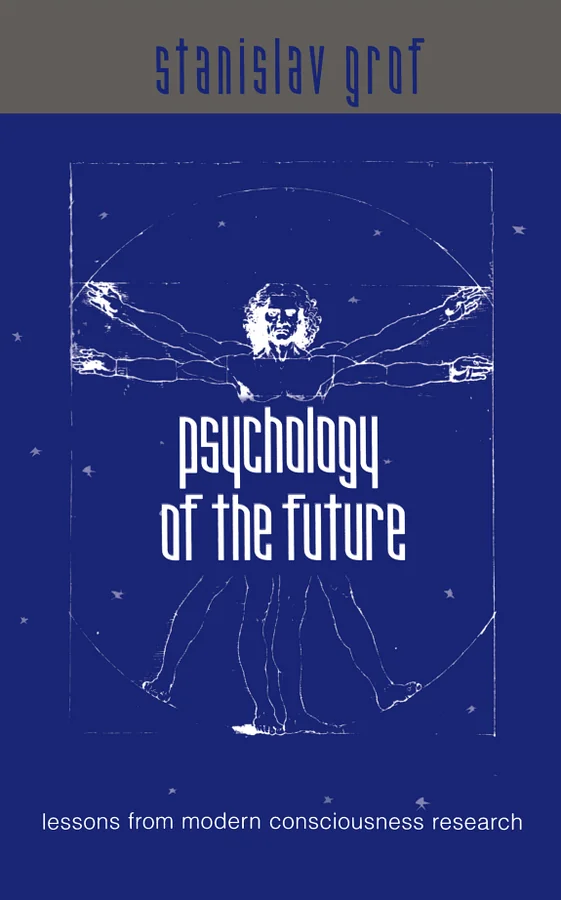
Stanislav Grof's 2000 book, Psychology of the Future, summarizes his lifelong research into altered states of consciousness.
Published in 2000, Psychology of the Future compiles over four decades of Stanislav Grof's research on altered states of consciousness. This volume serves as a clear introduction to his work in transpersonal psychology, consolidating his career findings and clinical observations. It offers a comprehensive overview of his theories for readers new to his extensive contributions.
The book is intended for those interested in the human psyche's deeper potentials, especially experiences outside ordinary awareness. It suits students of psychology, psychotherapy, and consciousness studies, as well as anyone examining the connection between science and spirituality. Individuals unfamiliar with Grof's prior work will find this text an accessible starting point. Grof's research developed in the late 20th century, a time of increased interest in Eastern philosophies and psychedelic research. His work expanded psychological inquiry beyond established Freudian and behaviorist frameworks. The development of Holotropic Breathwork and theories on perinatal matrices positioned him as a significant figure in the transpersonal psychology movement.
Grof's work sits within the broader esoteric tradition of exploring consciousness beyond the material world. His focus on non-ordinary states, accessed through breathwork and other methods, aligns with shamanic practices and mystical traditions that seek direct experience of inner realities. The emphasis on birth trauma and transpersonal realms connects to ancient cosmologies and Gnostic ideas about the soul's journey. This book bridges empirical research with these older methods of inner exploration.
💡 Why Read This Book?
• Gain an understanding of Stanislav Grof's extensive research into non-ordinary states of consciousness, including his cartography of the psyche, as presented in this 2000 publication. • Explore the concept of the perinatal matrices and their proposed influence on psychological development, a core element of Grof's theoretical framework. • Learn about Holotropic Breathwork, a specific technique developed by Grof and his colleagues, as a method for accessing and integrating these deeper states of awareness.
⭐ Reader Reviews
Honest opinions from readers who have explored this book.
❓ Frequently Asked Questions
What is the primary focus of Stanislav Grof's Psychology of the Future?
The book primarily focuses on summarizing over forty years of Stanislav Grof's research into non-ordinary states of consciousness and their therapeutic potential, introducing his transpersonal psychology framework to a wider audience.
Who founded transpersonal psychology, and how does this book relate?
Stanislav Grof is considered one of the founders of transpersonal psychology. This book serves as a comprehensive overview of his foundational contributions to the field, making his work accessible.
What is Holotropic Breathwork, and is it discussed in the book?
Yes, Holotropic Breathwork is a key focus. It's a method developed by Grof and Christina Grof for exploring non-ordinary states of consciousness, and the book details its principles and applications.
When was Psychology of the Future first published?
Psychology of the Future was first published on July 20, 2000, consolidating Grof's extensive research into a single, accessible volume.
What are COEX systems according to Grof's work?
COEX (System of Condensed Experience) systems are a central concept discussed by Grof, representing constellations of memories and fantasies with a strong emotional charge, organized around a common somatic or emotional theme.
Is this book suitable for beginners in psychology?
Yes, the book was specifically written to acquaint newcomers with Grof's work, offering an accessible overview of his research and theories in transpersonal psychology.
🔮 Key Themes & Symbolism
Non-Ordinary States
The book meticulously details Grof's exploration of states of consciousness that deviate from normal waking awareness. These states, often accessed through Holotropic Breathwork or other methods, are presented not as mere altered perceptions but as gateways to profound psychological and spiritual insights. Grof maps the diverse landscapes encountered within these states, including biographical memories, perinatal experiences, and transpersonal phenomena, arguing for their inherent healing and transformative potential within a psychological framework.
Perinatal Matrices
A core part of Grof's theory, the perinatal matrices describe four distinct stages of the birth process and their deep psychological impact. The book explains how these experiences, from the initial contractions to the final expulsion, can become condensed into 'systems of condensed experience' (COEX systems) that significantly shape an individual's personality, emotional patterns, and even physical well-being throughout life. Understanding these matrices is key to Grof's model of psychological healing.
Transpersonal Psychology
Psychology of the Future stands as a foundational text in transpersonal psychology, a field that extends beyond traditional psychology to encompass spiritual and transcendent aspects of human experience. Grof argues that experiences of unity, archetypal encounters, and encounters with the divine are integral to the human psyche, not pathological deviations. This perspective broadens the scope of psychological inquiry to include dimensions previously relegated to religion or mysticism.
Holotropic Breathwork
The book provides a comprehensive overview of Holotropic Breathwork, a powerful psychotherapeutic technique developed by Stanislav and Christina Grof. It explains how the combination of accelerated breathing, evocative music, and focused intention facilitates the emergence of non-ordinary states of consciousness. Grof emphasizes its role in accessing and processing deep-seated material, leading to emotional release, personal insight, and spiritual growth without the use of psychedelics.
💬 Memorable Quotes
Direct passages from the work, attributed to the author.
“The most effective way to achieve a permanent change in the personality is to bring about a transformation of consciousness.”
— This statement expresses Grof's core belief that lasting psychological shifts are directly linked to fundamental changes in one's awareness and perception of reality, rather than superficial behavioral adjustments.
“There is a profound connection between the experience of dying and the experience of birth.”
— This highlights Grof's observation that many intense psychological states involve themes of death and rebirth, suggesting a fundamental connection between the processes of ending and beginning in both biological and psychological terms.
“The psyche is not an isolated entity but is connected to the entire cosmos.”
— This interpretation reflects Grof's view that human consciousness is not confined to the individual but is part of a larger, interconnected web of existence, aligning with transpersonal and mystical perspectives.
“The system of condensed experience (COEX) organizes memories and fantasies around a common emotional or physical theme.”
— This describes a key theoretical construct in Grof's work, explaining how related psychological material clusters together, influencing present behavior and emotional responses based on past patterns.
💡 Key Ideas
Editorial paraphrase of the work's core concepts — not direct quotes.
Psychedelic experiences are not necessarily psychotic states but can be access routes to the deeper layers of the psyche.
This paraphrased concept challenges the conventional psychiatric view of altered states induced by psychedelics, positioning them instead as valuable tools for psychological exploration and healing.
🌙 Esoteric Significance
Tradition
Grof's work can be seen as a modern, empirically-informed approach to understanding phenomena traditionally explored within esoteric traditions like Hermeticism, Gnosticism, and Shamanism. While not explicitly adhering to any single lineage, his mapping of consciousness, emphasis on spiritual emergence, and exploration of archetypal realms resonate with ancient wisdom. He bridges the gap between mystical experience and psychological science, providing a framework that validates subjective spiritual journeys within a therapeutic context.
Symbolism
The book frequently touches upon archetypal symbols that emerge in non-ordinary states. The serpent, often symbolizing transformation, healing, and primal energy in many esoteric traditions, appears as a potent motif. The experience of light, representing consciousness, divine presence, or spiritual awakening, is another recurring symbol. The mandalas, geometric patterns representing the cosmos and the integrated self, are also discussed as powerful symbols of wholeness and order emerging from chaos.
Modern Relevance
Grof's work continues to influence contemporary thinkers and practitioners in fields ranging from psychedelic-assisted therapy to integral psychology and consciousness research. Modern somatic therapists, psychotherapists exploring trauma beyond the biographical, and researchers investigating the neurological correlates of spiritual experiences often draw upon his detailed cartography of the psyche and his understanding of perinatal influences. His emphasis on the healing potential of non-ordinary states remains highly relevant in a world seeking deeper meaning and well-being.
👥 Who Should Read This Book
• Therapists and counselors seeking to expand their understanding of consciousness and explore non-ordinary states as therapeutic tools. • Students of psychology, particularly those interested in transpersonal, depth, or consciousness studies, looking for foundational texts. • Individuals on a path of personal growth and spiritual exploration who wish to contextualize their inner experiences within a psychological framework.
📜 Historical Context
Published in 2000, *Psychology of the Future* arrived at a time when transpersonal psychology, a field co-founded by Grof, was gaining broader recognition, though still often viewed with skepticism by mainstream psychiatry. The late 20th century saw a growing interest in consciousness studies, fueled by advancements in neuroscience and a continued openness to exploring subjective experience, partly influenced by the counterculture movements of the 1960s and 70s. Grof's work, particularly his research with LSD in the early days of psychedelic therapy and his later development of Holotropic Breathwork, positioned him as a key figure challenging Freudian and behaviorist orthodoxies. His methods offered a non-pharmacological route to exploring the depths of the psyche. Contemporaries like Carl Jung had already explored archetypes and the collective unconscious, providing fertile ground for Grof's more detailed mapping of perinatal and transpersonal realms. The reception of his work often involved a division between those who embraced its potential for healing and spiritual growth and those who remained critical of its less empirically verifiable aspects within traditional scientific frameworks.
📔 Journal Prompts
The structure of COEX systems and their influence on present experience.
Reflections on the perinatal matrices and their potential impact on life patterns.
Experiences of non-ordinary states and their symbolic content.
The role of Holotropic Breathwork in accessing deeper layers of the psyche.
Connections between personal experiences and archetypal imagery.
🗂️ Glossary
Non-ordinary states of consciousness
States of awareness that differ significantly from the usual waking state, characterized by altered perceptions, emotions, and cognitive processes. These can include mystical, visionary, or deeply emotional experiences.
Transpersonal psychology
A subfield of psychology that focuses on the spiritual, transcendent, and mystical aspects of human experience, extending beyond the individual ego to explore broader states of consciousness.
Holotropic Breathwork
A powerful psychotherapeutic technique developed by Stanislav and Christina Grof, using accelerated breathing, evocative music, and focused intention to facilitate self-exploration and healing.
Perinatal matrices
Grof's model describing four stages of the birth process and their profound psychological impact on an individual's life, influencing personality and behavior.
COEX systems
Systems of Condensed Experience; constellations of memories and fantasies with a strong emotional charge, organized around a common theme or sensation, influencing current psychological states.
Biographical layer
The level of the psyche related to an individual's personal life history, memories, and experiences from birth to the present.
Transpersonal layer
The deepest layer of the psyche, encompassing experiences that transcend personal identity and the usual boundaries of space and time, including archetypal and spiritual phenomena.