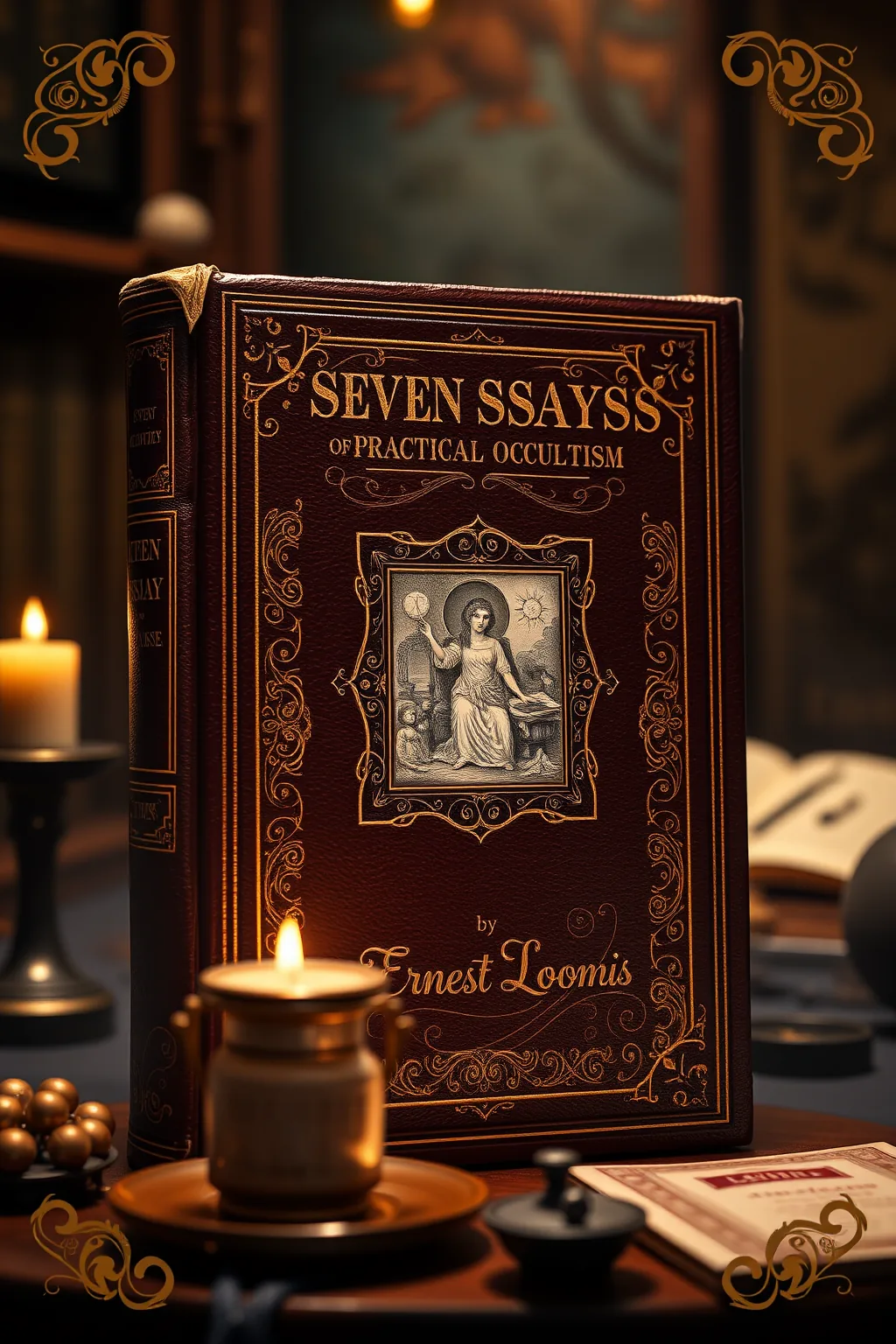
Seven Essays on the Subject of Practical Occultism: Showing how to Use Thought Forces, Etc. in ...
 72
72

Seven Essays on the Subject of Practical Occultism: Showing how to Use Thought Forces, Etc. in ...



Ernest Loomis' "Seven Essays on the Subject of Practical Occultism" is a foundational text for anyone delving into the esoteric and occult traditions. Published in 1899, this book offers a deep dive into the practical applications of thought forces and occult practices, making it an invaluable resource for modern esoteric seekers. Loomis' insights into the hidden dimensions of the human mind and the universe are both enlightening and thought-provoking, providing a historical context that enriches contemporary occult studies. The book's accessibility, thanks to its digitization by Google and upload to the Internet Archive, ensures that its wisdom is preserved and available to a broader audience. For those interested in exploring the mysteries of the occult, this text is a must-read, offering timeless wisdom and practical advice.
📝 Description
72
Ernest Loomis published 'Seven Essays on the Subject of Practical Occultism' to show how thought forces can be used.
Ernest Loomis' collection, 'Seven Essays on the Subject of Practical Occultism,' examines the practical application of occult principles, particularly the manipulation of thought forces. Loomis lays out a system for using mental energies, aiming to bridge the gap between theoretical occultism and everyday life. The essays are characterized by their symbolic language and direct approach to esoteric concepts.
This book is written for individuals interested in understanding how occult philosophy can inform one's perception of reality. It addresses both the theoretical underpinnings and potential uses of these forces, making it suitable for those who wish to actively engage with these ideas. Loomis guides the reader through a series of arguments that aim to clarify the role of consciousness in shaping experience.
Published in an era of burgeoning interest in spiritualism and occult studies, Loomis' work aligns with the broader esoteric movement of the late 19th and early 20th centuries. It reflects a desire to codify and make accessible practices often shrouded in mystery. The focus on 'practical' application suggests an influence from traditions that emphasize direct experience and personal transformation over purely theoretical knowledge, such as certain branches of Theosophy or earlier Hermetic traditions.
💡 Why Read This Book?
Reading "Seven Essays on the Subject of Practical Occultism" today offers readers a unique opportunity to explore the foundational principles of occult practices. This book provides a historical perspective that enriches modern esoteric studies, making it an essential read for anyone interested in the occult. By understanding the practical applications of thought forces and occult practices, readers can gain a deeper appreciation for the hidden dimensions of the human mind and the universe. This text is particularly valuable for esoteric enthusiasts and occult practitioners seeking to deepen their knowledge and practice.
⭐ Reader Reviews
Honest opinions from readers who have explored this book.
❓ Frequently Asked Questions
What is the main focus of this book?
The main focus of "Seven Essays on the Subject of Practical Occultism" is the practical application of thought forces and occult practices, providing readers with a comprehensive guide to esoteric studies.
Is this book suitable for beginners in esoteric studies?
While the book is accessible, it is more suited for those with some prior knowledge of esoteric and occult traditions, as it delves deeply into complex subjects.
How was this book digitized and made available?
The book was digitized by Google from the library of the New York Public Library and uploaded to the Internet Archive by user tpb, making it accessible to a wider audience.
🔮 Key Themes & Symbolism
Thought Forces
Loomis explores the manipulation of thought forces, exploring how these energetic entities can be harnessed to achieve spiritual and material goals. This theme underscores the power of the mind in shaping reality and offers practical techniques for those seeking to master their inner landscape.
Symbolism and Hidden Knowledge
The book is replete with symbolism that reveals hidden layers of meaning, inviting readers to uncover the deeper truths that lie beneath the surface of everyday experience. Loomis' exploration of esoteric symbols provides a wide range of mystical insights that enrich one's understanding of the occult.
Philosophical Foundations
Loomis presents a philosophical framework that underscores the significance of occult philosophy in understanding the deeper dimensions of reality. This theme emphasizes the importance of esoteric knowledge in spiritual growth and the pursuit of higher consciousness.
💬 Memorable Quotes
Direct passages from the work, attributed to the author.
“The manipulation of thought forces is the key to unlocking the hidden potential within.”
— Loomis emphasizes the power of the mind in shaping reality, inviting readers to explore the mystical arts.
“Symbolism reveals the deeper truths that lie beneath the surface of everyday experience.”
— The book is rich with esoteric symbols that offer useful insights into the occult.
“Occult philosophy provides a framework for understanding the deeper dimensions of reality.”
— Loomis' work underscores the importance of esoteric knowledge in spiritual growth.
“The veil between the seen and unseen can be lifted through the practical application of occult principles.”
— This theme invites readers to explore the mystical arts and explore hidden knowledge.
“Thought forces are the energetic entities that can be harnessed to achieve spiritual and material goals.”
— Loomis offers practical techniques for mastering the inner landscape and shaping reality.
🌙 Esoteric Significance
Tradition
This book belongs to the Hermetic tradition, which emphasizes the unity of all things and the power of the mind in shaping reality. Hermeticism draws on ancient Egyptian, Greek, and Jewish mystical traditions, offering a wide range of esoteric insights that enrich one's understanding of the occult.
Symbolism
Key symbols in this book include the use of thought forces as energetic entities that can be harnessed to achieve spiritual and material goals. Loomis' exploration of esoteric symbols provides a deep dive into the hidden layers of meaning that underlie everyday experience.
Modern Relevance
Loomis' insights continue to be relevant today, with many contemporary occultists and spiritual practitioners drawing on his principles to enhance their practices. The book's exploration of thought forces and symbolism offers a timeless framework for understanding the mystical arts and the deeper dimensions of reality.
👥 Who Should Read This Book
This book is ideal for spiritual seekers, occult practitioners, and scholars interested in the mystical arts and esoteric philosophy. Beginners curious about the occult will find the book accessible and enriching, while experienced practitioners will appreciate the depth of Loomis' insights. Those seeking to deepen their understanding of the hidden dynamics of the universe and the power of the mind in shaping reality will find this book invaluable.
📜 Historical Context
Published in the early 20th century, 'Seven Essays on the Subject of Practical Occultism' emerged during a time of significant spiritual and intellectual ferment. The era saw a renewed interest in esoteric traditions and the occult, driven by a desire to explore the deeper dimensions of reality and the hidden potential within the human psyche. Loomis' work was influential in shaping the discourse on occult philosophy, providing a practical framework for those seeking to understand and apply occult principles. The book's insights continue to resonate with modern practitioners and scholars, offering a timeless exploration of the mystical arts.
📔 Journal Prompts
How do thought forces manifest in your daily life, and how can you harness them for spiritual growth?
Reflect on a symbol that has deep personal meaning and explore its esoteric significance.
Consider the philosophical foundations of occult philosophy and how they enrich your understanding of reality.
What are some practical techniques you can use to manipulate thought forces and achieve your goals?
How does the veil between the seen and unseen influence your spiritual journey?
🗂️ Glossary
Thought Forces
Energetic entities that can be harnessed to achieve spiritual and material goals through the manipulation of the mind.
Occult Philosophy
The study of hidden knowledge and the deeper dimensions of reality, often involving the exploration of esoteric symbols and mystical arts.
Symbolism
The use of symbols to reveal hidden layers of meaning and provide insights into the occult.
Hermetic Tradition
An esoteric tradition that emphasizes the unity of all things and the power of the mind in shaping reality, drawing on ancient mystical traditions.
Esoteric Knowledge
Hidden knowledge that is revealed through the exploration of mystical arts and the deeper dimensions of reality.
This book appears in 3 collections
🔮 Readers Also Liked
Browse all →









From the “Occultism” Collection
View all →






More Free Occult Philosophy Books
View all →