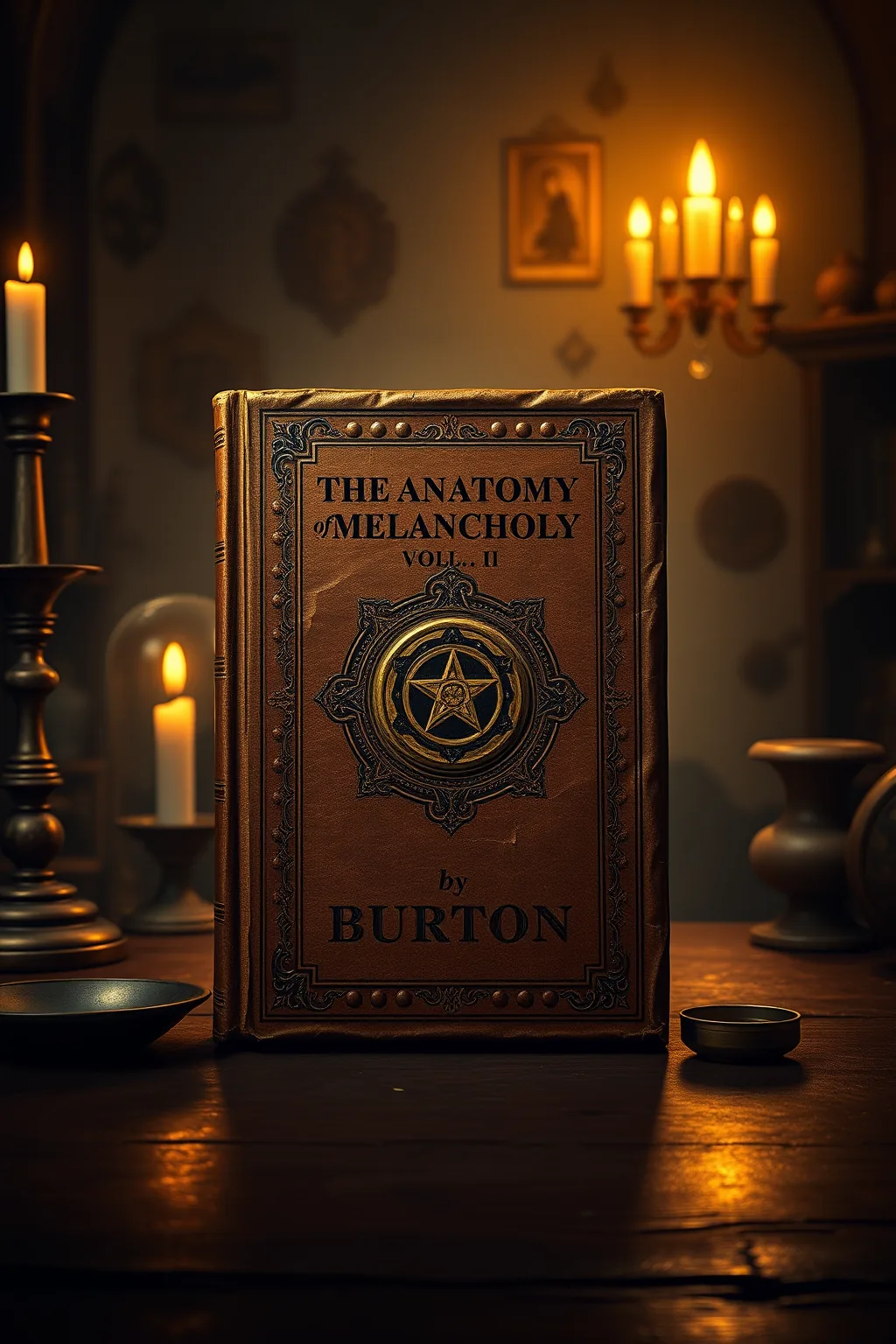
The anatomy of melancholy, what it is, with all the kinds causes, symptomes, prognostics, and several cures of it / Vol. II
 81
81

The anatomy of melancholy, what it is, with all the kinds causes, symptomes, prognostics, and several cures of it / Vol. II



The Anatomy of Melancholy by Robert Burton is a timeless classic that continues to captivate esoteric seekers and scholars alike. Burton's meticulous exploration of melancholy offers a deep dive into the psychological and spiritual dimensions of this complex condition. His insights, drawn from a vast array of sources, provide a comprehensive understanding of melancholy that is as relevant today as it was in the 17th century. The book's value lies in its ability to bridge the gap between ancient wisdom and modern esoteric practices. Burton's holistic approach, which includes alchemy and astrology, makes this text a treasure trove for those interested in the esoteric arts. The language and style, though archaic, add to the book's charm and authenticity. For modern readers, this text serves as a reminder of the enduring power of esoteric knowledge and its relevance in contemporary times.
📝 Description
81
Robert Burton's 1621 work, Volume II of 'The Anatomy of Melancholy,' examines the spiritual and metaphysical aspects of sadness.
This second volume of Robert Burton's study focuses on the spiritual and metaphysical dimensions of melancholy. Moving beyond a purely medical or psychological classification, Burton investigates the deeper, often hidden, causes and manifestations of sorrow. He draws upon a wide range of classical, medieval, and Renaissance sources, weaving together philosophical arguments with theological interpretations.
The text addresses the various types of melancholy, its prognostics, and potential remedies, but its unique contribution lies in its consideration of the soul's affliction. Burton treats melancholy not just as a bodily humor gone awry but as a condition that touches upon the very nature of human experience and its relationship to the divine or the spiritual world. His dense prose, filled with allusions and intricate arguments, invites careful reading and contemplation.
Robert Burton's 'Anatomy of Melancholy' sits at a complex intersection of Renaissance humanism, early modern medicine, and less conventional spiritual thought. While framed as a medical treatise, its extensive engagement with classical philosophy, Neoplatonism, and even alchemical concepts positions it within a broader esoteric tradition. The work reflects a period where the boundaries between natural philosophy, theology, and occultism were fluid. Burton's treatment of melancholy as a condition with spiritual and metaphysical roots aligns with certain hermetic and mystical views of the human condition, suggesting a universe where inner states are deeply connected to unseen forces and divine influences.
✍️ Author

BURTON, Robert
Robert Burton (8 February 1577 – 25 January 1640; sometimes writing under the pen name Democritus Junior) was an English author and fellow of Oxford University, known for his encyclopedic The Anatomy of Melancholy. Born in 1577 to a comfortably well-off fa…
💡 Why Read This Book?
Reading The Anatomy of Melancholy today offers a unique perspective on the human condition and the enduring quest for spiritual and psychological well-being. This book provides insights into the esoteric traditions that have shaped our understanding of mental health and spirituality. It is a must-read for those interested in the intersection of psychology, spirituality, and esoteric knowledge. The reader will gain a deeper understanding of melancholy and its various dimensions, as well as the historical context that shaped our modern views on mental health.
⭐ Reader Reviews
Honest opinions from readers who have explored this book.
❓ Frequently Asked Questions
What is the main focus of The Anatomy of Melancholy?
The main focus of The Anatomy of Melancholy is the exploration of melancholy, its causes, symptoms, and potential cures. Burton delves into the psychological, spiritual, and esoteric dimensions of this condition.
Who should read this book?
This book is ideal for esoteric seekers, scholars of Renaissance literature, and those interested in the history of psychology and mental health. It offers valuable insights for anyone exploring the intersection of spirituality and psychology.
Is this book available in digital format?
Yes, The Anatomy of Melancholy, Vol. II, is available in digital format through the Medica digital library with the resource ID 36761x02.
🔮 Key Themes & Symbolism
The Spiritual Roots of Melancholy
Burton explores the spiritual and metaphysical roots of melancholy, uncovering the hidden knowledge that underpins human suffering. This theme explores the esoteric dimensions of human emotion, providing a unique perspective on the mystical underpinnings of melancholy.
Alchemical Symbolism
The book is rich with alchemical symbolism, using ancient symbols and metaphors to illustrate the transformative nature of melancholy. This theme highlights the alchemical processes that Burton believes are at work in the human psyche, offering a deeper understanding of the esoteric aspects of melancholy.
Philosophical Inquiry
Burton's work is a profound philosophical inquiry into the nature of melancholy, blending medical insights with spiritual and philosophical thought. This theme emphasizes the philosophical significance of Burton's exploration of melancholy, making it a valuable resource for scholars and seekers of hidden knowledge.
💬 Memorable Quotes
Direct passages from the work, attributed to the author.
“Melancholy, whose name they tell is Synoche, madness, folly, fury, phrenesy.”
— Burton's quote underscores the profound and complex nature of melancholy, linking it to various psychological and spiritual states.
“Melancholy is nothing else but an appetite of the mind.”
— Burton's insight into the nature of melancholy as a desire of the mind reveals the deeper, mystical dimensions of human emotion.
“In melancholy, the soul seeks solace in the shadows.”
— Burton's exploration of the soul's journey through melancholy highlights the transformative power of this emotion, offering a deeper understanding of its esoteric significance.
💡 Key Ideas
Editorial paraphrase of the work's core concepts — not direct quotes.
The mind can no more exist without ideas than the body without organs.
This passage highlights the interconnectedness of the mind and body, emphasizing the importance of esoteric knowledge in understanding human emotions.
The soul is a divine spark, and melancholy is its shadow.
This quote illustrates the spiritual and metaphysical roots of melancholy, suggesting that it is an inherent part of the human condition.
🌙 Esoteric Significance
Tradition
This book belongs to the Hermetic tradition, which emphasizes the hidden knowledge and spiritual wisdom that underpin the human experience. Burton's exploration of melancholy is deeply rooted in Hermetic principles, making it a valuable resource for those interested in Hermetic studies.
Symbolism
Key symbols in this work include the alchemical processes of transformation, the divine spark of the soul, and the interconnectedness of the mind and body. These symbols are used to illustrate the esoteric dimensions of melancholy, offering a deeper understanding of its spiritual and metaphysical roots.
Modern Relevance
Today, Burton's insights into the esoteric dimensions of melancholy remain relevant, particularly for modern practitioners of divination, spiritual seekers, and scholars of the occult. His work continues to inspire those who seek a deeper understanding of the hidden knowledge that underpins human emotions.
👥 Who Should Read This Book
This book is ideal for beginners in the field of esoteric studies, providing a foundational understanding of the mystical dimensions of melancholy. Scholars of the occult will find it a valuable resource for their research, while spiritual seekers will appreciate its exploration of the spiritual and metaphysical roots of human emotion. Practitioners of divination will also benefit from Burton's insights into the transformative power of melancholy, making it a must-read for anyone interested in the hidden knowledge that underpins our existence.
📜 Historical Context
Written in the 17th century, 'The Anatomy of Melancholy, Vol. II' reflects the intellectual and spiritual climate of the era, marked by a blend of scientific inquiry and esoteric thought. Burton's work was groundbreaking in its time, offering a comprehensive examination of melancholy that transcended conventional medical literature. Its influence can be seen in the works of subsequent scholars and practitioners of the occult, making it a foundational text in the study of esoteric psychology.
📔 Journal Prompts
Reflect on the spiritual roots of your own melancholy. How do they connect to the esoteric dimensions explored by Burton?
Consider the alchemical symbolism in Burton's work. How do these symbols illustrate the transformative nature of melancholy?
Explore the philosophical significance of Burton's inquiry into melancholy. How does it deepen your understanding of human emotion?
Think about the interconnectedness of the mind and body in the context of melancholy. How does this connection manifest in your own experiences?
Reflect on the journey of the soul through melancholy. How does this exploration offer a deeper understanding of its esoteric significance?
🗂️ Glossary
Melancholy
A complex emotion characterized by profound sadness, introspection, and a sense of spiritual and metaphysical longing.
Alchemical Symbolism
The use of ancient symbols and metaphors to illustrate the transformative processes at work in the human psyche.
Hermetic Tradition
A school of thought that emphasizes the hidden knowledge and spiritual wisdom that underpin the human experience.
Esoteric Psychology
The study of the mystical and spiritual dimensions of the human psyche, often involving hidden knowledge and symbolism.
Divine Spark
The spiritual essence of the soul, often associated with its connection to the divine and its journey through human experience.
This book appears in 6 collections
🔮 Readers Also Liked
Browse all →









More by BURTON, Robert
All books →
From the “Transcendental Meditation” Collection
View all →





More Free Sacred Texts & Gnosticism Books
View all →