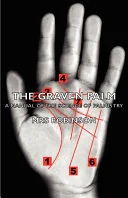
The Graven Palm - A Manual of the Science of Palmistry
 79
79

The Graven Palm - A Manual of the Science of Palmistry
Mrs Robinson's "The Graven Palm" offers a refreshingly direct approach to palmistry, eschewing mystical jargon for a methodical breakdown of the hand's geography. The sheer density of detail, particularly concerning the less-discussed mounts and minor lines, is impressive. The author's insistence on a 'science' of palmistry, supported by numerous diagrams, lends the work an air of empirical intent that is somewhat rare in the genre. However, this very rigor can also be its limitation; the text occasionally feels overly prescriptive, leaving little room for the intuitive leaps that many practitioners find essential. The section detailing "Other Lines and Marks" is particularly dense, almost overwhelming in its cataloging of subtle signs. Ultimately, "The Graven Palm" serves as an encyclopedic reference, best utilized by those seeking a deep, foundational understanding of traditional chiromantic analysis.
Verdict: A rigorously detailed, if somewhat dry, manual for the serious student of chiromancy.
📝 Description
79
Mrs. Robinson's The Graven Palm, published in 1914, is a detailed manual on palmistry.
First appearing in 1914, The Graven Palm by Mrs. Robinson functions as a thorough guide to the practice of palmistry. The book systematically explains the craft, starting with the basic anatomy of the hand and moving to the interpretation of its many lines and mounds. It is designed as a practical manual, intended to give the reader the skills for precise chiromantic analysis. The work uses numerous diagrams to clarify the complex patterns found on the palm.
This book is primarily for those who seek a structured introduction to palmistry, approaching the subject with a desire for systematic understanding. Students of esoteric studies, particularly those interested in physiognomy and chiromancy, will find its detailed approach useful. It is also for readers who appreciate historical texts on occult subjects and wish to learn the principles taught in the early 20th century, before later interpretations became common.
Published in 1914, The Graven Palm arrived during a time of significant interest in spiritualism and occult sciences. This period saw a revival of practices like palmistry, often presented with a philosophical or quasi-scientific framework. Mrs. Robinson's work contributed to this by aiming to codify chiromancy as a structured 'science' for a readership interested in metaphysical studies beyond conventional academic fields.
💡 Why Read This Book?
• You will learn to identify and interpret the specific "Mounts of Venus," "Mounts of Jupiter," and "Mounts of Apollo" as detailed in the book's early chapters, understanding their direct correlation to personality traits like love, ambition, and creativity, a focus often less emphasized in contemporary guides. • Gain practical skills in tracing and analyzing the "Line of Life," "Line of Heart," and "Line of Head," as presented with explicit diagrams in the 1914 edition, allowing for a direct comparison with foundational chiromantic teachings. • Understand the historical context of palmistry as a "science" in the early 20th century, appreciating how Mrs Robinson cataloged "Other Lines and Marks" beyond the primary ones, offering a unique glimpse into the era's approach to chiromancy.
⭐ Reader Reviews
Honest opinions from readers who have explored this book.
❓ Frequently Asked Questions
What is the original publication year of "The Graven Palm"?
The original publication year of "The Graven Palm - A Manual of the Science of Palmistry" by Mrs Robinson is 1914. The edition available via Esoteric Library is a modern reprint, first published on April 18, 2013.
Is "The Graven Palm" suitable for complete beginners in palmistry?
Yes, the book is structured as a comprehensive manual, starting with basic hand anatomy and progressing to line and mount interpretation. Its extensive illustrations make it accessible for beginners seeking a systematic introduction to the 'science' of palmistry.
What kind of illustrations does the book contain?
The book contains numerous explanatory diagrams and illustrations of hands. These visuals are designed to clearly demonstrate the various mounts, lines, and markings discussed, aiding the reader's understanding and practical application of palmistry techniques.
What specific lines of the hand are covered in detail?
"The Graven Palm" provides detailed coverage of major lines including the Line of Life, Line of Heart, Line of Head, and Line of Fate. It also dedicates sections to the Lines of Fortune and Fame, and the Line of Health.
Besides lines, what other features of the hand does Mrs Robinson analyze?
Beyond the major and minor lines, Mrs Robinson's manual thoroughly analyzes the various mounts on the palm, such as the Mount of Venus, Mount of Jupiter, and Mount of Apollo, explaining their significance in chiromantic readings.
Does the book discuss palmistry in a spiritual or purely analytical way?
The book frames palmistry as a 'science,' focusing on analytical interpretation of hand features to understand character and potential life paths. While rooted in esoteric traditions, its approach emphasizes systematic study and observation over purely spiritualistic pronouncements.
🔮 Key Themes & Symbolism
Chiromantic Cartography
This work meticulously maps the palm as a landscape for interpretation. It details the seven primary mounts – Jupiter, Saturn, Apollo, Mercury, Mars, Venus, and Luna – assigning specific psychological and characterological attributes to each. Furthermore, it charts the major and minor lines, treating them as pathways of experience and energy flow. The emphasis is on a systematic, almost topographical, understanding of the hand, where each feature's position and quality contribute to a holistic reading, reflecting an early 20th-century drive to systematize esoteric knowledge.
The Science of Lines
Central to "The Graven Palm" is the detailed analysis of the primary palm lines: the Line of Life, Line of Heart, Line of Head, and Line of Fate. Mrs Robinson explains how to trace their origins, trajectories, and endings, linking them to vital energy, emotional capacity, intellect, and destiny respectively. The text also covers secondary lines such as the Lines of Fortune and Fame, and the Line of Health, treating their presence, absence, or particular formations as significant indicators within the chiromantic framework.
Illustrative Pedagogy
A defining characteristic of this manual is its extensive reliance on visual aids. The author understood that the abstract concepts of palmistry require concrete representation. The book is replete with explanatory diagrams and illustrated hands, demonstrating precisely where lines begin and end, how mounts are formed, and the appearance of various marks and their potential meanings. This pedagogical approach aims to clarify the practice, making it accessible to anyone willing to study the visual evidence presented on the palm.
Characterological Determinants
The underlying philosophy of "The Graven Palm" posits that the hand's features are direct reflections of an individual's inherent character, predispositions, and life trajectory. By analyzing the development of the mounts, the clarity and length of the lines, and the presence of various signs (crosses, stars, islands), the practitioner can purportedly discern a person's strengths, weaknesses, talents, and potential challenges. This diagnostic approach aligns with the era's interest in physiognomy and the idea that physical form reveals inner essence.
💬 Memorable Quotes
Direct passages from the work, attributed to the author.
“The Mount of Venus is the fleshy ball at the base of the thumb.”
— This concise statement defines a fundamental element of palmistry analysis. It highlights the book's direct, anatomical approach to explaining the hand's features, setting the stage for interpreting the Mount of Venus's influence on love, passion, and vitality.
“The Line of Life commences at the base of the Mount of Jupiter.”
— This interpretation explains a key starting point for a major palm line. It illustrates how the text links different parts of the hand, suggesting that the 'life line' originates from a position associated with ambition and leadership.
“The Lines of Fortune and of Fame are often found on the Mount of Apollo.”
— This highlights the association of specific lines with particular mounts. It suggests that success and public recognition (Fortune and Fame) are linked to qualities represented by the Mount of Apollo, often associated with artistry and charisma.
“Other Lines and Marks are too numerous to classify exhaustively, but possess significance.”
— This acknowledges the complexity of palmistry beyond the main features. It implies that subtle markings, though less commonly discussed, are crucial for a complete and nuanced reading of the hand.
💡 Key Ideas
Editorial paraphrase of the work's core concepts — not direct quotes.
A clear Line of Head indicates a well-balanced mind.
This paraphrase captures the essence of how line characteristics are interpreted. A distinct 'Line of Head' is presented as a positive indicator of mental clarity and logical thought processes.
🌙 Esoteric Significance
Tradition
This work fits within the Western esoteric tradition, specifically the lineage of chiromancy that gained traction in the late 19th and early 20th centuries. While not directly tied to Kabbalah or Hermeticism in its textual presentation, it draws upon a long history of interpreting the hand, which has often been integrated into broader systems of divination and self-knowledge. It represents a move towards systematizing these practices, aligning with the broader occult revival's attempt to present ancient wisdom in accessible, often pseudo-scientific, formats.
Symbolism
The primary symbolism lies in the hand itself as a microcosm of the individual's life and character. The seven mounts (e.g., Mount of Jupiter symbolizing ambition, Mount of Venus representing love and vitality) act as focal points of energy and personality traits. The lines (Life, Head, Heart, Fate) symbolize the flow of time, consciousness, emotion, and destiny. Minor marks like stars, crosses, and squares function as specific omens or indicators of challenges and opportunities within this symbolic landscape.
Modern Relevance
Contemporary practitioners of palmistry, particularly those interested in a more analytical and less overtly mystical approach, often reference foundational texts like "The Graven Palm." Its detailed cataloging of lines and mounts influences modern chiromantic systems, especially those focused on psychological interpretation. Thinkers and schools that explore the intersection of physiognomy and personality, or those seeking historical perspectives on divination techniques, find value in its systematic methodology and comprehensive illustrations.
👥 Who Should Read This Book
['• Aspiring palmists seeking a detailed, illustrated guide to the fundamentals of chiromancy, focusing on the science behind interpreting hand lines and mounts.', '• Students of esoteric history interested in early 20th-century occult sciences and how practices like palmistry were presented as systematic disciplines.', "• Comparative divination practitioners looking to understand the specific methodologies and terminologies used in traditional palmistry manuals like Mrs Robinson's 1914 work."]
📜 Historical Context
Published in 1914, "The Graven Palm" emerged during a vibrant period for esoteric studies in the West, fueled by movements like Theosophy and the Hermetic Order of the Golden Dawn. This era saw a surge in the popularization and academic (albeit fringe) exploration of subjects like astrology, tarot, and chiromancy, often framed as ancient sciences or forgotten wisdom. Mrs Robinson's work contributes to this trend by presenting palmistry not as mere fortune-telling, but as a systematic 'science' of character analysis. It stands in contrast to the more mystical or purely predictive approaches prevalent at the time. While figures like William Walker Atkinson were also publishing extensively on occult subjects, Mrs Robinson's focus remained narrowly on the detailed mechanics of palm reading, aiming for a comprehensive, illustrated guide that could serve as a foundational text for serious students. The book reflects a desire to codify and rationalize occult practices within the intellectual currents of the early 20th century.
📔 Journal Prompts
The structure of the Mount of Venus and its relation to personal affection.
Tracing the Line of Head across different illustrative examples.
The significance attributed to the Line of Fate in early 20th-century chiromancy.
Comparing the interpretation of a specific mark, like a 'star,' across different mounts.
How the Mount of Apollo's characteristics are depicted and explained.
🗂️ Glossary
Mounts
Fleshy, raised areas on the palm, named after classical deities (e.g., Jupiter, Venus, Apollo), each believed to correspond to specific personality traits and potentials.
Line of Life
The major line curving around the base of the thumb, generally interpreted as indicating vitality, physical health, and major life events.
Line of Heart
The horizontal line running across the upper palm, typically read for emotional disposition, romantic inclinations, and heart health.
Line of Head
The line extending from near the thumb across the palm, generally interpreted as representing intellect, learning ability, and thought processes.
Line of Fate
A vertical line running up the palm, often associated with career, life path, and external influences shaping destiny.
Chiromancy
The practice of reading palms; a form of divination or character analysis based on the study of the hand's shape, lines, and mounts.
Marks
Various signs found on the palm, such as stars, crosses, squares, or islands, which are believed to modify or indicate specific circumstances related to the lines or mounts they appear on.
This book appears in 1 collection
🔮 Readers Also Liked
Browse all →








From the “Palmistry” Collection
View all →









More Free Occult Philosophy Books
View all →