Crop Circles
 74
74

Crop Circles
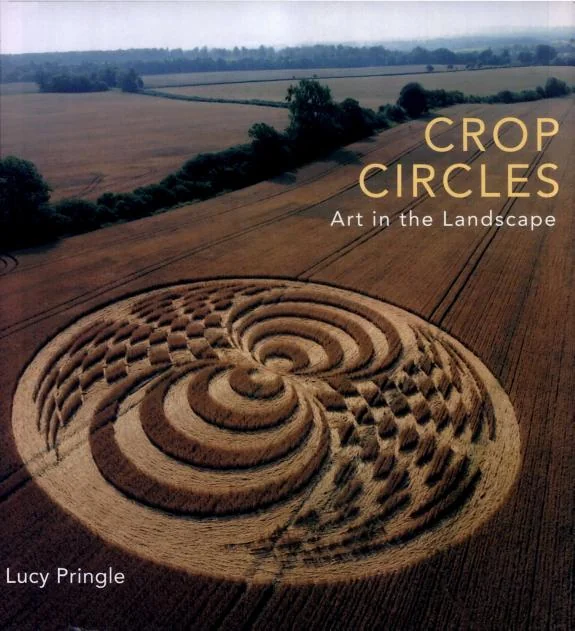
Lucy Pringle’s ‘Crop Circles’ is less a narrative and more an extensive photographic logbook, an approach that serves its purpose admirably. The strength lies in the sheer volume and clarity of the aerial shots, capturing the intricate designs that have mystified observers for decades. Pringle’s nearly 20 years of focus are evident in the breadth of examples presented, particularly from the South of England. However, the book’s limitation is its predominantly visual nature; the accompanying text, derived from an original blurb, offers little in-depth analysis or theoretical exploration, leaving the reader to infer much from the images alone. A particularly striking aspect is the evolution of complexity visible across the years documented, suggesting a developing 'language' within the formations. Ultimately, Pringle provides a valuable visual archive for those already engaged with the subject, rather than an introduction for the uninitiated.
📝 Description
74
Lucy Pringle's 2007 book presents nearly two decades of aerial photography of crop circles.
Lucy Pringle's 2007 volume, 'Crop Circles,' is a visual record built from almost twenty years of her aerial photography and research. The book gathers images, largely from the South of England, documenting patterns that have appeared in agricultural fields. It functions as a photographic archive, allowing for a direct visual encounter with the phenomenon of crop circles. The collection showcases the geometric precision, scale, and variety of these formations. Pringle's extensive catalog implicitly prompts questions about their origins: natural occurrences, human creations, or other causes.
The book is for anyone interested in unexplained aerial phenomena, geometric designs in nature, and the blend of art and mystery. It will appeal to crop circle researchers, photographers looking for visual ideas, and those curious about fringe subjects and the visual documentation of unusual events. Readers open to considering the origins and possible meanings of these formations will find a rich visual resource. The phenomenon itself gained public attention from the late 1970s, with increasing complexity in the 1980s and 1990s. Pringle's work documents a period of significant activity and ongoing speculation.
The study of crop circles, particularly their complex geometric designs and uncertain origins, fits within esoteric traditions that seek meaning beyond conventional explanations. These traditions often look for patterns and messages in natural or anomalous phenomena, suggesting a deeper order or intelligence at play. Pringle's visual documentation, while presented factually, invites contemplation of these broader questions about consciousness, earth energies, or even extraterrestrial influence, aligning with a worldview that perceives hidden connections and significance in the world around us.
💡 Why Read This Book?
• Gain a visual understanding of crop circle evolution through Pringle’s extensive photographic catalog, documenting patterns primarily from the South of England over nearly two decades, offering a concrete visual history. • Explore the geometric intricacies and scale of formations captured from aerial perspectives, prompting contemplation on design and formation mechanics not typically encountered in everyday life. • Engage with a primary visual resource compiled by a dedicated researcher, providing material for personal interpretation and study of a phenomenon that gained widespread attention from the late 1970s onwards.
⭐ Reader Reviews
Honest opinions from readers who have explored this book.
❓ Frequently Asked Questions
What is the primary focus of Lucy Pringle's 'Crop Circles' book?
The book is primarily a visual compendium, featuring a large collection of aerial photographs of crop circles taken by Lucy Pringle over nearly 20 years, with a focus on formations in the South of England.
When was Lucy Pringle's 'Crop Circles' first published?
Lucy Pringle's 'Crop Circles' was first published in 2007, reflecting her extensive research and photographic documentation up to that point.
What geographical area is most represented in the crop circle photographs?
The majority of the awe-inspiring aerial photographs featured in the book were taken across the South of England, showcasing a significant regional concentration of these formations.
Does the book offer explanations for how crop circles are made?
While Pringle has researched the phenomenon for nearly 20 years, the book primarily presents photographic evidence. It invites contemplation on formation rather than providing definitive explanations.
Who is Lucy Pringle and what is her background with crop circles?
Lucy Pringle is a photographer and researcher who has dedicated approximately 20 years to documenting and studying crop circles, amassing a significant archive of images.
Is 'Crop Circles' a good starting point for someone new to the topic?
The book offers a strong visual introduction to the variety and complexity of crop circles. However, it functions best as a photographic archive for those already curious about the subject.
🔮 Key Themes & Symbolism
Photographic Documentation
The core of this work lies in its extensive photographic archive. Pringle's nearly two decades of aerial photography serve as primary evidence, documenting the visual evolution and complexity of crop circles. The book emphasizes the geometric precision, scale, and artistic quality of these formations, presenting them as objects of study and wonder. This focus on visual data allows readers to directly engage with the phenomenon's appearance, moving beyond anecdotal accounts to a catalog of documented instances.
Geometric Complexity
A recurring theme is the astonishing geometric complexity and mathematical precision evident in many crop circles. Pringle's images showcase intricate patterns, fractals, and symbolic designs that appear within agricultural fields. This aspect challenges conventional explanations, prompting questions about the intelligence or natural forces capable of producing such ordered and elaborate designs. The sheer variety presented underscores a recurring visual language that invites interpretation.
The Enigma of Origin
While not explicitly stating a singular cause, the book’s comprehensive visual record inherently raises questions about the origin of crop circles. By presenting numerous examples documented over years, Pringle implicitly invites readers to consider the phenomenon’s persistence and evolving nature. The work documents formations that have appeared since at least the late 1970s, contributing to an ongoing global discussion about their creators, whether human, natural, or other.
Regional Focus
The collection prominently features crop circles documented across the South of England. This regional focus highlights a specific geographical area known for a high incidence of these formations. By concentrating on this locale, Pringle provides a detailed look at patterns that have emerged in a particular landscape, potentially revealing regional characteristics or concentrations of activity related to the phenomenon.
💬 Memorable Quotes
Direct passages from the work, attributed to the author.
“Lucy Pringle has been photographing and researching crop circles for nearly 20 years.”
— This statement establishes Pringle's extensive experience and dedication to the subject matter. It frames the book as the culmination of long-term observation and study, lending credibility to the visual evidence presented.
“Taken across the South of England.”
— This phrase pinpoints the geographical scope of the photographic collection. It informs the reader that the visual examples are concentrated in a specific region known for crop circle activity.
“The book showcases the intricate designs that have appeared in agricultural fields.”
— This interpretation focuses on the nature of the formations themselves – their detailed patterns and their unusual location within farmland, emphasizing the juxtaposition of man-made agriculture and anomalous design.
💡 Key Ideas
Editorial paraphrase of the work's core concepts — not direct quotes.
Presents a catalogue of awe-inspiring aerial photographs.
This paraphrase highlights the book's function as a visual repository. It emphasizes the aesthetic and impressive nature of the imagery, suggesting that the photographs themselves are the primary content and draw.
Documenting a phenomenon that has captivated global attention.
This paraphrase speaks to the broader cultural impact and intrigue surrounding crop circles, positioning the book as a contribution to the ongoing fascination with these enigmatic events.
🌙 Esoteric Significance
Tradition
While not explicitly tied to a single esoteric lineage like Hermeticism or Theosophy, crop circles resonate with traditions that emphasize sacred geometry, celestial influence, and hidden natural laws. Their appearance in fields can be seen as a manifestation of earth energies or geomantic patterns, echoing concepts found in Ley line studies and earth mysteries. The precision and complexity of the designs suggest an underlying intelligence or ordering principle, aligning with Gnostic ideas of divine emanation or panentheistic views of a conscious universe.
Symbolism
Crop circles often feature complex geometric shapes such as fractals (like the Mandelbrot set), circles, spirals, and interlocking patterns. These symbols have deep roots in various esoteric traditions: the circle represents unity and the divine; spirals signify growth, evolution, and cosmic movement; fractals embody self-similarity and infinite complexity within finite forms, often associated with the underlying structure of reality. The precise execution of these symbols in the earth can be interpreted as a form of terrestrial hieroglyph or a planetary communication.
Modern Relevance
Contemporary thinkers and practitioners in fields like consciousness studies, new physics, and earth mysteries continue to draw inspiration from crop circle research. Artists and designers explore their aesthetic and geometric principles. The phenomenon fuels ongoing discussions about non-human intelligence, the nature of consciousness, and potential forms of communication beyond conventional language. Pringle's photographic archive serves as a crucial reference for anyone investigating these interconnected modern esoteric and scientific inquiries.
👥 Who Should Read This Book
• Researchers of unexplained aerial phenomena and anomalous patterns who seek extensive visual documentation. • Photographers interested in aerial perspectives, geometric design, and capturing mysterious subjects. • Individuals curious about the cultural and symbolic meanings attributed to crop circles since their emergence in the late 1970s. • Students of sacred geometry and earth mysteries looking for visual examples of complex patterns appearing in natural settings.
📜 Historical Context
Lucy Pringle’s ‘Crop Circles,’ first published in 2007, arrives during a period of sustained global interest in aerial crop formations. The phenomenon, which saw a surge in complexity and public awareness from the late 1970s and throughout the 1980s and 1990s, had moved beyond early hoaxes to become a subject of serious, albeit often controversial, investigation. Pringle’s work builds upon the visual documentation efforts of researchers like Colin Andrews, who actively promoted the study of crop circles during the 1980s and 1990s. This era was marked by a dichotomy: while many dismissed the formations as human-made pranks, a dedicated community explored possibilities ranging from atmospheric plasma vortices to complex symbolic communications. The book’s focus on photographic evidence aligns with a visual-centric approach that characterized much of the research during this time, offering a substantial collection from a key investigator.
📔 Journal Prompts
The geometric precision of crop circles like those documented by Pringle.
The sheer scale of formations such as those photographed across the South of England.
The concept of a visual 'language' implied by recurring patterns.
Your personal interpretation of the symbolism within a specific crop circle design.
The feeling evoked by confronting images of these enigmatic earth patterns.
🗂️ Glossary
Aerial Photography
The practice of taking photographs from an airborne platform, such as an aircraft or drone, to capture images of the Earth's surface from above.
Crop Circle
A large pattern or geometric design created by flattening crops such as wheat, barley, or corn, typically appearing mysteriously in agricultural fields.
Geometric Precision
The characteristic of crop circles exhibiting exact mathematical shapes, straight lines, and perfect curves, often with high degrees of symmetry and complexity.
Phenomenon
An observable fact or event, particularly one whose cause is not immediately apparent or widely understood, such as the appearance of crop circles.
South of England
A geographical region in the southern part of England, noted for a significant number of crop circle formations documented over several decades.
Formation
In the context of crop circles, this refers to the specific design or pattern that has been created within a crop field.
Visual Archive
A collection of images, such as photographs, organized and preserved for reference, study, or historical record.
This book appears in 1 collection
🔮 Readers Also Liked
Browse all →








From the “Crop Circles” Collection
View all →







More Free Occult Philosophy Books
View all →