The Gnostic Gospels

 80
80

The Gnostic Gospels
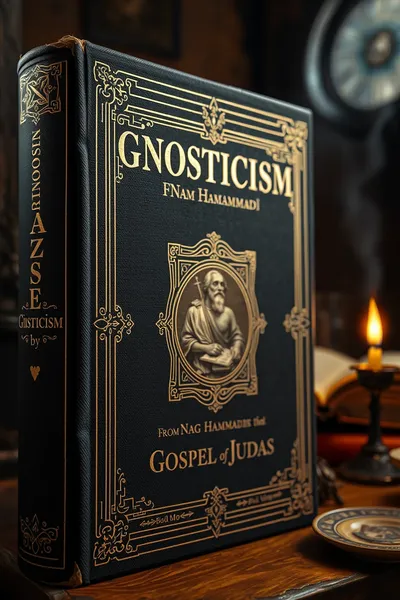
Lombard R Connor Osa’s The Gnostic Gospels offers a meticulously researched dive into the implications of the Nag Hammadi library. The strength of this work lies in its direct engagement with the patristic accounts and how the newly discovered texts validate, in surprising detail, the very descriptions used by figures like Saint Irenaeus to condemn these early Christian movements. Connor Osa excels at mapping the intellectual landscape, showing how figures like Valentinus and Marcion articulated complex theological systems that represented a significant challenge to emerging orthodoxy. A minor limitation is the density of academic discourse, which may require a patient reader. The section detailing the patristic descriptions of the *Archons* and their role in trapping the material realm is particularly illuminating, providing a concrete example of how the Nag Hammadi texts offered a different cosmology. The Gnostic Gospels serves as an essential scholarly resource for understanding the diversity of early Christian thought.
📝 Description
80
Lombard R Connor Osa's 1945 study examines suppressed early Christian texts from the Nag Hammadi discovery.
This volume offers a scholarly look at early Christian writings, focusing on those the emerging orthodox church labeled heretical. The core of the work centers on the 1945 discovery of thirteen leather-bound codices near Nag Hammadi in Egypt. These texts gave scholars direct access to writings that figures like Irenaeus and Tertullian had previously only mentioned in their condemnations.
The book is for those seriously studying early Christianity, comparative religion, and the history of esoteric thought. It suits readers seeking analysis beyond popular accounts, especially those interested in the theological and philosophical discussions of the late Roman Empire. Researchers of Gnosticism, Valentinianism, or early Christian apocrypha will find considerable material here.
Connor Osa details how the Nag Hammadi codices, unearthed after centuries, confirmed earlier descriptions from Church Fathers like Saint Irenaeus. These findings revealed complex theological systems from groups such as the followers of Valentinus and Marcion, which stood in contrast to proto-orthodox doctrines. The 1945 discovery fundamentally reshaped the understanding of early Christianity.
This work engages with the Gnostic traditions that emerged in the early centuries of the Common Era. These traditions often presented alternative cosmologies and paths to spiritual liberation, emphasizing direct knowledge (*gnosis*) over faith or ritual. The Nag Hammadi discoveries brought these often-marginalized viewpoints to light, challenging the dominant narratives of early Christianity and revealing a more diverse religious landscape.
💡 Why Read This Book?
• Gain direct insight into the theological systems of Valentinus and Marcion, as detailed by Connor Osa's analysis of the Nag Hammadi codices discovered in 1945, which provide an alternative to canonical Christian narratives. • Understand the historical conflict between emerging orthodox Christianity and Gnostic movements by examining the writings of Church Fathers like Saint Irenaeus (130-202 AD) and their relationship to suppressed texts. • Explore the Gnostic concept of *gnosis* as a salvific principle, learning how direct spiritual knowledge was presented as a pathway to liberation from the material world in early esoteric traditions.
⭐ Reader Reviews
Honest opinions from readers who have explored this book.
❓ Frequently Asked Questions
What is the significance of the 1945 Nag Hammadi discovery mentioned in The Gnostic Gospels?
The 1945 discovery near Nag Hammadi, Egypt, unearthed thirteen leather-bound codices containing early Christian and Gnostic texts. These writings provided direct evidence of teachings that Church Fathers had previously only described in their condemnations, profoundly impacting the study of early Christianity.
Who were Saint Irenaeus and Tertullian in relation to Gnostic texts?
Saint Irenaeus (130-202 AD) and Tertullian (160-225 AD) were prominent early Church Fathers who wrote extensively against Gnostic teachings. The Gnostic Gospels highlights how their critiques, previously the primary source for understanding these groups, were remarkably accurate when compared to the texts found at Nag Hammadi.
What is Gnosticism as discussed in The Gnostic Gospels?
Gnosticism, as explored in the book, refers to a diverse set of early religious movements emphasizing *gnosis*—a special, intuitive knowledge—as the means of salvation. It often involved complex mythologies and a dualistic worldview, contrasting the spiritual realm with the material world.
How does The Gnostic Gospels differ from canonical Christian texts?
The Gnostic Gospels focuses on texts that present alternative interpretations of Jesus's life and teachings, differing significantly from the canonical Gospels. These texts often feature different cosmological views and emphasize a path to salvation through direct spiritual knowledge rather than faith alone.
What role did figures like Valentinus and Marcion play?
Valentinus and Marcion were influential figures in early Gnostic movements. The book examines their sophisticated theological systems and how their teachings, as documented in the Nag Hammadi texts, presented a substantial intellectual challenge to the developing doctrines of the early Church.
Is this book suitable for beginners in esoteric studies?
While The Gnostic Gospels is a scholarly work, it provides essential historical context for understanding Gnosticism. Beginners interested in the origins of esoteric thought and early Christian diversity will find it valuable, especially for its factual grounding in primary source discoveries.
🔮 Key Themes & Symbolism
The Nag Hammadi Cache
The discovery in 1945 near Nag Hammadi, Egypt, is central, yielding thirteen leather-bound codices. These texts offered direct access to Gnostic scriptures previously known only through the condemnations of Church Fathers like Irenaeus. The book meticulously details the contents and their wide implications for understanding the diversity of early Christian thought and practice, revealing sophisticated theological systems that challenged nascent orthodoxies.
Patristic Polemics vs. Gnostic Texts
Connor Osa contrasts the writings of early Church Fathers, such as Saint Irenaeus (130-202 AD) and Tertullian (160-225 AD), with the actual Gnostic texts unearthed. The work demonstrates the surprising accuracy of the Fathers' descriptions of Gnostic beliefs, even as they sought to refute them. This juxtaposition highlights the intellectual battles of the era and the complex theological range of the 2nd and 3rd centuries AD.
Gnostic Cosmology and Soteriology
The book examines the unique cosmological frameworks and paths to salvation presented in Gnostic literature. Concepts such as the divine spark trapped in matter, the role of Sophia (Wisdom), the Demiurge, and the aeons are explored. Salvation is presented not through faith alone, but through *gnosis*—an experiential, intuitive knowledge of the divine, offering liberation from the material world.
Valentinus and Marcion
Prominent figures like Valentinus and Marcion are examined as architects of sophisticated Gnostic systems. Their teachings, represented in the Nag Hammadi library, offered alternative interpretations of Christian doctrine and scripture. The work positions them as key interlocutors in the formative period of Christianity, whose ideas represented significant intellectual currents that the proto-orthodox church actively sought to suppress.
💬 Memorable Quotes
Direct passages from the work, attributed to the author.
“The patristic descriptions were remarkably accurate.”
— This statement underscores a key finding: the condemnations by early Church Fathers like Irenaeus often provided surprisingly precise accounts of the very Gnostic teachings they sought to discredit, validating the importance of the Nag Hammadi texts.
“Thirteen leather-bound codices buried in Egyptian sand contained the very texts that Church Fathers... had warned against.”
— This highlights the dramatic impact of the 1945 discovery. The texts, long hidden, proved to be the direct sources that figures like Irenaeus were reacting against, offering unfiltered access to suppressed early Christian traditions.
“What scholars found was stunning: the patristic descriptions were remarkably accurate.”
— This reiterates the central thesis: the historical accounts of Gnostic beliefs provided by figures like Irenaeus and Tertullian, often dismissed as biased polemics, were shown by the Nag Hammadi texts to be factually precise in their portrayal of Gnostic doctrines.
“Valentinus, Marcion, and other sophisticated thinkers articulated complex theological systems.”
— This points to the intellectual depth of early Gnosticism. It counters the notion that Gnostic groups were fringe or simplistic, instead presenting them as articulate proponents of intricate philosophical and religious ideas that engaged critically with contemporary thought.
“The 1945 discovery near Nag Hammadi changed everything.”
— This emphasizes the rethinking brought about by the Nag Hammadi find. It moved the study of Gnosticism and early Christianity from reliance on secondary, often hostile, sources to direct engagement with primary Gnostic literature, revolutionizing the field.
🌙 Esoteric Significance
Tradition
This work engages directly with the Gnostic tradition, a significant early esoteric current within Western esotericism. It examines the complex mythologies and philosophical systems that sought knowledge of the divine and liberation from the material world. By analyzing texts that were suppressed by proto-orthodox Christianity, Connor Osa places these Gnostic systems within their historical context, showing their departure from and challenge to emerging mainstream religious thought.
Symbolism
Key Gnostic symbols explored include Sophia (Wisdom), often depicted as falling from the divine realm and initiating the creation of the material world through a flawed act. The concept of *gnosis*, or direct spiritual knowledge, serves as a central motif, representing the ultimate means of salvation. The duality of spirit versus matter, and the presence of divine sparks trapped within the material prison, are also critical symbolic elements representing the Gnostic worldview.
Modern Relevance
Contemporary esoteric thinkers and schools, particularly those interested in Gnosticism, Jungian psychology (which drew heavily on Gnostic themes), and alternative spiritualities, continue to find resonance in the Gnostic Gospels. The exploration of inner knowledge, critique of materialist worldviews, and the complex cosmologies offer frameworks for understanding consciousness and the divine that remain relevant to modern seekers exploring non-dualistic or dualistic spiritual paths.
👥 Who Should Read This Book
• Students of early Christianity and comparative religion: Gain a nuanced understanding of the diversity within 2nd and 3rd-century religious thought, moving beyond solely orthodox interpretations. • Scholars of esoteric traditions: Access critical analysis of foundational Gnostic texts, their historical context, and their relationship to suppressed early Christian movements. • Readers interested in the historical Jesus and alternative Gospels: Explore interpretations of Jesus's teachings and salvific role presented in texts discovered at Nag Hammadi, distinct from canonical accounts.
📜 Historical Context
The Gnostic Gospels situates itself within the turbulent intellectual range of the 2nd and 3rd centuries AD, a period marked by intense theological debate and the formation of Christian orthodoxy. The discovery near Nag Hammadi in 1945 provided direct textual evidence of movements and ideas previously known primarily through the polemical writings of Church Fathers like Saint Irenaeus (130-202 AD) and Tertullian (160-225 AD). These Fathers actively sought to define Christian doctrine and often condemned groups such as the followers of Valentinus and Marcion, who articulated sophisticated alternative cosmologies and soteriologies. The unearthed codices confirmed the accuracy of many patristic descriptions, revealing the complexity and diversity of early Christian expression. This era saw competing schools of thought, including various forms of Gnosticism, Marcionism, and proto-orthodoxy, all vying for influence and adherents, making the study of these suppressed texts crucial for understanding Christianity's foundational period.
📔 Journal Prompts
The concept of *gnosis* as presented by Valentinus: how does direct knowledge differ from faith?
Sophia's role in Gnostic cosmology: what does her 'fall' symbolize about creation?
Comparing the Archons' role in the material world to modern societal structures.
The Church Fathers' descriptions versus the Nag Hammadi texts: what does this reveal about historical narrative control?
Reflect on the dualistic worldview presented: spirit vs. matter, and its potential implications.
🗂️ Glossary
Gnosticism
A diverse set of religious movements in the early Christian era emphasizing salvation through *gnosis* (spiritual knowledge). Gnostic systems often featured complex cosmologies, dualistic views of spirit and matter, and alternative interpretations of Christian figures and doctrines.
Nag Hammadi Library
A collection of thirteen Coptic Gnostic texts discovered in 1945 near Nag Hammadi, Egypt. These papyrus codices provided direct access to primary Gnostic scriptures, revolutionizing the study of early Christianity and Gnosticism.
Church Fathers
Influential early Christian theologians and writers, such as Saint Irenaeus and Tertullian, whose works helped shape Christian doctrine. Many Church Fathers wrote extensively against Gnostic and other heterodox movements.
Valentinus
A prominent 2nd-century Gnostic Christian theologian. His teachings, known through secondary sources and later confirmed by Nag Hammadi texts, formed a sophisticated system of Gnostic thought with complex cosmology and soteriology.
Marcion
An early 2nd-century Christian theologian and evangelist who taught a dualistic doctrine of God. He rejected the Hebrew God of the Old Testament and accepted only a modified version of Luke's Gospel and Paul's epistles.
*Gnosis*
Greek for 'knowledge'. In Gnosticism, it refers to a special, intuitive, often salvific knowledge of the divine or of spiritual truth, believed to lead to liberation from the material world.
Demiurge
In Gnostic cosmology, a lesser divine being, often identified with the God of the Old Testament, who created the flawed material universe. The Demiurge is typically seen as ignorant of the true, higher God.
This book appears in 1 collection
🔮 Readers Also Liked
Browse all →







From the “Gnostic Gospels” Collection
View all →








More Free Sacred Texts & Gnosticism Books
View all →