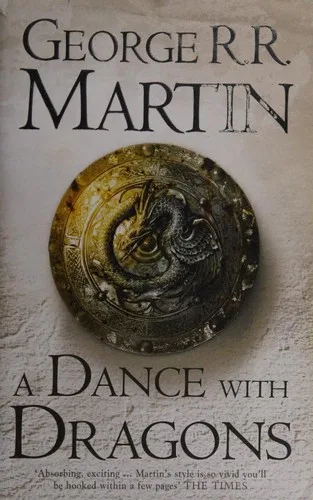
A Dance With Dragons
 75
75

A Dance With Dragons


Cassian Rothmann (Senior Critic, Ancient Wisdom) — 'A Dance With Dragons' unfurls with the gravitas of a forgotten grimoire, revealing the intricate mechanics of power and prophecy. Martin's prose, rich with the grit of human experience, also hints at deeper, mystical currents. The narrative delves into the psychological and spiritual toll of ambition, mirroring ancient rites of passage and the burden of destiny. Its strength lies in its unflinching portrayal of consequence, a vital lesson for any seeking to understand the true cost of wielding power, be it mundane or magical. An essential read for scholars of myth and practitioners of the arcane arts.
📝 Description
75
George R. R. Martin's 2011 novel 'A Dance With Dragons' continues the epic saga of Westeros.
This fifth volume in the A Song of Ice and Fire series focuses on characters previously sidelined, such as Daenerys Targaryen in Essos and Jon Snow as Lord Commander of the Night's Watch. The narrative expands the world beyond Westeros, showing Daenerys grappling with ruling Meereen and the complexities of her dragons' influence. Meanwhile, Jon faces internal strife and external threats at the Wall, making difficult decisions that impact the future of the Seven Kingdoms. The book also follows Tyrion Lannister's flight and his own path toward self-discovery and potential revenge. Martin continues to weave a complex plot with numerous viewpoints, detailing political maneuvering, personal struggles, and the growing presence of magic and otherworldly forces.
Within the broader fantasy tradition, 'A Dance With Dragons' situates its magical elements within a world where ancient prophecies and mythical creatures are re-emerging. The text references Targaryen history tied to dragons and fire magic, as well as the growing threat from beyond the Wall, hinting at older, perhaps more primal, forces at play. The narrative explores how characters perceive and interact with these supernatural phenomena, treating them not as mere allegories but as tangible elements influencing political and personal destinies. This integration of the mystical into a feudal political drama grounds the esoteric aspects in character action and consequence.
💡 Why Read This Book?
Embark on a journey into the heart of esoteric power struggles and the profound impact of destiny. 'A Dance With Dragons' offers a rich exploration of ancient magic, prophecy, and the cyclical nature of conflict, perfect for seekers of hidden wisdom and scholars of fictional mythologies. Engage with complex characters grappling with profound moral and spiritual dilemmas, offering fertile ground for personal reflection and understanding the arcane forces that shape our world.
⭐ Reader Reviews
Honest opinions from readers who have explored this book.
❓ Frequently Asked Questions
What esoteric themes are prominent in 'A Dance With Dragons'?
The novel explores themes of destiny, prophecy, the corrupting nature of power, and the primal forces that influence human actions, echoing ancient mythologies and esoteric philosophies of fate and free will.
How does the book depict magic?
Magic is depicted as an ancient, often unpredictable force, tied to bloodlines, ancient pacts, and the very essence of the world, rather than mere parlor tricks. Its use carries significant consequences.
Is this book suitable for beginners to esoteric literature?
While a complex narrative, its accessible storytelling and exploration of universal themes like power and consequence make it a compelling entry point for those curious about the mystical aspects of storytelling.
What is the significance of the 'dragons' in the title and story?
Dragons symbolize immense, primal power, ancient lineage, and the reawakening of lost magical forces. Their presence signifies a shift in the world's balance and the return of potent, often destructive, energies.
Does the book offer insights into leadership and governance from an esoteric perspective?
Yes, it examines the spiritual and psychological burdens of leadership, hinting that true power requires more than force, often involving an understanding of deeper currents and moral integrity.
🔮 Key Themes & Symbolism
The Weight of Prophecy and Destiny
This theme examines the intricate range of predestination versus free will. Characters grapple with ancient prophecies, questioning whether their paths are divinely ordained or if they possess the agency to forge their own destinies. The narrative explores the psychological burden of foreknowledge and the seductive, often destructive, allure of fulfilling or defying fate, mirroring ancient philosophical debates on determinism and the soul's journey.
The Corrupting Influence of Power
The quest for power, whether political, magical, or personal, is a central esoteric current. The novel illustrates how unchecked ambition can warp morality, leading to moral decay and spiritual compromise. This theme appeals to alchemical principles of transformation, where base desires (lead) can be transmuted into something darker (a corrupted form of gold) if not guided by wisdom and ethical grounding, highlighting the hidden costs of dominance.
The Reawakening of Ancient Magic
The resurgence of dragons and other long-dormant magical forces signifies a profound shift in the cosmic order. This theme explores the primal, untamed nature of magic, often tied to bloodlines, ancient pacts, and the elemental forces of the world. It suggests that forgotten powers hold the keys to both creation and destruction, reflecting esoteric traditions that view magic as a fundamental force, capable of profound good or catastrophic ruin when unleashed.
💬 Memorable Quotes
Direct passages from the work, attributed to the author.
“The night was rank with the smell of man.”
— A visceral evocation of primal human presence, hinting at the raw, often brutal, nature of survival and conflict that underpins the narrative’s more mystical elements.
“Chaos isn't a pit. Chaos is a ladder.”
— An interpretation of disruption not as an end, but as an opportunity for advancement and power acquisition, a concept found in various esoteric traditions focused on navigating turmoil to achieve higher states.
“We are all of us dying, all of us are living.”
— A profound reflection on the duality of existence, the constant interplay of life and death, creation and decay, a core tenet in many spiritual and philosophical systems.
“Winter is coming.”
— More than a mere season, this phrase symbolizes an impending epoch of hardship, spiritual trial, and the potential for profound societal and personal transformation, akin to a spiritual reckoning.
💡 Key Ideas
Editorial paraphrase of the work's core concepts — not direct quotes.
A reader lives a thousand lives before he dies.
This quote speaks to the transformative power of knowledge and narrative, suggesting that through stories, one can gain wisdom and experience far beyond their physical existence.
🌙 Esoteric Significance
Tradition
The novel draws heavily from archetypal mythologies and the concept of the Hero's Journey, fundamental to Jungian psychology and various shamanic traditions. It explores themes of the shadow self, the cyclical nature of destruction and rebirth, and the hidden forces that govern human destiny, resonating with elements found in Hermeticism and Gnosticism, where knowledge of the self and the cosmos is paramount for liberation.
Symbolism
Dragons symbolize primal, untamed power, ancient wisdom, and the reawakening of potent, often dangerous, forces. The stark contrast between fire and ice represents the eternal struggle between creation and destruction, passion and stagnation. The interconnectedness of bloodlines and magic hints at the esoteric concept of lineage as a conduit for spiritual or elemental inheritance, while the Wall serves as a potent symbol of division, protection, and the unseen threats lurking beyond the known.
Modern Relevance
In an age often characterized by rapid change and uncertainty, 'A Dance With Dragons' offers a compelling allegorical framework for understanding complex societal shifts and the human response to existential threats. Its exploration of leadership, morality, and the consequences of ambition provides a timely lens through which to examine contemporary power dynamics and the individual's role in navigating turbulent times. The narrative encourages introspection on destiny versus agency, a perennial philosophical question relevant to personal growth and societal progress.
👥 Who Should Read This Book
This epic is a valuable collection for discerning readers. **Scholars of mythology and comparative religion** will find rich parallels to ancient legends and spiritual archetypes. **Seekers of profound philosophical insights** will appreciate the nuanced exploration of destiny, power, and morality. **Practitioners of esoteric arts** can glean wisdom from the depiction of magic as a force with inherent consequences and the study of power dynamics. **Beginners to fantasy and the esoteric** will be drawn in by the gripping narrative and relatable human struggles, offering an accessible gateway into deeper symbolic meanings.
📜 Historical Context
While a work of fantasy, 'A Dance With Dragons' draws parallels to historical periods of significant upheaval and transition. The medieval setting, with its feudal societies, dynastic struggles, and the pervasive influence of religion and superstition, mirrors real-world historical epochs like the late Roman Empire or the tumultuous medieval period in Europe. The themes of succession crises, the clash between old traditions and new ideologies, and the impact of 'unforeseen' events (like the return of dragons) echo historical narratives of societal collapse and rebirth. The narrative's exploration of power vacuums and the rise of charismatic, often ruthless, leaders can be seen as a reflection of historical figures who navigated such volatile times, demonstrating how the human condition and the dynamics of power remain remarkably consistent across ages.
📔 Journal Prompts
Reflect on a time when you felt caught between destiny and free will. How did you navigate this tension?
Consider a character in the book whose pursuit of power led to moral compromise. What lessons can be learned from their choices?
How does the concept of 'winter' in the book symbolize an impending spiritual or societal trial in your own life?
Explore the symbolic meaning of dragons in your personal understanding of primal power or hidden potential.
What is the most significant 'hidden knowledge' a character in the book uncovers, and how does it change their trajectory?
🗂️ Glossary
Westeros
A vast, fictional continent and the primary setting for the saga, characterized by diverse climates, cultures, and a complex political landscape ripe with ancient prophecies and hidden magical influences.
White Walkers
Ancient, supernatural beings from the far north, representing a primal force of destruction and a harbinger of existential threat, embodying the destructive aspects of primordial magic.
Dragons
Mythical creatures of immense power, symbolizing ancient lineage, destructive potential, and the reawakening of potent, often untamed, magical forces within the world.
Prophecy
Foretellings of future events, often cryptic and open to interpretation, shaping the actions and destinies of characters and reflecting the esoteric concept of fate's influence on human lives.
The Wall
A colossal fortification of ice separating the Seven Kingdoms from the perilous lands to the north, symbolizing a barrier against primal chaos and the unknown forces of the world.
This book appears in 2 collections
🔮 Readers Also Liked
Browse all →

More by George R. R. Martin
All books →




From the “Ceremonial Magic” Collection
View all →







More Free Magic & Ritual Books
View all →