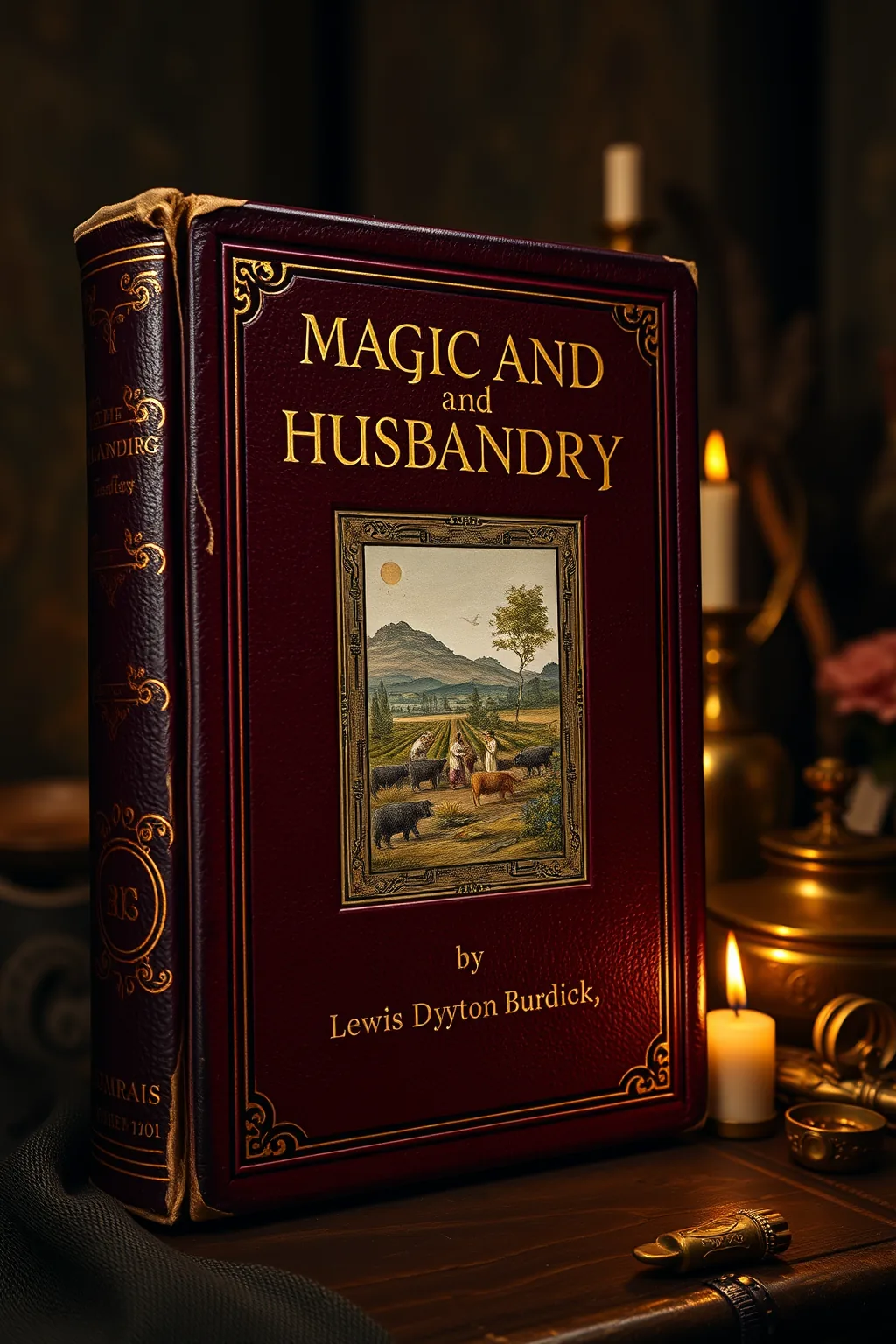
Magic and Husbandry, the Folk-Lore of Agriculture; Rites, Ceremonies, Customs, and Beliefs Connected with Pastoral Life and the Cultivation of the Soil; with Breeding and the Care of Cattle; with Fruit-growing, Bees, and Fowls
 61
61

Magic and Husbandry, the Folk-Lore of Agriculture; Rites, Ceremonies, Customs, and Beliefs Connected with Pastoral Life and the Cultivation of the Soil; with Breeding and the Care of Cattle; with Fruit-growing, Bees, and Fowls



Aurelia Blackwood (Occult Philosophy Critic) — Lewis Dayton Burdick's 'Magic and Husbandry' is an indispensable compendium for anyone charting the esoteric underpinnings of agrarian societies. It masterfully excavates the hidden magical logic embedded within everyday farming and pastoral customs, revealing a profound worldview where human endeavor was in constant communion with cosmic forces. Burdick's meticulous research uncovers forgotten rituals and beliefs, offering invaluable insights into sympathetic magic, animism, and the sacred cycles of nature. This work is a cornerstone for scholars of folk magic, occult historians, and practitioners seeking to reconnect with the earth-based spiritualities that shaped our ancestors. A truly illuminating exploration.
📝 Description
61
Lewis Dayton Burdick's 1913 book details agricultural magic and pastoral beliefs.
Published in 1913, 'Magic and Husbandry' examines the folk-lore surrounding agriculture and animal care. Lewis Dayton Burdick collected rites, ceremonies, customs, and beliefs tied to cultivating the soil and managing livestock. The book goes beyond practical farming, revealing the underlying sympathetic magic and cyclical energies connected to coaxing life from the earth.
Burdick covers the spiritual dimensions of livestock breeding and care, fruit cultivation, beekeeping, and poultry management. He presents these practices within a worldview where the ordinary and the mystical were not separate. This work serves as a record for those interested in the spiritual aspects of humanity's connection to nature, showing a time when agriculture was seen as a dialogue with the cosmos.
This book fits within the broader stream of folk magic and nature religion studies that gained traction in the late 19th and early 20th centuries. It reflects an interest in preserving and understanding pre-industrial, localized belief systems tied to the land and its cycles. These studies often sought to uncover what was perceived as older, more authentic spiritual connections to the natural world, contrasting them with modern, rationalized approaches to agriculture and life.
💡 Why Read This Book?
Unearth the ancient symbiotic relationship between humanity and nature. 'Magic and Husbandry' reveals the mystical rituals, folk beliefs, and ceremonial practices that once governed agriculture, livestock, and the cultivation of the land. Ideal for seekers of forgotten wisdom, scholars of folk magic, and practitioners yearning to understand the spiritual roots of sustenance.
⭐ Reader Reviews
Honest opinions from readers who have explored this book.
❓ Frequently Asked Questions
What is the central theme of 'Magic and Husbandry'?
The book's central theme is the profound integration of magic, ritual, and spiritual belief into the practicalities of agriculture, animal husbandry, and cultivation, highlighting the sacred relationship between humanity and the earth.
Who was Lewis Dayton Burdick?
Lewis Dayton Burdick was a dedicated folklorist and scholar who meticulously researched and documented the traditional customs, beliefs, and magical practices associated with rural life and farming across various cultures and eras.
Is this book about modern farming techniques?
No, 'Magic and Husbandry' focuses on historical and traditional folk practices, exploring the magical and spiritual dimensions of agriculture that predate modern scientific methods.
What kind of rituals are discussed?
The book details a wide array of rituals, including those for planting, harvesting, weather control, animal fertility, protection, and appeasement of nature spirits, all tied to agricultural cycles.
Can this book be used for practical magical work today?
While primarily a historical and ethnographic study, the book offers foundational knowledge and inspiration for modern practitioners interested in earth-based magic, nature worship, and folk traditions.
🔮 Key Themes & Symbolism
Symbiotic Agriculture and the Sacred Earth
This theme explores the profound, almost sacramental, connection between early agricultural communities and the land they cultivated. It examines how farming was not merely an economic activity but a spiritual practice, imbued with rituals designed to honor, appease, and cooperate with the elemental forces and unseen intelligences governing fertility and growth. The book reveals a worldview where the soil was not inert matter but a living entity, deserving of reverence and reciprocal care, forming the bedrock of societal and spiritual well-being.
The Alchemy of Sustenance: From Seed to Table
This theme unpacks the hidden alchemical principles believed to be at play in the cultivation of crops, the breeding of animals, and the harvesting of natural bounty. It examines the intricate web of customs and beliefs that governed fruit-growing, beekeeping, and poultry farming, suggesting that these were not just practical tasks but processes imbued with magical intent. From the blessings of seeds to the protection of livestock, the aim was to transmute raw potential into sustenance through ritual and sympathetic magic, mirroring deeper cosmic transformations.
Pastoral Rites and the Guardians of the Herd
Focusing on the often-overlooked spiritual dimension of animal husbandry, this theme investigates the rituals and beliefs surrounding the care, breeding, and protection of cattle and other livestock. It reveals how these animals were seen as integral to the spiritual and material prosperity of a community, and how their well-being was intertwined with a complex system of folk magic, protective charms, and seasonal ceremonies. The book illuminates the deep respect and understanding held for the animal kingdom as partners in the agrarian cycle.
💬 Memorable Quotes
Direct passages from the work, attributed to the author.
“In the hum of the hive, the pulse of the cosmos beats.”
— This evokes the ancient reverence for bees and their colonies, viewing their organized labor and honey production as a microcosm of universal order and divine energy.
“The harvest is not merely gathered, but coaxed.”
— This highlights the magical and ceremonial aspect of agriculture, implying that successful harvests were achieved not just through physical effort but through ritualistic persuasion and alignment with natural forces.
“Cattle are the wealth of the spirit as much as the flesh.”
— This emphasizes the deep spiritual and symbolic value placed on livestock in folk traditions, seeing them as living embodiments of prosperity, vitality, and connection to the earth's bounty.
“Every seed holds a whispered promise from the earth.”
— This poetic sentiment underscores the belief in the latent potential within each seed, seen as a gift or a message from the earth, waiting to be awakened through human care and ritual.
💡 Key Ideas
Editorial paraphrase of the work's core concepts — not direct quotes.
The soil remembers the hand that tills it.
This quote speaks to the intimate and reciprocal relationship between the farmer and the earth, suggesting that the land itself retains a memory of the care and intention invested in its cultivation.
🌙 Esoteric Significance
Tradition
This work is deeply rooted in the tradition of folk magic and animism, common across many pre-industrial societies. It aligns with earth-based spiritualities that view nature as alive and imbued with consciousness, requiring respectful engagement through ritual and sympathetic magic. It touches upon elements of sympathetic magic, agricultural shamanism, and the ancient concept of the 'Great Mother' archetype, where the land's fertility is paramount.
Symbolism
Key symbols abound, from the phallic imagery of plows and seeds representing generative power, to the cyclical symbolism of seasons and harvests signifying life, death, and rebirth. The bee, with its structured colony and golden honey, symbolizes divine order and abundance, while cattle represent earthly wealth, vitality, and the nourishment provided by the Great Mother. Water, sun, and moon also feature prominently as elemental forces governing growth and transformation.
Modern Relevance
In an era increasingly disconnected from the sources of our food and the natural cycles, 'Magic and Husbandry' offers a vital counter-narrative. It reconnects us to the spiritual significance of agriculture, encouraging a more mindful and respectful relationship with the earth. Its exploration of folk rituals can inspire contemporary earth-based spiritual practices, permaculture ethics, and a deeper appreciation for the hidden energies that sustain life, making it relevant for ecological awareness and personal spiritual growth.
👥 Who Should Read This Book
This book is essential for folklorists and scholars of esoteric traditions seeking to understand the spiritual dimensions of agrarian societies. Modern practitioners of earth-based magic, Wicca, and paganism will find rich source material for ritual and inspiration. Seekers of forgotten wisdom, those interested in the history of magic, and individuals yearning for a deeper connection to nature and the cycles of life will also find profound value within its pages, bridging the gap between the mundane act of farming and the sacred mysteries of the earth.
📜 Historical Context
Written during a period of burgeoning interest in folklore and ethnography, 'Magic and Husbandry' emerges from the late 19th and early 20th centuries, a time when scholars began to systematically document the vanishing traditions of rural life. As industrialization and modernization began to reshape society, there was a concurrent fascination with the perceived wisdom and spiritual depth of pre-modern cultures. Burdick's work stands as a evidence of this era's effort to preserve the esoteric knowledge embedded in agricultural practices, viewing them not as primitive superstitions but as sophisticated expressions of a human-nature symbiosis deeply connected to ancient magical understandings and the cyclical rhythms of the natural world.
📔 Journal Prompts
Reflect on a time you felt a deep connection to the earth while gardening or tending to plants. What rituals or intentions did you unconsciously employ?
How does the concept of 'symbiotic agriculture' resonate with your understanding of modern food production and environmental responsibility?
Consider the symbolism of a particular crop or animal discussed in the book. What deeper meanings can you derive from its place in human culture and belief?
Explore the idea of 'coaxing' rather than 'forcing' growth. How can this philosophy be applied to personal development or creative endeavors?
Imagine you are living in a pre-industrial society. What rituals would you perform to ensure a successful harvest or the health of your livestock, and why?
🗂️ Glossary
Husbandry
The care, cultivation, and breeding of crops and livestock; encompassing the practical and spiritual management of agricultural resources.
Folk-Lore
The traditional beliefs, customs, and stories of a community, passed through generations by word of mouth, often containing elements of magic and ritual.
Sympathetic Magic
A form of magic based on the principle that like produces like, or that a cause and effect are produced through visualized means, such as through images or effigies.
Pastoral Life
A life associated with the tending of sheep or cattle, often implying a simple, rural, and close connection to nature and the land.
Apiary
A place where bees are kept; a collection of beehives.
This book appears in 3 collections
🔮 Readers Also Liked
Browse all →








More by Lewis Dayton Burdick
All books →
From the “Ritual Magic” Collection
View all →






More Free Magic & Ritual Books
View all →