The Problem of Lemuria
 74
74

The Problem of Lemuria
Lewis Spence’s "The Problem of Lemuria" presents a compelling, if ultimately speculative, case for a lost Pacific civilization. Spence marshals an impressive breadth of evidence, from geological formations to linguistic patterns, attempting to reconstruct a coherent picture of a pre-diluvian world. His methodical approach, citing specific word origins and comparative myths, lends a scholarly air to what could easily descend into pure fantasy. A notable strength is the author's insistence on interdisciplinary connections, showing how geology, anthropology, and linguistics might corroborate each other. However, the book’s limitation lies in its reliance on interpretations that, while ingenious, often remain within the realm of conjecture. For instance, Spence's discussion of Polynesian migration routes as evidence for Lemurian influence, while intriguing, is open to alternative explanations within established historical frameworks. The work explores how certain mythological motifs appear across vast geographical distances, suggesting a common source. Spence's exploration of the geological possibility of land bridges or sunken continents in the Pacific, while dated by current plate tectonics understanding, was forward-thinking for its time. Ultimately, "The Problem of Lemuria" is a significant contribution to the literature of lost continents, offering a well-researched, albeit unproven, hypothesis.
📝 Description
74
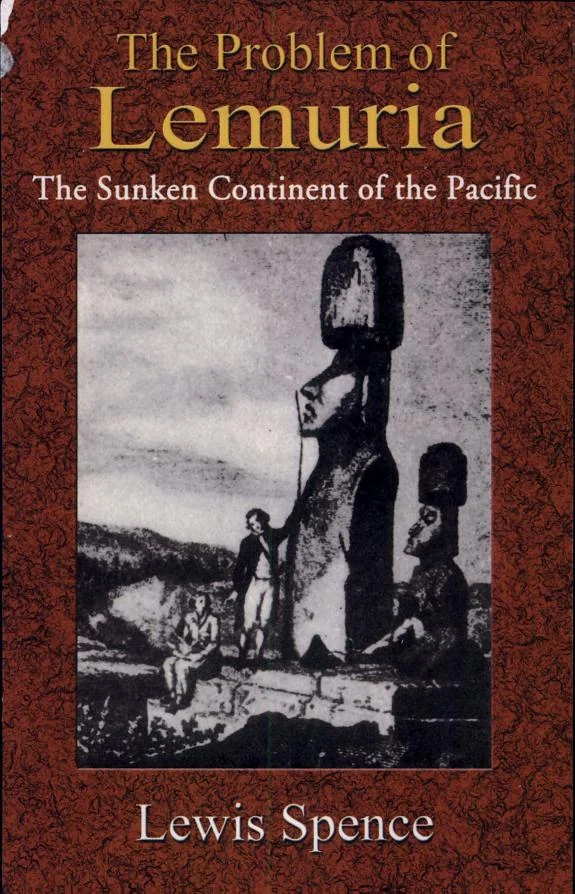
Lewis Spence's 2002 book investigates the hypothesis of a lost Pacific continent, Lemuria.
In "The Problem of Lemuria," Lewis Spence examines the theory of a sunken continent in the Pacific. First published in 2002, the book gathers information from various fields to argue for the existence of an advanced civilization that predates current historical understanding. Spence suggests that geological changes and major disasters led to its disappearance.
This work will appeal to those interested in unconventional historical accounts, ancient enigmas, and speculative archaeology. It is especially suitable for readers who value an approach that connects geology, mythology, linguistics, and cultural patterns. The book also engages students and followers of esoteric beliefs who want to understand the origins of myths about lost lands.
Spence's work appeared during a time when ideas about lost continents like Lemuria and Atlantis were prevalent in esoteric thought, notably through Helena Blavatsky and her Theosophical Society. While mainstream science largely disregarded these concepts, Spence aimed for a more fact-based argument. He drew upon geological theories of shifting landmasses and comparative mythology to support his claims, attempting to link speculative prehistory with scientific discussion.
💡 Why Read This Book?
• Understand the interdisciplinary evidence Spence marshals, including specific geological theories and linguistic comparisons, to support the existence of Lemuria. • Explore the connection between comparative mythology and theories of lost continents, referencing specific myths Spence analyzes. • Gain insight into the historical context of lost civilization theories, noting Spence's engagement with the intellectual climate surrounding figures like Helena Blavatsky in the early 20th century.
⭐ Reader Reviews
Honest opinions from readers who have explored this book.
❓ Frequently Asked Questions
What specific geological evidence does Lewis Spence present for Lemuria?
Spence discusses theories of submerged continental shelves and land bridges in the Pacific, referencing geological changes and the potential for landmasses to sink due to cataclysmic activity, suggesting these could explain the disappearance of Lemuria.
How does Spence use linguistics to support the Lemurian hypothesis?
Spence analyzes word origins and linguistic similarities between geographically distant cultures, such as those in Polynesia and South America, suggesting a common ancestral language that points to a shared origin and potentially a unified civilization.
What is the primary source of evidence for Lemuria in Spence's book?
The primary evidence is a synthesis of findings across geology, archaeology, mythology, biology, and linguistics, all interpreted as pointing towards a sophisticated, ancient Pacific civilization that has since vanished.
When was Lewis Spence's "The Problem of Lemuria" first published?
Lewis Spence's "The Problem of Lemuria" was first published on July 15, 2002.
Does "The Problem of Lemuria" align with modern scientific consensus on lost continents?
No, the scientific consensus, particularly in geology and archaeology, does not support the existence of Lemuria as described by Spence. His theories predate or diverge from current understandings of plate tectonics and human migration.
What other disciplines does Spence draw upon besides geology and linguistics?
Spence also incorporates evidence from archaeology, mythology, biology, and the transmission of various customs and traditions across cultures to build his case for the existence of Lemuria.
🔮 Key Themes & Symbolism
Submerged Landmass Theories
The work explores the geological possibility of entire continents sinking beneath the ocean, focusing on the Pacific region. Spence examines theories of land bridges and continental drift as potential mechanisms for the disappearance of Lemuria, positing that cataclysmic events could have been responsible for such widespread destruction, leaving behind only scattered islands and fragmented myths.
Linguistic Diffusion
A significant focus is placed on linguistic analysis, particularly the similarities in word origins and grammatical structures found between seemingly disparate cultures across the Pacific and even into South America. Spence interprets these linguistic parallels not as coincidental borrowings but as evidence of a shared, ancient progenitor language stemming from Lemuria.
Mythological Echoes
Spence explores global mythologies, searching for recurring themes and narratives that could correspond to a lost continent and its destruction. He examines flood myths, creation stories, and tales of ancient, advanced civilizations across various cultures, arguing these are distorted memories of Lemuria and its fate.
Comparative Cultural Practices
The book investigates the transmission of customs, religious practices, and societal structures across vast geographical distances. Spence suggests that similarities in rituals, art, and social organization found in regions as diverse as Polynesia, Easter Island, and parts of the Americas are not independent developments but survivals from an ancient, unified Lemurian culture.
💬 Memorable Quotes
Direct passages from the work, attributed to the author.
“The origin of the Pacific peoples is a puzzle that can only be solved by the hypothesis of a continent now submerged.”
— This statement captures Spence's central thesis: that the widespread similarities among Pacific island cultures and their myths point to a common, lost homeland, which he identifies as Lemuria.
“Geology itself whispers of continents that have been lost beneath the waves.”
— Spence uses this evocative phrase to suggest that geological evidence, such as submerged landmasses and evidence of past geological upheaval, supports the idea of lost continents like Lemuria.
“Certain linguistic roots reappear in tongues separated by oceans, hinting at a common ancestral speech.”
— This highlights Spence's reliance on etymology and comparative linguistics, where he finds recurring linguistic elements as proof of ancient cultural connections and a unified origin.
“Cataclysmic forces are the great destroyers and shapers of the world's surface.”
— This interpretation reflects Spence's belief that geological catastrophes, rather than gradual change, were responsible for the destruction of Lemuria and the subsequent reshaping of the Earth's geography.
“Mythology is the long memory of humanity, preserving elements of forgotten epochs.”
— Spence views myths not as mere fables but as historical records, albeit distorted, that contain valuable clues about past civilizations and events, such as the existence and demise of Lemuria.
🌙 Esoteric Significance
Tradition
Spence's work aligns with the tradition of esoteric exploration of lost civilizations, particularly those influenced by Theosophy and its concept of root races and sunken continents. While not strictly adhering to a single lineage like Hermeticism or Kabbalah, it draws upon a broader speculative historical framework that seeks hidden knowledge and ancient wisdom, proposing a forgotten epoch of advanced humanity.
Symbolism
The continent of Lemuria itself serves as a potent symbol of lost paradise, advanced ancient knowledge, and a unified human origin before fragmentation. The cataclysmic events described symbolize destruction and rebirth, a common motif in esoteric cosmologies, representing the cyclical nature of creation and dissolution on a planetary scale.
Modern Relevance
Contemporary esoteric thought, particularly within communities interested in ancient mysteries, alternative history, and indigenous knowledge, continues to reference Lemuria. Thinkers exploring ideas of collective consciousness, earth energies, and pre-diluvian wisdom traditions may find Spence's synthesis of evidence relevant to their own investigations into humanity's deep past.
👥 Who Should Read This Book
• Students of comparative mythology and folklore seeking evidence for shared global narratives. • Researchers of esoteric history and alternative archaeological theories interested in the concept of lost continents. • Readers fascinated by interdisciplinary investigations connecting geology, linguistics, and cultural anthropology to ancient mysteries.
📜 Historical Context
Published in 2002, Lewis Spence's "The Problem of Lemuria" entered a landscape where theories of lost continents like Atlantis and Lemuria had long been relegated to the fringes of both science and esoteric thought. Influenced by the speculative works of Helena Blavatsky and Ignatius Donnelly in the late 19th and early 20th centuries, Spence sought to ground these ideas in a more systematic, multidisciplinary approach. His work emerged at a time when mainstream archaeology and geology were firmly established, largely dismissing such hypotheses. However, within esoteric circles, the search for ancient, advanced civilizations persisted. Spence's effort to synthesize geology, linguistics, mythology, and anthropology was a significant attempt to bridge these disciplines, though it faced skepticism from established academic fields. While not directly engaging with a specific contemporary critic by name, his work implicitly challenged the prevailing paradigms of his time and continued a tradition of esoteric inquiry into prehistory.
📔 Journal Prompts
Lemurian linguistic roots: Identify potential cross-cultural word origins that resonate with Spence's hypothesis.
The symbolism of cataclysm: Reflect on the recurring theme of destruction and renewal in myths and geological records.
Comparative mythology: Analyze a specific myth discussed by Spence and consider its possible connection to a lost civilization.
Geological evidence: Ponder how ancient geological shifts might be interpreted as evidence for submerged lands.
The transmission of customs: Trace a cultural practice across different regions and consider its potential ancient origins.
🗂️ Glossary
Lemuria
A hypothetical lost continent, purportedly located in the Pacific Ocean, believed by some to have been the cradle of an ancient, advanced human civilization before its destruction.
Cataclysmic Activity
Refers to sudden, violent geological events such as earthquakes, volcanic eruptions, or tsunamis, which Spence suggests were responsible for the destruction of Lemuria.
Linguistic Diffusion
The spread of linguistic features or languages from one group to another, which Spence uses as evidence for the migration and influence of a common ancient civilization.
Comparative Mythology
The study of myths from different cultures to identify common themes, symbols, and origins, which Spence employs to find elements of Lemuria in global folklore.
Root Origins (Linguistics)
The basic, original forms of words from which other words are derived, analyzed by Spence to find connections between languages.
Submerged Landmasses
Geographical areas of land that are now underwater, hypothesized by Spence to be remnants of lost continents like Lemuria.
Cultural Transmission
The process by which cultural elements, such as customs, beliefs, and practices, are passed down from one generation or group to another.
This book appears in 1 collection
🔮 Readers Also Liked
Browse all →









From the “Lemuria” Collection
View all →









More Free Occult Philosophy Books
View all →