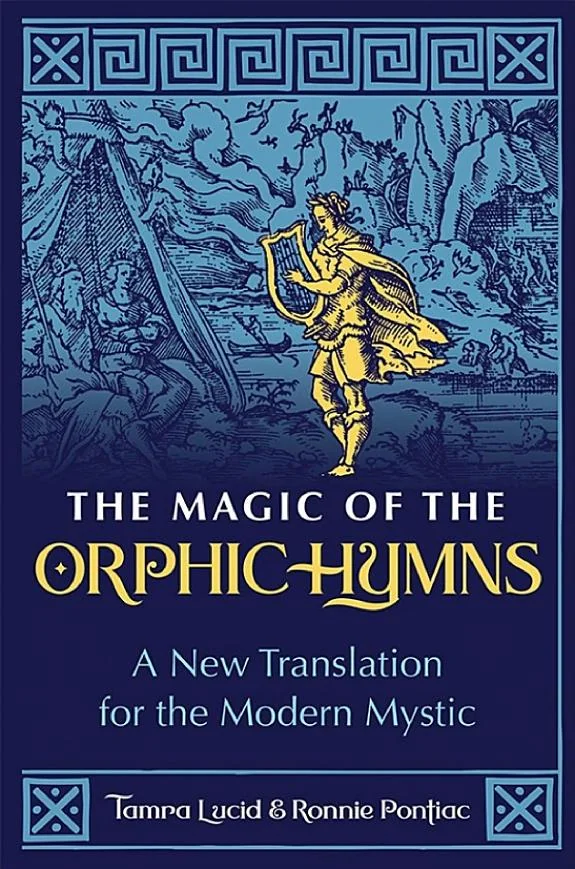
The Magic of the Orphic Hymns
 84
84

The Magic of the Orphic Hymns
Tamra Lucid and Ronnie Pontiac’s The Magic of the Orphic Hymns provides a much-needed scholarly recalibration of these foundational Hellenistic texts. The translators’ stated aim to restore esoteric details is largely successful; the literary translations feel more attuned to the ritualistic and magical intent than many previous versions. A particular strength lies in the appendix featuring the golden leaf inscriptions, offering a stark glimpse into ancient beliefs about the afterlife and the soul’s journey. While the exploration of the Orpheus myth is informative, it occasionally feels as if it is charting familiar territory without adding substantial new perspectives on its esoteric evolution. The inclusion of a reconstructed hymn to Number, however, is a bold and commendable effort to engage with the more abstract philosophical currents within Orphism. The work’s primary limitation is a density that may challenge readers unfamiliar with Hellenistic Greek religious concepts. Ultimately, this is a valuable resource for serious students of ancient magic and mysticism, offering fresh linguistic and interpretive insights into a complex tradition.
📝 Description
84
Published in 2023, The Magic of the Orphic Hymns offers new translations of ancient Greek ritual poems.
Tamra Lucid and Ronnie Pontiac's 2023 work provides scholarly yet accessible translations of the Orphic Hymns, ancient Greek religious poems. The book focuses on the *teletai*, or ritual invocations, presenting translations that aim to restore esoteric details and correspondences specific to the deities addressed. It also includes translations of the golden leaf inscriptions, which served as amulets for the deceased. A reconstructed hymn dedicated to the concept of Number is also presented, with the goal of preserving its original mystical significance.
The volume is suited for those interested in ancient mystery traditions, comparative religion, and Hellenistic occultism. Readers drawn to the practical application of ancient magical texts, the philosophical ideas within Orphism, or the historical background of early Greek religious practices will find value here. The authors focus on the often overlooked magical and philosophical aspects of these historical texts.
The Orphic Hymns, dating from the Hellenistic period (roughly 2nd century BCE to 2nd century CE), represent a significant development in Greek religious thought. Attributed to the mythical Orpheus, these hymns emerged during a time of cultural exchange, blending Greek traditions with influences from Egypt and the Near East. They serve as a bridge between archaic Greek religion and later esoteric schools such as Neoplatonism and Gnosticism. The hymns themselves detail initiatory rites (*teletai*) and specific correspondences for various deities, reflecting a mystical worldview that influenced subsequent magical and philosophical movements.
💡 Why Read This Book?
• Understand the practical, ritualistic purpose of the *teletai* as presented in the hymns, moving beyond mere poetic appreciation to grasp their function in ancient initiatory rites. • Examine the specific esoteric correspondences and divine attributes detailed for each deity, allowing for a deeper, more informed practice or study of Hellenistic polytheism. • Explore the symbolic significance of the golden leaf inscriptions, learning about ancient Greek concepts of the soul’s passage and the magical tools intended to facilitate it.
⭐ Reader Reviews
Honest opinions from readers who have explored this book.
❓ Frequently Asked Questions
When were the Orphic Hymns originally composed?
The Orphic Hymns are generally dated to the Hellenistic period, with scholarly consensus placing their composition between the 2nd century BCE and the 2nd century CE. This era saw significant cultural exchange and philosophical development in the Mediterranean.
What is the significance of the golden leaves mentioned in the book?
The golden leaves are described as funerary artifacts inscribed with mystical texts and divine names. They were believed to serve as passports or guides for the deceased on their journey through the underworld in ancient Greek funerary practices.
Who was Orpheus in Greek mythology?
Orpheus was a legendary musician, poet, and prophet in ancient Greek mythology. He is credited with creating the Orphic traditions and hymns, and his myth often involves a journey to the underworld to retrieve his deceased wife, Eurydice.
What does 'teletai' refer to in the context of the Orphic Hymns?
*Teletai* (singular: *telete*) refers to initiatory rites or mysteries in ancient Greek religion. In the context of the Orphic Hymns, it signifies the ritualistic invocation and worship practices associated with each hymn.
Does the book discuss the Orpheus myth specifically?
Yes, the book explores the obscure origins and evolution of the Orpheus myth, examining its narrative as a spiritual journey and its connection to esoteric doctrines and practices.
What kind of translations can I expect in 'The Magic of the Orphic Hymns'?
The book presents literary translations of the Orphic Hymns that aim to restore specific esoteric details and correspondences, focusing on the magical vitality and ritualistic intent of the original texts.
🔮 Key Themes & Symbolism
Restoration of Esoteric Detail
The work prioritizes re-establishing the practical, magical, and philosophical nuances within the Orphic Hymns. By focusing on literary translations of the *teletai*, Lucid and Pontiac aim to recover specific esoteric correspondences and divine attributes that might be obscured in more literal or poetic renditions. This approach seeks to reveal the hymns not merely as devotional literature, but as operative texts intended for ritual efficacy and spiritual transmission.
The Orpheus Myth and Spiritual Journey
The book looks at the complex origins and development of the Orpheus myth, interpreting it as a symbolic narrative of spiritual descent and ascent. This archetypal journey through the underworld, as undertaken by Orpheus, is presented as a metaphor for initiatory processes and the soul’s quest for gnosis and liberation from the cycle of rebirth.
Golden Leaves and Afterlife Beliefs
A significant focus is placed on the inscribed golden leaves, understood as funerary amulets and magical passports for the dead. The book analyzes the inscriptions, which often contain divine names and instructions, as evidence of ancient Greek beliefs concerning the soul’s perilous journey after death and the protective measures employed to ensure safe passage and a favorable reception in the afterlife.
The Cosmic Significance of Number
The reconstruction of a lost hymn to Number highlights the influence of Pythagorean and Platonic philosophy on Orphism. This theme explores the idea that Number is a fundamental principle of cosmic order and creation, a concept central to understanding the underlying structure of reality within this esoteric tradition.
💬 Memorable Quotes
Direct passages from the work, attributed to the author.
“Recaptures the magical vitality of the original Orphic Hymns”
— This statement suggests the book's primary goal is to imbue the ancient hymns with their intended power and efficacy, moving beyond historical study to a more direct engagement with their mystical force.
“Presents literary translations of the teletai that restore important esoteric details”
— The emphasis here is on the specific nature of the translations: they are designed to reveal hidden or neglected spiritual and magical information embedded within the ritual invocations.
“Includes messages inscribed on golden leaves meant to be passports for the dead”
— This highlights a specific, tangible artifact discussed in the book – the golden leaves – and their function as guides for the deceased through the afterlife, underscoring the practical application of esoteric beliefs.
“A reinvention of a lost hymn to Number that preserves the original mystical intent”
— This points to a unique reconstruction within the text, focusing on the concept of Number as a foundational mystical principle, and the effort to recreate a lost text while honoring its original spiritual purpose.
“Explores the obscure origins and the evolution of the Orpheus myth”
— This indicates the book's engagement with the historical and mythical background of Orphism, tracing the development of its central figures and narratives from their ancient roots.
🌙 Esoteric Significance
Tradition
The Orphic Hymns are central to the Orphic tradition, a mystery religion and philosophical school in ancient Greece. They fit within the broader lineage of Hellenistic mystery cults and esoteric philosophies that sought personal salvation and direct experience of the divine. Orphism shares roots with Pythagoreanism and later influences Neoplatonism and Gnosticism, emphasizing purification, reincarnation, and a cosmology centered on divine principles.
Symbolism
Key symbols include the lyre of Orpheus, representing divine harmony and the power of music to order chaos; the underworld (Katakthonia), symbolizing spiritual descent, purification, and the challenges of the soul's journey; and the golden leaves, inscribed with divine names and instructions, acting as talismans for the deceased’s safe passage and spiritual rebirth.
Modern Relevance
Contemporary practitioners of Hellenistic polytheism, chaos magic, and various forms of Western esotericism draw inspiration from the Orphic Hymns. Their emphasis on direct invocation, deity correspondence, and the symbolic journey of the soul continues to inform modern magical and spiritual practices seeking connection with ancient divine energies and wisdom.
👥 Who Should Read This Book
• Students of ancient Greek religion and mythology seeking to understand the esoteric dimensions beyond classical Olympian worship. • Practitioners of modern Paganism and Hellenistic Reconstructionism interested in authentic ritual texts and deity invocation practices from antiquity. • Scholars of comparative religion and classical literature exploring the development of mystery traditions and their influence on subsequent Western esoteric thought.
📜 Historical Context
The Orphic Hymns emerged during the Hellenistic period (c. 323 BCE – 31 BCE), a time characterized by the widespread dissemination of Greek culture and the syncretism of various religious and philosophical ideas across the Mediterranean. Emerging from a tradition attributed to the mythical poet Orpheus, these hymns represent a significant development in Greek religious thought, moving towards more personal and mystery-oriented practices. They prefigure and influence later esoteric movements, notably Neoplatonism, and were studied by figures like Iamblichus. While classical Greek religion focused on public, civic cults, the Orphic tradition offered a path of individual salvation and spiritual purification. The collection itself likely coalesced over centuries, with the earliest probable dating placing their compilation in the 2nd century BCE. Their reception was significant among philosophical and mystical circles, influencing Gnostic traditions and Hermeticism.
📔 Journal Prompts
The invocation to Hecate: What does her portrayal reveal about the liminal spaces in Orphic cosmology?
Reflect on the concept of *teletai* and its modern parallels in spiritual initiations.
Analyze the reconstructed hymn to Number: How does it connect mathematical principles to divine manifestation?
Consider the golden leaf inscriptions as ancient 'soul maps'. What guides would your own soul need?
The myth of Orpheus: How does his journey represent a spiritual quest relevant today?
🗂️ Glossary
Orphism
An ancient Greek mystery religion and philosophical movement attributed to the mythical poet Orpheus. It emphasized purification, ritual, reincarnation, and a dualistic cosmology concerning the soul's divine origin and earthly imprisonment.
Teletai
Greek for 'initiation' or 'mystery rites'. In the context of the Orphic Hymns, it refers to the ritualistic acts of invocation, prayer, and offering intended to bring about a divine encounter or spiritual transformation.
Hellenistic Period
The historical era following the conquests of Alexander the Great (c. 323 BCE) and preceding the rise of the Roman Empire (c. 31 BCE). It was a period of significant cultural exchange and syncretism across the Mediterranean and Near East.
Gnosticism
A diverse set of religious movements prominent in the early Christian era, characterized by a belief in a transcendent God and the material world as a flawed creation, necessitating secret knowledge (gnosis) for salvation.
Pythagoreanism
A philosophical and religious movement founded by Pythagoras in ancient Greece, emphasizing mathematics, music, asceticism, and the transmigration of souls. Its ideas heavily influenced Orphism and Plato.
Neoplatonism
A philosophical system developed by Plotinus in the 3rd century CE, building on Plato's ideas. It posits a hierarchical reality emanating from a single, transcendent source (the One), influencing mystical and esoteric thought for centuries.
Amulet
An object believed to possess magical properties, worn to ward off evil, bring good luck, or provide protection. The golden leaves are discussed as a type of funerary amulet.
This book appears in 1 collection
🔮 Readers Also Liked
Browse all →









From the “Orphic Mysteries” Collection
View all →







More Free Occult Philosophy Books
View all →