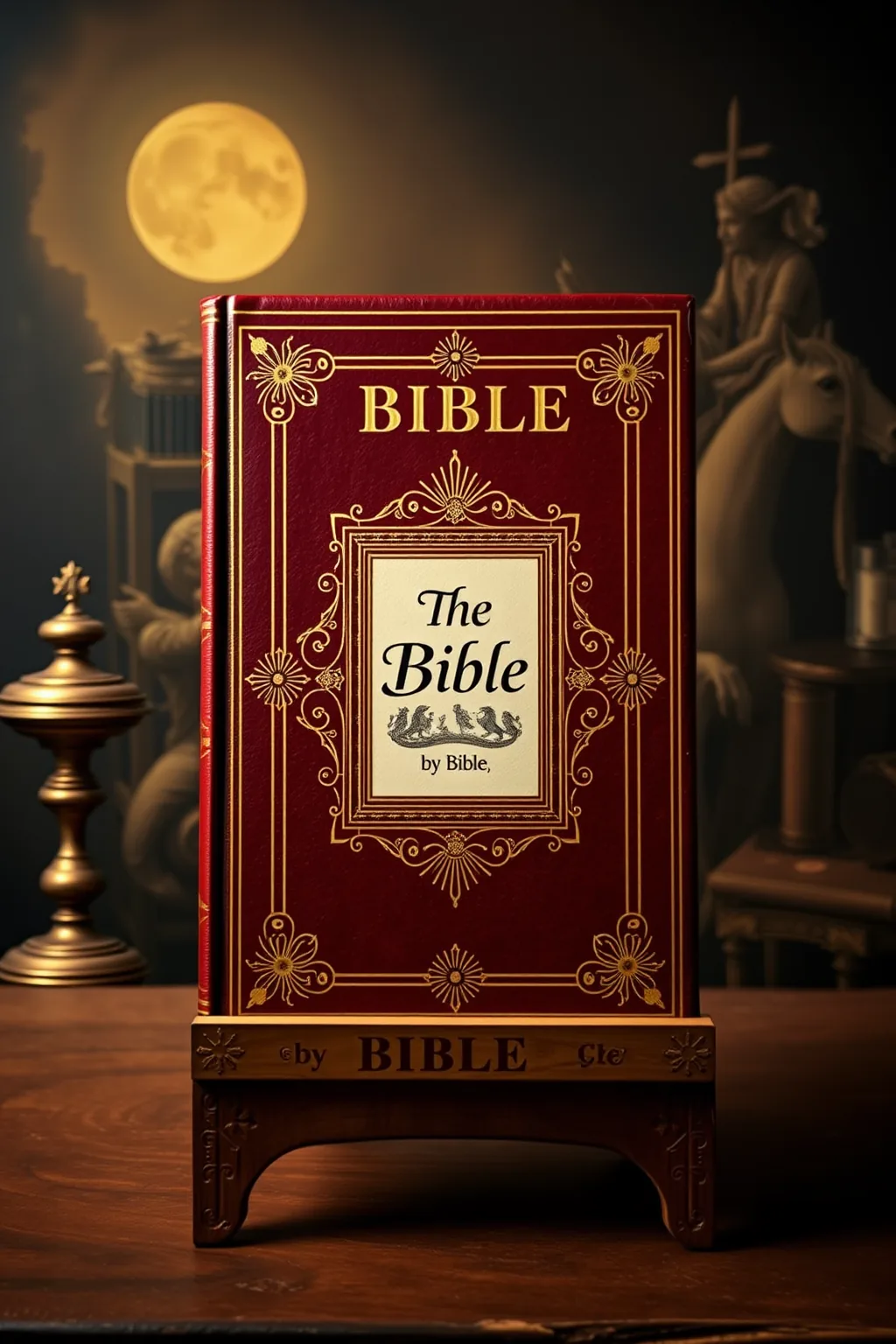
Bible
 78
78

Bible
The sheer breadth of the Bible's content makes any singular critical assessment challenging. Its historical and literary impact is undeniable, serving as a cornerstone for numerous belief systems and cultural expressions. However, approaching it as a singular, monolithic text can obscure the diversity of its authorship and historical development. The Book of Job, for instance, presents a complex theological debate on suffering that predates much of later Christian doctrine, offering a stark contrast to the more didactic parables found in the Gospels. While its passages on justice and mercy have inspired countless acts of compassion, other sections have been historically used to justify oppression, highlighting the need for critical engagement. The work's enduring power lies not in its uniformity, but in its multifaceted nature and the ongoing dialogue it provokes.
📝 Description
78
The Bible's earliest texts date to the first millennium BCE, compiled over centuries into distinct Old and New Testaments.
The Bible is a collection of religious writings that has deeply influenced Western civilization. Its texts span a considerable period, with the Old Testament originating from Hebrew scriptures that describe God's covenant with the Israelites. The New Testament focuses on Jesus Christ's life and teachings, alongside the growth of the early Christian church.
This compilation is important for understanding comparative religion, mythology, and Western literature. Its impact on art, philosophy, and ethics is significant, providing a key to cultural and historical development. Those interested in the origins of monotheism, the evolution of moral systems, or the basis of many societal structures will find substantial material within its pages. The King James Version, published in 1611, is a notable English translation that affected both language and religious discussion.
While often viewed as a mainstream religious text, the Bible contains currents that resonate with esoteric traditions. Its allegorical narratives, symbolic language, and mystical interpretations, particularly within certain Gnostic schools, suggest deeper, hidden meanings. Concepts like divine immanence, spiritual transformation, and the nature of the divine spark within humanity connect it to broader mystical inquiries found across various traditions. The search for hidden knowledge and direct experience of the divine, central to many esoteric paths, can be found within its verses.
💡 Why Read This Book?
• Gain insight into the origins of Western monotheism by examining the development of the concept of covenant, particularly in books like Exodus, which details the divine promise to the Israelites. • Understand the foundational narratives that underpin Christian theology, such as the parables of Jesus presented in the Gospels, which offer moral and spiritual lessons. • Appreciate the linguistic and literary influence of the King James Version, first published in 1611, by encountering its distinctive prose and its impact on English language.
⭐ Reader Reviews
Honest opinions from readers who have explored this book.
❓ Frequently Asked Questions
When was the earliest part of the Bible written?
The earliest texts within the Bible are estimated to have been written in the first millennium BCE, with scholars dating some portions to as early as the 10th century BCE.
What is the significance of the King James Version?
The King James Version, first published in 1611, is a pivotal English translation that significantly influenced the English language and continues to be revered for its literary quality and theological impact.
How many books are in the Christian Bible?
The Protestant canon of the Christian Bible contains 66 books: 39 in the Old Testament and 27 in the New Testament. Other traditions include additional books.
What does the term 'Old Testament' refer to?
The Old Testament primarily refers to the collection of Hebrew scriptures that predate the birth of Jesus Christ, detailing the history and laws of the ancient Israelites.
Who is traditionally credited as the author of the Pentateuch?
The first five books of the Old Testament, known as the Pentateuch or Torah, are traditionally attributed to Moses, though modern scholarship suggests a more complex compilation process.
What is the primary theme of the New Testament?
The New Testament centers on the life, teachings, death, and resurrection of Jesus Christ, and the subsequent spread of Christianity through the work of his apostles.
🔮 Key Themes & Symbolism
Divine Covenant and Law
The Bible extensively explores the concept of a covenant, a sacred agreement between God and humanity, most notably with the Israelites. This theme is central to the Old Testament, particularly in books like Exodus and Deuteronomy, which outline divine laws and expectations. Understanding these covenants provides insight into the development of monotheistic thought and the establishment of moral and ethical frameworks that have influenced Western legal and religious systems for centuries. The cyclical nature of adherence and transgression within these covenants also reveals a consistent narrative arc.
Creation and Cosmology
The opening chapters of Genesis present a foundational narrative of creation, detailing the formation of the universe and humanity by a divine entity. This account has profoundly shaped Western cosmological views and philosophical inquiries into existence, purpose, and the origin of being. Beyond the literal narrative, these passages serve as archetypal stories of order emerging from chaos, and the inherent value placed upon creation. The relationship between the Creator and the created is a recurring motif throughout the text.
Prophecy and Eschatology
Throughout both Testaments, prophecy plays a significant role, often involving divine pronouncements about future events, societal judgment, or the coming of a messianic figure. Books like Isaiah and Revelation offer extensive eschatological visions, detailing end-times scenarios, divine judgment, and ultimate redemption. These prophetic elements have fueled diverse interpretations across centuries, influencing mystical traditions and providing frameworks for understanding historical progression and ultimate spiritual destiny.
Wisdom and Morality
The Bible contains numerous texts dedicated to wisdom literature and moral instruction, such as Proverbs and Ecclesiastes. These books offer practical advice for living a righteous and fulfilling life, emphasizing virtues like humility, justice, and discernment. They explore the human condition, the nature of good and evil, and the consequences of one's actions. This ethical dimension provides a bedrock for many moral philosophies and continues to guide personal conduct and societal values.
💬 Memorable Quotes
Direct passages from the work, attributed to the author.
“In the beginning God created the heaven and the earth.”
— This opening statement from Genesis establishes the fundamental premise of the Bible: a singular, omnipotent deity as the ultimate source of all existence, setting the stage for a narrative of divine action and cosmic order.
“The LORD is my shepherd; I shall not want.”
— From Psalm 23, this verse captures a profound trust in divine providence and guidance. It portrays God not just as a creator, but as a benevolent caretaker, ensuring provision and protection for the faithful.
“Vanity of vanities; all is vanity.”
— A recurring refrain from Ecclesiastes, this phrase reflects a philosophical exploration of the perceived futility and transience of earthly pursuits when viewed from a certain perspective.
💡 Key Ideas
Editorial paraphrase of the work's core concepts — not direct quotes.
For God so loved the world, that he gave his only begotten Son, that whosoever believeth in him should not perish, but have everlasting life.
This verse from John 3:16 is a central to Christian theology, summarizing the concept of salvation through faith in Jesus Christ and the promise of eternal life as a gift of divine love.
What does the LORD require of you but to do justice, and to love kindness, and to walk humbly with your God?
Attributed to the prophet Micah, this passage distills the essence of ethical and spiritual practice, emphasizing action, compassion, and a humble relationship with the divine over mere ritual.
🌙 Esoteric Significance
Tradition
The Bible, particularly through its apocryphal texts and later interpretations, has been a significant, albeit often controversial, source for various esoteric traditions. Elements within Gnosticism, Kabbalah, and Hermeticism have drawn upon its narratives, symbolism, and alleged hidden meanings. While not exclusively an esoteric text, its allegorical potential and the presence of mystical experiences (like those of Ezekiel or the visions in Revelation) provide fertile ground for esoteric study, often seeking correspondences between biblical events and spiritual realities.
Symbolism
Key symbols abound: the Serpent in Eden represents primal knowledge and temptation, often reinterpreted in esoteric contexts as the awakening of consciousness. The Tree of Life and the Tree of Knowledge of Good and Evil in Genesis are archetypal symbols of divine connection and differentiated awareness, respectively. Water frequently symbolizes purification, chaos, and the unconscious, while light represents divine presence and revelation. The number seven, appearing throughout creation accounts and ritual prescriptions, signifies completion and divine perfection.
Modern Relevance
Contemporary esoteric practitioners and thinkers continue to engage with the Bible. Kabbalistic traditions explore its Hebrew letters and numerical values for deeper meaning. Various New Age and spiritual movements draw upon its creation stories and prophecies for cosmological frameworks. The concept of the 'divine spark' within humanity, traceable to biblical creation narratives, remains a potent idea in modern self-help and spiritual development circles. The rich allegorical potential ensures its continued relevance for those seeking spiritual or mystical understanding.
👥 Who Should Read This Book
• Students of Western religious history and comparative mythology seeking to understand the foundational texts that shaped millennia of culture, art, and philosophy. • Scholars of esoteric traditions interested in tracing the influence of biblical narratives and symbols within Gnosticism, Kabbalah, and Hermeticism. • Individuals undertaking a serious study of ethical and moral frameworks, exploring the origins and development of concepts like justice, mercy, and divine law in Western thought.
📜 Historical Context
The Bible represents a complex literary and theological tradition, not a single text produced in a vacuum. Its formative period spans over a millennium, with its earliest components originating in ancient Israelite society during the first millennium BCE. Key intellectual currents included the development of monotheism, the codification of law (as seen in the Torah), and prophetic critique of societal and religious practices. The Septuagint, a Greek translation of the Hebrew Bible, emerged in the 3rd-2nd centuries BCE, reflecting Hellenistic influence and broader dissemination. The New Testament writings in the 1st-2nd centuries CE engaged with Roman imperial culture and nascent Christian communities. This era saw competing philosophical schools like Stoicism and Epicureanism, with which early Christian thinkers implicitly or explicitly interacted. The reception of biblical texts was varied; for example, the Gnostic movements of the early centuries CE offered alternative interpretations that were later deemed heretical by the emerging orthodox church, leading to significant theological debates and canon formation.
📔 Journal Prompts
The narrative of Creation in Genesis and its implications for humanity's perceived role.
Reflect on the concept of covenant as presented in the Abrahamic narratives.
Analyze the symbolic meaning of light and darkness across different biblical texts.
Consider the prophetic pronouncements and their interpretations throughout history.
Examine the ethical teachings found in the wisdom literature, such as in Proverbs.
🗂️ Glossary
Covenant
A solemn agreement or pact, often between God and humanity (e.g., the Abrahamic covenant), establishing mutual obligations and promises that define a relationship.
Testament
Referring to the two main divisions of the Christian Bible: the Old Testament (Hebrew scriptures) and the New Testament (Christian scriptures concerning Jesus Christ and his followers).
Genesis
The first book of the Bible, detailing the creation of the world, the early history of humankind, and the origins of the Israelite people.
Gospel
The accounts of the life, teachings, death, and resurrection of Jesus Christ, found in the four books of Matthew, Mark, Luke, and John in the New Testament.
Prophecy
Divinely inspired utterance or revelation, often concerning future events, but also encompassing warnings, exhortations, and pronouncements about God's will.
Eschatology
The theological study of 'end things,' such as death, judgment, the end of the world, and the ultimate destiny of humanity and the cosmos.
Parable
A simple story used to illustrate a moral or spiritual lesson, commonly employed by Jesus in the New Testament Gospels.
🔮 Readers Also Liked
Browse all →









More by Bible
All books →
More Free Occult Philosophy Books
View all →