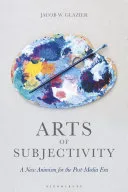
Arts of Subjectivity: A New Animism for the Post-Media Era
 76
76

Arts of Subjectivity: A New Animism for the Post-Media Era
Glazier's "Arts of Subjectivity" offers a bracingly contemporary examination of how media constructs our sense of self and reality. The book’s strength lies in its ambitious synthesis of art criticism and digital humanities, proposing a "new animism" that extends agency beyond the human in the post-media age. For instance, the exploration of how algorithmic systems exhibit a form of "subjectivity" is particularly compelling, moving beyond simple critiques of technological determinism. However, the dense academic prose can at times obscure the very lived experience it seeks to illuminate, making certain passages feel more like theoretical exercises than direct engagements with the "post-truth" condition. Despite this, the work provides a valuable framework for understanding our entangled existence with technology, challenging readers to reconsider the boundaries of consciousness in the 21st century.
📝 Description
76
Jacob W. Glazier's 2019 book examines the nature of being alive in a technologically saturated world.
Published in 2019, "Arts of Subjectivity: A New Animism for the Post-Media Era" investigates how constant connectivity and media shape our perceptions of reality and selfhood. The book links artistic inquiry with digital humanities scholarship to address the disorientation of our current information environment, marked by "post-truth" discourse. Glazier challenges purely deterministic views of technology by engaging with intellectual currents from post-structuralism and critical theory.
The work proposes a "new animism," a framework that grants subjective experience or agency to non-human entities, especially within the digital sphere. This approach critiques anthropocentric perspectives and considers how media and technology influence human existence. Glazier frames the current condition as a "post-media era," where the line between the real and the mediated blurs.
This work engages with occult philosophy by proposing an animistic framework for understanding the digital age. It moves beyond traditional animism, which often focuses on natural phenomena, to attribute a form of agency or subjective experience to technological systems and digital environments. This perspective can be seen as a contemporary interpretation of vitalist philosophies, suggesting a pervasive life force or consciousness extends into artificial constructs, challenging the materialist separation of mind and machine.
💡 Why Read This Book?
• Understand the concept of a "new animism" as presented by Glazier, offering a framework to conceptualize agency in digital systems and media, a perspective distinct from traditional animistic beliefs. • Gain insights into the "post-media era" as defined in the book, which describes a condition where media mediation fundamentally alters our perception of reality and self, moving beyond simple technological determinism. • Explore the intersection of art and digital humanities as Glazier employs these fields to analyze the subjective experience within technologically structured environments, providing unique analytical tools.
⭐ Reader Reviews
Honest opinions from readers who have explored this book.
❓ Frequently Asked Questions
What is the core argument of "Arts of Subjectivity"?
The book's core argument is the development of a "new animism" to understand subjective experience in the "post-media era." It posits that media and technology, not just humans, possess a form of agency or "life" that shapes our reality.
When was "Arts of Subjectivity: A New Animism for the Post-Media Era" first published?
The book was first published on December 26, 2019.
What disciplines does Jacob W. Glazier draw upon in this book?
Glazier brings together thinking from the arts and digital humanities. He also engages with philosophical concepts related to media theory, post-structuralism, and contemporary understandings of consciousness and reality.
What does the term 'post-media era' refer to in the book?
The 'post-media era' describes our current historical moment where media saturation and constant connectivity have blurred the lines between the mediated and the real, making it difficult to navigate truth and subjective experience.
Who might find "Arts of Subjectivity" most beneficial?
Scholars, artists, and critical thinkers interested in media theory, digital culture, philosophy, and the implications of technology on human consciousness would find this book particularly beneficial.
Does the book offer solutions to the 'post-truth' problem?
While not offering prescriptive solutions, the book provides a conceptual framework, "new animism," to better understand the dynamics of the 'post-truth' world and our place within it, encouraging critical engagement with media.
🔮 Key Themes & Symbolism
The New Animism
Glazier proposes a "new animism" not as a return to primal beliefs, but as a necessary conceptual tool for the "post-media era." This framework attributes a form of subjective life or agency to non-human entities, particularly within the complex networks of digital media and technology. It challenges anthropocentric biases by suggesting that the very systems we interact with possess an active, influencing presence that shapes our experience of reality and ourselves. This perspective is crucial for understanding how algorithmic logic and digital infrastructures operate as active forces.
Subjectivity in the Post-Media Era
The book investigates what it means to inhabit a "post-media era," characterized by pervasive digital connectivity, constant information bombardment, and the blurring of lines between the real and the mediated. Glazier argues that in this environment, traditional notions of a stable, singular self become increasingly fragmented. The work explores how technology and media actively construct and influence our sense of being alive, moving beyond simple critiques of media effects to a deeper philosophical inquiry into lived experience under these conditions.
Bridging Arts and Digital Humanities
A significant contribution of "Arts of Subjectivity" is its interdisciplinary approach, fostering dialogue between artistic inquiry and digital humanities scholarship. Glazier utilizes methods and insights from both fields to dissect the complex relationship between technology, media, and human consciousness. This synthesis allows for a nuanced examination that transcends purely theoretical or purely aesthetic analyses, offering a richer understanding of how contemporary digital culture impacts our subjective realities and perceptions.
Navigating 'Post-Truth'
The book directly addresses the challenges posed by what is often termed the "post-truth" world, where objective facts are less influential than appeals to emotion and personal belief, amplified by media. Glazier's "new animism" offers a way to analyze this phenomenon not just as a political or social issue, but as a condition emerging from the very structure of our media environment. It encourages a critical re-evaluation of how information circulates and how meaning is constructed when mediated by technology and networked systems.
💬 Memorable Quotes
Direct passages from the work, attributed to the author.
“We are bombarded by signs and symbols and constantly connected into gadgets, apps, and networks.”
— This observation captures the overwhelming sensory and connective overload of the contemporary digital age, setting the stage for Glazier's analysis of how this environment shapes our subjective experience and perception of reality.
“It has become increasingly difficult to navigate what has been dubbed a 'post-truth' world.”
— This highlights the core challenge the book addresses: the erosion of shared objective reality and the difficulty in discerning truth amidst pervasive media influence and subjective interpretation.
“Bringing thinking from the arts and digital humanities into dialogue with one another.”
— This indicates the book's methodological approach, aiming to synthesize disparate academic and creative fields to offer a more comprehensive understanding of our technologically mediated existence.
“Investigates what it means to be alive in a world that is structured by technology, the media, and an ever expanding sense of a global community.”
— This defines the central philosophical inquiry of the book, focusing on existential questions about life and being within the specific parameters of our current globalized, media-saturated reality.
“A new animism for the post-media era.”
— This is the conceptual linchpin of Glazier's work, proposing a novel framework to attribute agency or subjective qualities to non-human elements within our technologically advanced society.
🌙 Esoteric Significance
Tradition
While not explicitly tied to a single historical esoteric lineage like Hermeticism or Gnosticism, "Arts of Subjectivity" echoes certain Gnostic concerns regarding illusion and the nature of reality, particularly in its exploration of how media can construct a potentially deceptive world. Its animistic framework, however, draws more from contemporary philosophical interpretations of animism, re-contextualizing it for the digital age. The departure from traditional esoteric systems lies in its focus on technological artifacts and media networks as sites of subjective experience, rather than purely spiritual or cosmic realms.
Symbolism
The book's symbolism is less about traditional esoteric icons and more about the emergent symbolism within digital culture. Concepts like the 'network' itself become a potent symbol, representing interconnectedness, flow, and systemic intelligence. 'Algorithmic logic' functions symbolically as a new form of disembodied will or consciousness. The 'screen' or 'interface' can be seen as a mediating symbol, a threshold between the user's subjective experience and the constructed reality presented by technology.
Modern Relevance
Contemporary thinkers in post-humanism, critical algorithm studies, and digital phenomenology find resonance with Glazier's "new animism." Practices exploring human-computer interaction, the ethics of artificial intelligence, and the philosophical implications of virtual reality can draw upon his framework. It informs discussions on how we attribute agency and consciousness in increasingly complex technological systems, relevant to fields like speculative design and new media art.
👥 Who Should Read This Book
• Students of media theory and digital culture: Those seeking to understand the philosophical underpinnings of our technologically saturated environment and the concept of the 'post-media era.' • Artists and designers engaging with technology: Individuals interested in how digital media shapes perception and consciousness, offering a theoretical lens for creative practice. • Philosophers of mind and consciousness: Readers exploring non-anthropocentric views of agency and subjective experience, particularly in relation to artificial intelligence and networked systems.
📜 Historical Context
Published in late 2019, "Arts of Subjectivity" arrived at a critical juncture in discourse surrounding digital media's societal impact. The work engages with intellectual currents stemming from post-structuralism and critical theory, particularly the analyses of media by figures like Jean Baudrillard, but seeks to move beyond them. Glazier's "new animism" can be seen as a response to the perceived crisis of meaning and truth in the digital age, a period marked by the rise of social media platforms and concerns over algorithmic influence. While not directly engaging in public debate with specific contemporaries in a widely documented manner, the book participates in broader academic conversations happening concurrently in fields like media studies and philosophy of technology, often influenced by thinkers such as Bernard Stiegler and Katherine Hayles, who were also examining the entanglement of humans and technology.
📔 Journal Prompts
Reflect on the "new animism" Glazier proposes for the "post-media era."
Consider the implications of constant connectivity for your own sense of self.
Analyze a piece of media through the lens of subjective experience.
How does the concept of "post-truth" manifest in your daily information consumption?
Explore the dialogue between arts and digital humanities in understanding contemporary life.
🗂️ Glossary
New Animism
A theoretical framework proposed by Glazier that extends the concept of subjective experience or agency to non-human entities, particularly within media and technological systems, challenging anthropocentric views.
Post-Media Era
The historical and cultural condition characterized by pervasive digital connectivity, constant media saturation, and the blurring of distinctions between the mediated and the real, fundamentally altering human consciousness and experience.
Subjectivity
In Glazier's context, refers to the experience of being alive, conscious, and having a sense of self, which is explored as being increasingly shaped and constructed by media and technology.
Digital Humanities
An interdisciplinary field that engages with humanities research through computational methods and explores the intersection of computing and the study of traditional humanities subjects.
Algorithmic Logic
The underlying principles and operations of algorithms, which Glazier suggests can be interpreted as possessing a form of agency or 'life' that influences human experience in the digital realm.
Post-Truth
A cultural and political condition where objective facts are less influential in shaping public opinion than appeals to emotion and personal belief, often amplified through media channels.
Media Saturation
The state of being constantly exposed to and influenced by a high volume and density of media messages and technological interfaces in everyday life.