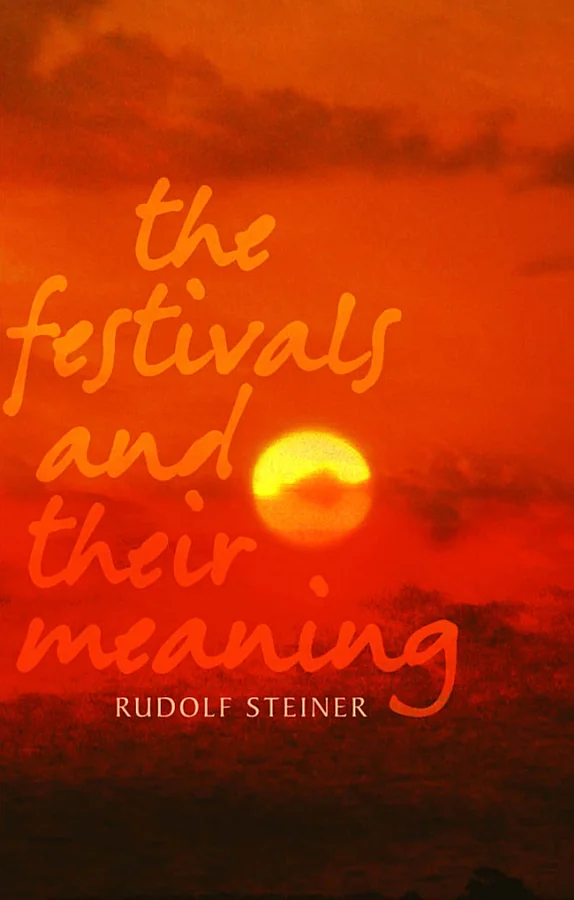
The Festivals and Their Meaning
 72
72

The Festivals and Their Meaning
Rudolf Steiner's "The Festivals and Their Meaning" presents a challenging yet rewarding perspective on the archetypal significance of the annual calendar. Rather than rehashing common holiday sentiments, Steiner, through his lectures, points towards the deeper, cosmic rhythms that these festivals are meant to reflect. His ability to connect seasonal observances like Easter or Michaelmas to specific spiritual forces and the evolution of human consciousness is particularly striking. However, the dense, lecture-based format can sometimes feel abstract, requiring considerable reader effort to visualize the described spiritual dynamics. A passage discussing the Michaelmas festival, for instance, effectively links the archangel Michael with the development of human courage and intellectual freedom, providing a concrete example of the work's interpretive power. This is a book for dedicated seekers, not casual readers.
📝 Description
72
Rudolf Steiner's 1996 book, "The Festivals and Their Meaning," examines the spiritual significance of yearly celebrations.
Rudolf Steiner's collection of lectures, "The Festivals and Their Meaning," published in 1996, examines the spiritual and cosmological basis of traditional festivals. Steiner argued that events like Easter, Midsummer, Michaelmas, and Christmas are more than just cultural dates. He saw them as active spiritual forces that individuals can engage with to develop their inner lives and connect with the changing cosmos.
The book targets readers who want to understand these festivals on a deeper, spiritual level, moving beyond their everyday secular meanings. It is particularly relevant for those interested in Anthroposophy, spiritual science, and applying esoteric ideas to daily living. The text addresses how archetypal forces active at different times of the year can be understood and used for personal and collective growth, offering substantial content for those seeking to revitalize traditional observances.
Delivered in the early 20th century, Steiner's lectures address a world influenced by materialism. He sought to connect scientific thought with spiritual reality, proposing that conscious engagement with nature and the yearly cycle could re-establish a link to the divine. This era was marked by a growing interest in comparative religion and ancient mysteries, aligning with Steiner's efforts to bridge the perceived divide between the material and spiritual worlds.
💡 Why Read This Book?
• Gain an understanding of the specific spiritual impulses Steiner believed are active during festivals like Easter and Michaelmas, moving beyond secular interpretations. • Learn to perceive the yearly cycle not just as a passage of time, but as a dynamic spiritual process that can foster personal evolution, as detailed in his discussions of the festival rhythms. • Discover practical meditative approaches to engage with these yearly forces, as outlined in Steiner's methods for inner perception and connection to cosmic events.
⭐ Reader Reviews
Honest opinions from readers who have explored this book.
❓ Frequently Asked Questions
When were Rudolf Steiner's lectures on the festivals first published?
The lectures compiled in "The Festivals and Their Meaning" were delivered by Rudolf Steiner in the early 20th century, with the collection first being published in 1996.
What is Anthroposophy and how does it relate to this book?
Anthroposophy is a spiritual philosophy founded by Rudolf Steiner. This book is a key text for understanding how Anthroposophical principles inform the meaning and practice of traditional festivals.
Does the book offer practical ways to observe festivals?
Yes, Steiner's work emphasizes engaging with festivals through inner perception and meditative practices, aiming to connect individuals with the spiritual energies he believed are active during these times.
What festivals does Rudolf Steiner discuss in this book?
The book covers major festivals throughout the year, including Christmas, Easter, Midsummer (St. John's Tide), and Michaelmas (St. Michael's Day), among others.
Who was Rudolf Steiner?
Rudolf Steiner (1861-1925) was an Austrian philosopher, esotericist, and social reformer who founded Anthroposophy and the Waldorf education movement.
Is this book suitable for beginners in esoteric studies?
While comprehensive, the book's lecture format and dense subject matter may be best suited for those with some familiarity with esoteric concepts or Steiner's work.
🔮 Key Themes & Symbolism
The Spiritual Impulses of Festivals
Steiner argues that each festival marks the presence of specific spiritual forces or 'impulses' that influence the Earth and human consciousness. For example, Easter is linked to the Christ impulse, representing renewal and cosmic sacrifice, while Michaelmas is associated with the Michaelic impulse, fostering human courage and independent thinking. Understanding these impulses allows individuals to align their inner development with the natural and spiritual cycles of the year.
The Yearly Cycle as a Spiritual Process
The book reframes the calendar from a mere chronological sequence to a living, spiritual process. Steiner explains how the Earth's relationship to the sun and the cosmos creates distinct energetic conditions throughout the year, culminating in the unique spiritual character of each festival. This perspective encourages readers to see the festivals as opportunities for conscious participation in cosmic evolution, rather than passive observance.
Inner Perception and Meditative Practice
Central to Steiner's approach is the cultivation of inner perception, or spiritual sight. He provides guidance on how to move beyond purely intellectual understanding to experience the spiritual realities behind the festivals. This involves specific meditative exercises and contemplative practices designed to attune the individual to the subtle forces at play, thereby enriching personal spiritual life and fostering a deeper connection to the divine.
The Evolution of Consciousness
Steiner posits that engaging consciously with the festivals is crucial for the evolution of human consciousness. By understanding the spiritual work associated with each festival, individuals can develop their capacities for higher thinking, moral freedom, and spiritual insight. The festivals, in this view, serve as vital points of spiritual nourishment and development for humanity as it navigates its path through cosmic and earthly time.
💬 Memorable Quotes
Direct passages from the work, attributed to the author.
“Michaelmas is the festival of courage.”
— This statement, a core idea within the lectures on Michaelmas, links the feast of St. Michael to the development of inner strength and the capacity for independent thought and action, essential for human spiritual progress.
“Easter represents the victory of spiritual life over death.”
— This interpretation of the Easter festival underscores its significance as a turning point, symbolizing the triumph of enduring spiritual forces over material dissolution and the cyclical nature of renewal.
“We must learn to feel the spiritual in the seasonal changes.”
— This captures Steiner's call for developing spiritual perception, urging readers to sense the subtle, unseen forces that he believed manifest through the changing seasons and are honored by the festivals.
💡 Key Ideas
Editorial paraphrase of the work's core concepts — not direct quotes.
The festivals are not merely to be observed, but to be lived.
This paraphrased concept highlights Steiner's emphasis on active, conscious engagement with the festivals. It suggests that true understanding comes not from passive celebration but from internalizing the spiritual forces and meanings inherent in each observance.
The festivals are cosmic events reflected in the earthly year.
This paraphrased concept emphasizes the connection Steiner draws between the annual cycle of festivals and larger cosmological occurrences, positioning earthly celebrations as elements of divine or cosmic rhythms.
🌙 Esoteric Significance
Tradition
Steiner's work draws heavily from the Western esoteric tradition, particularly Hermeticism, Gnosticism, and Kabbalah, reinterpreting them through the lens of his developed spiritual science, Anthroposophy. He sought to synthesize these ancient streams with modern scientific and philosophical thought, creating a unique path focused on the Christ impulse and the evolution of human consciousness. This work fits within Anthroposophy by providing foundational understanding for its practical applications in areas like education, agriculture, and medicine.
Symbolism
Key symbols include the Christ impulse, representing cosmic love and sacrifice, central to Easter. The figure of Michael, associated with Michaelmas, symbolizes courage, intellect, and the human being's role in spiritual evolution. The cyclical nature of the year itself is a potent symbol, representing the recurring opportunities for humanity to connect with divine forces and undergo spiritual renewal.
Modern Relevance
Contemporary practitioners of Biodynamic farming, Waldorf education, and various Anthroposophical initiatives continue to draw upon Steiner's understanding of the festivals. Thinkers exploring the intersection of spirituality, ecology, and consciousness often reference his work for its detailed cosmology and emphasis on aligning human life with natural and spiritual rhythms.
👥 Who Should Read This Book
• Students of Anthroposophy seeking to understand the foundational role of festivals in Rudolf Steiner's spiritual science. • Individuals interested in comparative religion and mythology looking for esoteric interpretations of traditional celebrations. • Contemplative practitioners aiming to deepen their inner life by connecting with the spiritual forces Steiner believed are active throughout the yearly cycle.
📜 Historical Context
Rudolf Steiner delivered the lectures forming "The Festivals and Their Meaning" between 1908 and 1924, a period marked by intense spiritual inquiry and societal upheaval in Europe. As a key figure in the burgeoning esoteric movements of the era, Steiner was responding to a growing sense of spiritual alienation fostered by scientific materialism. His work offered an alternative cosmology and a path for spiritual renewal, seeking to re-enchant the natural world and imbue everyday human activities, like observing festivals, with profound meaning. This occurred within a broader intellectual milieu that included movements like Theosophy (from which Steiner later diverged) and various occult revivals. While not facing direct censorship, his ideas were often met with skepticism or outright dismissal by mainstream academic and religious circles, positioning his work as a distinct, often counter-cultural, spiritual science.
📔 Journal Prompts
The Michaelmas impulse and the development of courage.
Easter's significance as a cosmic event reflected in the earthly year.
How the Midsummer festival's energies might be perceived today.
Reflecting on the Christmas festival's connection to the birth of the Christ impulse.
The role of the Festivals in fostering inner perception.
🗂️ Glossary
Anthroposophy
A spiritual philosophy founded by Rudolf Steiner, seeking to understand the spiritual nature of the human being and the cosmos through empirical spiritual research.
Spiritual Science
Rudolf Steiner's term for his method of investigating the spiritual world through clairvoyant perception and rigorous mental discipline, aiming for objectivity.
Christ Impulse
In Anthroposophy, the unique spiritual influence of Christ on Earth's evolution, particularly potent during the Easter period, signifying renewal and transformation.
Michaelmas
The festival celebrating the Archangel Michael, typically observed around September 29th. Steiner associates it with the development of human courage and intellectual freedom.
Midsummer (St. John's Tide)
The festival around the summer solstice, linked by Steiner to the height of the Earth's connection with the sun and the flourishing of elemental beings.
Inner Perception
The capacity to perceive spiritual realities, developed through meditative practice and inner training, as advocated by Rudolf Steiner.
Cosmic Events
Occurrences in the celestial or spiritual realms that Steiner believed directly influence Earth and human development, often reflected in the festivals.
This book appears in 1 collection
🔮 Readers Also Liked
Browse all →

From the “Anthroposophy” Collection
View all →




More Free Theosophy & Anthroposophy Books
View all →