Kabbalah

 63
63

Kabbalah

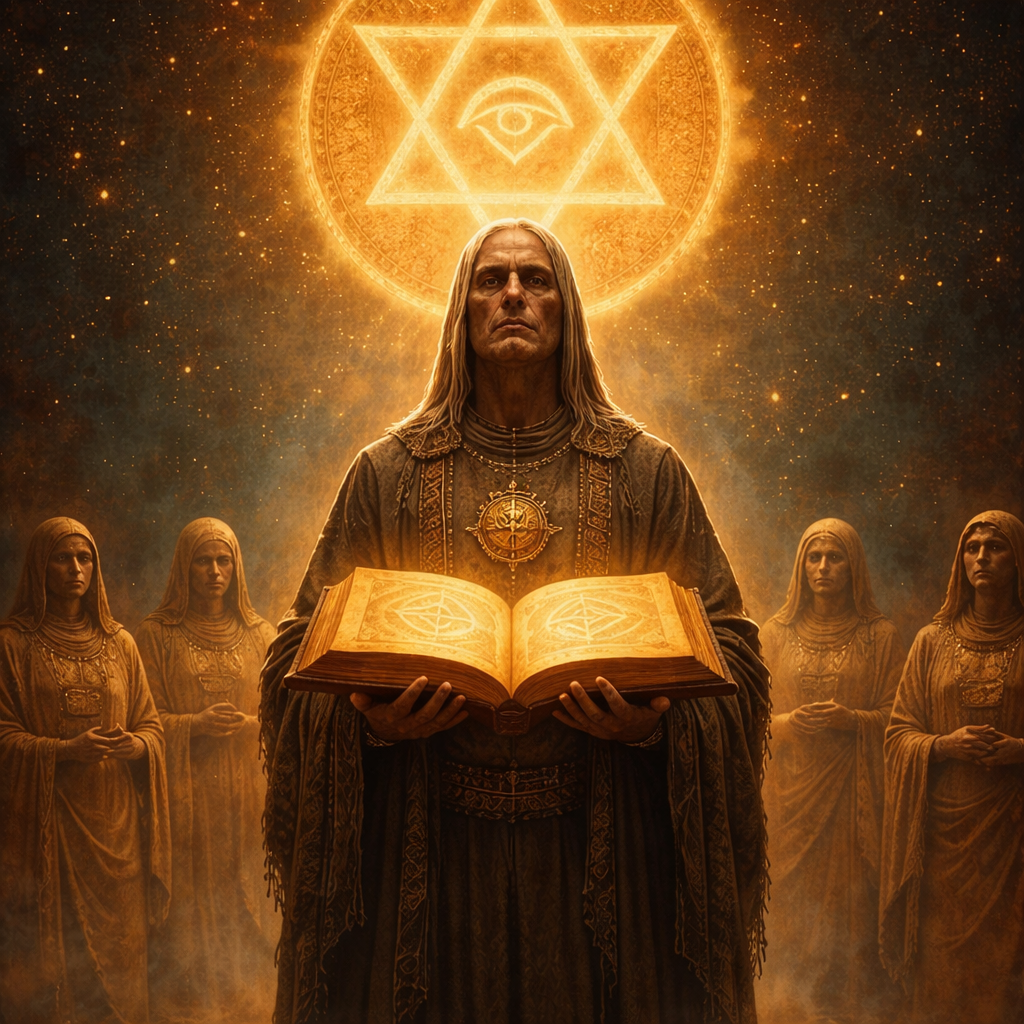

By Balthazar Finch (Senior Critic, Occult Philosophy) — Christian D. Ginsburg's 'Kabbalah' stands as a monumental achievement in the study of Jewish esoteric traditions. It offers a rare clarity into the complex cosmology and mystical doctrines of the Cabala, presenting profound insights with scholarly rigor. Ginsburg masterfully untangles the dense symbolism and theological intricacies, making this ancient wisdom accessible to a contemporary audience. This work is indispensable for serious students of mysticism, occult philosophy, and comparative religion, providing a foundational understanding of a tradition that has profoundly shaped Western esotericism. It is a testament to the enduring power of Kabbalistic thought.
📝 Description
63
Christian D. Ginsburg published his study of Kabbalah in 1865.
Christian D. Ginsburg's 1865 study, 'Kabbalah', examines the core tenets of Jewish mysticism. The book explains the symbolism, divine emanations, and celestial structures central to Kabbalistic philosophy. Ginsburg details the pathways connecting the earthly to the divine, and the soul's movement toward enlightenment.
This work serves as a guide to understanding the spiritual foundations of Judaism. It also addresses the broader human pursuit of spiritual knowledge. The text aims to clarify these concepts for newcomers and those already familiar with esoteric studies.
This book sits within the tradition of Western esotericism, specifically focusing on Kabbalah, a form of Jewish mysticism. Kabbalah developed over centuries, with key texts like the Zohar appearing in the 13th century. It concerns itself with the hidden nature of reality, divine consciousness, and the relationship between the Creator and creation. Ginsburg's work, written in the 19th century, approaches this tradition from a scholarly, analytical perspective, aiming to present its complex ideas to a wider audience interested in spiritual and mystical traditions.
💡 Why Read This Book?
Embark on a transformative intellectual and spiritual journey into the heart of Jewish mysticism. 'Kabbalah' by Christian D. Ginsburg offers an unparalleled exploration of esoteric doctrines, divine emanations, and sacred symbolism. Ideal for seekers of spiritual knowledge, scholars of comparative religion, and practitioners of contemplative traditions, this book provides the keys to unlocking ancient wisdom and understanding the hidden architecture of the universe.
⭐ Reader Reviews
Honest opinions from readers who have explored this book.
❓ Frequently Asked Questions
What is the primary focus of Ginsburg's 'Kabbalah'?
The book's primary focus is a comprehensive and scholarly exploration of the esoteric doctrines, symbolism, and cosmology of Jewish Kabbalah, aiming to illuminate its hidden meanings and philosophical underpinnings.
Is this book suitable for beginners interested in Kabbalah?
Yes, while it is scholarly, Ginsburg's clear prose and structured approach make it a valuable starting point for beginners seeking to understand the foundational concepts of Kabbalistic thought.
Does the book explain the Tree of Life?
Absolutely. The Sephiroth and the Tree of Life are central to Kabbalistic cosmology and are extensively explained and analyzed within the text.
What makes this edition significant for esoteric libraries?
Its meticulous scholarship and comprehensive coverage of core Kabbalistic texts and concepts make it a foundational text, essential for any serious collection on mystical and occult traditions.
Can this book be used for practical Kabbalistic study?
While primarily a theoretical and historical exposition, the deep understanding it provides of Kabbalistic principles can serve as a vital foundation for practitioners engaging in contemplative or symbolic practices.
🔮 Key Themes & Symbolism
The Divine Emanations (Sephiroth)
This theme explores the intricate system of ten divine emanations, the Sephiroth, which form the core of Kabbalistic cosmology. Ginsburg meticulously explains their order, interrelationships, and symbolic representations as divine attributes and stages of creation. Understanding the Sephiroth is crucial for comprehending the Kabbalistic worldview, the nature of God, and the process by which the divine manifests in the material world. This section offers a useful insights into the structure of existence and the pathways of divine influence.
Symbolism and Allegory
Kabbalah is a tradition rich in symbolism, and this theme explores the profound allegorical language employed within its texts. Ginsburg unpacks the meanings behind various symbols, from the Hebrew alphabet and divine names to biblical narratives and mystical imagery. These symbols are not mere ornamentation but are potent keys that unlock deeper spiritual truths and facilitate a more profound connection with the divine. The adept use of allegory allows for the transmission of complex, ineffable concepts across generations.
The Ascent of the Soul
A central tenet of Kabbalistic thought is the journey of the human soul towards spiritual perfection and reunion with the divine source. This theme examines the various stages and challenges involved in this ascent, as described in Kabbalistic literature. Ginsburg elucidates the practices and understanding required to purify the soul, overcome material attachments, and achieve a state of mystical union. It represents the ultimate aim of Kabbalistic practice: the transformation of the individual and the realization of their divine potential.
💬 Memorable Quotes
Direct passages from the work, attributed to the author.
“The Sephiroth are the emanations of the Divine Essence.”
— This highlights the crucial concept of the Sephiroth as the direct outpourings or manifestations of God's infinite being, forming the bridge between the unknowable Creator and the created universe.
“Man is a microcosm of the universe.”
— This emphasizes the profound connection between the human being and the cosmos, suggesting that understanding ourselves is key to understanding the greater divine order.
“The study of Kabbalah is a path to spiritual illumination.”
— This points to the transformative power of Kabbalistic knowledge, indicating that its pursuit leads not just to intellectual understanding but to a profound inner awakening and enlightenment.
“The Hebrew letters are divine sparks.”
— This reveals the mystical significance attributed to the Hebrew alphabet, suggesting that each letter carries divine energy and is a fundamental building block of creation.
💡 Key Ideas
Editorial paraphrase of the work's core concepts — not direct quotes.
The Kabbalah is the science of the holy mysteries of God.
This quote expresses the fundamental purpose of Kabbalah as a divinely revealed system for understanding the ultimate nature of God and the sacred secrets of existence.
🌙 Esoteric Significance
Tradition
This work is firmly rooted in the Jewish Kabbalistic tradition, a mystical interpretive tradition that seeks to understand the nature of God, the creation of the universe, and the relationship between the divine and humanity through esoteric means. It is a core part of Western esotericism, influencing Hermeticism, Christian Kabbalah, and various occult philosophies.
Symbolism
The esoteric significance of 'Kabbalah' lies in its deep dive into a rich symbolic language. It explores concepts like the Sephiroth (divine emanations), the Hebrew alphabet as divine creation tools, and the allegorical meanings of biblical texts. These symbols are not arbitrary but are considered keys to unlocking the divine blueprint of existence and the inner workings of the cosmos.
Modern Relevance
Ginsburg's 'Kabbalah' remains highly relevant today for its clear exposition of fundamental Kabbalistic principles. It offers seekers, scholars, and practitioners a solid foundation for understanding concepts that continue to influence contemporary spirituality, psychology (e.g., Jungian archetypes), and philosophical thought, providing timeless insights into the human condition and the search for meaning.
👥 Who Should Read This Book
This indispensable text is for anyone drawn to the profound mysteries of Jewish mysticism. **Beginners** will find Ginsburg's clear exposition a valuable introduction to the core concepts of Kabbalah. **Scholars of religion and comparative mysticism** will appreciate its scholarly depth and historical context. **Spiritual seekers** yearning for a deeper understanding of the divine and the universe will find profound wisdom. **Practitioners** of contemplative traditions seeking to enrich their understanding of cosmic principles and symbolic language will find it an essential resource for deepening their practice.
📜 Historical Context
Christian D. Ginsburg's 'Kabbalah' emerged in the mid-19th century, a period of burgeoning interest in esoteric and religious studies across Europe. As scholarship on ancient texts and mystical traditions gained momentum, there was a growing desire to understand the deeper spiritual currents within major religions. Ginsburg, a scholar of Hebrew and biblical studies, approached the Kabbalah with both scholarly rigor and a profound respect for its mystical dimensions. His work contributed significantly to making this complex Jewish esoteric tradition accessible to a wider, non-Jewish academic and spiritual audience, bridging the gap between historical analysis and the profound philosophical and theological insights of Kabbalistic thought.
📔 Journal Prompts
Reflect on the concept of divine emanations (Sephiroth) and consider how they might manifest in your own life or understanding of the world.
Explore a personal symbol that holds deep meaning for you. How does its meaning connect to broader spiritual or universal concepts?
Consider the idea of the soul's ascent. What 'obstacles' or 'attachments' might impede your own spiritual journey, and how could they be addressed?
How does the concept of 'man as a microcosm' resonate with your personal experiences and self-perception?
If the Hebrew letters are 'divine sparks,' how might this perspective change your relationship with language and communication?
🗂️ Glossary
Sephiroth
The ten divine emanations or attributes through which God reveals Himself and creates the universe in Kabbalistic cosmology. They form the structure of the Tree of Life.
Tree of Life
A central symbolic diagram in Kabbalah representing the structure of the universe and the pathways of divine emanation, consisting of ten Sephiroth connected by 22 paths.
Ein Sof
The Kabbalistic term for the 'Infinite' or 'Without End,' representing the unknowable, absolute divine essence that is beyond all comprehension and manifestation.
Tzimtzum
The Kabbalistic concept of divine 'contraction' or 'withdrawal,' understood as the act by which God made space for creation to exist within the infinite divine light.
Gematria
A Kabbalistic method of interpreting the Hebrew Bible by assigning numerical values to Hebrew letters and calculating the numerical equivalence of words and phrases.
This book appears in 1 collection
🔮 Readers Also Liked
Browse all →









More by Christian D. Ginsburg
All books →

From the “Kabbalah” Collection
View all →







More Free Kabbalah & Jewish Mysticism Books
View all →