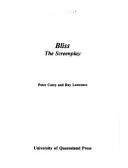
Bliss
 71
71

Bliss
Peter Carey's "Bliss" presents a disquieting portrait of a man adrift, Harry Keogh, whose life seems to operate on a plane of manufactured unreality. The novel excels in its meticulous depiction of Keogh’s internal world, particularly his wrestling with a perceived "beautiful place" that serves as both an escape and a torment. Carey’s prose, while always precise, occasionally becomes so dense with internal monologue that the narrative momentum falters. A passage describing Keogh’s imagined sanctuary, a space divorced from tangible sensation, highlights the book’s strength in exploring psychological states. However, the emotional distance cultivated by this focus can make the story feel somewhat sterile. "Bliss" offers a piercing, if melancholic, examination of authenticity and regret.
📝 Description
71
Peter Carey's 2017 novel "Bliss" centers on Harry Keogh's struggle with manufactured happiness.
The novel "Bliss," published in 2017, follows Harry Keogh, a man seemingly trapped in a world of artificial contentment and deep personal alienation. Keogh confronts his past, his current circumstances, and the unsettling nature of his own existence. Carey crafts a reality where the distinction between genuine experience and manufactured illusion dissolves. This blurring forces both the characters and the reader to question the very basis of their perceived realities.
The narrative is suited for readers who favor literary fiction that engages with existential questions and offers a critique of societal expectations. It will particularly resonate with those interested in character studies that examine internal psychological states, especially when these are shaped by unusual conditions or a felt absence of authentic connection. Readers who seek novels that deviate from traditional storytelling and demand a concentrated, analytical engagement will find "Bliss" rewarding.
Published in 2017, "Bliss" engages with contemporary anxieties about authenticity in an age saturated by digital life and curated identities. Carey, known for his complex narratives, addresses the cultural moment where manufactured appearances often overshadow lived experience. This aligns with literary traditions that question the nature of reality and the individual's place within it, particularly in works that explore the subjective experience of consciousness and the potential for alternative realities or states of mind.
💡 Why Read This Book?
• Gain insight into the concept of a "beautiful place" as a psychological construct, as explored through Harry Keogh's internal struggles, offering a unique lens on escapism. • Understand the specific anxieties of the early 21st century regarding manufactured reality, as evidenced by the novel's 2017 publication context and its thematic engagement with authenticity. • Experience Carey's signature narrative density, particularly in his exploration of memory and regret, providing a complex character study distinct from more straightforward literary approaches.
⭐ Reader Reviews
Honest opinions from readers who have explored this book.
❓ Frequently Asked Questions
What is the primary theme explored in Peter Carey's 'Bliss'?
The primary theme in 'Bliss' is the exploration of manufactured reality versus authentic experience, focusing on Harry Keogh's struggle with his perceptions and his search for genuine meaning in a disorienting world.
When was Peter Carey's novel 'Bliss' first published?
'Bliss' by Peter Carey was first published in 2017, placing it within a contemporary literary landscape grappling with themes of digital existence and curated identities.
Who is the central character in 'Bliss' and what is his main conflict?
The central character is Harry Keogh, whose main conflict revolves around his disconnection from his own life and his internal battle with the idea of a 'beautiful place,' a mental construct he uses to cope or escape.
Does 'Bliss' offer a hopeful perspective on finding happiness?
The novel offers a complex and often melancholic perspective. While characters seek a form of bliss, the narrative primarily examines the difficulty of finding genuine happiness amidst manufactured realities and past regrets.
What literary style does Peter Carey employ in 'Bliss'?
Carey employs a dense, introspective literary style, characterized by intricate prose and a deep dive into the psychological landscape of his protagonist, Harry Keogh.
How does 'Bliss' relate to societal concerns around 2017?
Published in 2017, 'Bliss' engages with contemporary anxieties about authenticity, the influence of media, and the potential for technology and societal pressures to create artificial realities, a theme also touched upon by authors like Dave Eggers.
🔮 Key Themes & Symbolism
Manufactured Reality
The novel probes the concept of a 'beautiful place,' a subjective ideal or fabricated sanctuary that characters inhabit mentally. This theme questions the authenticity of experience in a world increasingly shaped by external influences and internal coping mechanisms. Harry Keogh's internal life exemplifies this struggle, where his perceived reality is constantly at odds with tangible existence, blurring the lines between what is real and what is constructed for comfort or escape.
Regret and Second Chances
Central to 'Bliss' is the pervasive weight of past actions and the yearning for a 'second chance' to rectify perceived mistakes or missed opportunities. Harry Keogh's narrative is steeped in regret, with his present circumstances often viewed through the lens of what might have been. The work explores how memory can become a burden, shaping present perceptions and hindering the possibility of genuine forward movement or contentment.
Disconnection and Authenticity
The novel scrutinizes the profound sense of disconnection experienced by its characters, particularly Harry Keogh, from their own lives and from genuine human interaction. This theme is amplified by the exploration of authenticity – what it means to live a real life versus a life perceived or performed. The narrative questions whether true bliss can be found when one feels fundamentally estranged from oneself and the world.
The Nature of Bliss
Contrary to its title, 'Bliss' does not present an easily attainable state of happiness. Instead, it interrogates the very notion of bliss, suggesting it might be an elusive ideal or a construct that distracts from genuine, albeit imperfect, existence. The novel challenges readers to consider whether true contentment lies in escaping reality or in confronting and integrating its complexities.
💬 Memorable Quotes
Direct passages from the work, attributed to the author.
“The narrative examines the burden of memory and the desire for a 'second chance'.”
— This highlights a core thematic concern in 'Bliss', where characters are often haunted by past decisions and yearn for an opportunity to alter their course or find redemption.
“The novel questions the authenticity of experience in a world of perceived realities.”
— This interpretation points to the book's critique of superficiality and manufactured existence, prompting reflection on what constitutes genuine lived experience versus constructed personas.
“Harry Keogh's internal world is characterized by profound disconnection.”
— This statement succinctly describes the protagonist's central struggle, emphasizing his alienation from himself and his environment as a driving force of the narrative.
“The book presents a complex search for meaning amidst societal artifice.”
— This suggests that 'Bliss' is not a simple story, but a nuanced exploration of existential questions set against a backdrop of a world that may prioritize superficiality over substance.
💡 Key Ideas
Editorial paraphrase of the work's core concepts — not direct quotes.
The work explores the internal range of a character grappling with a perceived 'beautiful place'.
This paraphrase captures the essence of Harry Keogh's mental state, where an idealized, perhaps artificial, sanctuary serves as a focal point for his internal conflict and detachment from reality.
🌙 Esoteric Significance
Tradition
While not explicitly tied to a single esoteric tradition, "Bliss" engages with themes common in Gnostic and Hermetic thought, particularly the concept of a flawed or illusory material world and the individual's struggle to perceive or attain a higher, more authentic reality. The idea of a hidden or desired 'beautiful place' can be seen as a secularized echo of the Gnostic search for true knowledge (gnosis) or the Hermetic quest for spiritual illumination beyond the mundane.
Symbolism
The recurring motif of the 'beautiful place' serves as a potent symbol for an idealized, often unattainable, state of being or escape. It represents a mental construct that characters use to navigate their discontent. Another symbolic element is the pervasive sense of unreality, suggesting the material world itself might be a form of illusion or a compromised state, a concept resonant with certain mystical philosophies that view the physical realm as transient or deceptive.
Modern Relevance
Contemporary thinkers and practitioners exploring consciousness studies, existential psychology, and critiques of consumer culture find resonance in "Bliss." Its examination of manufactured realities and the search for authentic experience speaks to current debates about mindfulness, digital detox, and the psychological impact of pervasive media. The novel's themes are relevant to those seeking to understand the modern alienation that can arise from societal pressures and curated online lives.
👥 Who Should Read This Book
• Readers interested in existential literature who wish to explore the nuances of perceived reality and the search for authentic experience. • Students of contemporary fiction who want to understand literary responses to the anxieties of the early 21st century concerning technology and identity. • Individuals drawn to character-driven narratives that meticulously dissect psychological landscapes and the internal conflicts of protagonists like Harry Keogh.
📜 Historical Context
Peter Carey's "Bliss," published in 2017, arrived during a period marked by escalating discourse on digital immersion and the curated self. The novel engages with the anxieties surrounding authenticity in an era where online personas often overshadowed lived experiences. Carey, a celebrated author with a history of crafting intricate narratives, likely responded to the cultural climate that saw figures like Dave Eggers publishing works such as "The Circle" (2013), which similarly critiqued the isolating and artificial aspects of modern technological engagement. The novel's exploration of manufactured realities and internal disconnection can be seen as a literary contribution to the broader conversation about the human condition in the early 21st century. Its reception, while not marked by specific controversy or major awards at its release, contributed to the literary examination of these pervasive societal themes, offering a counterpoint to more overtly optimistic or technologically deterministic narratives.
📔 Journal Prompts
Harry Keogh's internal 'beautiful place' and its impact on his perception of reality.
The weight of regret and the yearning for a 'second chance' in your own life.
Moments of perceived disconnection from your immediate surroundings or self.
The contrast between societal expectations of happiness and personal contentment.
Defining authenticity in the context of external pressures and internal desires.
🗂️ Glossary
Beautiful Place
A concept within the novel representing an idealized, often illusory, mental sanctuary or state of being sought by characters as an escape from their perceived mundane or painful reality.
Manufactured Reality
The idea that a person's or society's perception of reality is constructed, artificial, or heavily influenced by external factors rather than being purely objective or organic.
Disconnection
A state of estrangement or lack of genuine connection, often experienced by characters in the novel towards themselves, others, or their immediate environment.
Authenticity
The quality of being genuine and true to oneself, contrasted with artificiality or performance, a central theme explored through the characters' struggles.
Second Chance
A metaphorical opportunity to alter the course of one's life, correct past mistakes, or achieve a desired outcome, often reflecting a character's deep-seated regret.
Harry Keogh
The protagonist of 'Bliss,' whose internal life and struggles with reality, memory, and the concept of a 'beautiful place' form the core of the narrative.
Existential
Relating to existence; concerned with human existence, freedom, and the search for meaning in a seemingly meaningless universe, a common lens through which to view the novel's themes.
🔮 Readers Also Liked
Browse all →









More by Peter Carey
All books →
More Free Occult Philosophy Books
View all →