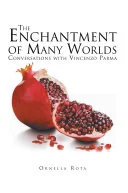
The Enchantment of Many Worlds
 79
79

The Enchantment of Many Worlds
Ornella Rota's *The Enchantment of Many Worlds* presents a compelling argument for the active construction of one's path through life, using the figure of Brigadier General Vincenzo Parma as its central explorer. The book’s strength lies in its refusal to offer easy answers, instead emphasizing the process of seeking. The epigraph, quoting a 16th-century Spanish poet, sets a tone of existential inquiry that permeates the narrative. While the concept of a self-made path is powerful, the work occasionally struggles to fully flesh out Parma's internal transformations, leaving some of the more abstract philosophical points feeling a bit detached from the character's lived experience. A particularly evocative passage describes Parma observing the vastness of the sky from an aircraft, a moment that encapsulates the book's blend of the mundane and the metaphysical. Ultimately, *The Enchantment of Many Worlds* offers a unique perspective on personal growth for those willing to engage with its introspective challenges.
📝 Description
79
Ornella Rota's 2012 book proposes that paths are made by walking, not discovered.
The Enchantment of Many Worlds, published in 2012, argues that true journeys, whether physical, intellectual, or spiritual, are defined by engagement with the unknown. The book rejects the idea of a fixed destination, suggesting instead that travelers forge their own routes through the act of moving forward. It uses the narrative of Vincenzo Parma, a Brigadier General in the Italian Air Force, to explore these concepts. Parma's structured background highlights the transformative power of confronting unfamiliar realities and expanding one's understanding. Rota posits that the pursuit of knowledge and self awareness is inseparable from encountering the unfamiliar. Growth happens at the edges of perception, and the book's titular enchantment comes from this allure and the transformative power of the unknown. These encounters can take many forms, from foreign cultures to abstract ideas or the inner self. The experience of these encounters is not fixed; it is a dynamic process where each step alters both the traveler and their perception of reality. This continuous evolution means the search for meaning is an ongoing dialogue between the self and the changing worlds, both external and internal.
This work engages with traditions that view the world as a series of interconnected states of being, accessible through internal transformation. It touches upon mystical philosophies where the journey of the self is paramount, emphasizing that reality is not static but fluid and responsive to the individual's evolving consciousness. The concept of 'enchantment' suggests an alignment with forces beyond ordinary perception, a recurring theme in hermeticism and various forms of occult philosophy that explore the hidden potentials of the human mind and spirit.
💡 Why Read This Book?
• Gain a framework for understanding personal growth not as a destination, but as an ongoing process of creation, inspired by the book's central metaphor of paths being made by walking. • Explore the transformative potential of engaging with the unknown, drawing parallels from Brigadier General Vincenzo Parma's journey as he confronts new dimensions of knowledge and self. • Reframe your perception of learning and discovery, recognizing its inherent evolution and the continuous impact of encountering unfamiliar concepts and experiences as detailed in Ornella Rota's 2012 work.
⭐ Reader Reviews
Honest opinions from readers who have explored this book.
❓ Frequently Asked Questions
What is the main theme of The Enchantment of Many Worlds?
The main theme is that the meaning of any journey—whether physical, intellectual, or internal—lies in the continuous engagement with unknown and evolving dimensions, emphasizing that paths are created through the act of walking.
Who is the central character in the book?
The central character is Vincenzo Parma, an Italian Air Force Brigadier General, whose journey serves as a vehicle for exploring the book's philosophical concepts.
When was The Enchantment of Many Worlds first published?
The book was first published on January 17, 2012.
What does the book suggest about the nature of knowledge?
The work suggests that the pursuit of knowledge is intrinsically linked to confronting the unfamiliar and that true growth occurs at the boundaries of one's current understanding.
What is the significance of the epigraph in the book?
The epigraph, 'Traveler, there is no path. Paths are made by walking,' highlights the book's core idea that journeys and personal development are active, self-created processes rather than predetermined routes.
Does the book offer practical advice for self-improvement?
While not a step-by-step guide, the book offers a philosophical framework for self-improvement by encouraging readers to embrace the unknown and actively forge their own paths of understanding.
🔮 Key Themes & Symbolism
Path Creation Through Action
The book argues against pre-existing spiritual or intellectual routes. Instead, it posits that meaning and understanding are forged through the act of moving forward, of actively engaging with life's challenges and unknowns. This concept is embodied by the anonymous 16th-century Spanish epigraph, which asserts that paths are not found but made. The journey of Brigadier General Vincenzo Parma illustrates this, as he navigates not a set course, but the emergent range of his own evolving consciousness and the world around him.
Encountering Unknown Dimensions
The 'enchantment' of the title refers to the profound allure and transformative power found in confronting what is unknown. This can manifest externally through travel and new cultures, or internally through introspection and the exploration of one's psyche. The work suggests that these encounters with the unfamiliar are not to be feared but embraced as the primary drivers of personal evolution and expanded awareness.
The Evolving Impact of Experience
Central to Rota's thesis is the idea that the effects of our journeys and discoveries are not static. Each interaction with a new dimension, whether conceptual or experiential, leads to a constant state of evolution. This implies that the search for knowledge and meaning is an ongoing, dynamic process. The book encourages a perspective where understanding is fluid and perpetually reshaped by ongoing engagement with the world.
Knowledge as a Dynamic Pursuit
The book reframes knowledge not as a static body of facts to be acquired, but as a living, evolving entity. The journey of discovery is presented as a continuous dialogue with the unknown, where the impact of each insight is itself subject to change and growth. This perspective challenges readers to view their own intellectual and spiritual development as an ongoing, active creation rather than a passive reception of information.
💬 Memorable Quotes
Direct passages from the work, attributed to the author.
“Paths are made by walking.”
— This concise epigraph captures the book's core philosophy: that personal growth, understanding, and meaning are not discovered on pre-existing routes but are actively created through the process of living, learning, and moving forward.
“The meaning of the journey... is the search for an endless impact with unknown dimensions, constantly in evolution.”
— This highlights the book's central theme: that the value of any endeavor, from travel to introspection, lies not in reaching a destination but in the ongoing, dynamic engagement with the unfamiliar and the continuous development it fosters.
“No path has already been made.”
— This statement directly challenges the notion of following established doctrines or predetermined life courses, asserting that individuals must forge their own unique ways through experience and conscious choice.
“The main character... is Vincenzo Parma, an Italian Air Force Brigadier General.”
— Introducing the protagonist grounds the abstract philosophical concepts in a concrete narrative. Parma's background likely provides a contrast to the inherent uncertainty and internal exploration the book advocates.
💡 Key Ideas
Editorial paraphrase of the work's core concepts — not direct quotes.
Traveler, there is no path. Paths are made by walking.
A direct translation of the epigraph, this quote emphasizes agency and active participation in one's own life journey, suggesting that the act of moving forward is what defines the path itself.
🌙 Esoteric Significance
Tradition
This work draws implicitly from existential philosophy and contemplative traditions that emphasize self-discovery and the creation of meaning. While not explicitly rooted in a single lineage like Hermeticism or Kabbalah, it shares the esoteric emphasis on inner transformation and the exploration of consciousness beyond mundane perception. It aligns with a more modern, individualistic approach to esoteric practice, where personal experience and self-generated understanding are paramount.
Symbolism
The primary symbol is the 'path' itself, representing one's life journey, spiritual quest, or intellectual pursuit. The book reinterprets this symbol, shifting it from a fixed route to a dynamic creation. 'Unknown dimensions' serve as another motif, symbolizing the unexplored aspects of consciousness, reality, and the self that are essential for growth and enchantment.
Modern Relevance
The book's emphasis on self-authorship and navigating uncertainty speaks to contemporary discussions around mindfulness, personal agency, and the search for meaning in a complex world. Thinkers and practitioners in fields like positive psychology and secular spirituality, who focus on creating personal meaning and resilience, might find its core ideas applicable to modern challenges.
👥 Who Should Read This Book
• Individuals seeking a philosophical framework for personal growth that emphasizes active creation over passive reception, particularly those interested in existential inquiry. • Readers who appreciate introspective narratives and are drawn to exploring the interplay between inner experience and the external world, as exemplified by Vincenzo Parma's journey. • Those interested in esoteric thought who prefer modern, individualistic approaches that focus on forging one's own understanding rather than adhering to established doctrines.
📜 Historical Context
Published in 2012, *The Enchantment of Many Worlds* emerged during a period where interest in esoteric thought and personal development continued to flourish, albeit often in fragmented digital forms. The work engages with a long tradition of philosophical inquiry into the nature of self and reality, echoing themes found in existentialism and various mystical traditions. While not directly aligned with a specific historical movement like Theosophy or Anthroposophy, it taps into a broader post-modern sensibility that questions grand narratives and emphasizes individual experience. The book's focus on creating one's own path might be seen as a counterpoint to more dogmatic spiritual systems prevalent in earlier decades. Its reception was within a niche audience interested in contemplative literature, a stark contrast to the highly publicized, sometimes controversial, reach of figures like Helena Blavatsky in the late 19th century.
📔 Journal Prompts
Vincenzo Parma's journey as a path being made by walking.
The concept of 'unknown dimensions' and personal engagement.
Reflections on the 'endless impact' of evolving experiences.
Creating your own path versus following a predetermined one.
The 'enchantment' found in confronting the unfamiliar.
🗂️ Glossary
Unknown Dimensions
Refers to aspects of reality, consciousness, or self that are not yet understood or experienced. The book posits that engaging with these is key to personal evolution and finding meaning.
Path Creation
The book's central concept that life's journey and personal development are not about following a pre-existing route but are actively forged through one's choices, actions, and experiences.
Endless Impact
The idea that encounters with the unknown have a continuous and evolving effect on the individual, leading to perpetual growth and transformation rather than a static outcome.
The Journey's Meaning
The book proposes that the true significance of any journey lies not in its destination but in the dynamic process of engaging with new experiences and dimensions.
Vincenzo Parma
The fictional Brigadier General in the Italian Air Force who serves as the protagonist, embodying the exploration of self-discovery and the creation of one's path.
Enchantment
The allure and transformative power derived from actively engaging with unknown dimensions and the process of personal evolution.
Constantly in Evolution
Describes the nature of the impact derived from journeys and encounters, emphasizing that understanding and selfhood are dynamic and perpetually changing states.
This book appears in 1 collection
🔮 Readers Also Liked
Browse all →









From the “Enchantment” Collection
View all →






More Free Occult Philosophy Books
View all →