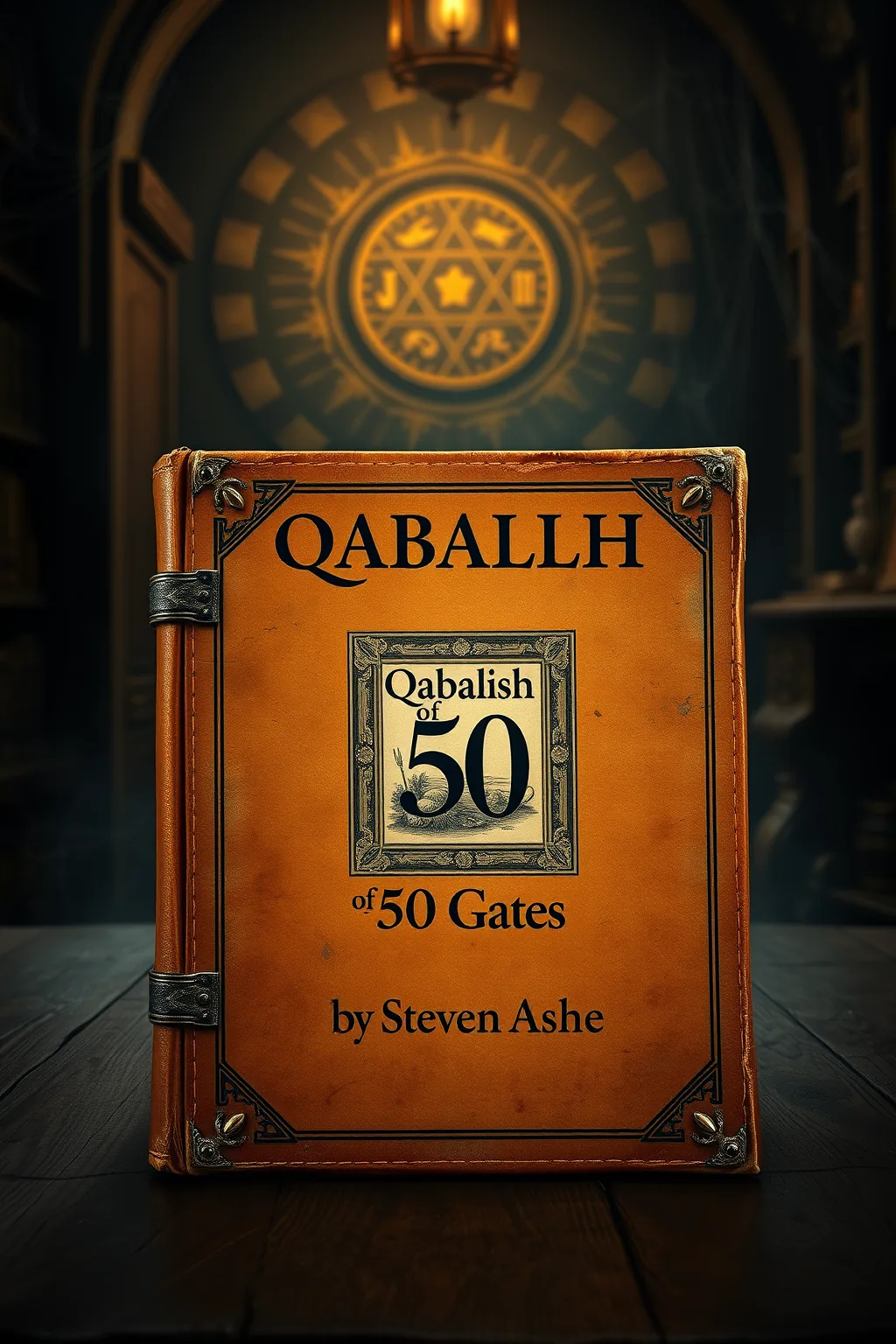
Qabalah of 50 Gates
 73
73

Qabalah of 50 Gates
Steven Ashe's 'Qabalah of 50 Gates' offers a methodical approach to a specific, often overlooked, aspect of Kabbalistic practice: the spiritual progression through the 50 days of the Omer. The book's strength lies in its detailed, day-by-day breakdown, providing practical exercises and divine names for each stage. This granular focus allows for a deep, personal engagement that abstract theoretical texts often lack. However, the work's intense focus can also be its limitation; readers without prior exposure to Kabbalistic nomenclature, such as the Sephiroth, might find themselves adrift. A particularly illuminating section details the correspondences for the 17th day of the Omer, linking it to specific angelic administrations and contemplative states. While dense, the book provides a tangible roadmap for those committed to a rigorous Kabbalistic path. It serves as a functional manual for a specific devotional discipline.
📝 Description
73
Steven Ashe's 2008 book, 'Qabalah of 50 Gates,' maps the Omer count to Kabbalistic spiritual ascent.
This book details the 50 days between Passover and Shavuot as a structured sequence for spiritual growth. Ashe connects each day to specific Kabbalistic elements, including divine names, meditations, and conceptual frameworks. The work functions as a day-by-day manual for practitioners aiming to deepen their experience of Kabbalistic cosmology.
It is written for students of Kabbalah who already understand basic concepts like the Sephiroth and the Tree of Life. The text will appeal to those interested in applying Kabbalistic theory to personal spiritual development and ritual. Readers seeking a methodical approach to contemplative Kabbalah or wishing to incorporate its teachings into a daily practice will find it valuable. It also offers insights for scholars of comparative mysticism and Jewish esotericism.
'Qabalah of 50 Gates' was published in 2008, a time of increased interest in esoteric traditions. While Kabbalah is widely studied, its application through the 50-day Omer count for spiritual progression is a less common, though historically recognized, aspect of its literature. This work provides a modern interpretation and guide to this specific devotional practice, contributing to discussions on practical Kabbalah.
The book engages with the Kabbalistic tradition, specifically focusing on the Omer counting period (the 50 days between Passover and Shavuot). This period is often viewed mystically in Judaism, and Ashe frames it as a structured path for spiritual development. He draws upon established Kabbalistic concepts, such as divine names and the Sephiroth, to create a practical system for daily contemplation. The work situates itself within the broader field of practical Kabbalah, aiming to make its teachings accessible for personal practice.
💡 Why Read This Book?
• You will learn a concrete daily contemplative practice tied to the 50 days of the Omer, providing structure for spiritual growth that goes beyond general meditation techniques. • You will gain specific correspondences for each of the 50 days, including divine names and meditative focuses, offering unique tools for personal esoteric work not found in broader Kabbalistic surveys. • You will feel a sense of guided progression through a specific esoteric calendar, experiencing the potential for sequential spiritual development as outlined in the '50 Gates' framework.
⭐ Reader Reviews
Honest opinions from readers who have explored this book.
❓ Frequently Asked Questions
What is the primary esoteric tradition explored in 'Qabalah of 50 Gates'?
The book primarily explores the Kabbalistic tradition, specifically focusing on practical applications derived from the 50-day Omer counting period. It draws from the rich symbolic and contemplative elements inherent in Jewish mysticism.
Who is Steven Ashe, the author of 'Qabalah of 50 Gates'?
Steven Ashe is an author known for his work in esoteric studies. 'Qabalah of 50 Gates', first published in 2008, is one of his contributions to the literature on practical Kabbalah and mystical practices.
What does the concept of '50 Gates' refer to in the book?
The '50 Gates' refers to the 50 days of the Omer, the period between Passover and Shavuot. Each day is presented as a distinct gate or stage for spiritual development and contemplation within the Kabbalistic framework.
Is prior knowledge of Kabbalah required to read this book?
While the book can be approached by beginners, a foundational understanding of Kabbalistic concepts like the Tree of Life and the Sephiroth would significantly enhance comprehension and practical application of the '50 Gates' system.
What kind of practical exercises does the book offer?
The book offers day-by-day meditative exercises, specific divine names to invoke, and conceptual frameworks to contemplate for each of the 50 days. These are designed to facilitate spiritual ascent and deeper understanding.
When was 'Qabalah of 50 Gates' first published?
'Qabalah of 50 Gates' by Steven Ashe was first published in 2008, making it a contemporary contribution to the field of practical Kabbalah.
🔮 Key Themes & Symbolism
Omer Count as Spiritual Path
The book reinterprets the 50-day Omer count, traditionally a period of anticipation and purification, as a structured pathway for esoteric advancement. Each day is presented as a unique 'gate' to be consciously traversed, imbued with specific energies and divine correspondences. This approach transforms a ritualistic count into an active process of spiritual ascent, detailing meditations and invocations for each stage. It emphasizes the sequential nature of spiritual development, where progress through one gate prepares the practitioner for the next, fostering a dynamic engagement with Kabbalistic principles.
Divine Names and Angelic Correspondences
Central to the '50 Gates' system is the meticulous assignment of divine names and angelic authorities to each day of the Omer. The work provides practitioners with specific Hebrew names and their associated angelic hierarchies, intended for invocation and contemplation. This practice is rooted in the Kabbalistic understanding of divine emanation and the structure of the celestial realms. By focusing on these specific names and beings, the book aims to facilitate direct experience of the divine energies associated with each of the 50 gates, serving as a practical tool for connecting with higher consciousness.
Microcosm-Macrocosm Alignment
The text explores the fundamental esoteric principle of correspondence between the human being (microcosm) and the universe or divine realms (macrocosm). Each of the 50 gates represents a specific facet of this relationship, offering the practitioner a means to align their inner state with the outer divine order. By engaging with the daily meditations and correspondences, individuals are guided to harmonize their personal spiritual journey with the broader cosmic flow. This alignment is presented as essential for achieving spiritual growth and a deeper understanding of one's place in creation.
Practical Kabbalistic Application
Unlike purely theoretical treatises, 'Qabalah of 50 Gates' emphasizes the practical application of Kabbalistic knowledge. It moves beyond abstract concepts to offer actionable steps for daily spiritual work. The structure of the book, organized around the 50 days, encourages consistent practice and discipline. It serves as a manual for those seeking to integrate Kabbalistic wisdom into their lived experience, providing the tools necessary for personal transformation and the cultivation of esoteric awareness through dedicated, structured effort.
💬 Memorable Quotes
Direct passages from the work, attributed to the author.
“Each day of the Omer is a distinct gateway, offering unique energies for spiritual refinement.”
— This highlights the book's core premise: that the 50-day period is not merely a countdown but a series of discrete opportunities for focused esoteric work and personal transformation.
“The invocation of specific divine names acts as a key to unlock the potential of each gate.”
— This emphasizes the practical methodology presented, where the use of sacred names is a direct, actionable technique for accessing the spiritual forces associated with each day.
“Alignment between inner states and cosmic order is achieved through diligent traversal of the 50 gates.”
— This speaks to the book's goal of facilitating a connection between the individual practitioner and the larger divine structure, promoting harmony and spiritual integration.
“The path through the 50 gates cultivates a sequential mastery of Kabbalistic principles.”
— This interpretation underscores the structured, progressive nature of the practices, suggesting that consistent engagement leads to a cumulative and ordered understanding of Kabbalistic teachings.
“Meditation on specific angelic orders provides a bridge to higher consciousness for each day's gate.”
— This points to the use of angelic correspondences as a specific technique for enhancing meditative states and facilitating a connection with divine intelligence.
🌙 Esoteric Significance
Tradition
The work is firmly rooted in the Kabbalistic tradition, drawing heavily from its symbolic language, divine names, and contemplative practices. It specifically engages with practical Kabbalah, emphasizing meditative techniques and the use of sacred names for spiritual advancement. While Kabbalah itself is many-sided, Ashe's '50 Gates' offers a specific devotional framework, aligning with the Lurianic emphasis on spiritual ascent and purification, albeit through a unique calendrical structure.
Symbolism
The central symbol is the '50 Gates,' representing the 50 days of the Omer. Each day acts as a symbolic portal, embodying unique spiritual potentials. Divine names, often represented by Hebrew letters or combinations, function as keys or conduits to access the energies associated with these gates. Angelic hierarchies are also employed symbolically, acting as intermediaries or guides within the celestial architecture associated with each day's progression.
Modern Relevance
Contemporary practitioners of Western Esotericism, particularly those interested in structured contemplative practices and Jewish mysticism, find value in Ashe's approach. The book's focus on daily spiritual work speaks to modern seekers looking for tangible methods to deepen their practice. It informs discussions on applied Kabbalah and comparative mysticism, offering a specific model for integrating esoteric principles into daily life, which influences modern devotional and meditative disciplines.
👥 Who Should Read This Book
['• Students of Kabbalah seeking a structured, day-by-day devotional practice tied to the Omer count, offering a unique progression beyond general studies.', '• Practitioners of Western Esotericism interested in applying Kabbalistic principles through specific meditative techniques and divine name invocation.', "• Scholars of comparative mysticism and Jewish esoteric traditions looking for a modern interpretation of the Omer period's spiritual significance."]
📜 Historical Context
Steven Ashe's 'Qabalah of 50 Gates,' published in 2008, arrived during a resurgence of interest in practical esoteric systems. While Kabbalah has a long and complex history, with figures like Isaac Luria in the 16th century profoundly shaping its contemplative dimensions, Ashe's work focuses on a specific, less universally emphasized aspect: the spiritual progression through the 50 days of the Omer. This period, bridging Passover and Shavuot, is traditionally linked to purification and the counting towards receiving the Torah. Ashe's approach offers a modern, systematic guide to this devotional practice, positioning it within the broader range of Western Esotericism. It engages with traditions that view the Omer count not just as a ritualistic observance but as a potent framework for personal spiritual advancement, offering a tangible path distinct from more abstract Kabbalistic studies prevalent at the time.
📔 Journal Prompts
The 12th Gate's correspondences and its specific meditative focus.
Reflecting on the divine name associated with the 34th Gate.
How the concept of ascending through the 50 Gates mirrors personal spiritual challenges.
The role of angelic administrations in the 45th Gate's practice.
Comparing the energetic focus of the first and last Gates in the Omer count.
🗂️ Glossary
Omer
The period of 50 days counted from the second day of Passover until the festival of Shavuot. In Kabbalistic context, it is often seen as a time for spiritual purification and ascent.
Sephiroth
The ten divine emanations or attributes described in Kabbalah, typically represented on the Tree of Life. They are fundamental concepts in understanding divine manifestation.
Tree of Life
A diagram central to Kabbalistic cosmology, depicting the 10 Sephiroth and their interconnections. It serves as a map of creation and a tool for spiritual understanding.
Divine Name
A specific Hebrew name or combination of letters believed to represent and channel divine power. In Kabbalah, these names are crucial for meditation and invocation.
Angel
In esoteric traditions, beings associated with divine realms, often serving as messengers or agents of specific divine forces or attributes. Their invocation is common in Kabbalistic practice.
Microcosm
The concept of the human being as a reflection or miniature representation of the larger universe or divine order (the macrocosm).
Macrocosm
The universe or the entirety of divine creation, viewed as a larger system of which the human being (microcosm) is a part.
🔮 Readers Also Liked
Browse all →









More by Steven Ashe
All books →





More Free Occult Philosophy Books
View all →