Crop Circles

 71
71

Crop Circles
Lucy Pringle's "Crop Circles" presents a compelling visual archive coupled with dedicated research into a persistent enigma. The strength of the book lies undeniably in its stunning aerial photography, which documents the evolution and sophistication of these formations with remarkable clarity. Pringle’s decades of personal investigation lend an authenticity to the narrative, moving beyond mere speculation. However, the work sometimes struggles to provide definitive answers, a limitation inherent to the subject matter itself. The detailed descriptions of specific formations, such as the intricate fractal-like patterns that emerged in the late 1990s, are particularly effective in illustrating the increasing complexity. While not a definitive scientific treatise, Pringle's effort is an invaluable photographic and research record for anyone drawn to the mystery of the fields.
📝 Description
71
Lucy Pringle's 1999 book presents years of research on geometric formations in agricultural fields.
This volume compiles extensive aerial photography with years of dedicated research into the enigmatic geometric formations that appear in agricultural fields worldwide. The book examines the patterns, scale, and increasing complexity of these formations, offering a visual and analytical look at their origins and potential meanings. Pringle's photographic expertise is central to the book's appeal, capturing the intricate designs from unique vantage points. The images serve as documentation of formations that often disappear quickly. Beyond the visual material, Pringle's research details the history and reported characteristics of crop circles. The work covers various theories proposed to explain their appearance, from natural phenomena to more esoteric interpretations. It highlights the meticulous efforts undertaken to document and understand these formations, noting the challenges researchers face in a field often met with skepticism.
Within esoteric traditions, crop circles often fall under discussions of anomalous phenomena that suggest non-human intelligence or subtle energies influencing the physical world. This book engages with that context by meticulously documenting the formations and examining theories that extend beyond conventional scientific explanations. It aligns with an esoteric interest in patterns that seem to carry symbolic weight or point to a deeper, hidden order within nature, inviting contemplation on consciousness and the unknown.
💡 Why Read This Book?
• Gain an unparalleled visual understanding of crop circle formations through Lucy Pringle’s extensive aerial photography, showcasing designs that appeared from the early years of investigation into the late 1990s. • Explore the historical progression and increasing complexity of crop circles, understanding how researchers like Pringle documented changes in pattern sophistication over time. • Engage with detailed case studies of specific formations, allowing for a deeper contemplation of the theories surrounding their creation and the investigative methods employed.
⭐ Reader Reviews
Honest opinions from readers who have explored this book.
❓ Frequently Asked Questions
When was Lucy Pringle's "Crop Circles" first published?
Lucy Pringle's influential work "Crop Circles" was first published in 1999, capturing a significant period of research and public interest in the phenomenon.
What is the primary focus of Lucy Pringle's "Crop Circles"?
The book's primary focus is on the visual documentation and detailed research of crop circle formations, presenting aerial photographs alongside extensive investigative findings.
Does the book offer scientific explanations for crop circles?
While the book examines various theories, it primarily presents the phenomenon and the research surrounding it, rather than offering definitive scientific conclusions.
Who is Lucy Pringle and what is her background in studying crop circles?
Lucy Pringle is a dedicated researcher and photographer who has spent many years investigating crop circles, amassing a significant collection of photographic evidence and research data.
What kind of photographs are featured in the book?
The book features extensive aerial photographs of crop circles, taken from various altitudes and angles to best capture the scale and complexity of the formations.
Is "Crop Circles" by Lucy Pringle suitable for beginners interested in the topic?
Yes, the book serves as an excellent introduction due to its comprehensive visual data and detailed research, making it accessible for those new to the subject of crop circles.
🔮 Key Themes & Symbolism
Aerial Photographic Documentation
The book's core strength is its extensive collection of aerial photographs of crop circles. These images, meticulously captured by Lucy Pringle, serve as primary evidence, illustrating the sheer diversity and intricate geometrical designs that have appeared in fields. Pringle’s work emphasizes how aerial perspectives are crucial for understanding the scale and complexity of these formations, moving beyond ground-level observation to reveal patterns that are often invisible from below. The photographs document the phenomenon's evolution, from simpler designs to highly complex geometric arrangements that emerged particularly in the late 1990s.
Investigative Research Methods
Pringle details her years of intensive research, highlighting the methodologies employed to study crop circles. This includes meticulous on-site investigation, measurement of formations, and recording of environmental conditions. The work explores the challenges of researching a phenomenon that is often transient and subject to skepticism. It presents the careful, systematic approach Pringle and others have taken to gather data, moving the study from anecdotal reports to a more structured, albeit unconventional, field of inquiry. The book implicitly questions the limitations of conventional scientific frameworks when faced with such phenomena.
Theories of Origin
"Crop Circles" surveys a range of hypotheses regarding the creation of these formations. While avoiding definitive pronouncements, Pringle examines explanations ranging from atmospheric plasma vortices and unusual weather events to more speculative theories involving consciousness or unknown intelligence. The book presents these theories alongside the visual evidence, allowing readers to consider the various interpretations proposed by researchers and observers. It acknowledges the ongoing debate and the lack of consensus within both scientific and esoteric communities.
Symbolism and Pattern Language
The book touches upon the symbolic nature of crop circle designs. As formations became more complex, particularly in the years leading up to and around 1999, researchers began to analyze the geometric principles and potential symbolic meanings embedded within them. Pringle's work showcases patterns that often incorporate mathematical ratios and sacred geometry, prompting questions about whether these designs possess an inherent language or represent a form of communication. The precise geometry invites contemplation on universal patterns and their potential significance.
💬 Memorable Quotes
Direct passages from the work, attributed to the author.
“The increasing complexity of formations observed in the late 1990s.”
— This observation highlights a key development in the crop circle phenomenon, suggesting an evolution in the patterns' sophistication and intricacy during the period leading up to the book's publication.
“Aerial photography is essential to truly appreciate the scale and design.”
— This statement emphasizes the unique value of an overhead perspective in understanding crop circles, underscoring how their full form and artistry are often only visible from above.
“Many theories exist, but conclusive proof remains elusive.”
— This reflects the ongoing nature of crop circle research, acknowledging the multitude of proposed explanations while admitting that no single theory has been universally accepted or scientifically validated.
“Documentation requires meticulous on-site investigation.”
— This points to the rigorous fieldwork involved in studying crop circles, suggesting that careful observation and data collection are critical to understanding the phenomenon.
“The formations often display remarkable geometric precision.”
— This highlights a consistent characteristic of crop circles – their adherence to precise mathematical and geometric principles, which fuels speculation about their origins.
🌙 Esoteric Significance
Tradition
While not explicitly tied to a single established esoteric tradition like Theosophy or Hermeticism, Pringle's work engages with the broader esoteric interest in unexplained natural phenomena and potential non-human intelligence. It aligns with a modern esoteric current that seeks meaning and patterns in nature that transcend conventional scientific paradigms. The focus on geometry and complex design speaks to traditions that view the universe as a manifestation of divine order and mathematical principles, such as Pythagoreanism or certain interpretations of Kabbalah.
Symbolism
The symbolism in crop circles, as presented by Pringle, often centers on geometric forms. Precise circles, spirals, and fractal patterns are frequently observed. These shapes can be interpreted through various esoteric lenses: the circle representing unity, the cosmos, or the divine; spirals symbolizing growth, evolution, or descent into the underworld; and fractals hinting at the infinite complexity within simple rules, reflecting the principle of 'as above, so below'. The sheer scale and precision suggest a form of cosmic geometry manifesting on Earth.
Modern Relevance
Pringle's research continues to be a vital reference point for contemporary crop circle enthusiasts and researchers. Her photographic archive and documentation methods inform ongoing investigations. The work's emphasis on geometric patterns and the search for meaning in natural formations finds echoes in modern fields like archaeoastronomy, sacred geometry studies, and even certain aspects of consciousness research that explore non-local awareness or symbolic communication. The book remains relevant for those investigating anomalous phenomena and seeking alternative frameworks for understanding reality.
👥 Who Should Read This Book
• Independent researchers and enthusiasts of unexplained aerial phenomena seeking a comprehensive visual and research-based overview of crop circles. • Students of comparative mythology and symbolism interested in geometric patterns and their potential meanings in natural formations. • Photographers and artists drawn to the aesthetic and mysterious qualities of aerial imagery and large-scale natural art.
📜 Historical Context
Lucy Pringle's "Crop Circles," first published in 1999, emerged during a period of heightened global interest in the phenomenon. The late 20th century saw an explosion in crop circle reports, characterized by increasingly elaborate designs that captured public and media attention. This era was marked by a growing community of independent researchers, often working outside mainstream academia, who meticulously documented formations and proposed various explanations. The work of figures like Colin Andrews was prominent, contributing to a burgeoning field of ufology and unexplained mysteries. While some scientists dismissed crop circles as hoaxes, others, like the astrophysicist Dr. Horace Drew, explored more unconventional hypotheses. Pringle's book arrived amidst this intense fascination and ongoing debate, offering a substantial visual and research-based contribution that solidified the phenomenon's place in popular esoteric discourse.
📔 Journal Prompts
The intricate geometric precision of formations like those documented in the late 1990s.
Aerial perspectives revealing hidden patterns in nature.
The balance between photographic evidence and speculative interpretation.
The feeling evoked by witnessing immense, unexplained designs in the landscape.
The historical progression of complexity in documented crop circles.
🗂️ Glossary
Formation
A general term for a crop circle or any other geometric pattern appearing in agricultural fields, often created by flattening crops.
Aerial Photography
The practice of taking photographs from an elevated position, typically from an aircraft or drone, essential for documenting the full design of crop circles.
Geometric Precision
The characteristic of crop circles exhibiting exact mathematical shapes, straight lines, and smooth curves, suggesting deliberate construction.
Phenomenon
An observable event or fact, especially one whose cause is not yet fully explained, referring here to the appearance of crop circles.
Theory of Origin
A proposed explanation for how crop circles are created, ranging from natural causes to human or non-human agency.
Sacred Geometry
The study of geometric shapes and patterns that are considered fundamental to the structure of the universe and often hold symbolic or spiritual significance.
Case Study
A detailed examination of a specific crop circle formation, including its location, date, design, and any associated observations or research.
This book appears in 1 collection
🔮 Readers Also Liked
Browse all →








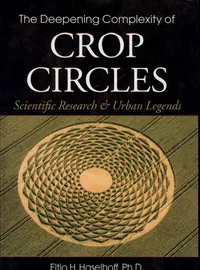
From the “Crop Circles” Collection
View all →







More Free Occult Philosophy Books
View all →