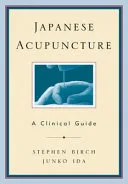
Japanese Acupuncture
 82
82

Japanese Acupuncture
Stephen Birch and Junko Ida's "Japanese Acupuncture" presents a starkly practical, almost clinical, exposition of its subject. The strength lies in its unvarnished presentation of techniques, supported by excellent photography that leaves little room for ambiguity. It avoids theoretical meandering, focusing instead on the 'how-to' with commendable directness. However, this very focus means the book offers limited exploration of the philosophical underpinnings or broader energetic theories that often accompany such practices, which might leave some readers wanting more context. A particularly effective section details the palpation techniques used to assess the body's response during treatment, illustrating the sensitive interaction between practitioner and patient. It is a highly functional guide, best suited for those who prioritize technical execution.
📝 Description
82
Published in 1998, Japanese Acupuncture by Birch and Ida details traditional needle methods and moxibustion.
This volume acts as a practical manual for acupuncture practitioners, detailing tools, skills, and techniques specific to Japanese practice. It covers traditional needle methods, including filiform needling, supplementation and drainage techniques, and the combination of moxibustion with needles. High-resolution photographs support the clear explanations of complex procedures, making them accessible.
The book targets acupuncturists from any tradition interested in refining their practice with Japanese methodologies. It is suited for practitioners who value precision, clarity, and visual aids. Those curious about the unique diagnostic and therapeutic approaches developed in Japan, regardless of their primary training, will find it useful.
The text stresses precise needle manipulation and palpation, characteristic of Japanese styles. It specifies insertion depths and angles, often shallower than in other traditions. Palpation here guides needle placement and functions as a diagnostic feedback mechanism, a notable feature of this approach.
Japanese acupuncture represents a distinct lineage within the broader field of East Asian medicine. While sharing roots with Chinese medicine, its development saw unique adaptations influenced by Japan's cultural and historical trajectory. This included a focus on refined palpation, precise needle techniques, and often shallower insertions, differing from more vigorous approaches. The integration of moxibustion and specific diagnostic methods further marks its unique path, presenting a codified system that evolved in parallel with, yet distinct from, its continental origins.
💡 Why Read This Book?
• Learn the specific needle insertion and manipulation techniques that characterize Japanese acupuncture, as detailed in the 1998 first edition by Stephen Birch and Junko Ida, offering a distinct tactile approach. • Understand the unique role of palpation in Japanese styles, as demonstrated through detailed photographic sequences, enabling a more nuanced diagnostic and therapeutic interaction. • Gain practical skills in integrating moxibustion with needle techniques, a method explored in the book to enhance therapeutic outcomes for specific conditions.
⭐ Reader Reviews
Honest opinions from readers who have explored this book.
❓ Frequently Asked Questions
What specific needle techniques are covered in Japanese Acupuncture by Birch and Ida?
The book details traditional needle techniques such as filiform needling, supplementation, and drainage. It also covers the combined use of needles with moxa, offering a comprehensive look at Japanese methods.
Is this book suitable for beginners in acupuncture?
Yes, the book is designed to be clear and direct, with simple instructions and high-resolution photography, making it applicable to practitioners of any tradition, including those newer to the field.
What makes the Japanese acupuncture techniques in this book unique?
The book emphasizes techniques that are uniquely or creatively Japanese, focusing on precise needle manipulation, palpation, and often shallower insertion depths compared to other traditions.
Who are the authors of Japanese Acupuncture?
The authors are Stephen Birch and Junko Ida. The book was first published in 1998.
How does the book illustrate its techniques?
It features completely illustrated instructions with high-resolution close-up photography, ensuring clarity and ease of application for the reader.
Can the techniques from this book be applied to non-Japanese acupuncture traditions?
The authors state that the instructions are simple and concise, designed to be easily applied to the practice of any acupuncture tradition, despite the focus on Japanese methods.
🔮 Key Themes & Symbolism
Refined Needle Manipulation
The core of Japanese acupuncture lies in its precise and often subtle needle manipulation. This book illuminates techniques that prioritize tactile feedback and minimal stimulation. Unlike more forceful methods, the Japanese approach, as presented here, often involves shallower insertions and delicate adjustments guided by the practitioner's sense of the body's response. This focus on refined touch aims to elicit a natural healing response with minimal invasiveness, a concept deeply rooted in the tradition's development.
Palpation as Diagnosis
Central to the practice detailed in "Japanese Acupuncture" is the sophisticated use of palpation. The book illustrates how practitioners use touch not just to guide needle insertion but also as a primary diagnostic tool. By feeling the subtle qualities of the tissues and the body's reactions, acupuncturists can assess imbalances and monitor the effects of treatment in real-time. This emphasis on tactile diagnosis underscores the deeply interactive nature of this healing art.
Integration of Moxibustion
The synergy between acupuncture needles and moxibustion is a significant aspect explored in this text. The book outlines methods for combining these modalities, particularly in needle-moxa techniques where moxa is applied directly to the needle handle or shaft. This integrated approach is presented as a way to enhance therapeutic efficacy, warming meridians and strengthening Qi in ways that needle insertion alone might not achieve, reflecting a holistic view of treatment.
Clarity Through Illustration
The book's commitment to clarity is a defining characteristic, achieved through extensive use of high-resolution, close-up photography. This visual approach explains complex techniques, offering clear demonstrations of needle angles, depths, and manipulation. For practitioners seeking to understand the practical application of Japanese acupuncture, these detailed illustrations serve as an invaluable guide, bridging the gap between textual description and hands-on skill.
💬 Memorable Quotes
Direct passages from the work, attributed to the author.
“Filiform needling, supplementation and drainage, and needle with moxa.”
— This concise phrase expresses the fundamental techniques covered, highlighting the book's focus on core practical skills essential to Japanese acupuncture practice.
“Clear, direct, and completely illustrated with high-resolution close-up photography.”
— This statement emphasizes the book's pedagogical approach, prioritizing visual learning and straightforward instruction for practitioners.
“Instructions are simple and concise so that they may be easily applied to the practice of any acupuncture tradition.”
— This highlights the book's aim to make advanced Japanese techniques accessible and adaptable, fostering cross-disciplinary learning among acupuncturists.
“Emphasis on those that are uniquely or creatively Japanese.”
— This points to the book's specific focus on the distinct characteristics and innovations within Japanese acupuncture, differentiating it from broader or other regional styles.
“Practical guide to tools, skills, and techniques common to all acupuncture practice.”
— This frames the book as a foundational resource, grounding its specialized content in the universal principles and practices shared across the acupuncture field.
🌙 Esoteric Significance
Tradition
While primarily a technical manual, the emphasis on precise palpation and subtle energetic feedback in "Japanese Acupuncture" aligns with certain esoteric principles found in Daoism and traditional East Asian philosophies. The focus on attuning the practitioner's senses to the body's energetic state echoes practices within Daoist internal alchemy (Neidan) and Qigong, where refined awareness is key to cultivating and directing vital force (Qi). The book's practical application of these subtle perceptions, however, grounds it firmly within a clinical, rather than purely mystical, framework.
Symbolism
The acupuncture needle itself, though a tool, carries symbolic weight. In the context of Japanese practice as presented, it symbolizes precision, focused intention, and the careful intervention into the body's energetic landscape. The concept of 'Qi' (Ki in Japanese), while not explicitly elaborated in esoteric terms, is the fundamental unseen force being addressed. The precise points targeted can be seen as microcosmic gateways, influencing the macrocosmic flow of energy throughout the body's meridians, akin to points of access in energetic or spiritual maps.
Modern Relevance
Contemporary practitioners of integrative medicine and holistic health often draw upon the refined techniques detailed in works like Birch and Ida's "Japanese Acupuncture." Thinkers and practitioners in fields such as osteopathy, craniosacral therapy, and somatic experiencing, which also prioritize tactile sensitivity and subtle bodywork, find resonance with the palpation-centric approach. Furthermore, the ongoing global interest in evidence-based complementary therapies ensures that practical, skill-focused texts remain highly relevant for clinicians seeking to broaden their therapeutic repertoire.
👥 Who Should Read This Book
• Acupuncturists seeking to deepen their understanding and practical application of Japanese needle techniques, moving beyond generic training to specialized skills. • Students of comparative medicine interested in the historical and methodological divergences between Chinese and Japanese acupuncture traditions, particularly regarding diagnostic and therapeutic approaches. • Bodywork therapists and manual healers who value precise tactile feedback and subtle energetic engagement, aiming to enhance their sensory awareness and treatment efficacy.
📜 Historical Context
Published in 1998, "Japanese Acupuncture" arrived at a time when Western practitioners were increasingly seeking to explore acupuncture traditions beyond the canonical texts of Chinese medicine. Stephen Birch and Junko Ida's work offered a detailed look at methods that had developed distinctly in Japan, often influenced by a history of integrating and adapting foreign medical knowledge. While Chinese acupuncture maintained a dominant presence, Japanese styles, with their emphasis on palpation and refined needle technique, began to gain wider recognition. This book contributed to a growing academic and clinical interest in comparative acupuncture studies, providing a practical counterpoint to more theoretical explorations of East Asian medicine. It emerged in an era where scholars like Ted Kaptchuk were also making complex medical traditions more accessible to Western audiences, though Birch and Ida’s approach was decidedly more technique-focused.
📔 Journal Prompts
The precise needle manipulation techniques detailed in Chapter X.
The role of palpation in assessing the body's energetic state.
Filiform needling versus other insertion methods.
The integration of moxa with needle techniques.
The application of Japanese skills to diverse acupuncture traditions.
🗂️ Glossary
Filiform Needling
Refers to the use of very fine, solid needles, characteristic of most acupuncture traditions, including Japanese styles, emphasizing gentle insertion and manipulation.
Supplementation and Drainage
Techniques used in acupuncture to either tonify deficient Qi (supplementation) or disperse excess pathogenic factors (drainage), often through specific manipulation methods.
Moxa
Short for moxibustion, a therapy that involves burning dried mugwort (Artemisia vulgaris) near the skin or on acupuncture points to warm and stimulate the body.
Palpation
The act of feeling with the hands, particularly in a clinical context, to assess the condition of the body, such as tissue texture, temperature, and the presence of abnormalities.
Ki
The Japanese pronunciation of Qi, the fundamental vital energy or life force believed to flow through the body in acupuncture and other East Asian medicine systems.
Meridians
Channels or pathways through which Qi is believed to flow in the body, connecting acupuncture points and organs, forming a network essential for health.
Needle-Moxa
A technique where moxibustion is applied directly to the handle of an acupuncture needle inserted into the body, combining the effects of both therapies.