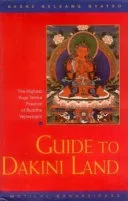
Guide to Dakini Land
 74
74

Guide to Dakini Land
Geshe Kelsang Gyatso’s Guide to Dakini Land is an exhaustive manual, aiming to demystify the complex Vajrayogini Tantra for Western practitioners. Its strength lies in its systematic approach, breaking down the intricate eleven yogas of the generation stage with clarity. The inclusion of all necessary sadhanas is a practical boon. However, the sheer density of the material, particularly the completion stage practices, necessitates a dedicated and experienced practitioner. A passage detailing the subtle body visualizations, while essential, requires significant background knowledge to fully grasp. The book serves its purpose as a comprehensive guide but demands considerable commitment from its readers.
📝 Description
74
Published in 2000, Guide to Dakini Land details Vajrayogini practice for English speakers.
Geshe Kelsang Gyatso's 2000 book, Guide to Dakini Land, offers a thorough explanation of Vajrayogini, a central female Buddha in Tantric Buddhism. It details the eleven yogas of the generation stage, methods for integrating spiritual practice into daily life. The text also covers the completion stage practices for Vajrayogini, serving as a manual for advanced Tantric practitioners. This work is intended for those who have received the necessary empowerments and instructions for Vajrayogini practice within Vajrayana Buddhism. It is also useful for scholars studying Tantric methodologies and the role of female deities in Buddhist traditions. A basic understanding of Buddhist philosophy is assumed.
The book's publication in 2000 coincided with growing global interest in Tibetan Buddhism's Tantric aspects. Guide to Dakini Land expanded the availability of detailed Tantric literature in English, moving beyond introductions to practical application. While Tibetan Buddhism has long historical roots, this text's Western dissemination opened new paths for study and practice, sometimes engaging with Western esoteric interpretations of similar symbolic systems.
This text belongs to the New Kadampa Tradition's approach to Tibetan Tantric Buddhism. It focuses on the practical application of Vajrayogini, a dakini deity, within the Vajrayana system. The book explains specific visualization and meditation techniques central to this lineage, aiming to guide practitioners through advanced stages of Tantric realization. It stands as a manual for those engaged in the deity yoga practice as taught by Geshe Kelsang Gyatso.
💡 Why Read This Book?
• Learn the specific visualization techniques of the eleven yogas of the generation stage, a core practice within Vajrayogini Tantra, enabling the transformation of daily activities into spiritual practice. • Understand the subtle internal meditations of the completion stage, offering a direct method for realizing emptiness, a concept central to Buddhist philosophy. • Gain access to all the necessary sadhanas for Vajrayogini practice, providing a complete textual resource for undertaking a traditional Tantric retreat.
⭐ Reader Reviews
Honest opinions from readers who have explored this book.
❓ Frequently Asked Questions
What is Vajrayogini and why is she important in Tantric Buddhism?
Vajrayogini is a female Buddha, a manifestation of the wisdom dakini, central to Highest Yoga Tantra in Tibetan Buddhism. She represents the ultimate wisdom that overcomes ignorance and delusion, offering a swift path to enlightenment.
What are the 'eleven yogas of the generation stage' mentioned in the book?
These are special methods within Vajrayogini practice for transforming mundane activities and perceptions into the spiritual path. They involve specific visualizations and meditations to embody the enlightened qualities of the deity.
Is this book suitable for beginners in Buddhism?
While it offers detailed explanations, this book is primarily intended for those who have already received empowerments and oral instructions for Vajrayogini practice within the New Kadampa Tradition, implying a foundational understanding of Buddhist principles.
What is the difference between the generation stage and the completion stage in Tantra?
The generation stage involves visualizing oneself as the deity, while the completion stage focuses on subtler meditations, often involving internal energies and channels, to attain deeper realization.
When was 'Guide to Dakini Land' first published and by whom?
The book was first published in January 2000 by Geshe Kelsang Gyatso. It is part of a broader series of Buddhist texts authored by him.
Does the book include practical instructions for retreats?
Yes, the Guide to Dakini Land provides advice on how to conduct a Tantric retreat, offering guidance on the practical aspects of undertaking intensive practice.
🔮 Key Themes & Symbolism
Vajrayogini Practice
The central theme is the practice of Vajrayogini, a female Buddha embodying ultimate wisdom. The book details her visualizations, mantra recitations, and the specific methods of the eleven yogas of the generation stage. It emphasizes her role as a swift path to enlightenment by purifying negative karma and obscurations, allowing practitioners to realize their inherent Buddha-nature.
Generation and Completion Stages
This theme distinguishes and explains the two primary stages of Highest Yoga Tantra. The generation stage involves cultivating a divine pride by visualizing oneself as Vajrayogini. The completion stage explores the subtler practices of working with internal energies, winds, and channels to achieve profound meditative states and direct insight into emptiness.
Transforming Daily Life
A core tenet explored is the integration of spiritual practice into everyday activities. The eleven yogas are presented as practical tools to perceive all experiences through the lens of Vajrayogini, transforming mundane actions like eating, sleeping, and working into opportunities for spiritual progress and merit accumulation.
Tantric Retreats
The book provides guidance on undertaking a Tantric retreat, specifically in relation to Vajrayogini practice. This includes advice on the necessary preparations, the structure of the retreat, and how to engage with the practices effectively to gain maximum spiritual benefit and realization.
💬 Memorable Quotes
Direct passages from the work, attributed to the author.
“The eleven yogas of the generation stage are special methods for transforming all our daily activities into the spiritual path.”
— This statement highlights the practical, integrated nature of Tantric practice. It suggests that enlightenment is not achieved in a separate realm but through the skillful application of spiritual principles to ordinary life experiences.
“Vajrayogini is the female Buddha of wisdom.”
— This succinctly defines Vajrayogini's essence. It positions her as the embodiment of prajna (wisdom) in the Vajrayana path, emphasizing her role in cutting through ignorance and realizing the ultimate nature of reality.
“The book provides detailed instructions on the eleven yogas of generation stage.”
— This indicates the text's function as a practical manual. It promises systematic, step-by-step guidance on a complex set of meditations crucial for practitioners aiming to embody the deity's qualities.
“It also explains with perfect clarity the essential completion stage practices of Vajrayogini.”
— This points to the advanced nature of the content, addressing the more subtle and profound internal meditations that follow the initial generation stage, aiming for direct realization of emptiness.
“It includes all the sadhanas of Vajrayogini and advice on how to do a Tantric retreat.”
— This emphasizes the comprehensive utility of the book for dedicated practitioners, serving as a complete resource for personal practice and structured retreat environments.
🌙 Esoteric Significance
Tradition
This work is firmly rooted in the Vajrayana tradition of Tibetan Buddhism, specifically within the lineage of the New Kadampa Tradition founded by Geshe Kelsang Gyatso. While sharing symbolic archetypes with broader esoteric traditions, its methodology—emphasizing deity yoga, subtle body practices, and the guru-disciple relationship—is distinct. It represents an effort to present these profound teachings in a structured and accessible manner for modern practitioners outside of their original monastic context.
Symbolism
Vajrayogini herself is a potent symbol, often depicted with a fierce, wrathful aspect, representing the overcoming of obstacles and delusions. Her consort, Chakrasamvara, represents bliss-consciousness. The wisdom dakini symbolism signifies the feminine principle of wisdom that cuts through ignorance. The red color often associated with her symbolizes the transformative power of bliss and the union of method and wisdom.
Modern Relevance
Guide to Dakini Land continues to be a vital resource for contemporary practitioners of Vajrayana Buddhism, particularly within the New Kadampa Tradition. Its detailed explanations of Tantric practices remain relevant for individuals seeking structured meditative paths. Scholars of comparative religion and Buddhist studies also utilize such texts to understand the nuances of deity yoga and Tantric methodologies in a globalized spiritual landscape.
👥 Who Should Read This Book
• Dedicated practitioners of Vajrayana Buddhism who have received empowerments for Vajrayogini and seek a comprehensive guide to her practice, including both generation and completion stages. • Advanced students of Tibetan Buddhism interested in detailed explanations of Tantric methodologies, deity yoga, and the specific practices associated with female Buddhas. • Scholars of comparative religion and esoteric studies looking for in-depth textual resources on specific Buddhist Tantric traditions and their ritualistic and meditative systems.
📜 Historical Context
Geshe Kelsang Gyatso's Guide to Dakini Land, published in 2000, arrived during a significant wave of interest in Tibetan Buddhism within Western countries. The late 20th century saw a growing demand for accessible, yet authentic, teachings on advanced Buddhist practices, particularly Tantra. While Western esoteric traditions like Theosophy and various forms of occultism had long explored symbolic systems and spiritual paths, the detailed exposition of specific Vajrayana deities like Vajrayogini offered a distinct and systematic approach. The book's emergence provided practitioners with a comprehensive guide, moving beyond introductory texts to detailed sadhanas and meditation instructions. Its detailed focus on the generation and completion stages of Vajrayogini practice represented a significant contribution to the growing body of translated and authored Tibetan Buddhist literature available in English, catering to a maturing audience seeking deeper engagement.
📔 Journal Prompts
The eleven yogas of the generation stage as a framework for daily transformation.
Reflecting on the symbolism of Vajrayogini as the female Buddha of wisdom.
The role of the guru in facilitating Tantric realization.
Contemplating the integration of completion stage practices with one's current understanding.
Personal applications of advice on conducting a Tantric retreat.
🗂️ Glossary
Vajrayogini
A female Buddha, a manifestation of the wisdom dakini, central to Highest Yoga Tantra. She represents the ultimate wisdom that overcomes ignorance and delusion.
Dakini
Literally 'sky dancer,' these are female beings in Tantric Buddhism, often seen as emanations of wisdom or enlightened energy, who guide practitioners on the path.
Generation Stage
The initial stage of Highest Yoga Tantra practice, involving visualizing oneself as the deity (e.g., Vajrayogini) and cultivating divine pride.
Completion Stage
The advanced stage of Tantric practice that follows the generation stage, focusing on subtler meditations involving internal energies, channels, and winds.
Yogas
In this context, refers to specific meditative practices or techniques used to achieve a particular spiritual state or realization, such as the eleven yogas of the generation stage.
Sadhanas
Literally 'means of accomplishment,' these are ritual texts containing the specific instructions and prayers for a particular deity meditation practice.
Tantric Retreat
An intensive period of dedicated meditation and practice, often undertaken in isolation, to deepen one's spiritual realization, specifically related to Tantric deities and methods.