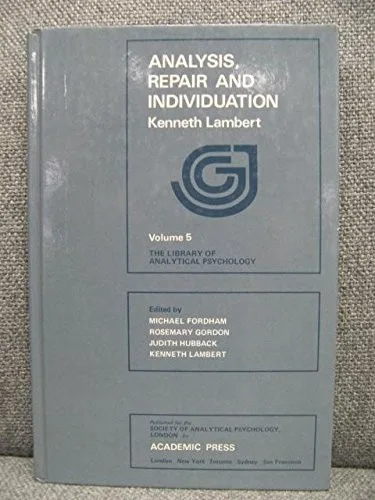
Analysis, repair, and individuation
 73
73

Analysis, repair, and individuation
Lambert's "Analysis, Repair, and Individuation" presents a formidable challenge, demanding sustained attention from its reader. The work's strength lies in its meticulous deconstruction of the individuation process, moving beyond Jung's initial formulations to suggest a more active "repair" mechanism. Lambert's analysis of the "fragmented self" in Chapter 3, detailing how specific archetypal energies become "misplaced," offers a compelling conceptual model. However, the prose can be dense, at times obscuring the very clarity it seeks to foster. The lack of explicit practical guidance, while perhaps intentional, may leave some readers adrift. Despite its academic rigor, the text occasionally feels removed from the lived experience of psychological integration. It is a valuable, albeit demanding, contribution to esoteric psychology.
📝 Description
73
Kenneth Lambert's 1994 book examines psychological and spiritual development.
Kenneth Lambert's "Analysis, Repair, and Individuation," first published in 1994, presents a theoretical framework for understanding psychological and spiritual growth. It looks at how people deal with internal fragmentation and move toward a more complete sense of self. This is not a typical self-help guide; instead, it offers a structured approach to integration.
The book is for individuals who study esoteric psychology, depth psychology, and comparative mysticism. It suits those who prefer deep theoretical ideas and do not need immediate practical results. Readers interested in the mechanics of psychological integration from a specific spiritual viewpoint will find its content valuable.
Lambert discusses concepts like the "shadow" and "anima/animus." However, he reformulates them within his own system of "analysis" and "repair." The main idea is to identify disconnected parts of the self, understand why they separated, and then bring them back together through a focused, demanding process. "Individuation" in this context means more than just self-discovery; it is the deliberate act of reclaiming fragmented psychic energy.
Published in 1994, Lambert's work appeared as Jungian psychology's influence was growing within esoteric circles. It engages with the post-Jungian discourse, particularly ideas about archetypal psychology. Unlike much New Age material from the preceding years, this book points toward a more specialized, academic engagement with spiritual and psychological synthesis.
💡 Why Read This Book?
• Gain a structured theoretical model for understanding psychological fragmentation, as detailed in Lambert's concept of "repair" (Chapter 3), which offers a distinct approach to internal integration. • Explore the esoteric underpinnings of individuation beyond standard Jungian interpretations, appreciating Lambert's unique framing of psychic energy "misplacement." • Develop a more disciplined approach to self-analysis by engaging with Lambert's rigorous conceptual framework, potentially enhancing your personal path toward psychological wholeness.
⭐ Reader Reviews
Honest opinions from readers who have explored this book.
❓ Frequently Asked Questions
What is the central thesis of Kenneth Lambert's "Analysis, Repair, and Individuation"?
The book's central thesis posits that psychological wholeness, or individuation, is achieved not just through understanding but through an active "repair" process of fragmented psychic energies and archetypal components.
When was "Analysis, Repair, and Individuation" first published?
Kenneth Lambert's "Analysis, Repair, and Individuation" was first published in 1994, positioning it within the post-Jungian discourse of the late 20th century.
What kind of reader would benefit most from this book?
Serious students of esoteric psychology, depth psychology, and comparative mysticism who appreciate theoretical rigor and are interested in the mechanics of psychological integration will find this book beneficial.
Does the book offer practical exercises for self-improvement?
While it provides a theoretical framework for understanding psychological processes, "Analysis, Repair, and Individuation" does not offer a series of practical exercises in the manner of a typical self-help guide.
How does Lambert's concept of "repair" differ from standard psychological analysis?
Lambert's "repair" suggests a more active and structured intervention to reclaim displaced psychic energies, moving beyond mere analysis to a form of energetic re-integration within the psyche.
What historical intellectual currents influenced this work?
The book is influenced by Jungian psychology and its subsequent developments, particularly within esoteric and archetypal psychology circles active in the late 20th century.
🔮 Key Themes & Symbolism
Psychic Fragmentation
Lambert elaborates on how aspects of the psyche, particularly archetypal energies, can become detached or "misplaced." This fragmentation, he argues, is a core obstacle to individuation. The work details how these disassociated parts manifest, influencing behavior and perception, and posits that recognizing their existence is the first step towards integration. This concept moves beyond simple psychological "flaws" to a structured understanding of energetic disjunction within the self.
The Process of Repair
Central to Lambert's thesis is the concept of "repair." This is not passive analysis but an active, disciplined process of reclaiming and re-integrating the fragmented psychic elements. It involves a rigorous examination of the origins of these "misplacements" and a systematic effort to restore them to their rightful place within the psyche's structure. This active engagement is framed as essential for achieving true psychological wholeness.
Esoteric Individuation
Lambert reinterprets the Jungian concept of individuation through an esoteric lens. It signifies not just psychological maturity but a profound spiritual realization achieved through the successful "repair" of the psyche. This process is depicted as a difficult but ultimately rewarding journey toward a more complete and integrated self, aligning psychological development with metaphysical principles.
Archetypal Misplacement
The book theorizes that archetypal energies, rather than being fully integrated, can become "misplaced" within the psyche. This leads to distorted expressions and a sense of internal division. Lambert explores how these archetypal dynamics, when not properly situated, create internal conflict and hinder the process of becoming a unified individual. Understanding this "misplacement" is key to the repair process.
💬 Memorable Quotes
Direct passages from the work, attributed to the author.
“The journey toward wholeness necessitates not merely comprehension, but a deliberate process of psychic repair.”
— This statement expresses Lambert's core argument that self-understanding alone is insufficient. True individuation requires active, intentional work to reintegrate fractured aspects of the self, moving beyond passive observation to engaged re-creation.
“Archetypal energies, when displaced, exert a subtle but pervasive influence on the conscious mind.”
— This highlights the pervasive impact of unintegrated archetypes. It suggests that these fundamental psychic patterns, when not properly situated within the individual's psyche, can unconsciously shape thoughts, feelings, and actions.
“Analysis reveals the fault lines; repair rebuilds the integrity of the self.”
— This concise phrase contrasts the roles of analysis and repair. Analysis serves to identify the points of internal division, while repair is the constructive phase focused on restoring the individual's fundamental structural and energetic integrity.
“Individuation is the conscious reclaiming of lost psychic territory.”
— This interpretation frames individuation as an active conquest or recovery. It implies that parts of the self have been lost or ceded, and the process involves a deliberate effort to regain them and assert sovereignty over one's entire psychological landscape.
“The fragmented self is a consequence of misplaced archetypal dynamics.”
— This interpretation directly links psychological fragmentation to the concept of "misplaced archetypal dynamics." It suggests that the disunity experienced by an individual often stems from these fundamental psychic patterns not being correctly integrated or positioned within the psyche.
🌙 Esoteric Significance
Tradition
Lambert's work aligns closely with the Western esoteric tradition, particularly drawing from Jungian depth psychology and its subsequent esoteric interpretations. It fits within the lineage of thinkers who sought to bridge psychological science with spiritual development, exploring the soul's journey toward wholeness. While not strictly Hermetic or Gnostic, it engages with universal concepts of fragmentation and integration that echo across many mystical traditions, framing individuation as a salvific process.
Symbolism
While explicit symbolic language may be dense, the work inherently engages with symbols of wholeness and fragmentation. The concept of "misplaced archetypal energies" can be seen as symbolic of the dismembered god motif found in various mythologies, where integration requires reassembling scattered parts. The "repair" process itself symbolizes alchemical purification and reconstruction, aiming for a unified, perfected self.
Modern Relevance
Contemporary practitioners of depth psychology and integral spirituality continue to draw on Lambert's precise terminology and theoretical architecture. His structured approach to "repair" offers a valuable framework for those seeking to understand and address deep-seated psychological divisions, resonating with modern therapeutic modalities that emphasize integration and wholeness.
👥 Who Should Read This Book
• Students of Jungian and post-Jungian psychology seeking a rigorous theoretical model for individuation beyond foundational texts. • Esoteric scholars interested in comparative mysticism and the psychological underpinnings of spiritual development. • Practitioners of depth psychology looking for advanced concepts on psychic integration and the repair of internal fragmentation.
📜 Historical Context
Published in 1994, Kenneth Lambert's "Analysis, Repair, and Individuation" emerged during a vibrant period for Jungian and post-Jungian thought. The early 1990s saw continued exploration of archetypal psychology, with figures like James Hillman publishing influential works that challenged conventional psychological paradigms. Lambert's book can be seen as participating in this intellectual current, offering a more structured and theoretically dense approach to individuation than much of the popular New Age literature of the era. While not directly engaging with a specific public controversy or censorship, the work's demanding theoretical nature likely positioned it within academic and serious esoteric study circles, distinct from broader spiritual movements. Its focus on a systematic "repair" process suggests a dialogue with, or perhaps a departure from, more purely analytical or imaginal approaches prevalent at the time.
📔 Journal Prompts
The nature of "misplaced archetypal energies" within your own psyche.
Reflecting on the distinction between analysis and repair in personal growth.
The process of reclaiming fragmented psychic territory.
Identifying instances of "psychic fragmentation" in your life.
Conceptualizing the "repair" of the self through Lambert's framework.
🗂️ Glossary
Individuation
In Lambert's context, the process of becoming a whole, integrated self, achieved through the analysis and repair of fragmented psychic components and archetypal energies.
Psychic Fragmentation
The state where parts of the psyche, particularly archetypal energies, become detached or disassociated from the conscious self, leading to internal division and dysfunction.
Repair
Lambert's term for the active, disciplined process of reclaiming and reintegrating fragmented psychic elements, essential for achieving individuation.
Misplaced Archetypal Energies
Archetypal forces that have become detached or improperly situated within the psyche, influencing behavior and perception in distorted ways.
Analysis
The initial phase of understanding the structure and nature of psychic fragmentation and the "misplacement" of energies.
Wholeness
The state of integrated psychic and spiritual being achieved through the successful process of individuation and repair.
Conscious Mind
The aspect of the psyche engaged in awareness, perception, and reasoning, which is influenced by both integrated and fragmented psychic elements.
🔮 Readers Also Liked
Browse all →









More by Kenneth Lambert
All books →
More Free Occult Philosophy Books
View all →