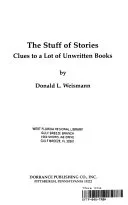
The Stuff of Stories
 72
72

The Stuff of Stories
Weismann’s "The Stuff of Stories" attempts to uncover the raw material from which all narratives are spun, a bold endeavor that often succeeds in illuminating the primal forces at play. The strength of the book lies in its ambitious scope, connecting seemingly disparate mythologies and personal narratives through a lens of energetic resonance. However, the text can sometimes feel dense, with its esoteric terminology occasionally obscuring the very insights it seeks to convey. A particularly striking section discusses the "narrative void" – the pregnant silence before a story begins, which Weismann argues is the true source of creative potential. While the work offers a unique perspective, readers may find themselves wishing for more direct examples to anchor its more abstract propositions. It offers a compelling, albeit demanding, exploration of storytelling's hidden architecture.
📝 Description
72
Donald L. Weismann's 1998 book argues that stories are active forces shaping consciousness.
Published in 1998, Donald L. Weismann's "The Stuff of Stories" investigates the essential components of narrative and their connection to human experience. It moves beyond simple literary critique to examine the underlying structures and psychological drives that fuel storytelling across different cultures and time periods. The book is not so much a review of literary methods as it is an inquiry into the archetypal patterns and energetic forces that give rise to tales.
This work is suited for readers interested in the deeper aspects of mythology, psychology, and comparative religion. It speaks to those who want to understand the source of certain stories' power, how they influence our view of reality, and the subtle links between ancient myths and modern narratives. Students of folklore, Jungian psychology, and esoteric traditions will find much to consider.
The book discusses concepts like narrative archetypes, the 'anima' and 'animus' within stories, the function of the 'shadow' in plot, and the distinct 'energetic signature' of various story types. Weismann suggests that stories are not merely passive entertainment but dynamic influences that mold consciousness and reality. He draws connections between the structure of myths and the processes of psychological change.
Emerging in 1998, "The Stuff of Stories" arrived during a resurgence of interest in Jungian archetypes and mythological studies, influenced by figures like Joseph Campbell. Weismann's work engages with this intellectual current but often focuses more directly on the energetic and psychological foundations of myth, distinguishing it from purely academic analyses. It connects the structure of narrative to psychological transformation and posits stories as active agents in shaping consciousness and perceived reality.
💡 Why Read This Book?
• Understand the energetic blueprint of narrative structures, as detailed in Weismann's concept of the 'narrative void,' to better grasp why certain stories compel and endure. • Gain insight into how archetypal patterns, such as the 'shadow' as discussed in the book, manifest in both ancient myths and personal life, offering a framework for self-reflection. • Explore the connection between narrative forms and psychological transformation, learning how the 'stuff of stories' actively shapes consciousness, a core idea presented in the 1998 publication.
⭐ Reader Reviews
Honest opinions from readers who have explored this book.
❓ Frequently Asked Questions
What is the core thesis of Donald L. Weismann's "The Stuff of Stories"?
The book posits that stories are composed of fundamental energetic and psychological elements, not just words. Weismann explores archetypal patterns and the underlying impulses that drive narrative creation across cultures, suggesting stories actively shape our reality.
When was "The Stuff of Stories" first published?
Donald L. Weismann's "The Stuff of Stories" was first published in December 1998.
What esoteric traditions or concepts does the book draw upon?
While not strictly adhering to one lineage, the work engages with concepts resonant with Jungian psychology, archetypal mythology, and esoteric understandings of energetic patterns and consciousness.
How does this book differ from standard literary criticism?
Unlike conventional literary criticism, "The Stuff of Stories" moves beyond textual analysis to investigate the deeper, often invisible, forces and psychological drivers that give rise to narrative itself.
Is "The Stuff of Stories" accessible to beginners in esoteric studies?
The book offers profound insights but can be dense. Beginners may benefit from a foundational understanding of psychological archetypes or comparative mythology, though the text itself aims to illuminate these areas.
What makes the 'narrative void' concept significant in the book?
Weismann identifies the 'narrative void' as the primordial space of potential from which all stories emerge. Understanding this concept, as explored in the book, offers a unique perspective on the source of creative energy in storytelling.
🔮 Key Themes & Symbolism
Archetypal Narrative Structures
Weismann's work identifies recurring archetypal patterns that form the bedrock of all stories, from ancient myths to personal anecdotes. These are not mere plot devices but fundamental energetic signatures that resonate with the human psyche. The book studies how figures like the 'shadow' and the 'hero' are expressions of these deep psychological currents, suggesting that understanding these archetypes provides a key to unlocking the power and purpose of any given narrative. This exploration connects directly to traditions that examine universal mythic forms.
The Energetics of Storytelling
A central tenet of "The Stuff of Stories" is that narratives possess an inherent energetic quality. Weismann posits that stories are not static texts but dynamic forces that can influence consciousness and shape reality. This perspective draws parallels to esoteric philosophies that view the universe as fundamentally energetic. The book explores how different narrative forms carry distinct energetic signatures, impacting the listener or reader on subtle levels, and how this energy can be harnessed or understood for personal growth.
The Narrative Void as Source
The concept of the 'narrative void' is presented as the primordial, unmanifest space from which all stories arise. It is the pregnant silence, the potentiality before creation, that fuels narrative. Weismann suggests that connecting with this void is essential for authentic storytelling and for understanding the deepest roots of myth. This idea offers a unique lens through which to view the creative process, emphasizing stillness and receptivity as the true wellspring of narrative power, a theme often explored in contemplative traditions.
Story as Transformative Agent
Weismann argues that stories are not merely reflections of reality but active agents of transformation. They possess the power to alter perception, foster psychological integration, and guide individuals through developmental stages. By engaging with specific narrative archetypes and understanding their energetic impact, readers can harness stories as tools for personal evolution. This view aligns with esoteric practices that utilize symbolic narratives for spiritual and psychological development, positioning storytelling as a sacred art.
💬 Memorable Quotes
Direct passages from the work, attributed to the author.
“The narrative void is the fertile silence from which all stories emerge.”
— This highlights Weismann's concept of the primordial potential before a story is told. It suggests that true creativity stems from a place of emptiness and receptivity, rather than from pre-existing ideas.
“Every tale carries an energetic signature, shaping the consciousness that receives it.”
— This emphasizes the active, influential power of stories. It proposes that narratives are not passive entertainment but dynamic forces that can subtly alter our perceptions and inner states.
“The shadow in myth is not an enemy, but a necessary component of wholeness.”
— This re-frames the concept of the 'shadow' archetype, often feared or rejected. Weismann suggests its integration is crucial for psychological completeness, a perspective deeply rooted in Jungian thought.
“We do not just consume stories; we are co-created by them.”
— This provocative statement underscores the reciprocal relationship between teller, listener, and tale. It suggests that our identity and understanding of the world are profoundly influenced by the narratives we engage with.
“The structure of a myth mirrors the journey of the soul.”
— This interpretation connects the macrocosm of mythic narratives to the microcosm of individual spiritual and psychological development, implying that ancient stories offer maps for inner exploration.
🌙 Esoteric Significance
Tradition
While not strictly confined to a single lineage, "The Stuff of Stories" draws heavily on archetypal psychology, particularly the work of Carl Jung, which itself has deep roots in Gnosticism and Hermeticism. It aligns with esoteric traditions that view symbols and narratives as living energetic forces capable of influencing consciousness and facilitating transformation. Weismann's approach departs from purely academic mythography by emphasizing the direct energetic impact and psychological potency of story structures, positioning narrative as a key element in spiritual and self-realization practices.
Symbolism
Key symbols explored include the 'Shadow,' representing the disowned aspects of the psyche that drive plot and personal growth; the 'Hero's Journey,' not just as a plot outline but as a map for soul development; and the 'Narrative Void,' symbolizing the unmanifest potential from which all creation, including stories, arises. These symbols function not merely as literary devices but as energetic conduits that, when understood, can facilitate profound psychological and spiritual shifts within the individual.
Modern Relevance
Contemporary thinkers in fields ranging from depth psychology and consciousness studies to creative writing and transpersonal psychology continue to find value in Weismann's exploration of narrative energetics. His emphasis on archetypal patterns and the transformative power of story appeals to modern practitioners of somatic experiencing, mindfulness, and narrative therapy. The book's ideas inform contemporary discussions on how stories construct our reality and how engaging consciously with narrative can be a path toward integration and self-discovery.
👥 Who Should Read This Book
• Students of Jungian psychology and archetypal studies seeking to understand the energetic underpinnings of mythic narratives. • Writers and storytellers interested in tapping into deeper sources of inspiration and exploring the psychological impact of their work. • Practitioners of esoteric traditions looking for frameworks to understand how symbols and narratives function as tools for consciousness transformation.
📜 Historical Context
Donald L. Weismann's "The Stuff of Stories," released in 1998, appeared within a late 20th-century intellectual landscape fascinated by the power of myth and narrative. This period saw the continued influence of Carl Jung's theories on archetypes and the collective unconscious, with scholars like Joseph Campbell having popularized mythological studies for a broader audience. The book engages with this milieu, offering a more esoteric and energetic interpretation of narrative structures than purely academic approaches. While figures like Mircea Eliade were meticulously documenting religious phenomena, Weismann's work instead focused on the intrinsic 'stuff'—the energetic and psychological components—of story itself. The book's perspective can be seen as distinct from the post-structuralist deconstruction of narrative prevalent at the time, instead leaning towards a more vitalist and psychological understanding of storytelling's primal force.
📔 Journal Prompts
The energetic signature of a compelling story.
Reflecting on the 'narrative void' in personal creative endeavors.
Identifying the 'shadow' archetype in a familiar myth or personal experience.
How a specific story has acted as a transformative agent in your life.
The archetypal journey as a map for the soul.
🗂️ Glossary
Archetype
Universal, archaic patterns and images that derive from the collective unconscious and are the psychic counterpart of a biological feature. In narrative, these manifest as recurring character types or plot structures.
Narrative Void
The concept of the primordial, unmanifest space or silence from which all stories originate. It represents pure potentiality and the source of creative energy before form is given.
Energetic Signature
The unique vibratory quality or underlying force that a story possesses, influencing the consciousness of those who engage with it. It suggests narratives have an active, palpable influence.
Shadow
In a psychological and narrative context, the 'shadow' refers to the disowned, repressed, or unconscious aspects of an individual or a collective psyche. Its confrontation and integration are often key to transformation.
Animus/Anima
Jungian concepts representing the masculine aspect within the female psyche (animus) and the feminine aspect within the male psyche (anima). In stories, these archetypes often drive relationship dynamics and inner conflicts.
Consciousness
The state or quality of awareness, or of being aware of an external object or something within oneself. In esoteric contexts, it can also refer to broader fields of awareness and energetic fields.
Psyche
The human soul, mind, or spirit. In Weismann's context, it encompasses the conscious and unconscious elements that shape our experience and our engagement with stories.