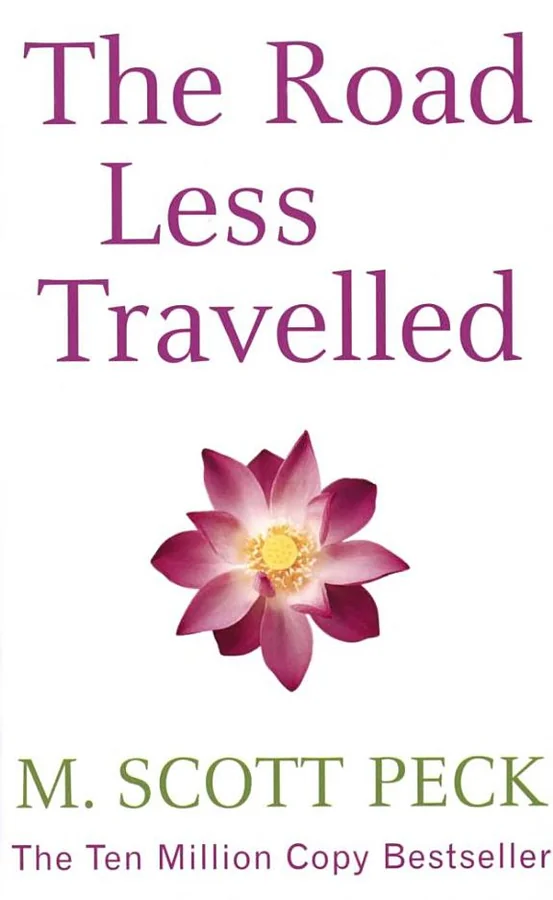
The Road Less Travelled
 73
73

The Road Less Travelled
M. Scott Peck's The Road Less Travelled doesn't shy away from the arduous nature of genuine personal evolution. Peck asserts, quite forcefully, that the avoidance of life's inherent difficulties is the primary impediment to psychological and spiritual maturation. He uses the metaphor of a journey, one that demands conscious effort and willingness to face discomfort, rather than seeking perpetual ease. A significant strength lies in his directness; he avoids the platitudes that often plague self-help literature. For instance, his extended discussion on the necessity of pain in decision-making, particularly the 'pain of experience' versus the 'pain of avoidance,' is remarkably clear and bracing.
However, the book's extended reliance on religious and spiritual framing, while central to its appeal for many, might feel prescriptive or exclusionary to readers with secular or differing spiritual perspectives. Peck's exploration of the concept of 'grace' and his spiritual interpretations, while earnest, can at times feel less grounded than his psychological observations. Despite this, the work offers a compelling argument for embracing responsibility as the bedrock of a meaningful life. It is a challenging, yet ultimately rewarding, examination of the path to authentic selfhood.
📝 Description
73
M. Scott Peck's 1990 book, The Road Less Travelled, argues that confronting difficulty is key to growth.
First published in 1990, The Road Less Travelled proposes that genuine maturity comes from facing life's problems directly, rather than avoiding them. Peck suggests that true psychological and spiritual development requires active engagement with pain and struggle. This book is for those who seek a deeper self-understanding and improved relationships, especially if they feel stuck in avoidance patterns. It offers a more challenging but ultimately more satisfying path to personal fulfillment.
Peck's work emerged in the late 20th century, offering a different perspective from prevailing self-help trends. It countered approaches focused on ease or pleasure, resonating with a renewed interest in traditional spiritual and moral values. The book became a bestseller, shaping conversations about personal responsibility and development. Its concepts, like 'cathexis', 'boundaries', and 'emptying and filling', guide readers toward a deliberate approach to life's challenges and emotional renewal.
While often categorized within popular psychology, Peck's work touches on themes resonant with certain esoteric traditions that emphasize the transformative power of hardship and self-discipline. It aligns with spiritual paths that see the overcoming of obstacles as central to enlightenment or higher consciousness. The focus on conscious effort and intentionality in facing personal challenges echoes practices found in contemplative traditions that value rigorous self-examination and spiritual practice as a means to achieve inner peace and wisdom. It suggests that the path to fulfillment is not one of ease, but of deliberate engagement with the self and the world.
💡 Why Read This Book?
• Understand the psychology of problem-solving, learning how confronting difficult issues, as described in Peck's concept of 'constructive pain,' leads to growth and maturity. • Explore the dynamics of relationships through the lens of 'boundaries,' grasping how clear personal limits foster genuine connection and self-respect. • Reframe personal challenges by examining the 'emptying and filling' process, recognizing how emotional release and conscious effort facilitate spiritual and mental renewal.
⭐ Reader Reviews
Honest opinions from readers who have explored this book.
❓ Frequently Asked Questions
When was M. Scott Peck's The Road Less Travelled first published?
The Road Less Travelled was first published in 1990. It quickly became a significant bestseller, influencing popular psychology and spiritual growth discussions throughout the late 20th century.
What is the main psychological concept in The Road Less Travelled?
The central psychological concept is that confronting and solving life's problems, though painful, is essential for personal and spiritual growth. Peck argues that avoiding pain leads to greater suffering and stagnation.
Does The Road Less Travelled focus on traditional values?
Yes, the book explicitly addresses traditional values alongside spiritual growth and the new psychology of love. Peck's work advocates for discipline, responsibility, and conscious effort, often aligning with established moral frameworks.
Is M. Scott Peck's book about romantic love?
While it discusses love, The Road Less Travelled is not solely about romantic love. It examines love as a verb, a conscious act of commitment and will, applicable to all relationships and self-development, framed within the 'new psychology of love'.
What is the 'pain of avoidance' according to M. Scott Peck?
The 'pain of avoidance' is the suffering incurred by delaying or ignoring life's problems. Peck posits this passive suffering is often more damaging and impedes mental and spiritual growth more than the active 'pain of experience'.
How does The Road Less Travelled approach spiritual growth?
Spiritual growth is presented as an active process of confronting reality, exercising discipline, and embracing responsibility. Peck integrates psychological insights with spiritual principles, viewing maturity as a journey that requires conscious commitment.
🔮 Key Themes & Symbolism
Discipline and Effort
The book's core tenet is that meaningful growth is not passive but demands deliberate discipline. Peck argues that true maturity arises from the conscious decision to confront difficulties, invest emotional energy ('cathexis'), and engage in the 'pain of experience' rather than succumbing to the 'pain of avoidance.' This theme underscores the active role individuals must play in their own development, moving beyond mere self-interest to embrace responsibility and commitment.
The Nature of Love
Peck redefines love not as a passive emotion but as an active verb, a commitment to another's growth and well-being. He posits that true love requires the will to extend oneself, to discipline one's desires, and to work through the complexities of relationships with intention. This perspective challenges superficial notions of romance, grounding love in conscious action and mutual support, essential for both personal and relational evolution.
Spiritual Growth as a Process
The work frames spiritual growth as an ongoing, often challenging, journey rather than a destination. Peck integrates psychological insights with spiritual principles, suggesting that maturity involves recognizing and accepting life's inherent difficulties. Concepts like 'emptying and filling' and the acceptance of 'grace' illustrate this process, emphasizing self-awareness, emotional honesty, and a willingness to be transformed by experience.
Problem Solving and Pain
A central argument is that life is inherently a series of problems, and growth occurs through confronting and solving them. Peck distinguishes between the 'pain of experience' (necessary for growth) and the 'pain of avoidance' (which leads to stagnation and greater suffering). This perspective encourages readers to view challenges not as obstacles to be escaped, but as opportunities for learning and advancement.
💬 Memorable Quotes
Direct passages from the work, attributed to the author.
“Life is difficult. This is a great truth, one of the greatest truths.”
— This foundational statement immediately sets the tone, asserting that struggle and challenge are inherent to existence. It challenges the common desire for an easy life and suggests that acknowledging this difficulty is the first step toward genuine personal and spiritual development.
“The process of true spiritual growth involves the emptying and filling of the self.”
— This refers to the need to release old, unhelpful patterns and beliefs ('emptying') to make space for new insights and perspectives ('filling'). It highlights the dynamic, cyclical nature of personal transformation, requiring both shedding and embracing.
“The effort of will and the exercise of discipline are the most important tools of the spiritual life.”
— This emphasizes that spiritual progress is not accidental but requires active participation. Peck suggests that conscious choice, dedication, and consistent effort are paramount in working through the path toward deeper understanding and maturity.
“Love is the will to extend one's self for the purpose of nurturing one's own or another's spiritual growth.”
— This defines love as a deliberate act of commitment and support for development, rather than a mere feeling. It frames love as a powerful force for positive change, integral to both self-improvement and fostering the growth of others.
“The path that leads away from the great majority of mankind is the path of spiritual growth.”
— This highlights the unconventional nature of true personal evolution. Peck suggests that the pursuit of genuine growth often requires deviating from societal norms and popular comforts, embracing a more demanding, individualistic path.
🌙 Esoteric Significance
Tradition
While not explicitly aligned with a single esoteric lineage, Peck's work draws heavily on archetypal psychological principles and a general Western spiritual tradition that values self-mastery and inner work. It echoes Gnostic themes of confronting illusion and seeking authentic knowledge, as well as Hermetic principles of self-transformation through understanding universal laws. The emphasis on conscious will and disciplined effort aligns with practices found in various Western esoteric traditions focused on personal evolution.
Symbolism
The central symbol is the 'road' itself, representing life's journey. The 'road less travelled' signifies the path of conscious effort, individuation, and spiritual growth, distinct from the easier, more conventional routes. Another motif is 'boundaries,' symbolizing the necessary structures (mental, emotional, physical) that protect the self and facilitate healthy interaction, akin to protective circles or sacred spaces in magical practice.
Modern Relevance
Peck's emphasis on intentionality, personal responsibility, and the integration of psychological and spiritual development continues to influence contemporary thinkers and practitioners. His ideas are relevant to modern therapeutic modalities that focus on acceptance and commitment, as well as to spiritual paths that emphasize conscious practice over passive belief. Modern self-help and personal development movements often build upon his foundational concepts of disciplined growth.
👥 Who Should Read This Book
• Individuals grappling with life's persistent difficulties who seek a framework for understanding and overcoming them, learning to harness 'constructive pain.' • Readers interested in the intersection of psychology and spirituality who want to explore 'love' as an act of will and commitment. • Those undertaking personal or spiritual development who wish to understand the importance of 'discipline' and 'boundaries' for authentic growth.
📜 Historical Context
Published in 1990, M. Scott Peck's The Road Less Travelled emerged during a period of intense interest in personal development and therapeutic culture. It resonated with a readership seeking more substantial psychological and spiritual frameworks than were often offered by mainstream self-help. The book's emphasis on discipline, responsibility, and the necessity of confronting pain stood in contrast to more superficial approaches to happiness. It gained significant popularity, becoming a fixture on bestseller lists and influencing popular discourse on psychology and spirituality. While not directly engaging in polemics, its focus on traditional values and spiritual growth provided a counterpoint to certain postmodern trends that questioned objective morality or universal truths. Its reception was overwhelmingly positive, cementing Peck's status as a prominent voice in the field, though some critics noted its religious underpinnings could be exclusionary.
📔 Journal Prompts
The 'pain of experience' versus the 'pain of avoidance': When have you chosen one over the other, and what were the consequences?
Reflect on a boundary you have established or need to establish in a relationship. How does it serve spiritual growth?
Consider the concept of 'cathexis.' Where have you invested significant emotional energy, and was it constructive?
How does the idea of 'grace' manifest in your life's challenging moments?
Analyze a current life problem through the lens of intentional problem-solving rather than avoidance.
🗂️ Glossary
Cathexis
The investment of emotional energy in a person, idea, or object. Peck emphasizes that healthy growth involves consciously directing this energy towards productive and meaningful pursuits.
Boundaries
The limits we set to protect our physical, emotional, and psychological selves. Establishing clear boundaries is crucial for healthy relationships and self-respect, enabling individuals to differentiate themselves from others.
Pain of Avoidance
The suffering that results from failing to confront and solve life's problems. Peck argues this passive suffering is more detrimental to growth than the active 'pain of experience'.
Pain of Experience
The discomfort or suffering that arises from actively confronting and dealing with life's challenges. Peck posits this is a necessary component of growth and maturity.
Emptied and Filled
A process of psychological and spiritual renewal involving releasing outdated beliefs, emotions, or patterns ('emptying') and making space for new understanding and growth ('filling').
Spiritual Growth
A process of increasing self-awareness, maturity, and connection to something larger than oneself, achieved through conscious effort, discipline, and confronting life's difficulties.
Love as a Verb
Peck's concept of love not as a passive emotion but as an active choice and commitment to nurture one's own or another's spiritual growth.
This book appears in 1 collection
🔮 Readers Also Liked
Browse all →







From the “Self-Realization” Collection
View all →






More Free Occult Philosophy Books
View all →